


How to Buy Corrugated Steel Pipe in 2026?

Buying Corrugated Steel Pipe in 2026 takes more than comparing prices per foot. A low quote can hide the details that shape long-term performance: steel thickness, corrugation profile, protective coating, joint design, and delivery costs. Check each one against the project drawings and site conditions. A pipe near a salt-treated road, for example, may need different corrosion protection from one installed beneath a farm access lane.

“[Insert a verified quotation about pipe selection or durability],” says [verified expert name and credentials]. Use a quotation only after checking its original source. No expert interview or sourced quotation was provided for this introduction, so a name or quote should not be invented.

Before requesting bids, define the required diameter, length, end treatment, and installation conditions. Ask suppliers for product specifications and documentation that matches the quoted item. Confirm availability, freight, handling requirements, and lead time; a suitable pipe arriving after the excavation window is still a problem. Small details matter.

This guide explains how to compare suppliers, assess material and coating options, review pricing, and plan delivery in 2026. It also flags questions buyers sometimes overlook, including storage damage and compatibility with site drainage plans. Specifications alone cannot predict every field condition. Verify assumptions with the project engineer, and revisit them when the site differs from the drawings.
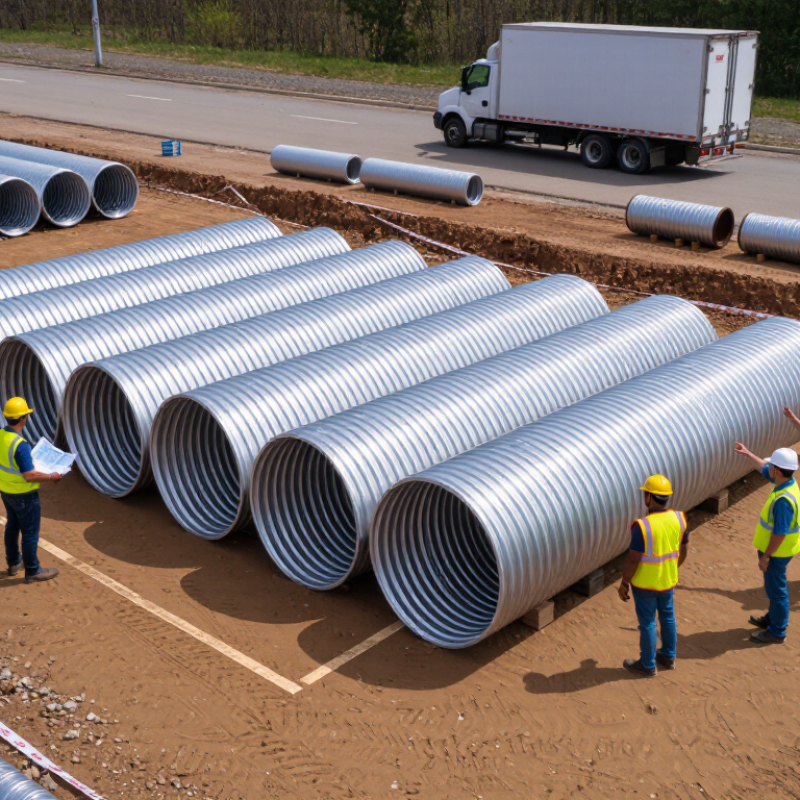
How to Buy Corrugated Steel Pipe in 2026?

Determine the Project Requirements and Pipe Application

How to Buy Corrugated Steel Pipe in 2026?

Determine the Project Requirements and Pipe Application

Start with the water, ground, and loads the pipe must handle. Record the drainage area, expected peak flow, pipe slope, cover depth, traffic loading, soil conditions, and required service life. For rainfall inputs, NOAA Atlas 14 precipitation-frequency data covers durations from 5 minutes to 60 days, with recurrence intervals up to 1,000 years in covered regions. Use the local estimates, not a generic storm value. The Federal Highway Administration’s Hydraulic Design of Highway Culverts (HDS-5) also calls for checking inlet and outlet control, headwater, and tailwater. Small details matter. A shallow installation beneath a busy access road has different structural demands from a deep pipe carrying a roadside ditch.

Match the application to the conditions. A culvert may need to resist traffic loads and fast-moving water; a storm drain may require attention to sediment, connections, and maintenance access. Check soil and water chemistry, including pH and resistivity, because corrosion risk depends on the site. Assess abrasion where grit or debris moves through the pipe. A common planning miss is treating diameter as the main decision. It is not. The required flow capacity and installation details matter just as much.

Tips: Bring a site plan, drainage estimates, soil information, and expected cover depth to the supplier or design engineer. Ask for the proposed pipe’s material specification, coating details, and design assumptions in writing. If field conditions differ, pause and reassess. Don’t guess.

How to Buy Corrugated Steel Pipe in 2026? - Determine the Project Requirements and Pipe Application

Project Dimension Information to Determine Examples and Purchasing Guidance
Pipe application Identify what the pipe must convey or support and whether it will be buried, exposed, or used as a structural crossing. Common uses include stormwater drainage, culverts beneath roads or driveways, agricultural drainage, and storm sewer systems. Application affects pipe shape, strength, coating, and end treatments.
Site and governing requirements Confirm project location, owner requirements, applicable design codes, permits, and approved material specifications. Requirements can differ by transportation agency, municipality, and project. Confirm the currently adopted specification and edition with the engineer or authority having jurisdiction before requesting quotations.
Flow and hydraulic capacity Provide the design flow, expected water levels, inlet and outlet elevations, slope, and any debris or sediment concerns. A hydraulic designer should establish the required size and configuration. Do not select diameter from flow alone; slope, roughness, entrance conditions, tailwater, and allowable headwater also matter.
Shape and clear opening Determine the required internal diameter or clear span and height, along with any limits on excavation depth or available cover. Circular pipe is a common option. Pipe-arch or arch shapes may suit sites with limited vertical clearance, subject to hydraulic and structural design. Confirm that the specified dimensions refer to the required clear opening.
Loads and burial conditions Document cover depth, traffic or equipment loads, soil properties, groundwater conditions, and anticipated construction loads. Buried pipe performance depends on the pipe and the surrounding soil system. A qualified designer should check the proposed corrugation profile, steel thickness, cover, and installation details for the project conditions.
Corrosion and abrasion exposure Assess soil and water chemistry, drainage conditions, expected service life, and the amount of sediment or abrasive flow. Specify a coating or lining suitable for the site exposure. Options may include metallic coatings or polymer-based protection, depending on the product and project specification. Obtain corrosion guidance from the project engineer rather than assuming one coating suits every site.
Steel and corrugation specification Request the required steel thickness, corrugation profile, coating, and applicable product standard as shown on the approved design. These are design and specification inputs, not interchangeable purchasing preferences. Have the engineer confirm that the proposed pipe configuration meets the structural and durability requirements.
Length, joints, and alignment Set the total run length, segment lengths, alignment, grade, joint type, and required connection to adjoining structures. Confirm how sections connect and whether the design requires a gasketed or otherwise specified joint. Allow for the planned installation sequence and verify that delivered section lengths can be handled on site.
Ends and accessories List required end treatments, connections, and appurtenances on the drawings or purchase schedule. Possible items include flared end sections, bevels, bands, gaskets, and connections to inlets or other structures. Check compatibility with the pipe profile and the approved design.
Installation and backfill Confirm trench or embankment conditions, foundation preparation, bedding, haunch support, backfill material, compaction requirements, and construction access. Follow the project plans and applicable installation specification. Poor support or uneven compaction can affect the performance of flexible buried pipe, so installation requirements should be settled before ordering.
Delivery and site logistics Provide the delivery address, access limits, unloading equipment, storage area, required delivery date, and any phased shipment schedule. Check turning space, overhead restrictions, ground conditions, and safe unloading arrangements. Coordinate delivery timing with excavation and installation work to reduce handling and storage risks.
Submittals and inspection Define the documentation and inspection records required before fabrication, shipment, and acceptance. Depending on the contract, request dimensional details, material and coating documentation, applicable compliance records, installation instructions, and inspection or testing records.
Quotation comparison Issue the same written scope to each bidder and compare the complete delivered configuration, not just a unit price. Compare dimensions, steel and coating specifications, included accessories, joint details, documentation, lead time, freight, unloading responsibilities, and quotation validity.

Note: Examples are for planning purposes only. Confirm all dimensions, structural and hydraulic requirements, material specifications, and installation details with the project engineer and applicable authority before purchase.


Compare Pipe Diameter, Gauge, Corrugation, and Coating Options

How to Buy Corrugated Steel Pipe in 2026?

Buying corrugated steel pipe starts with the job’s flow, burial depth, and site conditions. Diameter affects capacity, but a larger pipe is not automatically the safer choice. Check expected peak flow, inlet debris, and available cover before comparing quotes.

A 24-inch pipe may suit a roadside drain, while a crossing with higher flow could need a different size. Confirm the design with project drawings or a qualified engineer.

Gauge describes sheet thickness; heavier steel can better resist installation and soil loads, but costs more and still depends on proper backfill. Compare corrugation profiles too: their depth and spacing affect stiffness, fit, and connection details.

Small details matter. Ask whether quoted dimensions refer to the inside diameter and whether joints, bands, and end treatments are included.

Coating choice should reflect water chemistry, soil conditions, and expected service life. Galvanized steel is common, while additional polymer or other protective coatings may be appropriate in more corrosive environments. Request coating specifications, not just a product label.

On a site walk, look for standing water, abrasive sediment, and handling damage. A catalog comparison can miss these conditions; I would not select a coating from price alone.

Check cut edges and scratches, since local damage may need attention before burial.

Verify Standards, Supplier Credentials, and Product Documentation

For a 2026 corrugated steel pipe purchase, confirm which standards apply to the project before comparing quotations. Requirements can vary with the pipe’s use, loading, coating, and local specifications. Ask the project engineer or owner to identify the governing standard and required editions. Then request written confirmation that the quoted pipe meets them. Do not rely on a general claim of “compliance.”

Check supplier credentials with evidence, not polished brochures. Request the scope and validity dates of relevant quality-management certificates, and verify them with the issuing body. Ask how the supplier tracks steel coils, coating batches, and finished pipe through production. Paperwork matters. A certificate alone does not prove that a specific shipment matches your order.

Request product drawings and documentation showing diameter, corrugation profile, steel grade, wall thickness, coating type, and joining details. Review inspection records and test reports, and make sure they identify the product or batch being supplied. Small gaps matter. A report with no clear link to the shipment is difficult to rely on. Check that delivery documents match the approved specifications, and resolve unclear entries before dispatch. It is easy to treat a tidy file as proof; I would still compare every key value against the purchase specification.

Evaluate Quotes, Delivery Costs, and Lead Times

How to Buy Corrugated Steel Pipe in 2026?

A low unit price can hide costly gaps. Compare quotes using the same diameter, gauge, corrugation profile, steel coating, and pipe length. List end sections, bands, gaskets, and other fittings separately. Check whether prices include taxes, loading, unloading, and delivery to your actual site entrance. A quote that says “freight included” may still exclude difficult access or offloading.

Delivery deserves its own calculation. The American Transportation Research Institute’s 2024 trucking-cost report put average operating costs at $2.27 per mile for 2023. That is not a carrier’s quoted rate, but it shows why distance, fuel terms, and truck availability matter. Ask for the shipping origin, delivery method, expected number of loads, and any site-waiting charges. That matters. Confirm the delivery window in writing, especially if crews or excavation equipment are already scheduled.

Lead times can shift with coating requirements, order size, and fabrication capacity. Request separate estimates for production and transit, plus a date when the supplier will confirm the schedule. The U.S. Census Bureau reported 2024 construction spending of about $2.15 trillion, up 6.5% from 2023; this broad market figure is not a pipe-specific forecast, but it signals a busy construction environment. Keep a contingency for delays. A neat spreadsheet can still mislead: I would compare the delivered cost per usable foot, then revisit the assumptions before placing the order.

Inspect the Pipe and Confirm Order Details Before Purchase

How to Buy Corrugated Steel Pipe in 2026?
Inspect the Pipe and Confirm Order Details Before Purchase

Before approving an order, inspect the pipe itself, not only the supplier’s specification sheet. Check that the diameter, length, corrugation profile, and wall thickness match the approved drawings. Examine seams and ends for distortion, sharp burrs, or visible separation. Look closely at the protective coating, especially around bolt holes and handling points. Small defects matter. Photograph any damage and record the affected pipe sections before installation or acceptance.

Confirm the steel grade, coating type, quantity, delivery schedule, and included fittings in writing. NCHRP Report 474, Service Life of Drainage Pipe (2002), developed service-life estimates from field performance data and factors such as soil and water conditions, including pH and resistivity. Its findings reinforce a practical point: service life depends on the installation environment, not just the product description. Ask for coating and material documentation, then compare it with the purchase specification. A clean sample can still hide a poor batch; that deserves a second look. Measure twice. Keep inspection notes with the order records, even when the delivery appears routine.

How to Buy Corrugated Steel Pipe in 2026? Inspect the Pipe and Confirm Order Details Before Purchase

Use this pre-purchase checklist to confirm key pipe specifications and order details with the supplier. The 100% bars represent the recommended verification target for each item, not survey results.

Powder Coat Booths

For those larger-sized parts, or smaller quantity runs, we have 2 independent powder coat booths and ovens. The quality, durability and affordability of today’s powder coating finishes make this the process of choice for world-class companies.

Powder coating advantages over other forms of coating are many. Materials used in the Powder coating process can be metals and non-metals that come in a multitude of thicknesses, textures, colors, etc. Another of Powder coating’s biggest advantages over conventional coatings is its ability to create finishes in many different textures. Powder Coating Booths allow us the ability to apply these advantages to large products.

Wet Paint Line

Tri-State Fabricators runs a full-service conveyor line for painting. Wet painting can provide protection or decoration to many different part styles. From start to finish, every project is easier to undergo random and point-based inspection by our skilled painting team.

Advantages to our Wet Paint Line are these lines start with product prep and ends with a thorough inspection of a high quality finished product. Our ability to complete large and small projects with a superior finish and doing so in a timely and economical fashion. This passes along the savings in production to our customers. When powder coating ins not an option, our Wet Paint Line gets the job done right the first time.

Wet Paint Booths

When the parts get big and heavy we roll-out our custom paint racks and oversize booth. By utilizing our partnerships with all the major paint brands, we can match virtually any color with wet paint.

The advantages of having access to a Wet Paint Booth are many. Large projects of many different shapes can be loaded into the booth. The Wet Paint Booth offers an environment that is much more controlled than a typical parts painting operation.

Not only are they used because of their controlled environment, but they’re are also advantageous when it comes to applying paint to parts that are needed in industries that require specialty coatings such as medical, aerospace, etc.

Military CARC

Our military forces have some very high standards when it comes to the finish of their vehicles and equipment. From the first pre-treatment step to final coat, it takes a great deal of knowledge and experience to protect the men and women of our armed forces. They deserve only the best, and Tri-State Fabricators provides it.

All of our processes are closely monitored by our staff and management teams. Both of which are highly trained in the processes of metal fabrication and finishing. Tri-State Fabricators’ goal is to always fully satisfy each and every customer, including the military. We will always put a 110% into what we do.

Glass-Bead Blasting

Abrasive media blasting is an excellent way to remove old paint, rust, and increase the paint/powder adhesion. Glass beads produce a much smoother and brighter finish than angular abrasives; leaving the part clean yet without any dimensional change. Chemically inert and environmentally friendly, we can recycle our beads approximately 30 times; making them a more preferred method of metal cleaning or surface finishing.

Advantages to Glass Bead Blasting are many. Glass bead blast media is used when a project is needing rough surfaces need to become smooth for applications of coatings such as paint. It is typically used to clean paint and rust from a product surface without deforming the surface it is being used on. Overall, compared to many other blasting media, Glass Bead Blasting is a very economical choice and those savings are always passed on to our customers.

Part Washing

Tri-State Fabricators utilize a zinc phosphate wash to clean and etch the material to ensure the best paint adhesion possible. The unique design of our 3-stage wash system does the work like a 5-stage. From Cleaning and rinsing to conversion coating and post-treatment, Our Part Washing process is a complete service and works throughout the fabrication service and the finishing service.

Along with the previously mentioned benefits, Curing is a vital chemical reaction that leaves the product finish hard and relatively safe from mild abrasion and aggressive corrosion. This process can be done in more than one way; ambient air-dry or in curing ovens at temps that exceed 240°.

Burn-Off Oven

From fixing paint mistakes (someone else’s of course) to simply cleaning our paint line hooks, our burn-off oven is put to good use. After a quick burn-off, a little clean up, and a fresh coat of paint, your parts will look better than new.

Why does our Burn-Off Oven work so well? Because super heating the air around parts turns the materials into ashes. From paint and powder coatings to rubber and machining oils, high temps do the job without degrading the integrity of the part.

Masking

Masking is a vital part of producing high quality products. We have die-cut masking patterns to protect machined surfaces as well as a wide range of plugs and caps to protect threaded holes and bolts. We provide permanent and temporary masking.

Masking allows the selected sections of a product to be protected from a fabrication or finishing service. This can be with both chemicals when etching and tapes, paints when only finishing just a section of the product. Masking is great in aiding the customization process of a project.

Screen Printing

Screen printing is a photographic process that transfers artwork onto a porous nylon screen which allows colored ink to flow through the screen and be deposited on an aluminum or plastic component. We can generally have just about any design created onto a screen for your parts.

Some of the advantages of Screen Printing are, brand recognition for your business displaying on your products, assembly instructions, product warnings/hazards, etc. Tri-State Fabricators produces Screen Printing of the highest quality so you know it’s durable.

Metal Finishing

Metal Finishing is the art of treating the exterior portion of product, often metal but can also be made of other materials, so that the surface is clean and free of any debris. Then the process of applying coats or either paint of powder coat takes place. This coating process improves the quality of the product in both appearance and resistance to wear and corrosion.

Tri-State Fabricators, Inc., understands that a project typically isn’t complete until a high-quality finish has been added to your product. This is why our painting and powder coating teams continuously inspect the products throughout the Metal Finishing process.
