


7 Tips for Buying a Vintage Tourist Car

A Vintage Tourist Car can turn an ordinary weekend drive into a journey with real character. The polished badge, broad seats, and gentle engine note may be charming, but appearance alone cannot tell you how well a car has been cared for. A glossy photograph can hide tired suspension, uneven paint, or a dashboard that has seen better days. Look closely.

Buying one calls for patience and a little healthy skepticism. Ask for maintenance records, compare the vehicle’s identification details, and check whether important parts match the seller’s description. During a viewing, inspect the body in daylight, including seams, wheel arches, and the floor beneath the car. A small patch of bubbling paint may matter more than a spotless steering wheel. Take a careful test drive, if possible, and listen for rattles, warning lights, or a temperature gauge that climbs too quickly. None of these signs alone proves a serious problem. They are reasons to ask better questions.

The following seven tips offer a practical way to assess condition, paperwork, running costs, and seller claims before making a decision. An independent inspection by a mechanic familiar with older cars can provide useful perspective, especially when replacement parts are scarce or repair estimates vary. Bring a notebook. It sounds fussy, perhaps, but details blur after three viewings. And nostalgia can be persuasive. The right car need not be perfect; it should be honestly described, reasonably documented, and suited to the trips you actually plan to take.
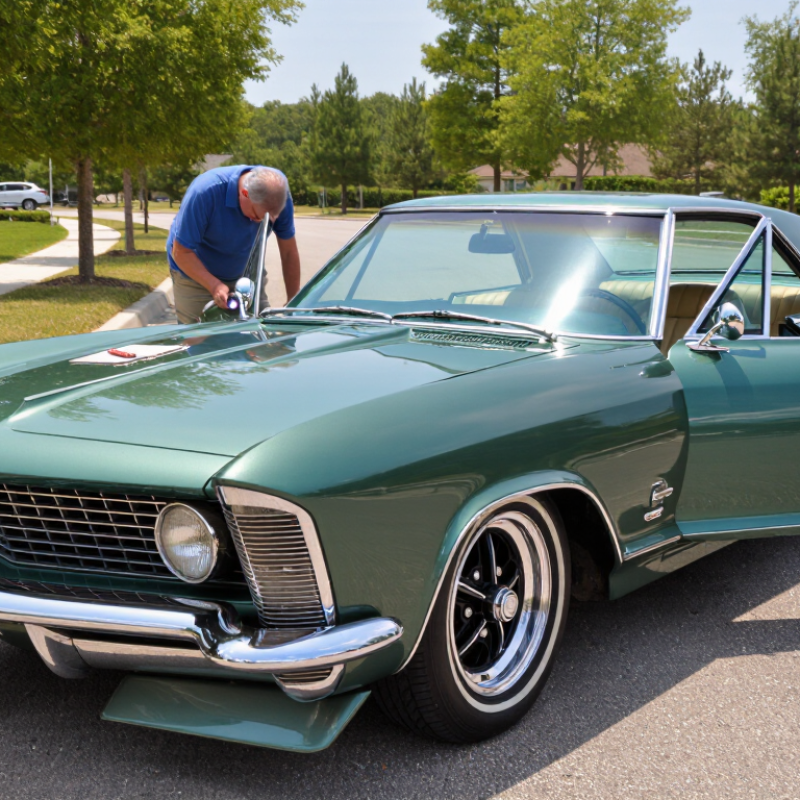
7 Tips for Buying a Vintage Tourist Car

Verify the 25-Year Antique-Car Threshold with AACA and NHTSA Rules

A vintage tourist car can look old and still miss the legal age threshold. NHTSA’s import exemption generally applies when a vehicle is at least 25 years old, measured from its manufacture date—not simply its model year. Check the manufacturer’s plate, chassis records, and import documents, then compare them with the car’s identification number. Dates matter. A seller’s estimate is not proof, and one unclear digit can change the calculation.

AACA uses a 25-year age benchmark for antique vehicles, but its classification is not the same as federal import eligibility. Nor does either standard automatically qualify a car for registration, insurance, or road use where you live. State rules can differ. Before paying, ask the relevant motor-vehicle office what documents it accepts, and confirm whether the title date matches the vehicle’s records. Keep copies. If dates conflict, pause and request clarification in writing. This part can feel tedious, especially when a car is sitting in sunlight with its luggage rack and faded tour map; still, a polished dashboard cannot settle an age dispute. Check current official guidance, because requirements and interpretations may change.


Compare Hagerty Values with Recent Auction Sales for Similar Touring Cars

A guide value is a starting point, not a promise of what a touring car will sell for. Compare it with recent auction results for the same model, year, body style, and condition. A restored four-seat tourer with documented work is not a fair match for a tired, partly modified example. Check the hammer price and the buyer’s premium separately; fees can make two apparently similar sales look quite different. That gap matters. HAGI’s 2024 Top Index tracks price movements across 50 collectible cars, but a broad index cannot price every touring configuration or condition grade. Use it as market context, not a substitute for close comparisons.

Read each sale record carefully. Note mileage, originality, restoration quality, sale date, and whether the car actually sold. Photos can reveal details a headline hides: uneven paint around a door, worn seat edges, or a replacement dashboard. Adjust your comparison for those differences, then compare the result with the guide estimate. I still find it easy to give a dramatic auction result too much weight. One exceptional sale may reflect unusual provenance or intense bidding, not a normal market price. Keep a short record of your chosen comparisons and why each one fits; it makes your estimate easier to review later.

7 Tips for Buying a Vintage Touring Car — Compare Valuation Guides with Recent Auction Sales for Similar Cars
Tip Data to Compare What to Check How to Use the Comparison
1. Match the car as closely as possible Year, model, body style, engine, transmission, and market region Confirm details from the vehicle identification, registration, or historical records. Do not treat different body styles or specifications as direct comparables. Give the greatest weight to completed sales of cars with the closest specification and location.
2. Compare guide values with completed sales Valuation-guide date and condition category; auction sale date and final recorded price Use completed transactions rather than asking prices. Record the guide’s valuation date because market values can change over time. Compare several recent, relevant sales with the guide figure; investigate large differences rather than assuming either figure is definitive.
3. Adjust for condition Body, chassis, paint, interior, mechanical condition, and completeness Look for corrosion, accident repairs, worn components, missing parts, and evidence of restoration. An inspection and a detailed condition report are more useful than appearance alone. Compare cars in similar condition. Treat a project car and a road-ready example as separate categories.
4. Check originality and restoration records Original components, replacement parts, restoration scope, invoices, and photographs Verify which components are original and whether restoration work is documented. A claimed restoration should be supported by records where possible. Use documented work to understand condition and maintenance history; do not assume restoration cost is fully reflected in resale value.
5. Verify identity and provenance Chassis or identification numbers, ownership history, registration, and supporting documents Check that identifying numbers are consistent across the car and its paperwork. Resolve gaps or discrepancies before purchase. Give less confidence to price comparisons when the vehicle’s identity, history, or specification cannot be verified.
6. Put auction prices on the same basis Currency, sale date, published price basis, buyer fees, taxes, and transport costs A reported sale price may not include every fee or expense. Auction terms differ, so check what the published result includes. Compare like with like: use the same currency and distinguish the recorded sale price from additional purchase costs.
7. Set a maximum offer after inspection Comparable sale range, inspection findings, immediate repairs, parts availability, and ownership costs Obtain an independent inspection and estimate urgent repairs before bidding or making an offer. Confirm that parts and specialist services are accessible. Base your limit on the car’s verified condition and total expected cost, not on a guide value or one exceptional auction result alone.

Match VINs and Check Recall Records in NHTSA’s Vehicle Database

A vintage tourist car may have a polished body and a convincing story, but its identity should be checked before you pay. Compare the VIN or serial number on the title with the number stamped on the vehicle. Look near the dashboard, door opening, and frame, since locations vary by age and construction. Older cars may not use today’s 17-character format. Don’t assume. Check every character in good light, and photograph each location. A faded stamp or a single mismatch deserves a careful explanation, not a quick promise from the seller.

Enter the VIN in NHTSA’s Vehicle Database to check for open safety recalls. NHTSA reported 932 recalls affecting about 30.8 million vehicles in 2022, showing why this step matters even on an older purchase. The search can identify unrepaired recalls tied to the entered VIN, but it may not show completed repairs or recalls older than 15 years. Small mismatch, big pause. Ask an authorized repair facility to confirm whether any listed work was completed, and keep the response with the sale records. If the database returns no result, that is not proof of a clean history: confirm the VIN format and consult a qualified mechanic familiar with older vehicles. The metal may be sound; the paperwork can still be wrong.

Assess Mechanical Condition Using AACA Judging Standards

AACA judging standards offer a useful inspection framework: check whether components appear correct for the car’s year, whether they work, and whether repairs show sound workmanship. They are not a substitute for a mechanic’s pre-purchase inspection. A polished engine bay can hide trouble. Ask to see the car started cold, then watch for smoke, uneven idle, rising temperature, and fresh fluid beneath the engine. Cold start first.

On a safe road, assess braking, steering play, clutch engagement, and gear changes. Note any pull under braking or vibration through the wheel. Check tire date codes, cracked hoses, wiring splices, and corrosion around brake lines. Compare visible parts with period references, but don’t mistake originality for good condition. AACA judging rewards authenticity and condition; your priority is safe, dependable operation.

Costs deserve attention, too. AAA’s 2023 Your Driving Costs report estimated $1,186 per year for maintenance, repairs, and tires on a new vehicle driven 15,000 miles. That figure is not a classic-car forecast, but it shows how routine upkeep adds up even on newer vehicles. Older cars may need specialist work and parts that take time to source. I would still want an independent inspection; a careful walk-around can miss a lot.

7 Tips for Buying a Vintage Tourist Car: Assess Mechanical Condition

A practical, AACA-inspired pre-purchase checklist. The bars show the number of checks in each area—not official AACA judging points.

Check the engine, cooling system, transmission, brakes, steering and suspension, tires and wheels, and electrical system. Inspect the car cold, look for leaks and wear, and arrange an independent inspection. These checklist counts are a guide, not an assessment of any specific car.

Estimate Restoration Costs Against Hagerty’s Condition-Based Values

When assessing a vintage tourist car, compare its asking price with condition-based values for similar vehicles. A well-kept example and a tired project car should not share the same benchmark. Check whether the guide describes running condition, presentable condition, or a fully restored vehicle. Those labels can hide important differences.

Look closely at the frame, floor pans, seams, and storage areas for rust or old repairs. Check that the engine starts cold, not only after the seller has warmed it. Get an independent inspection. A clean photo can miss a soft floor or uneven bodywork.

Build a restoration estimate from written quotes, not optimism. Price the major work separately: structural repairs, paint, interior materials, mechanical servicing, and hard-to-find trim. Ask shops what is included, how long parts may take, and what could change the quote. Then compare the purchase price plus repairs with the value for the car’s likely finished condition.

Leave room for surprises; hidden corrosion can turn a modest job into a major one. That buffer matters. I would rather overestimate a little than discover the budget was built around perfect luck.

Even careful estimates are imperfect, so treat guide values as reference points, not promises of resale.

Powder Coat Booths

For those larger-sized parts, or smaller quantity runs, we have 2 independent powder coat booths and ovens. The quality, durability and affordability of today’s powder coating finishes make this the process of choice for world-class companies.

Powder coating advantages over other forms of coating are many. Materials used in the Powder coating process can be metals and non-metals that come in a multitude of thicknesses, textures, colors, etc. Another of Powder coating’s biggest advantages over conventional coatings is its ability to create finishes in many different textures. Powder Coating Booths allow us the ability to apply these advantages to large products.

Wet Paint Line

Tri-State Fabricators runs a full-service conveyor line for painting. Wet painting can provide protection or decoration to many different part styles. From start to finish, every project is easier to undergo random and point-based inspection by our skilled painting team.

Advantages to our Wet Paint Line are these lines start with product prep and ends with a thorough inspection of a high quality finished product. Our ability to complete large and small projects with a superior finish and doing so in a timely and economical fashion. This passes along the savings in production to our customers. When powder coating ins not an option, our Wet Paint Line gets the job done right the first time.

Wet Paint Booths

When the parts get big and heavy we roll-out our custom paint racks and oversize booth. By utilizing our partnerships with all the major paint brands, we can match virtually any color with wet paint.

The advantages of having access to a Wet Paint Booth are many. Large projects of many different shapes can be loaded into the booth. The Wet Paint Booth offers an environment that is much more controlled than a typical parts painting operation.

Not only are they used because of their controlled environment, but they’re are also advantageous when it comes to applying paint to parts that are needed in industries that require specialty coatings such as medical, aerospace, etc.

Military CARC

Our military forces have some very high standards when it comes to the finish of their vehicles and equipment. From the first pre-treatment step to final coat, it takes a great deal of knowledge and experience to protect the men and women of our armed forces. They deserve only the best, and Tri-State Fabricators provides it.

All of our processes are closely monitored by our staff and management teams. Both of which are highly trained in the processes of metal fabrication and finishing. Tri-State Fabricators’ goal is to always fully satisfy each and every customer, including the military. We will always put a 110% into what we do.

Glass-Bead Blasting

Abrasive media blasting is an excellent way to remove old paint, rust, and increase the paint/powder adhesion. Glass beads produce a much smoother and brighter finish than angular abrasives; leaving the part clean yet without any dimensional change. Chemically inert and environmentally friendly, we can recycle our beads approximately 30 times; making them a more preferred method of metal cleaning or surface finishing.

Advantages to Glass Bead Blasting are many. Glass bead blast media is used when a project is needing rough surfaces need to become smooth for applications of coatings such as paint. It is typically used to clean paint and rust from a product surface without deforming the surface it is being used on. Overall, compared to many other blasting media, Glass Bead Blasting is a very economical choice and those savings are always passed on to our customers.

Part Washing

Tri-State Fabricators utilize a zinc phosphate wash to clean and etch the material to ensure the best paint adhesion possible. The unique design of our 3-stage wash system does the work like a 5-stage. From Cleaning and rinsing to conversion coating and post-treatment, Our Part Washing process is a complete service and works throughout the fabrication service and the finishing service.

Along with the previously mentioned benefits, Curing is a vital chemical reaction that leaves the product finish hard and relatively safe from mild abrasion and aggressive corrosion. This process can be done in more than one way; ambient air-dry or in curing ovens at temps that exceed 240°.

Burn-Off Oven

From fixing paint mistakes (someone else’s of course) to simply cleaning our paint line hooks, our burn-off oven is put to good use. After a quick burn-off, a little clean up, and a fresh coat of paint, your parts will look better than new.

Why does our Burn-Off Oven work so well? Because super heating the air around parts turns the materials into ashes. From paint and powder coatings to rubber and machining oils, high temps do the job without degrading the integrity of the part.

Masking

Masking is a vital part of producing high quality products. We have die-cut masking patterns to protect machined surfaces as well as a wide range of plugs and caps to protect threaded holes and bolts. We provide permanent and temporary masking.

Masking allows the selected sections of a product to be protected from a fabrication or finishing service. This can be with both chemicals when etching and tapes, paints when only finishing just a section of the product. Masking is great in aiding the customization process of a project.

Screen Printing

Screen printing is a photographic process that transfers artwork onto a porous nylon screen which allows colored ink to flow through the screen and be deposited on an aluminum or plastic component. We can generally have just about any design created onto a screen for your parts.

Some of the advantages of Screen Printing are, brand recognition for your business displaying on your products, assembly instructions, product warnings/hazards, etc. Tri-State Fabricators produces Screen Printing of the highest quality so you know it’s durable.

Metal Finishing

Metal Finishing is the art of treating the exterior portion of product, often metal but can also be made of other materials, so that the surface is clean and free of any debris. Then the process of applying coats or either paint of powder coat takes place. This coating process improves the quality of the product in both appearance and resistance to wear and corrosion.

Tri-State Fabricators, Inc., understands that a project typically isn’t complete until a high-quality finish has been added to your product. This is why our painting and powder coating teams continuously inspect the products throughout the Metal Finishing process.
