


Buying a Used Spectrum Analyzer in 2026 can be a sensible way to get capable test equipment without paying new-instrument prices. But a low price alone tells you very little. The right choice depends on the signals you need to measure, the instrument’s condition, and the support available if something goes wrong. A unit suited to checking cellular interference may not meet the needs of a microwave design bench. Define your required frequency range, resolution bandwidth, sensitivity, and analysis features before comparing listings. Small details matter.
Ask for the exact model, installed options, firmware version, service history, and calibration records. A recent calibration certificate is useful, but it does not guarantee that the analyzer still performs correctly today. Request a live demonstration using a known signal source, and inspect the display, input connector, buttons, cooling fan, and trace stability. Check whether the noise floor and displayed signal levels behave as expected across the settings you will use. It is easy to overvalue a clean front panel; appearance is not a performance test. Also confirm what accessories, software, warranty, and return terms are included. If you cannot test the unit yourself, budget for an independent inspection or verification by a qualified technician. Some uncertainty remains, especially with older equipment. A careful purchase is not risk-free, but a clear checklist can help you avoid paying for features you do not need—or inheriting problems you could have spotted.
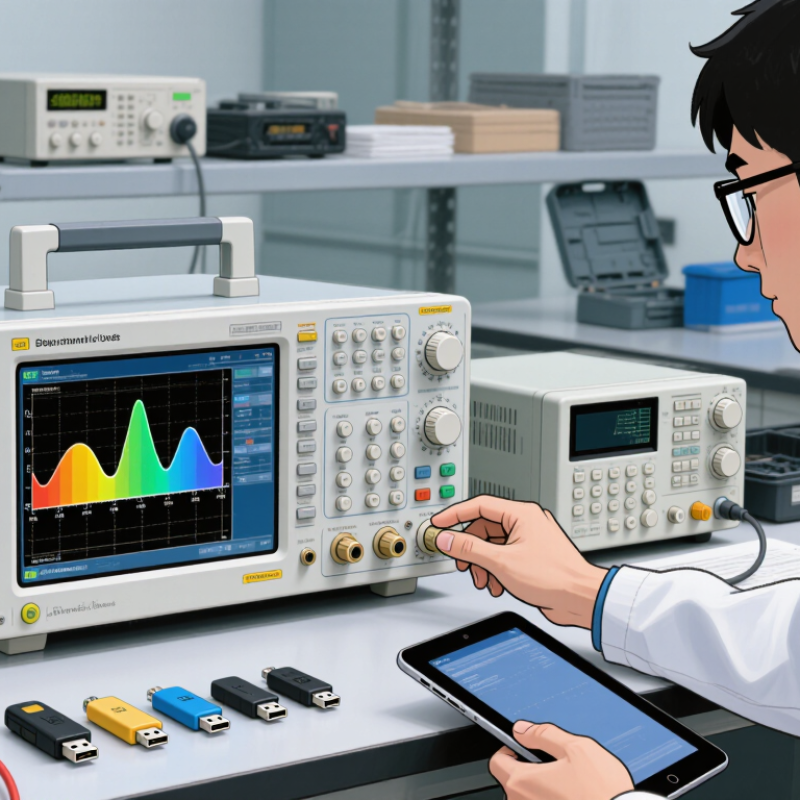
Before comparing used spectrum analyzers, write down the signals you actually need to measure. Note the highest frequency, expected signal level, and whether signals are continuous or brief. For example, checking a low-power wireless transmitter may require a lower displayed noise floor than inspecting a strong oscillator. Choose a frequency range with some headroom, rather than paying for range you will never use. Small details matter.
Set a minimum resolution bandwidth based on the spacing between signals you need to distinguish. If two tones sit close together, a wide bandwidth can merge them into one peak. Check phase-noise performance for measurements near strong carriers, and confirm that the input attenuation and maximum safe input level suit your sources. You may also need a tracking generator, preamplifier, or additional input channel. Don’t assume accessories are included; verify each item and test its operation.
A specification sheet is only part of the decision. Ask for the unit’s calibration date, service history, and results from a recent functional check. A dusty case is not proof of poor performance, but damaged connectors or an unstable display deserve attention. I would prioritize the specifications tied to real measurements, then leave room in the budget for verification. It is easy to overlook setup time. Make a short test plan before purchase, even if it feels overly cautious.
| Measurement Need | Useful Specification Target | Why It Matters | What to Check Before Buying |
|---|---|---|---|
| General RF troubleshooting | Frequency coverage from at least 9 kHz to 3 GHz; choose a higher upper limit if your work includes newer wireless bands or microwave signals. | Coverage must include the signals, harmonics, and spurious emissions you expect to inspect. | Confirm the full frequency range is included and operates correctly; check for frequency gaps or options that are not installed. |
| Cellular and wireless-device testing | Typically 6 GHz or higher for broad sub-6 GHz work; assess the exact bands and channel bandwidths used by your devices. | Some systems operate above 3 GHz, and wide channels may require suitable analysis bandwidth or dedicated analysis functions. | Verify supported analysis bandwidth, demodulation features, and measurement options against your test requirements. |
| Microwave measurements | Set the upper frequency limit to cover the highest signal and relevant harmonics; common instrument ranges extend to 18 GHz, 26.5 GHz, or higher. | Operating near the analyzer’s maximum frequency can affect sensitivity and may require suitable cables, adapters, and calibration. | Inspect the input connector, check for wear or damage, and confirm specified performance at the frequencies you need. |
| Resolving closely spaced signals | Resolution bandwidth (RBW) should reach 1 kHz or below for many general tasks; narrower RBW may be needed for closely spaced carriers or low-level spurs. | Narrower RBW can separate nearby signals and reduce displayed noise, but usually increases sweep time. | Test several RBW settings and confirm the analyzer completes a sweep without errors or abnormal traces. |
| Finding weak signals | Compare displayed average noise level (DANL) at the frequencies and RBW settings you will use. A lower DANL indicates better ability to see weak signals. | Noise floor varies with frequency, attenuation, preamplifier use, and RBW, so one headline value may not describe real performance. | Check noise-floor plots or perform a terminated-input measurement; verify any preamplifier option is present and functional. |
| Accurate signal-level measurements | Look for stated absolute amplitude accuracy appropriate to the work; around ±1 dB is a useful target for many general-purpose measurements. | Amplitude accuracy affects comparisons, compliance checks, and power estimates. | Review the calibration status and uncertainty information. If possible, compare readings at multiple levels with a calibrated source or power sensor. |
| Close-in noise and oscillator testing | Check phase-noise performance at the offset frequencies relevant to the device under test; do not rely on a single offset figure. | Phase noise can mask nearby low-level signals and limit oscillator or transmitter measurements. | Confirm the required phase-noise measurement function or option is installed, and review performance across relevant offsets. |
| Filter, amplifier, and cable testing | A tracking generator covering the required frequency range is useful; verify its output range and level-control capability. | A tracking generator enables swept-response measurements when used with suitable connections and calibration. | Confirm the generator is included, check its output across the intended range, and budget for any required adapters or test accessories. |
| EMC pre-compliance investigations | Choose frequency coverage for the applicable test range and check for quasi-peak, average, or other required detector functions. | A general spectrum analyzer may help locate emissions, but it may not provide all detectors, bandwidths, or procedures required for formal compliance testing. | Match the instrument’s detector functions, input protection, and measurement bandwidths to the relevant test method; confirm whether external preselection is needed. |
| Used-instrument condition and support | Prefer a unit with traceable calibration records, documented self-test results, and available service information. | Age, storage, heavy use, and missing options can affect performance and total ownership cost. | Check startup and self-test, display, keys, connectors, fan noise, included accessories, calibration date, return terms, and the cost of recalibration. |
Selection note: These targets are starting points, not universal requirements. Define the signals, frequency bands, signal levels, and measurement uncertainty you need before comparing used instruments.

Set a ceiling for the complete setup, not just the analyzer’s asking price. Include shipping, accessories, calibration, and any repair allowance. A low-priced unit can become expensive if its calibration record is missing or its input cable is damaged. Small details matter.
Grand View Research’s electronic test and measurement market report estimated the global market at about $31.5 billion in 2023. That figure describes the wider market, not used analyzer prices, but it signals continuing demand for measurement equipment. Compare a new unit’s warranty and support with a refurbished unit’s documented inspection and a used unit’s actual condition. Ask for a recent calibration certificate, frequency range, noise floor, and a photo of the display during startup. The paperwork matters.
For a fair comparison, list the same requirements for each option: frequency coverage, resolution bandwidth, tracking generator, and included probes or cables. A new analyzer may suit teams needing predictable support; refurbished equipment can offer a middle ground when testing and warranty terms are clear. Used equipment may fit a tight budget, but reserve funds for verification by a qualified calibration provider. I would not treat an old certificate as proof of present performance. That gap matters.
A used spectrum analyzer can look pristine and still carry an expensive history. Ask for its serial number, service records, repair notes, and most recent calibration certificate. Check that the certificate identifies the unit and lists measured performance, not just a calibration date. The United Nations’ Global E-waste Monitor 2024 reports that 62 million tonnes of electronic waste were generated worldwide in 2022; only 22.3% was documented as properly collected and recycled. That broader figure is a reminder to check whether the seller can explain the instrument’s serviceability and origin.
Inspect the analyzer under power. Confirm the displayed frequency range, amplitude accuracy, and self-test results against the manual. Look closely at the input connector for worn threads, then test the front-panel controls and save a trace to a USB drive. Ask what is included: power cable, calibration documentation, transport case, adapters, and any optional tracking generator. Missing accessories can mean extra cost—or compatibility problems. A clean case is reassuring, but it proves little.
Tips: Request a short video showing startup, self-test, and a stable signal on screen. Match every accessory to the instrument’s documented options. Compare the seller’s list with the delivered package before signing off. I would also reserve budget for independent verification; skipping that step can feel economical until the first questionable measurement.
A practical checklist for researching sellers, equipment history, included accessories, and instrument condition.
How to read this chart: Bars show the number of checks in each section of this buyer checklist—not market statistics.
Seller (4): verify seller identity, return terms, warranty, and written quote. Equipment history (5): check model and serial details, age, calibration records, repair history, and operating condition. Accessories (5): confirm the power cable, RF cables, adapters, calibration items, and any promised manuals or software. Functional checks (4): verify startup and self-test, frequency response, amplitude readings, and noise performance using suitable test equipment.
When buying a used spectrum analyzer in 2026, inspect the instrument before trusting its calibration sticker. Check the display for dead pixels, listen for uneven fan noise, and examine input connectors for wear or looseness. Scratches matter less than a bent connector. Ask to see the analyzer power up and complete its self-test, then allow it to warm up before checking readings. I have seen a clean case distract buyers from a tired input jack; it is an easy mistake.
Read the calibration certificate closely. It should identify the instrument, calibration date, measured functions, and uncertainty—not merely say “passed.” National Institute of Standards and Technology Technical Note 1297 describes expanded uncertainty using a coverage factor; k = 2 typically represents about 95% coverage when the stated assumptions apply. Compare the certificate’s uncertainty with your measurement needs, especially for amplitude and frequency. Check whether calibration covers the ranges and settings you actually use. A recent certificate can still be inadequate.
Request repair and service records, including replaced parts, fault descriptions, and post-repair verification results. Repeated input-stage repairs may signal more risk than one documented fan replacement. Ask whether the seller can demonstrate a known signal across several frequencies and levels. Watch for unstable traces, unexplained jumps, or slow settling. Records can be incomplete. Note that, and price the uncertainty rather than assuming the best.
Before paying, request a recent calibration certificate and check its date, measured ranges, uncertainty, and traceability. A calibration sticker alone proves little. NIST Technical Note 1297 explains that, for near-normal results, a coverage factor of 2 represents roughly 95% coverage. Compare the certificate’s uncertainty with the tolerances your work requires. If the certificate omits the frequency or amplitude range you need, ask for a targeted verification.
Test the instrument with a stable signal source and a known attenuator. Check frequency accuracy, amplitude readings, noise floor, and resolution bandwidth across several settings, not just one convenient screen. Save photos of the traces and record the settings. A clean display can still hide drift. I would not treat a seller’s demonstration as a complete acceptance test.
Put the terms in writing before the transaction. Specify included cables, adapters, software access, and calibration documents; list any known faults. Agree on a return period, who pays return shipping, and what happens if the analyzer fails the agreed checks. ILAC P14:09/2020 addresses measurement uncertainty in calibration, so ask how any quoted uncertainty was determined. Small details matter. I’ve seen accessory assumptions create more friction than the instrument itself. A short written checklist is unglamorous, but it can prevent an expensive misunderstanding.


For those larger-sized parts, or smaller quantity runs, we have 2 independent powder coat booths and ovens. The quality, durability and affordability of today’s powder coating finishes make this the process of choice for world-class companies.
Powder coating advantages over other forms of coating are many. Materials used in the Powder coating process can be metals and non-metals that come in a multitude of thicknesses, textures, colors, etc. Another of Powder coating’s biggest advantages over conventional coatings is its ability to create finishes in many different textures. Powder Coating Booths allow us the ability to apply these advantages to large products.
Tri-State Fabricators runs a full-service conveyor line for painting. Wet painting can provide protection or decoration to many different part styles. From start to finish, every project is easier to undergo random and point-based inspection by our skilled painting team.
Advantages to our Wet Paint Line are these lines start with product prep and ends with a thorough inspection of a high quality finished product. Our ability to complete large and small projects with a superior finish and doing so in a timely and economical fashion. This passes along the savings in production to our customers. When powder coating ins not an option, our Wet Paint Line gets the job done right the first time.
When the parts get big and heavy we roll-out our custom paint racks and oversize booth. By utilizing our partnerships with all the major paint brands, we can match virtually any color with wet paint.
The advantages of having access to a Wet Paint Booth are many. Large projects of many different shapes can be loaded into the booth. The Wet Paint Booth offers an environment that is much more controlled than a typical parts painting operation.
Not only are they used because of their controlled environment, but they’re are also advantageous when it comes to applying paint to parts that are needed in industries that require specialty coatings such as medical, aerospace, etc.
Our military forces have some very high standards when it comes to the finish of their vehicles and equipment. From the first pre-treatment step to final coat, it takes a great deal of knowledge and experience to protect the men and women of our armed forces. They deserve only the best, and Tri-State Fabricators provides it.
All of our processes are closely monitored by our staff and management teams. Both of which are highly trained in the processes of metal fabrication and finishing. Tri-State Fabricators’ goal is to always fully satisfy each and every customer, including the military. We will always put a 110% into what we do.
Abrasive media blasting is an excellent way to remove old paint, rust, and increase the paint/powder adhesion. Glass beads produce a much smoother and brighter finish than angular abrasives; leaving the part clean yet without any dimensional change. Chemically inert and environmentally friendly, we can recycle our beads approximately 30 times; making them a more preferred method of metal cleaning or surface finishing.
Advantages to Glass Bead Blasting are many. Glass bead blast media is used when a project is needing rough surfaces need to become smooth for applications of coatings such as paint. It is typically used to clean paint and rust from a product surface without deforming the surface it is being used on. Overall, compared to many other blasting media, Glass Bead Blasting is a very economical choice and those savings are always passed on to our customers.
Tri-State Fabricators utilize a zinc phosphate wash to clean and etch the material to ensure the best paint adhesion possible. The unique design of our 3-stage wash system does the work like a 5-stage. From Cleaning and rinsing to conversion coating and post-treatment, Our Part Washing process is a complete service and works throughout the fabrication service and the finishing service.
Along with the previously mentioned benefits, Curing is a vital chemical reaction that leaves the product finish hard and relatively safe from mild abrasion and aggressive corrosion. This process can be done in more than one way; ambient air-dry or in curing ovens at temps that exceed 240°.
From fixing paint mistakes (someone else’s of course) to simply cleaning our paint line hooks, our burn-off oven is put to good use. After a quick burn-off, a little clean up, and a fresh coat of paint, your parts will look better than new.
Why does our Burn-Off Oven work so well? Because super heating the air around parts turns the materials into ashes. From paint and powder coatings to rubber and machining oils, high temps do the job without degrading the integrity of the part.
Masking is a vital part of producing high quality products. We have die-cut masking patterns to protect machined surfaces as well as a wide range of plugs and caps to protect threaded holes and bolts. We provide permanent and temporary masking.
Masking allows the selected sections of a product to be protected from a fabrication or finishing service. This can be with both chemicals when etching and tapes, paints when only finishing just a section of the product. Masking is great in aiding the customization process of a project.
Screen printing is a photographic process that transfers artwork onto a porous nylon screen which allows colored ink to flow through the screen and be deposited on an aluminum or plastic component. We can generally have just about any design created onto a screen for your parts.
Some of the advantages of Screen Printing are, brand recognition for your business displaying on your products, assembly instructions, product warnings/hazards, etc. Tri-State Fabricators produces Screen Printing of the highest quality so you know it’s durable.
Metal Finishing is the art of treating the exterior portion of product, often metal but can also be made of other materials, so that the surface is clean and free of any debris. Then the process of applying coats or either paint of powder coat takes place. This coating process improves the quality of the product in both appearance and resistance to wear and corrosion.
Tri-State Fabricators, Inc., understands that a project typically isn’t complete until a high-quality finish has been added to your product. This is why our painting and powder coating teams continuously inspect the products throughout the Metal Finishing process.

