What Is a Bright Hardening Furnace and How Does It Work?
A Bright Hardening Furnace heats steel in a controlled atmosphere so the surface stays clean and bright during hardening. Unlike ordinary air heating, which can leave scale or alter the surface, this process limits oxidation while bringing the metal to a carefully selected temperature. The exact settings depend on the steel grade, part geometry, and required properties. Details matter.
Inside the furnace, sensors monitor temperature, while the atmosphere and heating rate are controlled to support consistent results. Once the steel reaches its specified hardening temperature, it is held long enough for heat to spread through the part. The hot component is then transferred to a quenching medium, such as oil or another process-approved coolant. This rapid cooling creates a harder structure, though it can also introduce stress or distortion. That trade-off deserves attention.
Some systems handle parts in batches; others move them continuously on a conveyor. Either way, loading, furnace uniformity, atmosphere quality, and quench conditions all affect the final outcome. A bright appearance is useful, but it does not prove that hardness or internal properties meet requirements. Testing is still needed. And parts vary. This guide explains what a Bright Hardening Furnace is, how its main stages work, and which practical factors influence reliable results. It also considers the limits of the process, because “bright” can sound like a guarantee when it is really a result that must be checked.
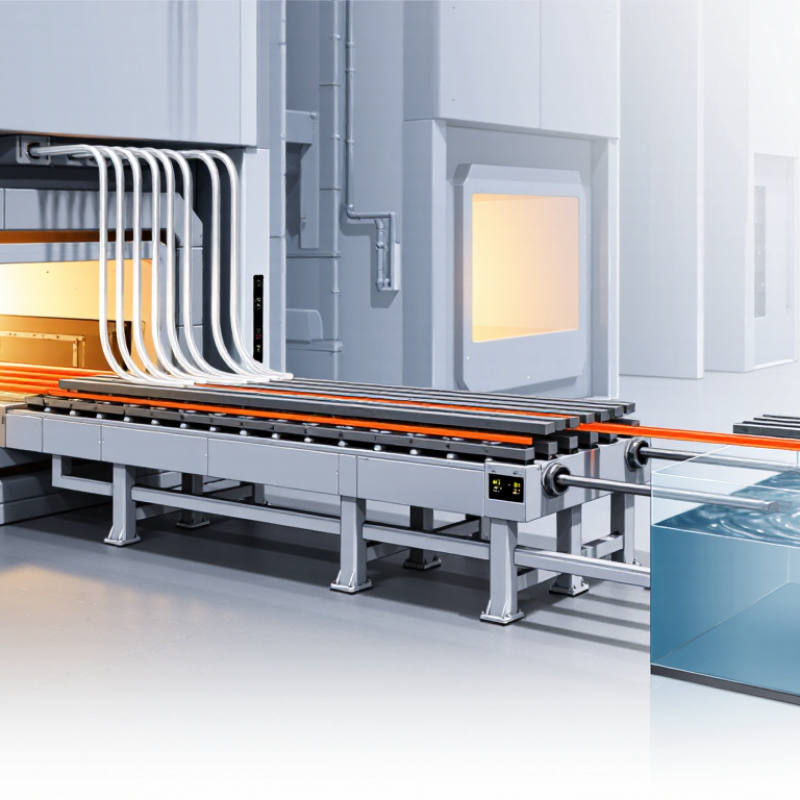
What Is a Bright Hardening Furnace?
A bright hardening furnace is an industrial heat-treatment system that hardens steel while helping preserve a clean surface. It warms parts to a controlled temperature inside a protective atmosphere, such as nitrogen-based gas or a carefully managed carbon-rich mixture. The atmosphere limits oxygen exposure, reducing scale and unwanted carbon loss at the surface. The result can be less post-treatment cleaning than with an open-air furnace.
The surface stays cleaner. But it is not always mirror-bright. Its appearance also depends on the part’s starting finish, alloy, and furnace conditions. A small leak or an incorrect gas balance can leave discoloration, so operators monitor temperature, atmosphere, and load placement.
For example, tightly packed gears may heat differently from widely spaced rings. That detail can matter.
After soaking, parts are quenched using a process suited to the steel and required properties. The quench may use oil, polymer solution, or gas; the choice affects cooling rate and distortion risk. Hardness checks and, when needed, metallurgical inspection help verify the result.
One practical caveat: “bright” describes the intended surface condition, not a guarantee of flawless appearance. Small process variations still deserve attention.
What Are Its Main Components and Their Functions?
A bright hardening furnace heats steel in a controlled atmosphere, limiting scale and discoloration during hardening. Its insulated chamber contains electric heating elements or gas-fired burners, plus thermocouples that measure temperature at defined locations. A control system adjusts heat and atmosphere flow. The sealed chamber, door seals, and gas inlet work together to maintain stable conditions; even a small leak can affect surface finish.
For continuous systems, rollers or a conveyor move parts through heating and soaking zones. A transfer mechanism then carries hot components to a quench tank or spray station, where rapid cooling develops hardness. Atmosphere sensors monitor conditions, while alarms flag temperature or flow deviations. SAE AMS2750G, a pyrometry standard for thermal processing, specifies ±3°C uniformity for Class 1 equipment. That figure is a tolerance benchmark, not a guarantee for every furnace or load. Part spacing and sensor placement still matter.
Tip: Check thermocouple calibration, door seals, and atmosphere readings before production. Keep parts evenly spaced so gas can circulate around them. Record the load temperature, not just the controller display. One detail is easy to miss: a bright surface does not prove uniform hardness. Verify representative parts with hardness tests, and review the setup when results vary.
How Does the Protective Atmosphere Prevent Oxidation?
In a bright hardening furnace, steel is heated while a controlled gas atmosphere surrounds the load. This atmosphere limits contact with oxygen, which can otherwise form scale on hot metal. The result is a brighter surface with less post-treatment cleaning. That barrier matters.
The gas works by lowering the oxygen potential around the parts. Nitrogen can dilute residual oxygen, while hydrogen in some mixtures reacts with oxygen to form water vapor. The furnace atmosphere must stay dry and correctly balanced; its dew point offers a useful check on moisture levels. Small leaks can upset that balance. So can damp parts or oil left on the surface.
Temperature, gas flow, and load arrangement all affect protection. Crowded parts may shield one another, leaving uneven gas circulation. A clean-looking part is not proof that every surface received the same treatment. Operators need to monitor atmosphere readings and inspect results, then adjust the process when evidence points to a problem. The chemistry sounds tidy. Real furnaces are less so.
What Happens During Each Stage of the Hardening Process?
A bright hardening cycle has four practical stages. Loading and preparation come first: parts are cleaned, spaced on fixtures, and checked for surface damage. The furnace then purges air and establishes a controlled atmosphere, limiting oxidation and carbon loss. During heating, the steel reaches its grade-specific austenitizing temperature. ASM International’s ASM Handbook, Volume 4A, notes that this temperature depends on steel composition; many plain-carbon steels are treated in roughly the 780–900°C range. The part must heat through its full section, not merely reach the setpoint at the furnace sensor.
Next comes the soak, which allows the structure to become more uniform. Too little time can leave a soft core; too much can encourage grain growth. The hot load then enters a rapid quench, often using gas or oil, to form a hard structure. Tempering follows: reheating below the hardening temperature reduces brittleness and balances hardness with toughness. The exact recipe depends on alloy, thickness, and the required properties. A missed detail matters.
Tips: Record load spacing, temperature, soak time, and quench conditions for each batch. Check hardness at more than one location. Bright surfaces can still hide uneven results, and that is easy to overlook.
What Is a Bright Hardening Furnace and How Does It Work?
Typical example temperatures for medium-carbon steel during hardening and tempering. Actual settings depend on the steel grade and its heat-treatment specification.
How the stages work: Steel is heated in a controlled protective atmosphere to limit oxidation and scaling, preheated, then brought to its austenitizing temperature. It is rapidly quenched to harden the steel, then tempered at a lower temperature to reduce brittleness and improve toughness.
Which Materials and Industries Use Bright Hardening Furnaces?
Bright hardening furnaces are used for steel parts that need a hardened surface without heavy scale or discoloration. The process heats components in a controlled atmosphere, then cools them quickly by quenching. The exact temperature and atmosphere depend on the alloy and required hardness. Small parts matter. Thin edges and deep holes may heat or cool differently, so sample testing helps confirm consistent results.
Common materials include carbon steels, alloy steels, and selected stainless grades designed for heat treatment. Gears, shafts, fasteners, and bearing components are frequent applications in automotive and precision machinery production. Tooling manufacturers also use bright hardening for parts that need wear resistance and a clean finish. Aerospace suppliers may process certain steel components, but specifications and inspection requirements are especially strict. Not every alloy qualifies. A bright surface does not guarantee the right hardness or dimensional stability; quench distortion can still occur. Engineers typically check hardness, part geometry, and surface condition before approving a production cycle.





