What is Biogas Purification and How Does It Work?
Biogas Purification is an essential process in transforming raw biogas into a clean and usable energy source. Biogas, primarily composed of methane and carbon dioxide, often contains impurities such as hydrogen sulfide and moisture. According to the International Energy Agency, the demand for clean energy technologies is projected to increase. With a rising global focus on sustainability, biogas purification plays a crucial role in addressing energy needs while reducing greenhouse gas emissions.
Efficient biogas purification can increase methane concentration from 50-60% to over 95%. This enhancement allows for better combustion and energy output. However, challenges remain in the purification process. Certain methods, like water scrubbing and membrane separation, come with high operational costs. Industry reports indicate that optimizing these methods is vital for broader adoption in renewable energy systems.
As the biogas sector evolves, continuous innovation in purification techniques is required. Improved methods can enhance energy recovery while minimizing environmental impacts. By investing in better technology and processes, stakeholders can maximize the benefits of this renewable energy source. The quest for efficient biogas purification is ongoing, highlighting an area ripe for further exploration and advancement.
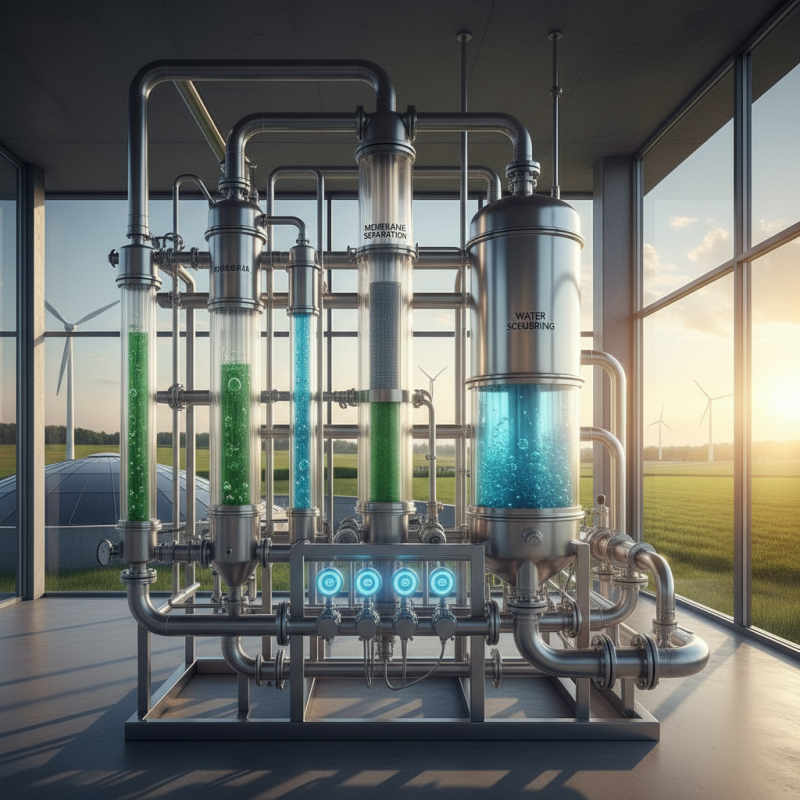
What is Biogas Purification?
Biogas purification is a vital process in converting raw biogas into a usable fuel. Raw biogas typically consists of about 50-70% methane, along with carbon dioxide and trace amounts of other gases. The purification process aims to increase methane concentration, making it suitable for energy production. According to industry studies, enhancing the methane content to over over 90% significantly improves its energy yield.
In addition to energy production, biogas purification helps reduce greenhouse gas emissions. A cleaner biogas output means lower emissions when it is burned for energy. Many plants now seek to achieve this through various purification methods, such as water scrubbing and membrane technology.
Water scrubbing involves passing biogas through water to absorb carbon dioxide and other impurities. Reports indicate that effective scrubbing can remove up to 99% of carbon dioxide.
However, the Biogas Purification Process does not come without challenges. The cost of implementing advanced purification technologies can behigh. Additionally, there may be issues related to the maintenance of equipment and the skill level required for operation. Current data suggests that many small-scale biogas plants struggle to implement these systems, limiting their operational efficiency. A reflection on these challenges is essential as the industry shifts toward sustainability and efficiency.
Importance of Biogas Purification in Renewable Energy
Biogas purification plays a crucial role in enhancing the viability of renewable energy. By removing impurities, such as carbon dioxide and hydrogen sulfide, biogas becomes more efficient for use. According to the International Renewable Energy Agency (IRENA), up to 70% of biogas is composed of methane, the primary component that fuels energy production. Effective purification processes can increase methane content significantly, making biogas a more valuable energy source.
The importance of biogas purification extends beyond energy efficiency. A report from the European Biogas Association highlights that upgraded biogas can contribute to reducing greenhouse gas emissions by over 80% compared to fossil fuels. This demonstrates biogas’s potential as a cleaner alternative in the energy sector. However, the costs associated with biogas purification technologies can be a barrier for many projects. Though advancements are being made, the industry still faces challenges in achieving cost-effective solutions while maintaining high purification standards.
Furthermore, the impact of biogas purification on local economies cannot be overlooked. Communities can benefit from job creation in biogas facilities. Studies show that every megawatt of biogas generated can create approximately 4 to 6 jobs. Still, a gap remains in community awareness and investment. To fulfill its potential, biogas purification must align with environmental goals and community interests, highlighting the urgency for continued research and development in this field.
Common Contaminants Found in Biogas
Biogas is primarily composed of methane and carbon dioxide, but it often contains contaminants that can interfere with its use. Common contaminants in biogas include hydrogen sulfide (H2S), water vapor, and siloxanes. H2S poses significant risks due to its toxicity and corrosive properties, making removal essential for safe biogas applications. Studies estimate that H2S can be present in biogas at concentrations ranging from 100 to 3,000 ppm, which underscores the need for effective purification methods.
Water vapor can also complicate biogas usage. If not removed, it can lead to condensation in storage and pipelines, causing corrosion and operational inefficiencies. Siloxanes, originating from various organic materials, can damage engines and turbines when combusted. Reports suggest that siloxane concentrations in biogas plants can vary widely, further emphasizing the importance of monitoring and purification strategies.
Tip: Consider using dual or multi-stage purification systems for effective contaminant removal. These can improve biogas quality significantly. Monitoring equipment for H2S and water vapor is crucial to maintaining efficiency. Addressing these impurities can enhance the reliability of biogas systems.
Common Contaminants Found in Biogas
Techniques and Technologies for Biogas Purification
Biogas purification is crucial for enhancing the quality of biogas. Several techniques and technologies play significant roles in this process. One common method is chemical absorption. Here, specific chemicals absorb impurities from biogas, making it cleaner. Another effective technique is membrane separation. This involves using membranes that let only certain gases pass through, effectively separating methane from carbon dioxide.
Tips: Regular maintenance of these systems ensures efficiency. Keeping components clean can prevent blockages. Monitoring gas quality is also essential. This helps identify any issues early.
Another promising technology is pressure swing adsorption (PSA). In PSA, adsorbents capture contaminants at high pressure. When pressure drops, the impurities release, resulting in purified methane. This method is quite efficient but may require significant energy input.
Tips: Always consider energy consumption when choosing a technology. Sometimes, the most efficient technology may not be the most energy-effective in practice. Experimenting with different setups can reveal valuable insights. Explore various combinations of techniques for the best results.
Applications and Benefits of Purified Biogas
Purified biogas has various applications that demonstrate its potential. One significant use is in the energy sector. After purification, biogas can replace natural gas in power plants. This transition can lower greenhouse gas emissions. With the correct treatment, biogas becomes a renewable energy source. It can also be used to generate heat for residential or industrial use.
Another application is in transportation. Purified biogas can be converted into biofuel for vehicles. This biofuel has a lower carbon footprint. It helps in reducing air pollution compared to conventional fuels. Additionally, the use of purified biogas supports local economies. It creates jobs in the renewable energy sector.
Moreover, there are environmental benefits. By utilizing waste to generate energy, we reduce landfill use. This mitigates methane emissions from decomposing organic materials. However, the biogas purification process is not without challenges. The technology can be expensive and requires routine maintenance. Lessons learned from early implementations reveal the importance of ongoing innovation to enhance efficiency.
What is Biogas Purification and How Does It Work? - Applications and Benefits of Purified Biogas
| Purification Method | Efficiency (%) | Common Applications | Benefits |
| Water Washing | 90 | Industrial Heating | Reduces H2S and CO2 content |
| Chemical Scrubbing | 95 | Power Generation | High removal efficiency of impurities |
| Pressure Swing Adsorption (PSA) | 98 | Vehicle Fuel | Produces high purity biogas |
| Membrane Separation | 90 | Biomethane Injection | Compact and energy-efficient |





