Top Volkswagen Fuel Injectors for Global Buyers
Choosing the right Volkswagen Fuel Injectors requires more than comparing prices online. Engine code, fuel system design, model year, and regional specifications all matter. A part that fits a Golf may not suit a Tiguan, Passat, or Transporter. Small differences can cause rough idling, hard starting, increased fuel use, or dashboard warnings.
This guide examines practical choices for global buyers. It considers injector compatibility, spray pattern, flow rate, connector design, sealing materials, and supplier documentation. Experienced technicians usually verify the original part number before ordering. They also inspect the old injector for deposits, damaged O-rings, or uneven delivery. Clear product photos help, but they are not enough. Testing records and traceable specifications offer stronger evidence.
Quality is not always obvious.
Reliable suppliers should explain testing methods, warranty terms, packaging, and return procedures. Buyers should also confirm shipping conditions, import requirements, and professional installation options in their region. Some aftermarket injectors perform well, while others may create problems after only a few weeks. That uncomfortable possibility deserves attention. Even an apparently correct injector can fail when calibration, fuel pressure, or engine software is overlooked.
The sections ahead compare leading Volkswagen Fuel Injectors for different engines and buying situations. They focus on fitment accuracy, durability, value, and supplier credibility. No single product suits every vehicle. Careful verification remains the safest investment.
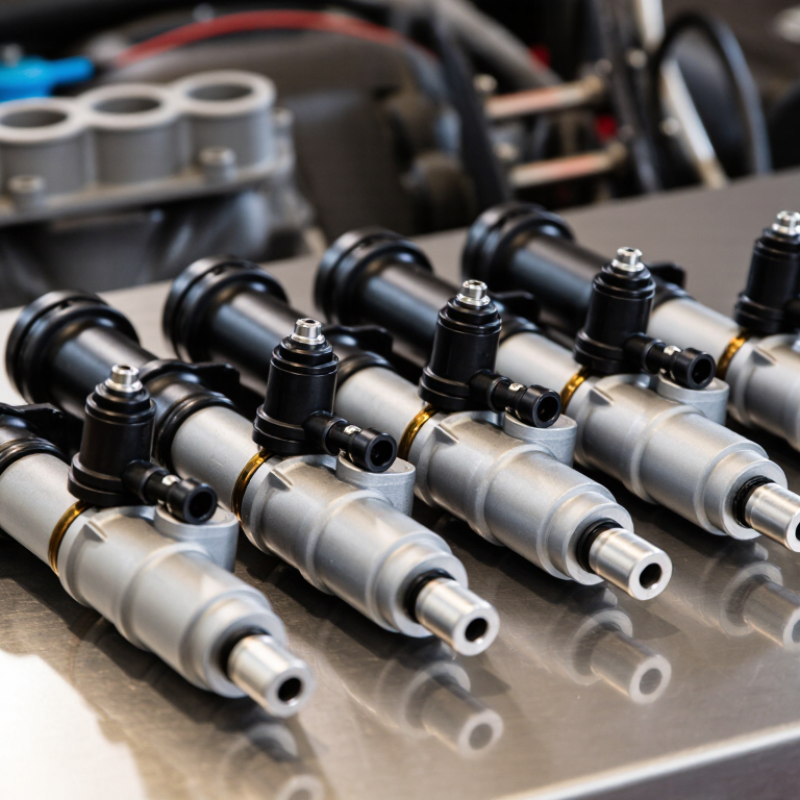
Volkswagen Fuel Injector Basics and Operating Principles
A fuel injector meters pressurized fuel into an engine’s intake port or combustion chamber. The engine control unit determines injection timing and duration. It reads signals from the crankshaft, oxygen, temperature, and airflow sensors.
Inside a gasoline injector, an electromagnetic coil lifts a small valve. Fuel then passes through a calibrated nozzle as a fine spray. The spray pattern must match the intake design. A damaged pattern can create rough idling, hesitation, or higher fuel consumption. During a cold start, the injector usually stays open longer. After warming, pulse width becomes shorter and more precise.
In workshop inspections, I check electrical resistance before replacing parts. I also inspect the connector, filter basket, seals, and nozzle tip. A clean-looking injector may still leak after shutdown. That mistake is easy to miss. Rail pressure testing and an approved flow test provide stronger evidence. Injector codes, engine type, voltage, and fuel system design must match the vehicle.
Global buyers should compare flow rate, connector shape, spray angle, and seal material. Packaging matters too, especially during long-distance transport. I once trusted an identical-looking connector and overlooked its calibration. The engine ran, but fuel correction values became unstable. It was a useful reminder: physical fit does not prove correct operation. Poor fuel quality can accelerate deposits, so maintenance history deserves attention.
Top Volkswagen Fuel Injectors for Global Buyers - Fuel Injector Basics and Operating Principles
Reference chart: Approximate fuel volume delivered by a 240 cc/min port fuel injector at 3 bar fuel pressure. Values are calculated from injector flow rate and commanded pulse width, excluding injector opening and closing delay.
Electronic fuel injection works by opening the injector valve for a precisely controlled pulse width. A longer pulse allows more fuel to pass through the nozzle, while the engine control unit adjusts this duration according to engine speed, load, air mass, temperature, and oxygen-sensor feedback.
How to Match Injectors with Volkswagen Engine Models
Matching a fuel injector to an engine model requires more than comparing displacement. In workshop checks, I begin with the engine code, production year, fuel system type, and original injector number. Two 1.8-liter engines may use different flow rates, spray patterns, or electrical resistance. These differences can cause hard starting, unstable idle, or lean operation. Measure fuel pressure at the rail before selecting a replacement. A 12-ohm injector is not automatically suitable for every control unit.
For global buyers, confirm the connector shape, body length, sealing rings, and nozzle position. The injector must sit squarely in the rail and intake port without forcing the clip. Compare verified flow data at the engine’s operating pressure, not an unspecified test condition. I also check ECU calibration and cylinder balance after installation. A part that fits physically may still deliver poorly. I learned this the hard way: catalog listings can contain small errors across model years.
Tips: Record the old injector’s markings and photograph the connector. Ask for a test report showing flow deviation and leak testing. Confirm whether seals are included. Replace damaged seals instead of reusing flattened ones. After installation, scan for fault codes and check fuel trims when the engine is fully warm. If data conflicts, verify the engine code again. Guessing saves minutes. It can cost much more later.
Key Factors for Comparing Injector Types and Quality
Choosing the right fuel injector requires more than matching a part number. Compare injector type, flow rate, electrical resistance, spray pattern, and connector design. A multi-hole injector may provide finer fuel distribution, while an older single-stream design can behave differently inside the intake port.
In workshop checks, I inspect the spray pattern before trusting the injector. It should appear even, without dripping or visible side streams. Flow testing also matters. Injectors with matching output help maintain balanced combustion across cylinders. Check the seal condition, coil resistance, and response time. Small differences can create rough idling, hard starting, or increased fuel use. I have seen clean-looking injectors fail under pressure, so appearance alone proves little.
Tips: Request test data, not vague quality claims. Confirm compatibility with the engine code, fuel pressure, connector, and control system. Ask whether each unit was tested individually. Also check the material of the nozzle and seals, especially for long-term heat exposure. Cheaper parts can work, but inconsistent calibration may cost more later. My own comparison process is not perfect; I sometimes focus too heavily on flow figures and overlook installation space. That mistake is worth remembering when comparing suppliers.
Top Volkswagen Fuel Injectors for Global Buyers - Key Factors for Comparing Injector Types and Quality
| Injector Type | Typical Application | Typical Fuel Pressure | Main Advantages | Main Limitations | Key Quality Checks | Buyer Suitability |
| Gasoline Port Fuel Injector | Gasoline engines that inject fuel into the intake port before the intake valve | Approximately 3–4 bar in many passenger-vehicle systems | Simple design, broad service availability, comparatively low operating pressure, and generally lower replacement cost | Usually lower fuel-system efficiency and emissions performance than newer direct-injection systems | Correct flow rate, spray pattern, coil resistance, leak-down performance, connector type, and seal dimensions | Suitable for compatible older and naturally aspirated gasoline applications |
| Gasoline Direct Injector | Gasoline engines that inject fuel directly into the combustion chamber | Commonly about 50–200 bar; some newer systems operate up to approximately 350 bar | Precise fuel metering, improved charge cooling, and strong compatibility with turbocharged engine designs | Higher pressure, stricter calibration requirements, and greater sensitivity to deposits and installation errors | Part number or engineering-number match, pressure rating, spray targeting, response time, leakage control, and calibration compatibility | Best for compatible turbocharged or direct-injection gasoline applications when exact specifications are verified |
| Diesel Common-Rail Solenoid Injector | Diesel engines using electronically controlled common-rail fuel delivery | Often approximately 1,350–2,500 bar, depending on system generation | Strong durability, established repair infrastructure, and precise multi-event injection control | Very high pressure requires strict cleanliness, correct coding, and specialized testing equipment | High-pressure leak test, return-flow measurement, electrical response, nozzle condition, correction-code requirements, and contamination control | Suitable for compatible diesel passenger vehicles and light commercial vehicles |
| Diesel Common-Rail Piezo Injector | Selected high-speed diesel systems requiring very rapid injection control | Often used in systems operating from approximately 1,600–2,500 bar | Fast actuator response and precise control of multiple injection events | More demanding electronic testing, higher replacement cost, and limited interchangeability | Exact electrical specification, actuator response, nozzle condition, high-pressure sealing, coding data, and test-bench verification | Recommended only when the original system specifically requires a piezo actuator |
Global Buyer Comparison Checklist
| Comparison Dimension | What to Verify | Why It Matters | Preferred Quality Indicator |
| Vehicle and Engine Compatibility | Engine code, model year, fuel type, emission version, and original injector specification | Similar-looking injectors may have different flow rates, connectors, lengths, or spray angles | Verified cross-reference supported by technical documentation |
| Flow and Calibration | Flow volume, flow balance, opening response, and operating-pressure test results | Uneven delivery can cause misfire, poor fuel economy, smoke, or increased emissions | Individual test data supplied for each injector or production batch |
| Materials and Sealing | Nozzle material, body finish, O-rings, combustion seals, and corrosion resistance | Correct sealing prevents fuel leakage, air ingress, combustion-gas leakage, and installation damage | New, correctly sized seals and documented material or durability specifications |
| Electrical Performance | Resistance, inductance, connector configuration, actuator type, and response behavior | Electrical mismatch can damage the control circuit or prevent correct injection timing | Measured electrical test results within the specified tolerance |
| Cleanliness and Packaging | Sealed packaging, protective caps, contamination control, and storage conditions | Small particles can damage precision nozzles and high-pressure fuel-system components | Clean-room or controlled-assembly practices with sealed protective packaging |
| Installation and Coding | Required calibration code, programming procedure, torque specification, and seal replacement | Some electronically controlled systems require injector coding after replacement | Clear installation instructions and confirmed diagnostic-tool compatibility |
| Warranty and Traceability | Batch identification, manufacturing date, warranty period, and claims procedure | Traceability supports quality control and simplifies international after-sales service | Documented batch records, test certificates, and clearly defined warranty terms |
Note: Fuel pressure ranges and calibration requirements vary by engine generation and fuel-system design. Always confirm compatibility using the exact engine code, injector specification, and service documentation before purchase.





