7 Best Valve Water Meters for Global Buyers
A Valve Water Meter can look modest on a pipe: a sealed body, a readable dial, and a valve that controls flow. Yet a poor match can distort consumption records, complicate maintenance, and weaken confidence in billing. Buyers need to compare more than price. Accuracy class, pressure range, connection size, materials, display type, and service access all matter. So does the operating environment. A meter exposed to grit, pressure changes, or cramped installation space may perform differently from one tested on a clean bench.
The World Bank’s 2006 report, The Challenge of Reducing Non-Revenue Water in Developing Countries, estimated that about 45 million cubic meters of water were lost daily in developing countries, with an annual value near US$3 billion. These are historical estimates, not current global totals, but they show why dependable measurement matters. Water-loss specialist Roland Liemberger’s published work focuses on measurement as part of effective loss control. Rather than assign him an unverified direct quotation, this introduction reflects that principle: useful decisions start with reliable data. In practice, the right meter still depends on site conditions. No single model suits every network. This guide compares seven options for global buyers, highlighting specifications, likely applications, and points worth checking before purchase. A small detail can matter. A readable register may save a technician time during a routine inspection.
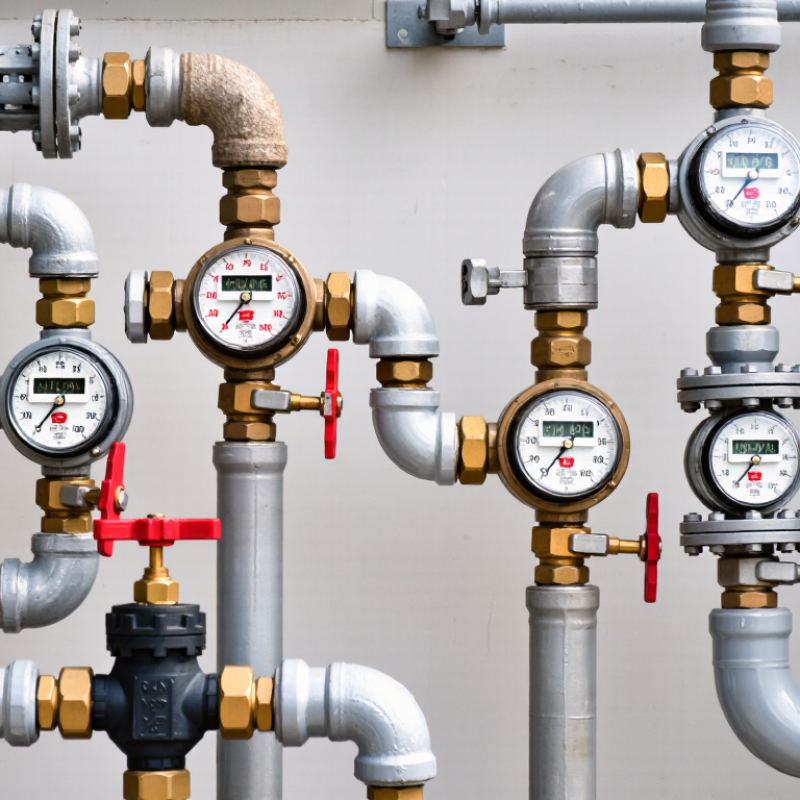
Understanding Valve Water Meters and Their Main Functions
Understanding Valve Water Meters and Their Main Functions
A valve water meter measures the volume of water moving through a pipe. Some models also include a shutoff valve, letting users stop flow without installing a separate control point. The meter records consumption; the valve controls it. These are related but distinct functions. In a small utility room, the difference matters when a leak needs quick isolation.
Meter designs vary. Mechanical models use moving parts, while electronic versions may transmit readings remotely. Accuracy depends on factors such as flow rate, pipe size, water quality, and installation. A meter chosen for a narrow flow range may give less dependable readings when demand changes sharply. Check the specified operating range and connection details before purchase. Real installations can be messier than product diagrams suggest.
Tips: Confirm whether the valve is manual or automatic. Leave room to read the display and service the unit. Flush debris from the pipe before installation, and follow the maker’s instructions. If readings seem inconsistent, compare them with observed usage and inspect for leaks; the meter alone may not explain the cause.
Key Factors for Selecting a Meter in Global Markets
Selecting a valve water meter for global markets begins with the water and the installation site. Check the expected flow range, operating pressure, temperature, and water quality. Sand or mineral deposits can affect moving parts, so confirm the meter’s design suits the actual supply. Small details matter. Pipe diameter alone does not determine the right meter size; compare typical and peak flow rates to avoid poor readings at low demand.
Check connection dimensions, installation orientation, and materials for contact with drinking water. Requirements and accepted test standards differ between markets, so verify current local specifications before ordering. Confirm the display units, data outputs, and communication protocols can connect with the intended monitoring system. A meter that records accurately but cannot share readings may create extra work. On paper, the highest accuracy looks decisive; in service, incorrect sizing can matter more.
The valve function deserves equal attention. Ask how it operates during power loss, whether manual control is available, and what pressure loss to expect. Review enclosure protection for humid or dusty locations, along with access for inspection and replacement. Installation conditions are easy to underestimate. A neat product sheet cannot fully describe a cramped meter pit, and that gap deserves a site check before selection.
Seven Top Valve Water Meters for Global Buyers
Seven Top Valve Water Meters for Global Buyers
Choosing a valve water meter starts with the job it must do. A compact single-jet meter can suit a small apartment line, while a multi-jet design may handle steadier household demand. For remote sites, an ultrasonic meter avoids moving measuring parts, but installation quality still matters. Check the valve, too.
A practical shortlist includes threaded meters for tight spaces, flanged bulk meters for larger pipes, and meters with integrated shutoff valves for controlled service connections. Prepayment models can help manage shared supply, where supported by local infrastructure. Electromagnetic meters suit some larger systems, but require compatible water conditions and power. Smart-enabled meters can send readings remotely; signal coverage varies by site.
Compare seven factors: pipe size, flow range, pressure loss, valve access, reading method, power needs, and service availability. Ask for accuracy and operating-pressure data, then check whether fittings match the existing pipework. A specification sheet can look reassuring and still miss a crucial detail, such as a valve handle blocked by a wall. Leave room for maintenance. The best choice is the one that measures reliably, closes when needed, and can be serviced with parts available in the buyer’s region.
Comparing Accuracy, Connectivity, Materials, and Compliance
When comparing seven valve water meters, test accuracy across the full operating range, especially at low flow. A meter that performs well at peak demand may miss a slow overnight leak. The World Bank’s 2006 report, The Challenge of Reducing Non-Revenue Water, estimated that utilities lost about 48 billion cubic metres of water annually. A widely cited estimate. That makes dependable measurement more than a laboratory detail. Check calibration records and confirm the stated accuracy applies to the installation conditions.
Connectivity affects how quickly teams can spot unusual use. Wired, radio, and cellular options differ in range, power needs, and data access. Ask how often readings transmit and what happens when the network drops. Materials matter, too. Compare wetted-part materials against water chemistry, pressure, and temperature; request documentation for potable-water suitability. A polished housing tells you little about internal corrosion resistance.
For compliance, review the requirements in the destination market. ISO 4064 and OIML R 49 provide metrological requirements for water meters, but buyers should verify local approvals and testing rules. Do not treat a certificate as a substitute for checking the exact meter configuration. Specification sheets can look reassuring. Installation details still matter, and I would not assume that every connectivity feature improves field reliability.
Matching Meter Features to Applications and Regional Needs
A valve water meter should match the job, not just the pipe size. For apartment branches, compact bodies and clear local readings can simplify checks in crowded cabinets. Fit matters. In irrigation, look for stable measurement across changing flow rates and a valve that can handle frequent cycling. For remote sites, battery life and dependable data transmission may matter more than a large display. Check the connection standard, pressure range, and installation orientation before ordering; small mismatches can create avoidable field work.
Regional conditions change the shortlist. Hard water and sediment can affect moving parts, so ask about filtration needs and service intervals. Cold installations need suitable temperature limits and protection from freezing. In areas with weak network coverage, meters with local data storage can reduce gaps in records. Confirm that measurement units, communication options, and pipe connections fit local infrastructure. Read the site. A product described as “universal” may still need adapters or extra commissioning.
Compare valve response, metering accuracy, and maintenance access together. A fast shutoff is useful for leak control, but it should not be chosen without checking how the system behaves during closure. For shared buildings, readable serial data can help technicians trace units without opening every cabinet. For small properties, simpler manual access may be more practical. There is no perfect pick. Buyers sometimes overvalue remote features and overlook replacement-part access; that trade-off deserves a second look.





