


Uwb Beacons made in China are moving from laboratory demonstrations into warehouses, hospitals, factories, and visitor-management systems. Their value is practical: a worker’s badge can trigger a precise location update near a loading gate, often within a few dozen centimeters. Yet precision depends on installation, calibration, antenna design, and software integration.
Industry data supports this growing attention. MarketsandMarkets has projected strong expansion for the global ultra-wideband market, estimating growth from about USD 1.1 billion in 2023 to USD 3.1 billion by 2028. Its forecast indicates a compound annual growth rate above 20%. Grand View Research also identifies real-time location systems as a major UWB application area. These figures differ by methodology, so they should guide research, not replace testing. The FiRa Consortium further emphasizes interoperability, security, and standardized UWB ranging across compatible devices.
This article examines Chinese-made Uwb Beacons through an engineering and purchasing lens. It considers ranging accuracy, battery life, enclosure strength, firmware support, API access, certification documentation, and after-sales service. A beacon that performs well on a quiet test bench may struggle beside metal racks or concrete walls. That detail matters. Product pages can look remarkably similar, while field results differ sharply.
The evaluation also distinguishes manufacturers, contract producers, and trading suppliers. This distinction is sometimes overlooked. We will compare suitable options for asset tracking, indoor navigation, personnel safety, and industrial positioning. No single model fits every site. Readers should verify performance with a pilot deployment, recorded measurements, and local compliance checks before committing to a larger order.
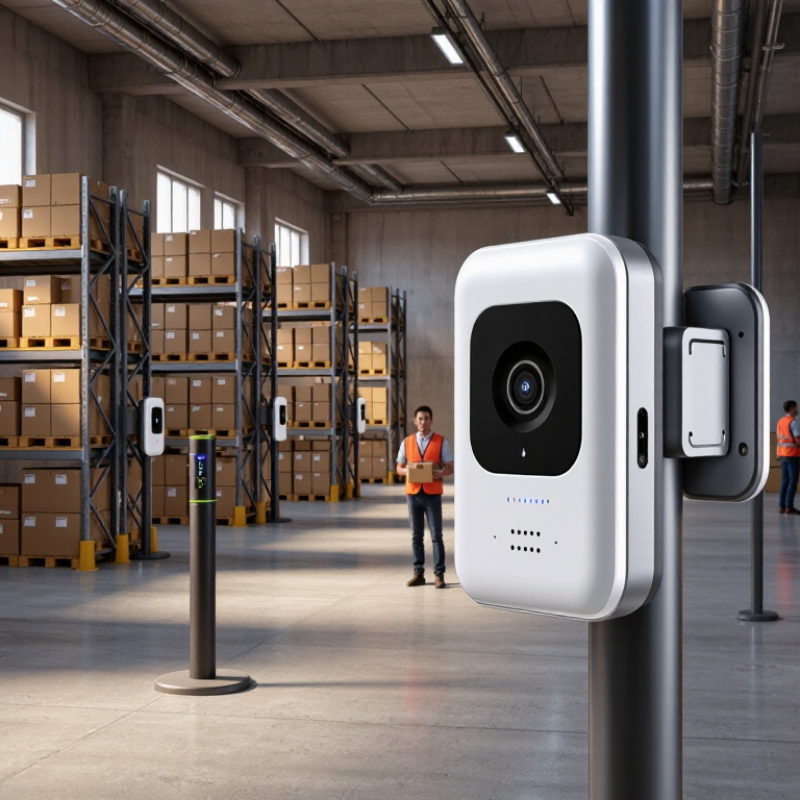
Ultra-wideband (UWB) beacons are compact radio devices that transmit precisely timed pulses. A compatible receiver measures signal travel time and estimates distance, often within a few centimeters under suitable conditions.
They do more than broadcast an identity. The beacon and receiver exchange synchronized packets through IEEE 802.15.4z-based ranging methods. Several beacons can support position calculation through time-difference or multilateration techniques. Metal shelves, concrete walls, and human bodies can still weaken accuracy. Real environments are untidy.
According to MarketsandMarkets, the UWB market is projected to grow from about USD 1.6 billion in 2023 to USD 3.2 billion by 2028. This growth reflects demand in logistics, industrial tracking, access control, and indoor navigation. ABI Research has also reported expanding UWB adoption in connected devices and location systems. These figures describe market potential, not guaranteed field performance.
For China-made UWB beacons, engineering quality depends on antenna design, clock stability, calibration, firmware, and factory testing. Ask for measured accuracy, update rate, battery life, and performance beside metal. A strong device should record ranging results across changing temperatures and crowded rooms. Certification and secure device provisioning matter too. Cheaper hardware may look attractive, but unstable timing can ruin positioning data. I would test prototypes in the actual building before approving a large order. That step is often skipped.
| UWB Beacon Type | Recommended Use | Common UWB Standard | Typical Frequency Channels | Typical Positioning Accuracy | Typical Operating Range | Power Source | Best Selection Criteria |
|---|---|---|---|---|---|---|---|
| Fixed Indoor UWB Anchor | Real-time location systems, warehouses, factories, and hospitals | IEEE 802.15.4z HRP UWB | Channel 5 or Channel 9; regional approval required | About 10–30 cm in favorable line-of-sight conditions; commonly 30–100 cm in real indoor deployments | Approximately 30–100 m indoors, depending on walls, interference, antenna design, and installation height | USB, Ethernet, or low-voltage DC power | Stable time synchronization, PoE support, ceiling or wall mounting, and reliable network connectivity |
| Battery-Powered UWB Tag | Personnel tracking, worker safety, indoor navigation, and access control | IEEE 802.15.4z HRP UWB with optional Bluetooth Low Energy | Commonly Channel 5 or Channel 9 | About 10–50 cm under suitable conditions | Approximately 30–100 m in open indoor areas | Rechargeable lithium battery or replaceable coin-cell battery | Battery life, motion detection, emergency button, BLE configuration, and comfortable enclosure design |
| Industrial Asset UWB Beacon | Pallets, tools, vehicles, equipment, and work-in-progress tracking | IEEE 802.15.4z HRP UWB; BLE often included for setup | Channel 5 or Channel 9, subject to local regulations | Typically 20–100 cm in operational environments | Approximately 50–150 m in open areas; shorter through dense structures | Long-life lithium battery, replaceable battery, or external DC power | Long battery life, strong mounting method, tamper detection, configurable transmission interval, and fleet-management support |
| Rugged Outdoor UWB Beacon | Construction sites, ports, mining areas, logistics yards, and outdoor vehicle tracking | IEEE 802.15.4z HRP UWB | Channel selection depends on spectrum regulations and deployment design | Approximately 20–100 cm with suitable anchor placement and clear signal paths | Around 100–300 m in open line-of-sight conditions; less in obstructed areas | High-capacity battery or external industrial power | IP65 or higher enclosure, wide operating-temperature range, impact resistance, and outdoor antenna performance |
| Compact Consumer UWB Beacon | Precise item finding, smart-home interaction, device proximity, and indoor wayfinding | IEEE 802.15.4z HRP UWB with Bluetooth Low Energy | Usually Channel 5 or Channel 9, depending on the device and market | About 10–50 cm in favorable indoor conditions | Approximately 10–50 m indoors | Coin-cell battery or small rechargeable battery | Small size, low energy consumption, mobile-device compatibility, privacy controls, and simple commissioning |

High-quality Chinese UWB beacons are defined by dependable positioning, not attractive specifications alone.
In practical deployments, accurate ranging should remain stable near metal shelves, concrete walls, and moving equipment. A strong beacon uses calibrated antennas, controlled pulse timing, and reliable interference management. Small timing errors can create visible location drift.
Build quality matters in daily operations. Look for a sealed enclosure, secure battery contacts, and clear protection ratings for dust or moisture. Long battery life is useful, but predictable performance matters more than an impressive laboratory number. Replaceable batteries, low-power sleep modes, and visible status indicators simplify maintenance. Firmware should support secure updates, event logs, and adjustable transmission intervals. Documentation must explain calibration, installation height, and expected accuracy under real conditions.
Tips: Test a sample batch before a full purchase. Place beacons beside metal racks and near doorways. Record accuracy, battery use, and reconnection time for several days. Ask for test reports, production traceability, and quality-control procedures. A supplier should explain failures honestly, not promise perfect precision everywhere. I would also check whether configuration software is easy for technicians to use. One overlooked setting can weaken an otherwise capable system.
Chinese UWB beacon makers differ less in marketing claims than in engineering details. In field trials, leading suppliers usually compete on ranging stability, battery life, enclosure quality, and software support. Some focus on compact beacons for warehouses. Others build rugged units for factories, hospitals, and outdoor sites. The strongest products maintain reliable positioning near metal racks and moving equipment. That is where laboratory accuracy can become disappointing.
A practical comparison should include antenna design, update rate, mounting options, and firmware access. Better suppliers publish test conditions instead of showing one impressive accuracy figure. They also provide calibration guidance, sample APIs, and responsive technical support. Hardware quality matters, but integration often decides the project’s real cost. A beacon with a lower purchase price may require more installation work. I have seen promising systems lose value because replacement batteries were difficult to source.
Tips: Request a live demonstration in your environment. Test corners, elevators, reflective surfaces, and crowded aisles. Ask how accuracy changes after months of use. Check local compliance documents and warranty terms. Confirm whether firmware updates can be controlled by your team. Do not trust a perfect number. Real sites are rarely perfect.
UWB beacons made in China serve several industries where location accuracy matters. Manufacturing plants use them to track tools, pallets, and mobile equipment. A beacon fixed beside a production line can support location updates within a few dozen centimeters. Warehouses use the same approach for forklift guidance, worker positioning, and faster asset searches. These systems can reduce manual scanning, but results depend heavily on installation quality.
Healthcare is another important field. Hospitals may attach beacons to infusion pumps, beds, and emergency equipment. Staff can locate movable devices instead of checking every corridor. Construction companies also use UWB for worker safety zones and machinery monitoring. In underground mining, compatible equipment can help estimate personnel locations when ordinary satellite positioning fails. The signal matters.
Market data supports this expansion. Grand View Research has projected strong growth for the global UWB market through 2030, with industrial tracking among its key applications. A 2024 report from Mordor Intelligence also estimated annual UWB market growth above 20% during its forecast period. These figures show demand, not guaranteed performance. That distinction is often missed.
When evaluating Chinese-made beacons, buyers should test anchor density, battery life, interference resistance, software integration, and local support. Metal racks can weaken practical accuracy. Concrete walls can create unexpected reflections. A factory trial is wiser than relying only on a product sheet. The best beacon is not always the cheapest one. Sometimes, it is the device that remains dependable after months of dust, movement, and imperfect installation.
Selecting the right Chinese UWB beacon requires more than comparing prices. Grand View Research estimated the global UWB market at about USD 1.1 billion in 2023, with strong growth expected through 2030. This expansion increases supplier choice, but also creates uneven quality. Buyers should request test records for ranging accuracy, latency, packet loss, and channel stability. A practical trial should place beacons near metal shelves, concrete walls, and moving equipment. Laboratory results alone can mislead.
Check compatibility with IEEE 802.15.4z and the selected positioning method, such as TDoA or AoA. FiRa technical guidance highlights secure, interoperable UWB ecosystems, so open interfaces and documented firmware matter. Ask for SDK examples, API limits, update procedures, and calibration tools. Battery life should be tested under the intended transmission interval, not only under standby conditions. A beacon claiming two years may last far less when reporting every second.
Physical design also deserves close inspection. Confirm IP protection, operating temperature, mounting strength, and enclosure materials. Request production traceability, incoming inspection records, and failure-rate data from recent batches. One sample is not enough. No checklist is perfect. I would personally test at least twenty units before a large order. Compare accuracy after several days, not just during the first hour. A reliable supplier should explain weaknesses clearly, provide replacement policies, and support integration after delivery. Cost matters, but unstable firmware can cost more than the beacon itself.


For those larger-sized parts, or smaller quantity runs, we have 2 independent powder coat booths and ovens. The quality, durability and affordability of today’s powder coating finishes make this the process of choice for world-class companies.
Powder coating advantages over other forms of coating are many. Materials used in the Powder coating process can be metals and non-metals that come in a multitude of thicknesses, textures, colors, etc. Another of Powder coating’s biggest advantages over conventional coatings is its ability to create finishes in many different textures. Powder Coating Booths allow us the ability to apply these advantages to large products.
Tri-State Fabricators runs a full-service conveyor line for painting. Wet painting can provide protection or decoration to many different part styles. From start to finish, every project is easier to undergo random and point-based inspection by our skilled painting team.
Advantages to our Wet Paint Line are these lines start with product prep and ends with a thorough inspection of a high quality finished product. Our ability to complete large and small projects with a superior finish and doing so in a timely and economical fashion. This passes along the savings in production to our customers. When powder coating ins not an option, our Wet Paint Line gets the job done right the first time.
When the parts get big and heavy we roll-out our custom paint racks and oversize booth. By utilizing our partnerships with all the major paint brands, we can match virtually any color with wet paint.
The advantages of having access to a Wet Paint Booth are many. Large projects of many different shapes can be loaded into the booth. The Wet Paint Booth offers an environment that is much more controlled than a typical parts painting operation.
Not only are they used because of their controlled environment, but they’re are also advantageous when it comes to applying paint to parts that are needed in industries that require specialty coatings such as medical, aerospace, etc.
Our military forces have some very high standards when it comes to the finish of their vehicles and equipment. From the first pre-treatment step to final coat, it takes a great deal of knowledge and experience to protect the men and women of our armed forces. They deserve only the best, and Tri-State Fabricators provides it.
All of our processes are closely monitored by our staff and management teams. Both of which are highly trained in the processes of metal fabrication and finishing. Tri-State Fabricators’ goal is to always fully satisfy each and every customer, including the military. We will always put a 110% into what we do.
Abrasive media blasting is an excellent way to remove old paint, rust, and increase the paint/powder adhesion. Glass beads produce a much smoother and brighter finish than angular abrasives; leaving the part clean yet without any dimensional change. Chemically inert and environmentally friendly, we can recycle our beads approximately 30 times; making them a more preferred method of metal cleaning or surface finishing.
Advantages to Glass Bead Blasting are many. Glass bead blast media is used when a project is needing rough surfaces need to become smooth for applications of coatings such as paint. It is typically used to clean paint and rust from a product surface without deforming the surface it is being used on. Overall, compared to many other blasting media, Glass Bead Blasting is a very economical choice and those savings are always passed on to our customers.
Tri-State Fabricators utilize a zinc phosphate wash to clean and etch the material to ensure the best paint adhesion possible. The unique design of our 3-stage wash system does the work like a 5-stage. From Cleaning and rinsing to conversion coating and post-treatment, Our Part Washing process is a complete service and works throughout the fabrication service and the finishing service.
Along with the previously mentioned benefits, Curing is a vital chemical reaction that leaves the product finish hard and relatively safe from mild abrasion and aggressive corrosion. This process can be done in more than one way; ambient air-dry or in curing ovens at temps that exceed 240°.
From fixing paint mistakes (someone else’s of course) to simply cleaning our paint line hooks, our burn-off oven is put to good use. After a quick burn-off, a little clean up, and a fresh coat of paint, your parts will look better than new.
Why does our Burn-Off Oven work so well? Because super heating the air around parts turns the materials into ashes. From paint and powder coatings to rubber and machining oils, high temps do the job without degrading the integrity of the part.
Masking is a vital part of producing high quality products. We have die-cut masking patterns to protect machined surfaces as well as a wide range of plugs and caps to protect threaded holes and bolts. We provide permanent and temporary masking.
Masking allows the selected sections of a product to be protected from a fabrication or finishing service. This can be with both chemicals when etching and tapes, paints when only finishing just a section of the product. Masking is great in aiding the customization process of a project.
Screen printing is a photographic process that transfers artwork onto a porous nylon screen which allows colored ink to flow through the screen and be deposited on an aluminum or plastic component. We can generally have just about any design created onto a screen for your parts.
Some of the advantages of Screen Printing are, brand recognition for your business displaying on your products, assembly instructions, product warnings/hazards, etc. Tri-State Fabricators produces Screen Printing of the highest quality so you know it’s durable.
Metal Finishing is the art of treating the exterior portion of product, often metal but can also be made of other materials, so that the surface is clean and free of any debris. Then the process of applying coats or either paint of powder coat takes place. This coating process improves the quality of the product in both appearance and resistance to wear and corrosion.
Tri-State Fabricators, Inc., understands that a project typically isn’t complete until a high-quality finish has been added to your product. This is why our painting and powder coating teams continuously inspect the products throughout the Metal Finishing process.

