What Is the Best Tyre Pyrolysis Machine from China?
Choosing the best Tyre Pyrolysis Machine from China requires more than comparing reactor capacity or purchase prices. The World Business Council for Sustainable Development’s Tire Industry Project estimates that about one billion end-of-life tyres arise globally each year. This volume creates pressure for safer, traceable, and commercially realistic recycling systems. However, the best machine depends on tyre composition, daily feedstock, energy costs, emission controls, and local operating rules.
A serious evaluation should examine reactor design, continuous or batch operation, feeding stability, condensation efficiency, and residue handling. TÜV, SGS, and other independent inspection bodies can verify selected equipment data, but certificates alone do not prove long-term performance. Ask for operating records, material balances, maintenance logs, and test results from comparable plants. Watch the details. A reliable supplier should explain how one tonne of tyres becomes gas, oil, recovered carbon material, and steel. Reported yields must include moisture, wire content, and actual operating conditions.
Environmental performance deserves equal attention. The European Tyre and Rubber Manufacturers’ Association highlights controlled end-of-life tyre management as an essential part of the circular economy. Therefore, buyers should review gas cleaning, odor control, fire prevention, wastewater management, and continuous temperature monitoring. Local permits remain essential. No machine should be selected without confirming installation and emissions requirements in the destination country. A perfect machine does not exist. Some supplier claims may look impressive, yet independent verification can reveal gaps. The strongest choice is usually not the cheapest unit, but a properly documented Tyre Pyrolysis Machine with dependable engineering support, transparent testing, and a realistic lifecycle cost.
What Is a Tyre Pyrolysis Machine?
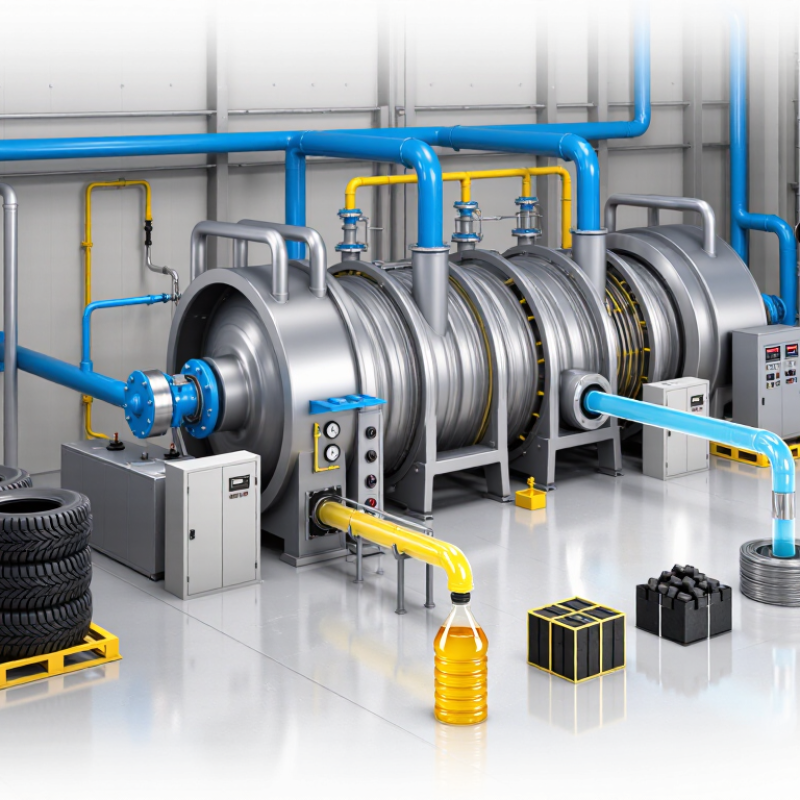
A tyre pyrolysis machine is industrial equipment that heats waste tyres in a sealed, oxygen-limited chamber. This process breaks rubber into smaller compounds without open burning. The main outputs are pyrolysis oil, recovered carbon material, steel wire, and non-condensable gas. A typical system includes a feeding unit, reactor, condenser, gas cleaning line, and control cabinet. Heat passes through the reactor wall, while vapours cool into liquid oil. It is a controlled thermal process.
When choosing the best tyre pyrolysis machine from China, buyers should inspect engineering details, not catalogue photos. Reactor thickness, weld quality, sealing design, and temperature sensors directly affect reliability. A practical machine should support stable feeding and steady discharge, reducing manual contact with hot materials. Condensers need enough surface area for efficient cooling, especially during continuous operation. Gas recovery can reduce fuel demand, but poor controls may create unstable pressure. That risk is easy to underestimate.
Ask for material certificates, test records, operating data, and clear maintenance procedures before purchase. Independent inspection is useful. The best choice also depends on local power supply, tyre size, labour skills, and environmental requirements. Some low-cost designs look attractive, yet thin insulation and weak seals can increase downtime. No machine is perfect. Operators still need training, leak checks, fire protection, and routine oil-quality testing. Real performance should be judged after months of operation, not during a short factory demonstration.
How Does a Tyre Pyrolysis Machine Work?
A tyre pyrolysis machine converts end-of-life tyres into useful fractions through controlled thermal decomposition. The process begins with tyre cutting and steel removal. Shredded rubber then enters a sealed reactor with very limited oxygen. At approximately 400–500°C, rubber polymers break into vapour, solid char, and non-condensable gas. A condenser cools the vapour into pyrolysis oil. Magnets recover remaining steel.
The figures vary by tyre composition and operating temperature. A 2021 review in Renewable and Sustainable Energy Reviews reported typical outputs of about 35–45% oil, 30–40% char, 10–20% gas, and 10–15% steel. The European Tyre and Rubber Manufacturers’ Association reported millions of tonnes of end-of-life tyres arising annually in Europe, showing why stable processing capacity matters. In practice, a machine’s performance depends on feedstock preparation, reactor sealing, heating uniformity, and emission controls. Real plants are less tidy than diagrams. Moisture, mixed tyre sizes, and poor condensation can reduce oil quality.
Tips: Ask for independent production data, not only catalogue yields. Check whether the design includes continuous temperature monitoring, gas recycling, dust filtration, and emergency shutdown systems. Chinese equipment can differ greatly in reactor thickness and control accuracy. A lower purchase price may hide higher fuel use or maintenance needs. Request a trial using your actual tyre feedstock. That step may expose weaknesses early. References: ETRMA, End-of-Life Tyres Management; Renewable and Sustainable Energy Reviews, 2021 review of tyre pyrolysis technologies.
What Makes a Chinese Tyre Pyrolysis Machine the Best Choice?
A Chinese tyre pyrolysis machine becomes a strong choice when engineering matches operating reality. Experienced buyers inspect reactor thickness, welding quality, insulation, and pressure protection before discussing price. A stable heating system should hold temperatures evenly, without creating bright hot spots. Good condensers recover usable oil efficiently, while separate gas lines support controlled fuel use. These details affect output, maintenance, and operator safety every working day.
China offers a broad manufacturing network for steel fabrication, automation, pumps, valves, and electrical controls. This can shorten replacement-part lead times and allow practical customization. A reliable supplier should provide material certificates, process drawings, commissioning records, and clear operating instructions. I would also request a factory acceptance test with measured heating curves, oil yield, power consumption, and noise levels. Photos are useful, but verified data is stronger. Claims without test conditions deserve caution.
The best choice is not always the largest or cheapest machine. Site access, local regulations, feedstock moisture, tyre size, and working hours matter more than impressive capacity figures. Emission controls and residue handling should be documented before installation. Operators need training, protective equipment, emergency procedures, and inspection logs. No machine is perfect. Even a well-built unit may need tuning after real tyres enter the reactor. That adjustment period can reveal more than a polished sales presentation. Choose equipment backed by responsive technical support, available spare parts, and transparent performance limits.
Which Features Should Buyers Compare Before Purchasing?
What Is the Best Tyre Pyrolysis Machine from China?
Buyers should compare performance, safety, and evidence rather than advertised capacity. The ETRMA 2023 end-of-life tyre report estimates about 3.6 million tonnes of waste tyres arise annually in Europe. The U.S. EPA also reported approximately 290 million scrap tyres generated in 2017. These figures show why stable feeding and continuous operation matter.
Check the reactor design, daily throughput, heating efficiency, and material compatibility.
Published engineering studies commonly report 35–45% pyrolysis oil, 30–40% recovered carbon material, and 10–15% gas by mass.
Results vary with tyre composition and operating temperature. A larger output claim may hide poor heat transfer. Ask for independent test records using your actual tyre sizes. Small details matter.
Compare condensation systems, gas recycling, dust removal, and emission monitoring.
Reviewers should request fuel consumption, product analysis, maintenance intervals, and emergency shutdown procedures.
Pressure relief, temperature alarms, fire protection, and sealed feeding are essential. Compliance documents should match the installation country, not merely show generic certificates. I would also inspect weld quality and insulation personally. Online photographs are not enough.
After-sales training, spare-part availability, and remote troubleshooting deserve equal attention. One weakness remains: many suppliers publish ideal laboratory results, not long-term field data. A witnessed trial can expose that gap before payment.
How Can Buyers Select a Reliable Chinese Manufacturer?
What Is the Best Tyre Pyrolysis Machine from China?
How Can Buyers Select a Reliable Chinese Manufacturer?
The best machine is not always the cheapest one. Buyers should inspect the manufacturer’s operating history, engineering records, and after-sales response. The World Business Council for Sustainable Development’s Tire Industry Project has estimated that about one billion end-of-life tyres are generated globally each year. This volume creates strong demand, but it also attracts inexperienced suppliers.
Request recent production data from a comparable installation. Check daily throughput, heating energy, oil yield, carbon quality, and maintenance records. A reliable supplier should provide drawings, material certificates, pressure-test results, and clear safety procedures. Ask to see the reactor, condenser, and emission-control system through a live video inspection or factory visit. Photos are not enough.
Look for ISO 9001 quality management and ISO 14001 environmental systems, but do not treat certificates as proof of performance. Verify their validity with the issuing body. The machine should also match local permits and emission requirements. Independent testing is valuable here. Small leaks matter.
Buyers should compare total ownership cost, not only the quotation. Include installation, spare parts, operator training, electricity, and downtime. The International Energy Agency has repeatedly highlighted energy efficiency as a major industrial cost factor, and tyre processing is no exception. A supplier promising unusually high yields deserves careful questioning. I would remain cautious, even with impressive factory data. No checklist is perfect. Insist on contractual performance testing before final payment, with measurable standards for capacity, safety, and product quality.





