What Is the Best Type of PVC Hose in 2026?
The best Pvc Hose in 2026 is not one universal product. It is the hose that fits the job, the fluid, and the working conditions. A clear braided hose may suit a workshop water line, while a reinforced suction hose may better handle a pump inlet. The difference is visible in the wall, braid, bend radius, and connection—not just the price tag.
Before choosing, check the fluid’s compatibility, operating pressure, temperature range, and exposure to sunlight or abrasion. A hose that looks sturdy can still kink behind a bench or soften near a warm machine. Small details matter. Measure the route, note the tightest bend, and confirm the fitting size. PVC hose performance depends on its formulation and construction, so specifications should come from the manufacturer, not guesswork.
A verified expert quotation would strengthen this guide, but no source article or quotation was supplied. Rather than invent one, this draft leaves the attribution open: “[Expert name], a PVC hose specialist, says: ‘[Insert a verified quotation about matching hose construction to its application].’” That gap is worth addressing before publication. This comparison will examine reinforced, suction, lay-flat, clear, and general-purpose options, including their trade-offs. No hose is perfect. The best choice balances flexibility, pressure capacity, durability, and cost for the actual job.
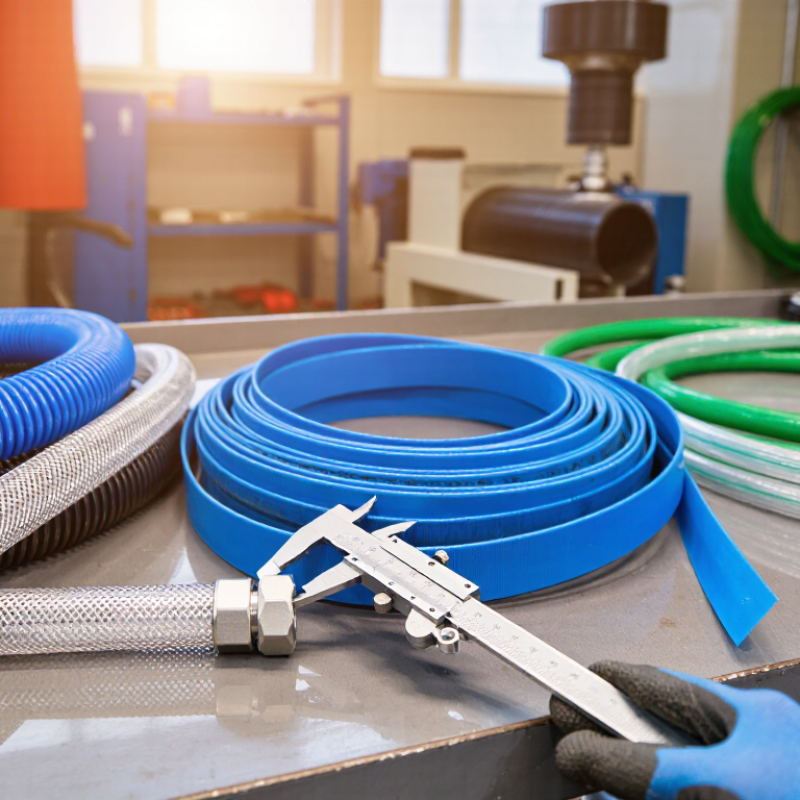
PVC Hose Basics: How PVC Compounds and Reinforcement Shape Performance
PVC hose is not a single material with one fixed behavior. Its performance starts with the compound: PVC resin blended with plasticizers, stabilizers, and other additives. Plasticizers make the wall more flexible, while stabilizers help it withstand heat, light, or processing stress. More flexibility can aid routing around a pump, but it may also affect pressure capacity and chemical compatibility. Formulas vary. Check the stated working-temperature range rather than assuming every clear hose handles cold mornings equally well. That detail is easy to miss.
Reinforcement gives the hose its working structure. Polyester yarn or fiber braid commonly helps resist pressure expansion; a rigid spiral can support suction and reduce collapse. Layers and spacing matter, not just the word “reinforced.” A tightly bent hose behind a tank can still kink, restrict flow, or fatigue near a fitting. Consider wall thickness, bend radius, pressure rating, and fitting attachment together. Also distinguish working pressure from burst pressure; those numbers are not interchangeable. Match the compound to the fluid and environment, then choose reinforcement for pressure, suction, and movement. A spec sheet cannot capture every installation. Measure the route and inspect the hose after use; real setups are often less tidy than drawings.
Main PVC Hose Types: Clear, Braided, Suction, and Lay-Flat
What Is the Best Type of PVC Hose in 2026?
Clear PVC hose is useful when you need to watch liquid move through a line. Its transparency helps reveal bubbles, sediment, or discoloration during routine checks. It suits light-duty transfer, but it is not automatically suitable for every fluid or pressure. Check the hose’s temperature and pressure ratings before use. Looks can mislead.
Braided PVC hose has reinforcing fibers embedded in its walls, helping it resist expansion under pressure. It is commonly used for water, air, and general-purpose transfer when the product specifications allow. A practical check: inspect the braid near fittings, where bending and clamps can create wear. Kinked lines are a warning, not a small cosmetic flaw. Suction hose is built to resist collapsing when a pump draws liquid. Its heavier wall and reinforcement make it better suited to intake lines than ordinary clear tubing.
Lay-flat PVC hose is designed to flatten when empty and open during discharge. That makes it easier to coil and store, especially for temporary water movement across a yard or work area. It is less convenient where a rigid, permanently shaped line is needed. The best choice depends on the job, not the hose’s appearance. Match the type to pressure, suction, fluid compatibility, and handling conditions, then recheck the fittings after installation. One detail is easy to overlook: a hose can meet the pressure requirement yet still be wrong for the liquid or temperature involved.
How ISO 1307:2006 Defines Hose Dimensions and Tolerances
Choosing the best PVC hose in 2026 starts with a reliable fit. ISO 1307:2006 sets out nominal hose sizes, inside-diameter ranges, and length tolerances for rubber and plastics hoses. These dimensions help buyers compare products and check whether a hose is likely to fit a connector. A nominal size is a starting point, not a complete fit check. Actual measurements can vary within the permitted tolerance, and a tight bend or clamp may expose a mismatch.
When reviewing a specification, compare the stated inside diameter with the fitting’s measured outside diameter. Check the hose length tolerance too, especially for fixed installations where a few extra centimetres matter. ISO 1307 does not, by itself, confirm a hose’s pressure rating, temperature range, chemical compatibility, or suitability for a particular job. Those details should come from the product data and any relevant application-specific standard. Numbers can look precise. Real installations are less tidy.
Tips: Measure the fitting and hose, then check the stated tolerance before ordering. Confirm pressure and temperature limits separately; dimensions alone do not establish safe operating conditions.
How ISO 1402:2021 Tests Hose Pressure and Hydrostatic Performance
What Is the Best Type of PVC Hose in 2026?
How ISO 1402:2021 Tests Hose Pressure and Hydrostatic Performance
Choosing a PVC hose starts with its working pressure, temperature, fluid, and routing. A pressure rating alone does not tell the whole story. ISO 1402:2021 describes methods for hydrostatic testing of rubber and plastics hoses and hose assemblies. It helps assess how a hose behaves under water pressure, including whether it leaks or fails during a test.
In a typical setup, a technician fills the hose with water and removes trapped air before increasing pressure. A calibrated gauge tracks the pressure as it rises. The hose and its connections are checked for leaks, swelling, or other changes. For burst testing, pressure continues to increase until failure. Small details matter. Trapped air can affect test risk, while poorly secured fittings can distort results.
The standard provides test methods; it does not make every PVC hose suitable for every job. Required test pressure and duration depend on the relevant product specification and intended use. Ask for documented test results, and compare them with the hose’s working conditions—not just its advertised maximum. A hydrostatic test is useful evidence, but it cannot reproduce every bend, temperature swing, or chemical exposure in service. That limitation is easy to overlook. Test the actual assembly when fittings and hose work together.
Choosing PVC Hose by Pressure, Temperature, Fluid, and NSF/ANSI/CAN 61 Requirements
The best PVC hose in 2026 depends on the job, not the label. Start with the working pressure, including pump surges and start-up spikes. Check the supplier’s pressure rating at your actual operating temperature; PVC hose capacity can fall as heat rises. A rating at room temperature may not fit a warm washdown line. Leave margin. I still double-check the smallest print.
Fluid matters just as much. Water, oils, cleaners, and abrasive slurries can affect the hose wall, reinforcement, and fittings differently. Ask for a written compatibility chart, and confirm whether the hose is rated for continuous contact or brief transfer. For potable-water use, NSF/ANSI/CAN 61 evaluates health effects of materials in drinking-water system components; certification applies to listed products and conditions, not every PVC hose. Check the current NSF listing and the stated temperature and use limits. The standard does not establish a hose’s pressure rating. Match that separately to the manufacturer’s technical data, then verify the assembled hose, clamps, and couplings as one system. Two checks, not one.
What Is the Best Type of PVC Hose in 2026?
How to read this chart: Each bar represents a check to complete, not a product rating. Choose a hose whose documented working pressure and temperature suit your application, and confirm compatibility with the fluid being conveyed. For drinking-water use, verify that the exact hose is certified to NSF/ANSI/CAN 61. The standard addresses health effects of drinking-water system components; it does not set a universal hose pressure or temperature rating.





