What Is the Best Type of Cement Unloader in 2026?
Choosing the best Cement Unloader in 2026 starts with the job, not the brochure. Cement may look uniform, yet its flow changes with moisture, temperature, storage time, and handling. A system that works well at one terminal can struggle at another.
The options usually include pneumatic pressure or vacuum systems, mechanical screw unloaders, and larger ship-unloading equipment. Each has trade-offs. Pneumatic systems can move cement through enclosed pipelines and reach flexible discharge points, but they need suitable power and careful dust control. Screw systems offer direct mechanical handling, though layout and wear deserve close attention. No single type wins everywhere.
David Mills is a recognized author on pneumatic conveying. The following line is an editorially written principle informed by that field, not a verified quotation from Mills: “Match the conveying method to the material, route, and duty—not the other way around.” That distinction matters when comparing rated capacity with real operating conditions. A quoted tonnes-per-hour figure may assume ideal feed, short distances, or steady running.
This guide will compare capacity, conveying distance, energy use, maintenance access, dust containment, and cement quality. It will also examine practical details, such as pipeline bends, silo inlet height, and space for filters. Small details count. The best Cement Unloader is the one that meets the site’s daily duty reliably, with manageable upkeep and room for realistic operating limits. It may not be the biggest machine. And that is worth reconsidering before purchase.
What a Cement Unloader Is and How It Works
What Is the Best Type of Cement Unloader in 2026?
A cement unloader transfers dry cement from a truck, railcar, or ship into storage or processing equipment. Its main job is to move powder while limiting spills and dust. The exact setup depends on the source vessel, transfer distance, and site layout. Pneumatic systems use moving air to carry cement through enclosed pipes. Mechanical systems use equipment such as screws or conveyors. Neither type is best for every operation.
In a typical pneumatic setup, a sealed hose connects to the vehicle’s discharge outlet. Air helps move the powder through a pipeline toward a receiving silo. A filter separates cement from the conveying air before it leaves the system. Mechanical systems move material with rotating components instead. They can suit fixed routes, but their parts need inspection for wear. Dust still escapes if seals or filters are neglected. I’ve seen even a capable system slow down when damp cement begins to cling inside a line.
Tips: Check the filter, hose seals, and discharge path before unloading. Keep cement dry, and follow the equipment manual for operating settings. If flow becomes uneven, stop and inspect the cause rather than simply increasing air pressure.
The Main Types of Cement Unloaders in Use
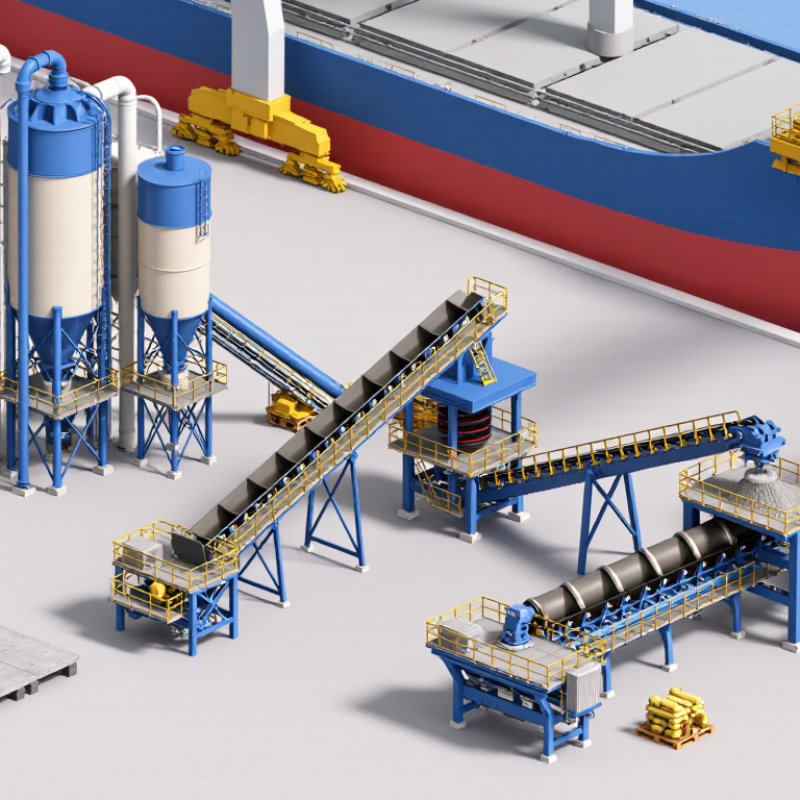
Cement unloaders generally fall into three groups: pneumatic systems, mechanical systems, and grab-based ship unloaders. Pneumatic unloaders use suction and enclosed pipelines to move powder from a vessel or truck into silos. They limit dust when filters and seals are maintained, but compressors consume substantial power. Fine cement can also build up in bends. Not ideal in every layout.
Mechanical systems use screws, bucket elevators, or conveyors to move cement through a defined route. They can suit steady, high-volume work and may use less conveying energy than pneumatic equipment, depending on distance and material condition. However, screws and transfer points need inspection for wear and leakage. Grab unloaders lift bulk material from a ship’s hold, often feeding a hopper and conveyor. They are flexible across cargo types, yet exposed transfers make dust control and careful operator handling essential.
Scale matters. The USGS Mineral Commodity Summaries 2025 estimates global cement production at about 4.2 billion metric tons in 2024, showing why unloading capacity and uptime matter across the supply chain. That figure does not identify a best machine. For a short, enclosed route, pneumatic handling may be practical; for continuous movement, mechanical equipment can be a better fit. Actual throughput, transfer height, berth conditions, dust controls, and maintenance access should shape the decision. Site trials are useful, though they rarely capture every operating problem.
What Is the Best Type of Cement Unloader in 2026?
Indicative throughput ranges for common cement-unloading equipment types
How to read this: The ranges are broad planning benchmarks, not standardized limits; actual capacity depends on equipment design, conveying distance, cement properties, and site conditions. Pneumatic truck unloaders suit delivery into silos, while ship unloaders are designed for much higher-volume port operations. Choose based on required throughput, transfer distance, dust control, and available infrastructure.
Key Factors for Comparing Unloader Performance
The best cement unloader in 2026 is not automatically the machine with the highest rated capacity. Compare effective throughput from the ship’s hold to the storage silo, including hatch changes, pauses, and cleanup. Those small delays add up. Pneumatic systems can route material flexibly around tight sites, while mechanical systems may suit steady, high-volume transfer. Actual performance depends on layout and operating conditions.
Check energy use per tonne under the expected duty cycle, not just motor ratings. Dust control matters too: inspect filter access, sealed transfer points, and how operators can spot a leak. Cement is sensitive to moisture, so consider exposure during transfer and storage.
Reliability depends partly on practical maintenance: can crews reach hoses, filters, and wear parts without lengthy shutdowns? Ask suppliers for performance data from comparable cement operations, then verify the assumptions behind it. A glossy capacity figure can be misleading. It is worth admitting that no comparison is perfect; port layout, cargo condition, and operator routines can change the results.
How Operating Conditions Shape Equipment Choice
A cement unloader should fit the berth and cargo, not just a brochure’s peak-capacity figure. Check vessel hatch dimensions, draft limits, berth access, and the distance to storage silos. A grab-based system can suit varied vessels and intermittent deliveries, while continuous mechanical or pneumatic systems may better match steady flows. The right choice depends on the actual transfer route.
Dust matters. Cement is fine and moisture-sensitive, so exposed transfer points and humid weather can increase housekeeping and material-handling demands. Enclosed conveying can help control dust, but pneumatic equipment uses power to move air as well as material. That trade-off deserves a site-specific calculation. The International Energy Agency’s 2023 cement-sector analysis estimates that cement production accounts for about 7% of global CO2 emissions; it does not quantify unloader emissions, but it makes electricity use worth checking. Compare expected throughput, operating hours, and local power conditions before choosing. Small details count. A long transfer line, limited maintenance access, or frequent vessel changes can overturn an equipment choice that looked efficient on paper. I would also question any selection based only on average unloading rate: peak delivery windows may matter more.
Which Cement Unloader Best Fits Each Application in 2026
The best cement unloader depends on the berth, annual tonnage, vessel access, and dust-control needs. The USGS Mineral Commodity Summaries 2025 estimates U.S. cement production reached 84 million metric tons in 2024. That scale signals substantial bulk-handling demand, but national output cannot tell a terminal how much capacity it needs. Start with measured vessel discharge rates and the hours available at your berth.
For high-volume, regular ship calls, a continuous mechanical unloader can move cement steadily through enclosed conveyors. It suits fixed terminals with room for permanent equipment and predictable flows. A mobile pneumatic unit offers more flexibility at smaller or shared berths, especially where equipment must reach different holds. Its trade-off is energy use: long conveying distances and high lifts can reduce practical throughput. Dust matters. For low annual volumes, a crane and enclosed hopper may cost less to install, though unloading is intermittent and dust collection becomes critical.
Compare real operating conditions, not just rated capacity. Ask suppliers to state throughput at your actual lift, conveying distance, and cement characteristics, then verify the figures with a site trial where possible. The European Commission’s cement-industry Best Available Techniques reference document identifies dust control as a key concern in production and handling. Keep that caveat. A compact pneumatic system can look ideal on paper, yet perform poorly if filters clog or maintenance access is awkward. The right choice is the one that meets berth targets without creating queues, excessive dust, or avoidable downtime.





