10 Best Type B Washers for Industrial Applications?
Industrial washers look simple, but their influence on a bolted joint is substantial. Type B Washers can distribute clamping force, protect painted surfaces, and reduce local damage beneath a nut or bolt head. Their value becomes clearer beside a steel beam, a vibrating pump base, or a weather-exposed equipment panel.
Grand View Research reported that the global industrial fasteners market reached approximately USD 88.43 billion in 2023. Its report also projects continued growth through 2030, driven by construction, machinery, transportation, and energy equipment. However, market growth does not guarantee correct washer selection. A washer that fits the hole may still fail under vibration, corrosion, or excessive bearing pressure. Small parts create expensive mistakes.
John H. Bickford, a recognized bolted-joint authority, emphasizes in substance that every joint component contributes to overall reliability. That principle guides this review. The following ten Type B Washers are assessed through material, hardness, outside diameter, thickness, corrosion resistance, and installation behavior. ASTM and ASME requirements should always be checked against the project drawing, because “Type B” can describe different dimensions across specifications and suppliers. That ambiguity matters.
A practical ranking can still mislead. Actual performance depends on preload, substrate strength, coating thickness, and field conditions. Think beyond the catalog photograph. A zinc-plated washer on a vibrating outdoor flange is not equivalent to a hardened washer inside a dry machine enclosure. This guide compares useful options while acknowledging that testing remains the final judge.
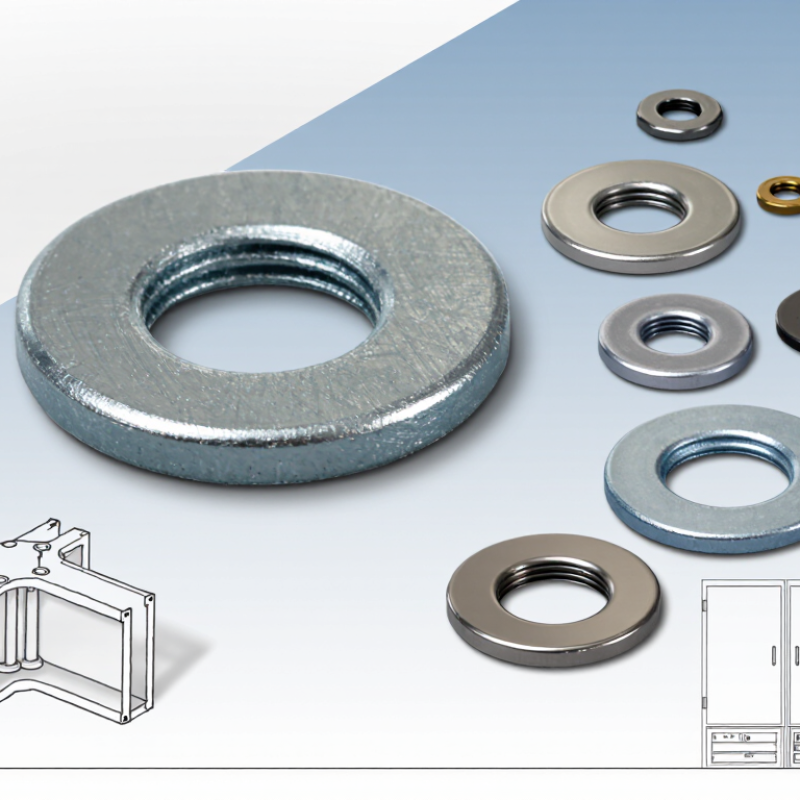
Type B Washers Defined: ASME B18.21.1 Sizes, Materials, and Profiles
Type B washers are often selected for industrial joints because their dimensions are controlled, repeatable, and easy to match with standard bolts. Under ASME B18.21.1, the Type B designation describes a washer profile and dimensional range, not a complete material specification. Engineers should check the relevant size table for inside diameter, outside diameter, and thickness. A correct fit prevents excessive bolt-head penetration and spreads clamping force across the joint surface.
Size selection starts with the nominal bolt diameter, but the application may require more review. A washer for a 1/2-inch bolt should not be chosen by outside diameter alone. Clearance, slot width, coating thickness, and available edge distance also matter. Small details matter here. Type B profiles may suit compact assemblies, while wider profiles can protect softer surfaces more effectively. The standard’s dimensions should be verified against the current edition and the project drawing.
Material selection depends on load, temperature, corrosion exposure, and contact conditions. Carbon steel provides practical strength for many indoor assemblies. Stainless steel helps resist moisture, but its strength and galling behavior require attention. Brass and other nonferrous options may serve electrical or corrosion-sensitive applications, when specified properly. Plating is a separate decision. Zinc, oxide, and other finishes can change corrosion performance and dimensions slightly. In field work, I have seen washers treated as interchangeable parts. That assumption is convenient, but often wrong. Inspect the washer’s ID, OD, thickness, material, and finish before installation.
Ranking 10 Industrial Washers by ASTM F606 Load, Hardness, and Durability
10 Best Type B Washers for Industrial Applications?
This ranking evaluates Type B washers by load transfer, hardness, and durability. Type B describes a washer geometry, not one universal material grade. ASTM F606/F606M mainly tests fasteners, so it cannot certify washer capacity alone. The washer must also be checked for bearing stress, permanent deformation, and surface damage.
The strongest candidates rank as follows. Quenched-and-tempered alloy steel leads for heavy clamping loads. ASTM F436/F436M hardened steel follows closely, with typical hardness near 38–45 HRC. Precipitation-hardened stainless steel offers strong corrosion resistance and stable hardness. Nickel alloy performs well in elevated temperatures. Hardened stainless steel suits wet industrial environments. Zinc-flake-coated alloy steel balances strength and coating durability. Hot-dip galvanized steel handles outdoor exposure, but coating thickness can affect clamping accuracy. Mechanically galvanized steel offers practical corrosion protection. Austenitic stainless steel resists rust, yet its lower hardness can increase embedding. Bronze ranks tenth for electrical and marine compatibility, not maximum load.
Field testing often reveals an uncomfortable detail. The washer is rarely the only weak point. Bolt grade, hole clearance, joint vibration, and torque scatter can change results significantly. ASTM F436/F436M provides useful dimensional and material guidance, while ASTM F606/F606M supports fastener load and hardness verification. Engineers should record washer indentation after tightening, then repeat tests after thermal cycling or salt exposure. A clean first test can still hide long-term loosening.
Steel, Stainless Steel, Brass, and Nylon: Comparing Four Type B Materials
For Type B washers, material choice controls more than appearance. In common industrial specifications, Type B geometry offers a narrower bearing profile than broad fender washers. Steel remains the practical baseline for carbon-steel assemblies. World Steel Association’s World Steel in Figures 2024 reported 1.89 billion tonnes of crude steel production in 2023. That scale supports broad availability and predictable fabrication. Zinc-coated steel resists ordinary humidity, but damaged coating exposes the washer quickly. Field checks often find this overlooked.
Stainless steel suits washdown areas, outdoor equipment, and corrosive process rooms. The International Stainless Steel Forum reported about 60.6 million tonnes of stainless production in 2023. Austenitic grades usually resist corrosion better than carbon steel, yet chloride exposure can still cause attack. Galling and lower hardness may complicate tightening. Brass works well around electrical hardware and moderate moisture. USGS data recorded roughly 22 million tonnes of mined copper production in 2023, supporting brass’s established supply chain. Brass is softer, though. High clamp loads may deform its bearing surface.
Nylon Type B washers help with electrical insulation, low weight, and surface protection. They resist many chemicals, but heat, ultraviolet exposure, and creep deserve attention. Temperature limits should come from resin data, not guesswork. In practical selection work, I compare load, temperature, moisture, torque, and maintenance access. That sounds complete, but it is not. Real assemblies vary. A stainless washer beside carbon steel may also create galvanic concerns in wet service.
Type B Washer Materials for Industrial Applications
Representative density comparison of carbon steel, stainless steel, brass, and nylon washer materials
Density affects washer weight and handling: nylon is significantly lighter than metal alternatives, while brass is the densest of the four materials shown. Carbon steel generally provides high mechanical strength at a competitive cost, stainless steel offers improved corrosion resistance, brass provides good electrical conductivity and corrosion resistance, and nylon provides electrical insulation and low weight. Actual performance depends on the specific grade, finish, temperature, load, and installation conditions.
Selecting Washer Dimensions: ISO 7093 ID, OD, Thickness, and Clamp Load
Selecting a Type B washer starts with the joint, not the catalog. ISO 7093-1 defines enlarged outside diameters for better load distribution under bolt heads and nuts. The inside diameter must clear the fastener without excessive movement. A tight fit can bind during installation. Too much clearance can tilt the washer.
Outside diameter controls bearing stress on softer plates. Thickness supports stiffness and reduces local embedding. ISO 7093-1 dimensions vary by nominal thread size, so engineers should verify the current table before ordering. Do not estimate from a photograph. A small dimensional error can change contact pressure across a thin flange.
Clamp load deserves equal attention. NASA Reference Publication 1228 explains that roughly 90% of tightening torque can be lost to thread and bearing friction, leaving about 10% for preload. Surface finish, lubrication, and coating can shift that balance. Torque alone is an imperfect control method. Very imperfect, sometimes. Use calibrated testing when the joint is safety-critical. Measure washer seating, bolt elongation, or tension directly when practical. A washer with a larger OD may lower plate stress, but it cannot rescue an undersized bolt or weak substrate. Field inspections should check deformation, fretting marks, and lost preload after thermal cycling. The selection may need revision.
Corrosion and Quality Testing: ASTM F2329 Coatings and ISO 9227 Salt Spray
Choosing the 10 best Type B washers for industrial applications requires more than checking dimensions. Corrosion control matters, especially in humid plants, outdoor structures, and exposed assemblies. ASTM F2329 focuses on hot-dip zinc coatings for steel fasteners, including washers. It helps inspectors verify coating coverage, thickness, adhesion, and visible defects.
In practical testing, measure coating thickness at several points, not one convenient edge. Record dull areas, bare spots, excess zinc, and rough deposits. Small surface flaws can become trouble under load. ISO 9227 salt spray testing can compare corrosion resistance under controlled conditions. Neutral salt spray is commonly used for zinc-coated parts. However, salt spray is not a direct prediction of field service life.
Keep that limitation visible.
A washer may survive hundreds of test hours yet corrode sooner near coastal spray, trapped water, or chemical vapors. Test panels should use consistent preparation, orientation, solution concentration, and inspection intervals. The test report should identify the coating condition before exposure and define red-rust evaluation clearly. From experience, poor drainage around a washer often matters more than a laboratory result. I would also question any supplier report lacking batch numbers, measurement locations, or calibration records. Good quality decisions combine ASTM F2329 compliance, ISO 9227 data, installation conditions, and honest review of uncertainty.
10 Best Type B Washers for Industrial Applications? - Corrosion and Quality Testing: ASTM F2329 Coatings and ISO 9227 Salt Spray
| Rank | Type B Washer Configuration | Nominal Size | Inside Diameter | Outside Diameter | Thickness | Base Material | Surface Treatment | ASTM F2329 Coating Target | ISO 9227 NSS Qualification Target | Recommended Industrial Use |
| 1 | Type B wide flat washer, hot-dip galvanized | M16 | 17.0 mm | 50.0 mm | 3.0 mm | Carbon steel | Hot-dip galvanized zinc | ≥70 μm* | ≥1,000 h | Heavy structural joints, outdoor steelwork and infrastructure |
| 2 | Type B wide flat washer, zinc-flake coated | M12 | 13.0 mm | 36.0 mm | 3.0 mm | Alloy steel | Non-electrolytic zinc-aluminum flake | Not applicable | ≥1,500 h | High-corrosion automotive, transport and machinery assemblies |
| 3 | Type B wide flat washer, hot-dip galvanized | M12 | 13.0 mm | 36.0 mm | 3.0 mm | Carbon steel | Hot-dip galvanized zinc | ≥55 μm* | ≥1,000 h | General outdoor equipment, frames and mounting systems |
| 4 | Type B wide flat washer, passivated stainless steel | M10 | 10.5 mm | 30.0 mm | 2.5 mm | AISI 316 stainless steel | Cleaning and passivation | Not applicable | ≥480 h | Marine, coastal, chemical-processing and wet-service environments |
| 5 | Type B wide flat washer, hot-dip galvanized | M10 | 10.5 mm | 30.0 mm | 2.5 mm | Carbon steel | Hot-dip galvanized zinc | ≥55 μm* | ≥1,000 h | Outdoor machinery, agricultural equipment and utility structures |
| 6 | Type B wide flat washer, zinc-flake coated | 3/8 in | 10.3 mm | 25.4 mm | 2.1 mm | Alloy steel | Zinc-aluminum flake with sealer | Not applicable | ≥1,000 h | Vibration-prone assemblies requiring controlled friction and corrosion resistance |
| 7 | Type B wide flat washer, hot-dip galvanized | M8 | 8.4 mm | 24.0 mm | 2.0 mm | Carbon steel | Hot-dip galvanized zinc | ≥45 μm* | ≥720 h | Outdoor enclosures, panels and medium-duty equipment |
| 8 | Type B wide flat washer, passivated stainless steel | M8 | 8.4 mm | 24.0 mm | 2.0 mm | AISI 304 stainless steel | Cleaning and passivation | Not applicable | ≥240 h | Indoor process equipment, food-service areas and general wet environments |
| 9 | Type B wide flat washer, hot-dip galvanized | M6 | 6.4 mm | 18.0 mm | 1.6 mm | Carbon steel | Hot-dip galvanized zinc | ≥45 μm* | ≥720 h | Light industrial structures, cable trays and outdoor cabinets |
| 10 | Type B wide flat washer, zinc-flake coated | 1/2 in | 13.5 mm | 31.8 mm | 2.8 mm | Alloy steel | Zinc-aluminum flake with organic topcoat | Not applicable | ≥1,500 h | High-performance equipment exposed to cyclic humidity and road salt |
Technical notes: Values are representative procurement targets for Type B wide flat washers and should be confirmed against the selected dimensional specification, drawing and lot inspection plan. ASTM F2329/F2329M applies to hot-dip galvanized coatings on carbon and low-alloy steel fasteners; it is not applicable to stainless steel or zinc-flake systems. ISO 9227 defines neutral salt spray test procedures but does not establish universal pass/fail hours or predict service life. The listed ISO 9227 values are recommended qualification targets, not guaranteed product test results.





