What Is the Best TrueNAS Server from China?
Choosing the best TrueNAS server from China depends on more than its price or processor. A True Nas Server must pair compatible hardware with dependable storage and cooling. TrueNAS is the storage operating system; the server is the machine running it. That distinction matters when comparing a ready-built system with a custom configuration.
For a home lab, a compact chassis with four drive bays may be enough. A small office may need more bays, faster networking, and room to expand. Check the motherboard’s memory support, available SATA connections, and network ports before buying. ECC memory can help detect certain memory errors, but it is not a substitute for backups. Good airflow matters, too. Hot drives wear faster.
Look beyond the headline specifications. Ask about warranty coverage, replacement parts, BIOS access, and whether the system has been tested with your intended drives. A quiet fan and clearly labeled drive trays can make everyday maintenance easier. These details are easy to overlook.
There is no single best choice for everyone. Some listings omit useful compatibility information, so verify claims with the seller and consult current TrueNAS documentation. Independent testing is helpful, but results can vary by workload. Be cautious. The strongest option is the one whose hardware, support, and expansion capacity match your actual storage needs—not simply the one with the most impressive specification sheet.
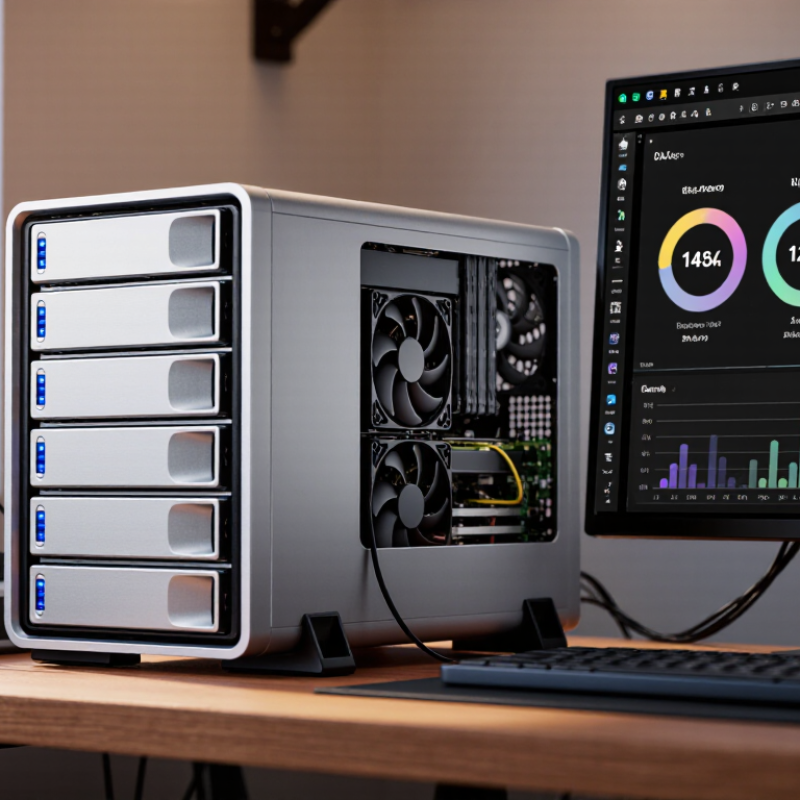
What Makes a Chinese Server Suitable for TrueNAS?
A Chinese server can suit TrueNAS when its components are documented, replaceable, and compatible with the intended workload. Check the processor platform’s support for ECC memory; ECC can help detect and correct certain memory errors, though it does not prevent every form of data loss. For ZFS storage, confirm that the drive controller can pass disks through reliably, preferably in a supported HBA configuration. Controller behavior matters more than a headline port count.
Look for enough drive bays, clear airflow, and room to add memory or network cards. A row of spinning disks needs steady cooling, especially during long scrubs. Cooling matters. Check that fans are standard parts and that the BIOS allows sensible power and fan settings. A 10GbE port is useful only when the rest of the network can handle the traffic. Keep the operating system on a separate boot device, and verify that the chosen network adapter is supported by the TrueNAS release you plan to run.
Before buying, review the exact motherboard, controller, and firmware details—not just the general server description. Ask whether the system can boot with the intended drives attached, and check the seller’s return and parts policies. Those checks are unglamorous. They can save time later. One weak point is that specifications may omit small revisions, so confirm the shipped configuration in writing. A quiet, modest system may be a better NAS than a powerful machine that runs hot or is difficult to service.
What Makes a Chinese Server Suitable for TrueNAS?
Compare common Ethernet link rates when choosing a server and network for a TrueNAS storage system.
How to read this chart: These are nominal Ethernet link rates, not guaranteed file-transfer speeds. Actual performance depends on the drives, storage configuration, server hardware, network equipment, and protocol overhead. Choose a system based on its specifications and workload needs rather than its country of origin.
How to Match Server Hardware to TrueNAS Workloads
The best server for a TrueNAS workload is not a fixed model. Match the hardware to the data, access patterns, and support available. A photo archive has different needs from virtual machines or shared video editing. For large files, prioritize drive bays, sufficient memory, and network bandwidth. Measure twice.
For mixed workloads, choose a CPU that can handle file services, encryption, and applications without paying for unused capacity. ECC memory can help detect and correct memory errors, but confirm that the motherboard and processor support it. Select drives for the expected workload and keep the boot device separate from data storage when practical. Check cooling, power quality, and remote management too. Small details matter. A quiet chassis can still run hot when every drive is busy.
Tips: Ask the supplier for the exact component list, memory compatibility, and drive-bay details. Check warranty terms and replacement-part availability in your region. Leave room for growth, but avoid buying capacity you cannot use. A minor compromise may be reasonable; an unclear specification is not.
Which Features Matter When Comparing Chinese Server Options?
When comparing Chinese server options for a TrueNAS build, start with the workload, not the case appearance. A home media library may need fewer drive bays than a small office archive. Check the exact motherboard revision, supported memory type, and processor generation. Product listings can be vague. Ask for a clear specification sheet before ordering.
Storage connectivity deserves close attention. Count usable drive bays, then check whether the controller supports direct disk access without hiding individual drives. This is important for monitoring and data protection. ECC memory can help detect certain memory errors, but it is not a substitute for backups. It matters. Also compare network ports, power-supply quality, and cooling. A chassis that looks compact may run noisy when all drive slots are occupied.
Firmware support and service access can shape daily reliability. Confirm that the system can boot from your chosen device and that its network adapter is supported by your TrueNAS version. Ask how replacement parts and warranty service are handled in your region. I would test temperatures, disk detection, and network stability before storing important files. That takes time. Yet specifications alone do not reveal every compatibility problem, and I would not assume two visually identical systems behave alike.
How to Assess Compatibility, Reliability, and Support
Compatibility starts with the exact workload, not the processor label. Check that the storage controller supports the intended drive mode and works with the operating system’s current drivers. Confirm ECC memory support, drive-bay dimensions, cooling clearance, and network-port speed before ordering. Then test the planned file-sharing protocols and backup workflow. A server that boots is not necessarily a server that behaves well under sustained disk activity.
Reliability depends on parts, configuration, and recovery planning. Uptime Institute’s 2024 Global Data Center Survey found that about 54% of respondents had experienced an outage in the previous three years. That figure covers data centers, not home NAS systems, but it shows why recovery matters. Ask for written warranty terms, replacement-part availability, firmware updates, and a clear support route. Request a compatibility list for the exact controller and drive combination, not a broad “works with NAS” claim. Small details matter. Keep a spare drive, document pool settings, and test restores before trusting important files. I would still leave some margin for imperfect documentation; it can be frustrating, but discovering that gap during setup is better than during recovery.
Choosing the Best TrueNAS Server for Your Use Case
Choosing the best TrueNAS server from China starts with your workload, not the lowest listed price. Start with the workload. A home media library may need fewer drive bays than a small office handling shared files and backups. Estimate usable capacity after redundancy, then leave room for growth. A compact chassis can look appealing, but tightly packed drives may run hotter and louder.
Check the motherboard, memory capacity, network ports, and storage controller specifications before ordering. ECC memory can help detect memory errors, though your requirements depend on the workload and budget. Confirm that the storage controller supports the intended drive configuration. Read the warranty terms carefully, and check how replacement parts and technical support are handled in your region. Noise matters. So does cooling. A server that meets a datasheet target may still need careful airflow planning in a warm room.
Tips: Ask for the exact component list, not just a broad model description. Check drive-bay sizes, power supply details, and network speed. If possible, test the system with sample drives before moving important data. Keep a separate backup; redundancy is not a backup. I would reconsider any configuration whose savings depend on unclear specifications.





