


Which type of transformer winding machine is best in 2026? The honest answer depends on the coil, production volume, and required consistency. A small repair shop may value a flexible manual winder. A growing manufacturer may need a semi-automatic model with reliable tension control. High-volume production often favors programmable CNC equipment, especially when repeatable turn counts and controlled winding patterns matter. There is no single winner.
Choosing a Transformer Winding machine starts with the workpiece, not the sales brochure. Check the wire diameter range, bobbin or core dimensions, maximum winding speed, tension range, and available traverse settings. Then consider how quickly operators can change recipes and inspect a finished coil. A machine that runs fast but causes crossed turns or damaged insulation can increase rework. Small details matter. Listen for uneven spindle motion, watch the wire guide, and verify the counter against a test winding. These checks are practical, not glamorous.
In 2026, automation may be attractive, but more features do not automatically mean better results. Manual machines can suit prototypes and varied, low-volume work; semi-automatic systems can balance operator control with repeatability; CNC machines can support demanding, repeat production. The right choice also depends on training, maintenance access, floor space, and spare-part support. Ask suppliers for a live demonstration using a representative coil, and compare sample quality rather than headline speed. I would still leave room for doubt: a machine that performs well on one winding design may struggle with another. The best decision comes from matching verified capabilities to actual production needs. That takes a little patience. That is usually worthwhile.
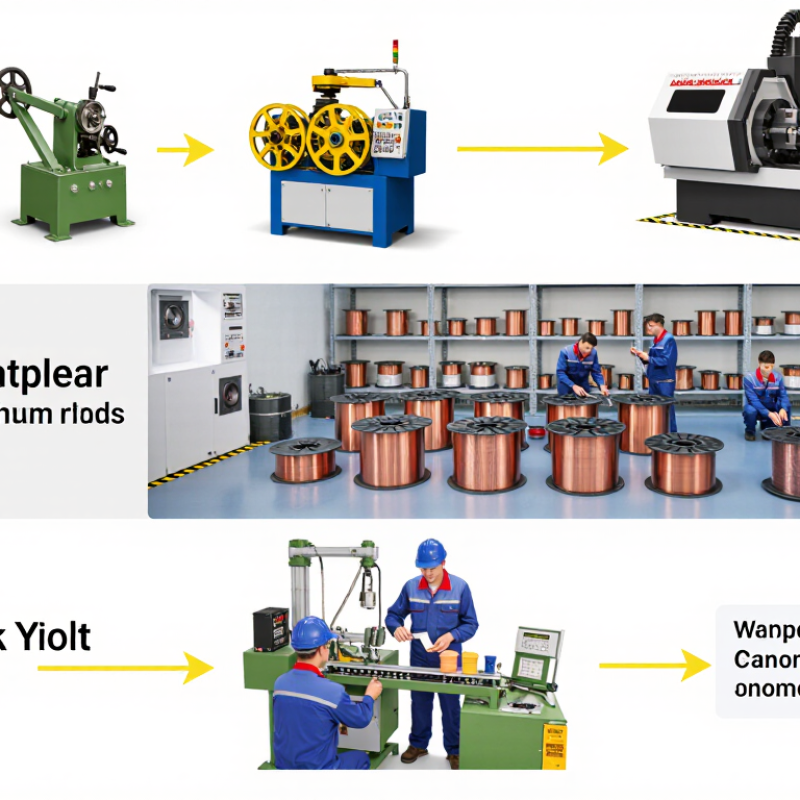
Which Type of Transformer Winding Machine Is Best in 2026?
Transformer winding machines differ by coil shape, conductor, and production volume. Manual or bench machines suit prototypes, repairs, and short runs. Operators guide the wire and insulation by hand, so skill matters. CNC layer-winding machines control turns, traverse, and tension for repeatable cylindrical coils. They are common choices for distribution-transformer windings. Foil-winding machines feed wide copper or aluminum strips, often with insulation between layers. They help produce compact low-voltage windings. Disc-winding machines form connected sections for larger power transformers, while toroidal machines wind wire around ring-shaped cores. Each type serves a distinct job.
The machine’s core functions are controlled rotation, accurate wire placement, tension management, and insulation handling. A practical selection starts with the transformer design: conductor dimensions, coil geometry, required output, and acceptable tolerances. Watch the wire cross a flange. Uneven tension can damage insulation or distort the coil. Still, automation is not a cure-all; setup errors can repeat neatly.
Industry context matters. The International Energy Agency’s 2023 report, Electricity Grids and Secure Energy Transitions, says annual grid investment must rise from about US$300 billion to over US$600 billion by 2030. This signals growing pressure on grid equipment supply, not a specific machine forecast. For buyers, that makes reliable changeovers and documented process settings valuable. A neat coil helps. There is no universal winner: a foil winder may be ideal for one design and unsuitable for another.

Transformer coil geometry, not headline speed, should guide machine selection. Layer-winding machines suit cylindrical coils with many turns and orderly insulation between layers. Their controlled traverse helps keep conductors aligned. A small offset can matter.
Disc-winding machines handle sectional coils used in many higher-voltage designs. Programmable winding and precise tension control help maintain consistent spacing between discs. Foil-winding machines are better suited to wide, low-voltage conductors carrying high current. They guide broad copper or aluminum strip, where edge alignment and insulation placement are critical. Too much tension can stretch insulation; too little may cause loose turns. That trade-off is easy to underestimate.
The International Energy Agency’s Electricity 2024 report projected average global electricity-demand growth of 3.4% per year from 2024 to 2026. This is not a direct measure of transformer orders, but it signals continued pressure on grid equipment production. Flexible CNC controls can help manufacturers switch coil specifications with less manual adjustment. Still, no machine type fits every design. Compare conductor width, coil diameter, turn count, insulation method, and changeover time using actual production samples. One weakness in many comparisons: setup effort gets less attention than rated speed.
| Winding machine type | Coil design it handles | Typical conductor | Where it is commonly used | Main advantages | Key considerations | Best fit |
|---|---|---|---|---|---|---|
| Layer-winding machine | Turn-by-turn layers arranged concentrically around a bobbin or cylindrical former. | Round or rectangular insulated wire; conductor size depends on the design. | Distribution transformers, instrument transformers, and many smaller power-transformer coils. | Produces orderly, repeatable layers and is well suited to designs with a defined winding sequence. | Layer insulation, wire tension, and turn placement need to match the electrical design; winding geometry can limit its suitability for some high-voltage coil arrangements. | Coils with regular layers and a consistent turn pattern. |
| Disc-winding machine | Axial disc sections made from turns arranged in a flat, pancake-like form, connected in the specified sequence. | Usually rectangular conductor, including transposed conductor where the design requires it. | Power-transformer windings, particularly designs that use disc arrangements for higher-voltage service. | Supports controlled disc spacing and insulation placement; the disc structure can help manage voltage distribution along the winding. | Requires accurate conductor placement, inter-disc insulation, and connection control. The winding layout must be designed for the required voltage and cooling conditions. | Transformers whose electrical design specifies disc-type windings. |
| Continuous-disc winding machine | A continuous conductor formed into successive discs without an individual joint between every disc. | Typically rectangular copper or aluminum conductor; conductor transposition may be incorporated when specified. | Power-transformer coils requiring a continuous-disc arrangement. | Can reduce the number of inter-disc conductor joints compared with arrangements that use separately connected discs. | Crossovers and disc transitions are design-sensitive and require precise guidance, insulation handling, and tension control. | Continuous-disc coils where joint reduction and accurate crossover placement are priorities. |
| Foil-winding machine | Turns formed by winding wide, thin foil with insulation between adjacent layers. | Copper or aluminum foil, commonly paired with insulating film or paper. | Low-voltage, high-current transformer windings, including many distribution and special-purpose designs. | Provides broad conductor contact across the winding width and can produce a compact, uniform coil when foil width and insulation are controlled. | Foil edges, insulation alignment, winding tension, and cooling paths require attention; foil thickness and width must suit the electrical and thermal design. | Low-voltage coils carrying substantial current and designed for foil conductors. |
| Toroidal-core winding machine | Wire wound through the center and around the circumference of a ring-shaped core. | Insulated copper or aluminum wire, selected to suit the transformer design. | Toroidal transformers used in power supplies, control equipment, and other applications designed around a toroidal core. | Automates repeated passes around the core and supports a compact winding layout that follows the core shape. | The core must fit the machine’s loading and shuttle arrangement; winding access, insulation, and lead management can constrain coil design. | Transformers specifically designed with a toroidal core. |
| Programmable CNC winding machine | Programmable winding paths for compatible bobbin-based or cylindrical coil designs; it is a control platform rather than a single coil geometry. | Round or rectangular wire, subject to machine tooling and the coil specification. | Repeat production of coils with defined winding patterns, turn counts, and traverse paths. | Stores winding programs and can improve repeatability for production runs when setup and process controls are appropriate. | Programming does not replace coil engineering: tooling, tension settings, insulation procedures, and operator verification remain important. | Manufacturers needing repeatable programmed winding for compatible coil designs. |
In 2026, compare transformer winding machines against real coil drawings, not brochure speed. The IEA’s Electricity Grids and Secure Energy Transitions (2023) says annual grid investment must rise from about $300 billion to over $600 billion by 2030. Its Electricity 2024 report projected global electricity demand growth of around 4% in 2024. These figures signal pressure on grid equipment, but they do not identify the right machine for your plant.
Check the wire diameter range, coil dimensions, winding tension control, spindle capacity, and traverse accuracy. Ask suppliers to wind a sample using your actual conductor and insulation. Then inspect turn placement, edge alignment, and coil shape. Small details matter. A fast cycle is less useful if operators spend several minutes correcting uneven layers. Compare setup time between different coil designs, too; frequent changeovers can erase gains from higher winding speed. Request repeatability data across several runs, not just one successful demonstration. I would not treat a single test as proof. Real shifts include material changes and operator variation.
Also assess programming, guarding, maintenance access, spare-part availability, and operator training. Record output per shift and rework rates during a production trial. A machine with more automation may still be a poor fit if your product mix changes often. The best choice is the one that meets today’s tolerances and leaves practical room for future coil designs.
Transformer winding machines should be matched to coil geometry, conductor type, and batch size—not selected by headline speed alone. The IEA’s Electricity 2024 report projects average global electricity-demand growth of 3.4% annually from 2024 to 2026. Its 2023 Grids report says annual grid investment needs to rise from about $300 billion to more than $600 billion by 2030. These figures indicate growing pressure on grid equipment production, but they do not prescribe one machine type. No universal winner.
Automatic layer or foil winders suit repeatable low-voltage coils and high-volume runs. They can feed strip conductor evenly and maintain consistent tension. For high-voltage disk coils, programmable disk winders offer better control over turns, spacing, and crossovers. Large power-transformer coils may call for vertical winding equipment, especially when handling heavy assemblies. Batch size matters. A flexible CNC winder can help with varied orders, though it may cost more per unit than a dedicated production line.
Before choosing, compare the machine’s usable diameter, conductor range, tension control, and changeover time against actual coil drawings. Request a trial run using your own conductor; a neat sample coil does not prove stable production across a full shift. I would also check how operators clear faults and record winding data. It is easy to overlook this. The best match is the machine that reliably meets insulation and dimensional tolerances without creating bottlenecks elsewhere in the factory.
Choosing a transformer winding machine starts with the coil, not the machine’s advertised speed. Layer-winding equipment suits many cylindrical coils using round or rectangular wire. Foil-winding machines handle broad, thin conductors, while toroidal winders are designed for ring-shaped cores. Match the machine’s tension control, traverse width, turn-count accuracy, and insulation handling to your drawings and conductor type. For mixed, low-volume orders, flexible setups may matter more than peak output. For repeat production, changeover time and consistent winding tension deserve close attention.
Tips: Bring a real coil drawing and sample conductor to the supplier. Test real coils. Check whether operators can set tension, wire guides, and turn counts without lengthy adjustments. Record the results.
Capacity pressure is real, but it does not mean every factory needs a faster line. The IEA’s 2023 report, Electricity Grids and Secure Energy Transitions, says transformer and cable lead times doubled over three years, while prices rose two- to threefold. That context favors reliable throughput and fewer winding defects, not speed alone. Ask for a trial using your actual materials, then inspect layer alignment, insulation placement, and finished-coil dimensions. There is no universal winner. A machine can meet its rated speed and still be a poor fit for frequent product changes; that trade-off is easy to underestimate.
Compare typical machine types by application fit. Scores are qualitative guidance on a 1–5 scale, not measured performance data.
Choose a manual machine for prototypes and short runs, a CNC layer winder for repeatable coil production, a foil winder for strip conductors, or a toroidal winder for toroidal cores. Confirm the choice against conductor type, coil geometry, production volume, and required tolerances.


For those larger-sized parts, or smaller quantity runs, we have 2 independent powder coat booths and ovens. The quality, durability and affordability of today’s powder coating finishes make this the process of choice for world-class companies.
Powder coating advantages over other forms of coating are many. Materials used in the Powder coating process can be metals and non-metals that come in a multitude of thicknesses, textures, colors, etc. Another of Powder coating’s biggest advantages over conventional coatings is its ability to create finishes in many different textures. Powder Coating Booths allow us the ability to apply these advantages to large products.
Tri-State Fabricators runs a full-service conveyor line for painting. Wet painting can provide protection or decoration to many different part styles. From start to finish, every project is easier to undergo random and point-based inspection by our skilled painting team.
Advantages to our Wet Paint Line are these lines start with product prep and ends with a thorough inspection of a high quality finished product. Our ability to complete large and small projects with a superior finish and doing so in a timely and economical fashion. This passes along the savings in production to our customers. When powder coating ins not an option, our Wet Paint Line gets the job done right the first time.
When the parts get big and heavy we roll-out our custom paint racks and oversize booth. By utilizing our partnerships with all the major paint brands, we can match virtually any color with wet paint.
The advantages of having access to a Wet Paint Booth are many. Large projects of many different shapes can be loaded into the booth. The Wet Paint Booth offers an environment that is much more controlled than a typical parts painting operation.
Not only are they used because of their controlled environment, but they’re are also advantageous when it comes to applying paint to parts that are needed in industries that require specialty coatings such as medical, aerospace, etc.
Our military forces have some very high standards when it comes to the finish of their vehicles and equipment. From the first pre-treatment step to final coat, it takes a great deal of knowledge and experience to protect the men and women of our armed forces. They deserve only the best, and Tri-State Fabricators provides it.
All of our processes are closely monitored by our staff and management teams. Both of which are highly trained in the processes of metal fabrication and finishing. Tri-State Fabricators’ goal is to always fully satisfy each and every customer, including the military. We will always put a 110% into what we do.
Abrasive media blasting is an excellent way to remove old paint, rust, and increase the paint/powder adhesion. Glass beads produce a much smoother and brighter finish than angular abrasives; leaving the part clean yet without any dimensional change. Chemically inert and environmentally friendly, we can recycle our beads approximately 30 times; making them a more preferred method of metal cleaning or surface finishing.
Advantages to Glass Bead Blasting are many. Glass bead blast media is used when a project is needing rough surfaces need to become smooth for applications of coatings such as paint. It is typically used to clean paint and rust from a product surface without deforming the surface it is being used on. Overall, compared to many other blasting media, Glass Bead Blasting is a very economical choice and those savings are always passed on to our customers.
Tri-State Fabricators utilize a zinc phosphate wash to clean and etch the material to ensure the best paint adhesion possible. The unique design of our 3-stage wash system does the work like a 5-stage. From Cleaning and rinsing to conversion coating and post-treatment, Our Part Washing process is a complete service and works throughout the fabrication service and the finishing service.
Along with the previously mentioned benefits, Curing is a vital chemical reaction that leaves the product finish hard and relatively safe from mild abrasion and aggressive corrosion. This process can be done in more than one way; ambient air-dry or in curing ovens at temps that exceed 240°.
From fixing paint mistakes (someone else’s of course) to simply cleaning our paint line hooks, our burn-off oven is put to good use. After a quick burn-off, a little clean up, and a fresh coat of paint, your parts will look better than new.
Why does our Burn-Off Oven work so well? Because super heating the air around parts turns the materials into ashes. From paint and powder coatings to rubber and machining oils, high temps do the job without degrading the integrity of the part.
Masking is a vital part of producing high quality products. We have die-cut masking patterns to protect machined surfaces as well as a wide range of plugs and caps to protect threaded holes and bolts. We provide permanent and temporary masking.
Masking allows the selected sections of a product to be protected from a fabrication or finishing service. This can be with both chemicals when etching and tapes, paints when only finishing just a section of the product. Masking is great in aiding the customization process of a project.
Screen printing is a photographic process that transfers artwork onto a porous nylon screen which allows colored ink to flow through the screen and be deposited on an aluminum or plastic component. We can generally have just about any design created onto a screen for your parts.
Some of the advantages of Screen Printing are, brand recognition for your business displaying on your products, assembly instructions, product warnings/hazards, etc. Tri-State Fabricators produces Screen Printing of the highest quality so you know it’s durable.
Metal Finishing is the art of treating the exterior portion of product, often metal but can also be made of other materials, so that the surface is clean and free of any debris. Then the process of applying coats or either paint of powder coat takes place. This coating process improves the quality of the product in both appearance and resistance to wear and corrosion.
Tri-State Fabricators, Inc., understands that a project typically isn’t complete until a high-quality finish has been added to your product. This is why our painting and powder coating teams continuously inspect the products throughout the Metal Finishing process.

