


10 Best Touch Power Switches for Global Buyers

Choosing a Touch Power Switch is not just a matter of finding a smooth glass panel. Buyers need to consider where it will be installed, what it will control, and how it feels in daily use. A kitchen switch may face frequent fingerprints and damp hands. A bedside model may need a clear indicator that is not too bright at night. Small details matter.

This guide compares ten options for buyers sourcing products across different markets. It looks at touch response, rated voltage and load, panel materials, wiring requirements, and available dimming or smart-home features. Specifications can vary by model and region, so check the manufacturer’s documentation before ordering. Where installation requirements are unclear, ask a qualified electrician rather than guessing.

Price alone tells an incomplete story. A polished finish does not prove durability, and a long feature list may not suit a simple room. Not every model fits. This comparison highlights practical trade-offs, including compatibility, ease of installation, and the clarity of product information. Some details are hard to judge from listings alone; that limitation is worth keeping in mind. The right choice depends on the existing wiring, the intended load, and the user’s priorities. For global buyers, confirming local compatibility before purchase can prevent avoidable delays and mismatched expectations.
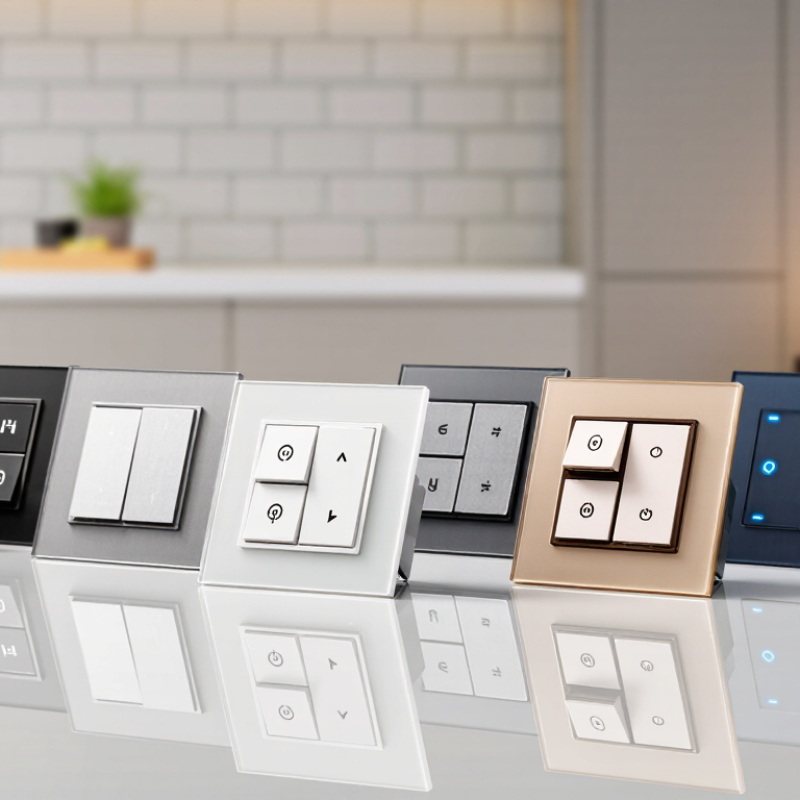
10 Best Touch Power Switches for Global Buyers

What Touch Power Switches Are and How They Work

A touch power switch replaces a moving toggle with a sensing surface, often glass or plastic. In capacitive models, a sensor tracks tiny changes in electrical capacitance when a finger approaches or touches the panel. A control circuit interprets that change, then switches the load through a relay or semiconductor. One light tap. No mechanical click. Some models also use resistive sensing, which responds to pressure rather than capacitance.

The operating idea is simple, but installation details matter. A switch must match the circuit voltage, load type, and rated current. Certain LED lamps may flicker or glow faintly if the switch and lamp are incompatible. Moisture, thick gloves, or poor grounding can also affect touch response. A 2025 MarketsandMarkets smart-home market report projected growth from $135.3 billion in 2025 to $203.2 billion by 2030. That broader forecast signals rising interest in connected controls, not proof that every touch switch is smart. Buyers should check wiring diagrams, load ratings, and whether a neutral wire is required. The panel can feel seamless. The wiring still deserves care.

10 Best Touch Power Switches for Global Buyers - What Touch Power Switches Are and How They Work

A touch power switch detects a finger touch, commonly by sensing a change in capacitance at its control surface. Its electronic controller then operates a switching element, such as a relay, MOSFET, or triac, to control a circuit. The sensing method and supported electrical load vary by design; always confirm the product’s voltage, current, load type, wiring, and regional safety approvals before purchase.

No. Switch Type How It Works Typical Use Power and Load Considerations Best For
1 Capacitive Touch Wall Switch A touch-sensitive front surface detects a change in capacitance and signals an internal switching circuit. Indoor lighting in homes, offices, and hospitality spaces. Available for different mains systems; check the rated voltage, current, wiring requirements, and supported lamp types. Buyers seeking a familiar wall-switch format with a smooth touch surface.
2 Touch Dimmer Switch A touch control switches the light and adjusts its output level through compatible dimming electronics. Dimmable residential or commercial lighting. Must match the lamp and driver dimming method. Minimum and maximum load ratings differ by model. Lighting installations that need adjustable brightness.
3 Multi-Gang Touch Panel Separate touch zones send independent control signals to one or more switching channels. Controlling multiple lighting circuits from one wall location. Check the number of independently controlled channels and the per-channel load rating. Rooms with several lighting zones or circuits.
4 Glass-Panel Touch Switch Capacitive electrodes sense a touch through an insulating glass front panel. Indoor lighting controls where a flat, wipe-clean surface is preferred. Glass thickness and construction affect touch sensitivity; confirm installation and electrical ratings. Buyers prioritizing a smooth, easy-to-clean control surface.
5 Sealed Touch Switch A sealed touch-sensitive surface registers input without requiring a moving button to pass through the enclosure. Locations where dust or splashes may be present, when the specific enclosure is rated for the environment. Ingress protection depends on the complete installed product. Verify its IP rating and suitability for the location. Installations needing a cleanable control surface; not a substitute for checking environmental ratings.
6 Low-Voltage Touch Module A touch-sensing circuit provides a control signal to an onboard or external switching device. Electronics projects, control panels, and low-voltage equipment. Supply and output ratings vary widely. Confirm DC input range, output type, polarity, and current limits. Integrators who need a touch input for a separately specified load.
7 Latching Touch Switch Module Each touch alternates the output between on and off states, with the circuit retaining its state after release. On/off control in compact electronic devices and panels. Check whether the output is a relay, transistor, or other switching type, and verify its load limits. Applications requiring toggle-style operation from a brief touch.
8 Momentary Touch Switch Module The output is active while the touch is detected, then returns to its default state after release. Signal inputs, user-interface controls, and trigger circuits. Often intended as a control signal rather than direct mains-load switching; follow the module’s output specifications. Equipment that needs a brief touch-activated command.
9 Touch Switch with Relay Output A touch controller energizes a relay, which opens or closes an electrical circuit. Switching compatible lighting or appliances where electrical isolation is required. Confirm the relay’s AC/DC voltage and current ratings, load category, and any limits for inrush current. Designs that need a touch control paired with a mechanical relay output.
10 Touch Switch with Solid-State Output A semiconductor device switches the load electronically; AC and DC versions use different output technologies. Electronic equipment and applications where silent switching or frequent operation is useful. Check AC/DC compatibility, heat dissipation, leakage current, minimum load, and the specified load type. Buyers who need silent operation and can match the output to the load.

Key Types and Features of Touch Power Switches

Touch power switches generally use capacitive sensing: a finger changes the electrical field beneath a glass or plastic panel, triggering the circuit. They have no exposed moving parts and are easy to wipe clean. Some models offer a simple on/off function; others add dimming or multiple touch zones. A quick tap may switch a light, while a longer press adjusts brightness. Simple enough.

Other designs use piezoelectric touch sensors, which respond to pressure on a solid surface. They can suit demanding environments, though the feel and response differ from capacitive panels. Wireless touch switches add remote or app control, but their features depend on the receiver and power supply. Check compatibility, not just appearance.

Useful details matter more than a glossy face. Confirm the rated voltage and load type, especially for LED lighting, which may flicker with an incompatible dimmer. Check whether the switch requires a neutral wire; older wall boxes may not have one. For bathrooms or kitchens, review the stated moisture protection and installation location. Glass panels can show fingerprints, and sensitive sensors may react unpredictably near moisture. That is easy to overlook. A clear wiring diagram, dependable touch response, and suitable electrical rating are stronger buying signals than extra modes. When uncertain, ask a qualified electrician to verify the installation.

How to Evaluate Touch Switches for Global Use

10 Best Touch Power Switches for Global Buyers

How to Evaluate Touch Switches for Global Use

Global buyers should check the electrical rating before comparing glass finishes or touch sensitivity. Supply voltage and frequency vary between markets, and a switch rated for one installation may not suit another. Verify its stated voltage, current, load type, and wiring method against the actual site conditions. For LED loads, confirm low-load performance and compatibility with dimmers; flicker can appear even when the switch responds reliably. Small details matter.

Environmental and immunity data deserve equal attention. Check the stated operating temperature, humidity range, ingress protection, and required installation enclosure. IEC 61000-4-2:2008 defines Level 4 electrostatic-discharge tests at 8 kV contact and 15 kV air discharge. This is a useful benchmark, not proof that a product passes; request the test report and confirm which model was tested. Also look for documented checks against relevant installation and safety standards, such as IEC 60669 for household switches. A polished specification sheet can still leave questions unanswered. Ask about neutral-wire requirements, standby consumption, and behavior after a power interruption. Compare certificates, test conditions, and warranty terms across suppliers, rather than relying on a single headline rating. A lab result may not mirror every real installation, so leave room for site testing.

10 Best Touch Power Switches for Global Buyers

The 10 best touch power switches for global buyers are not simply the sleekest models. A good choice must match the local supply, connected load, and installation conditions. Check the rated voltage and current, then confirm whether the switch supports the intended load, such as LED lighting or a fan. Some products need a neutral wire; others do not. That difference can change installation time and compatibility. Small details matter.

Compare the touch response, panel material, and operating indicators. A glass surface may wipe clean easily, but fingerprints can show under bright kitchen lights. Check whether the switch includes clear wiring instructions and safety documentation for the destination market. Requirements differ by country, so buyers should verify them with a qualified local installer. No shortlist is perfect. Product specifications can also leave practical questions unanswered, such as how the touch panel behaves with damp fingers.

Tips: Before ordering, photograph the existing wiring and record the box dimensions. Ask the supplier to confirm load compatibility in writing. Have installation checked by a qualified electrician, especially when the circuit or wiring is unfamiliar.

Installation, Compatibility, and Safety Considerations

A touch power switch should match the wiring behind the wall, not just the room’s decor. Check rated voltage, frequency, current, load type, and whether the circuit provides a neutral wire. LED lamps can flicker or fail to switch off when a control’s minimum-load requirements are unmet. A dimmer-compatible label does not guarantee compatibility with every lamp. Small details matter. Measure the wall-box depth, too; some electronic switches need more space for wiring and heat dissipation.

Safety deserves equal attention. NFPA’s Electrical Fires in U.S. Homes report estimated 46,700 annual home fires involving electrical failure or malfunction during 2015–2019. These figures cover many electrical causes, not touch switches alone, but they show why careful installation matters. Isolate the circuit and verify it is de-energized before work; use a qualified electrician when wiring or local requirements are unclear. For global sourcing, review the applicable edition of IEC 60669-2-1, which addresses electronic control devices for household fixed installations, and confirm required local approvals. Not always obvious. Product labels may omit details about neutral-wire needs, compatible loads, or installation conditions, so request the technical datasheet before ordering.

Powder Coat Booths

For those larger-sized parts, or smaller quantity runs, we have 2 independent powder coat booths and ovens. The quality, durability and affordability of today’s powder coating finishes make this the process of choice for world-class companies.

Powder coating advantages over other forms of coating are many. Materials used in the Powder coating process can be metals and non-metals that come in a multitude of thicknesses, textures, colors, etc. Another of Powder coating’s biggest advantages over conventional coatings is its ability to create finishes in many different textures. Powder Coating Booths allow us the ability to apply these advantages to large products.

Wet Paint Line

Tri-State Fabricators runs a full-service conveyor line for painting. Wet painting can provide protection or decoration to many different part styles. From start to finish, every project is easier to undergo random and point-based inspection by our skilled painting team.

Advantages to our Wet Paint Line are these lines start with product prep and ends with a thorough inspection of a high quality finished product. Our ability to complete large and small projects with a superior finish and doing so in a timely and economical fashion. This passes along the savings in production to our customers. When powder coating ins not an option, our Wet Paint Line gets the job done right the first time.

Wet Paint Booths

When the parts get big and heavy we roll-out our custom paint racks and oversize booth. By utilizing our partnerships with all the major paint brands, we can match virtually any color with wet paint.

The advantages of having access to a Wet Paint Booth are many. Large projects of many different shapes can be loaded into the booth. The Wet Paint Booth offers an environment that is much more controlled than a typical parts painting operation.

Not only are they used because of their controlled environment, but they’re are also advantageous when it comes to applying paint to parts that are needed in industries that require specialty coatings such as medical, aerospace, etc.

Military CARC

Our military forces have some very high standards when it comes to the finish of their vehicles and equipment. From the first pre-treatment step to final coat, it takes a great deal of knowledge and experience to protect the men and women of our armed forces. They deserve only the best, and Tri-State Fabricators provides it.

All of our processes are closely monitored by our staff and management teams. Both of which are highly trained in the processes of metal fabrication and finishing. Tri-State Fabricators’ goal is to always fully satisfy each and every customer, including the military. We will always put a 110% into what we do.

Glass-Bead Blasting

Abrasive media blasting is an excellent way to remove old paint, rust, and increase the paint/powder adhesion. Glass beads produce a much smoother and brighter finish than angular abrasives; leaving the part clean yet without any dimensional change. Chemically inert and environmentally friendly, we can recycle our beads approximately 30 times; making them a more preferred method of metal cleaning or surface finishing.

Advantages to Glass Bead Blasting are many. Glass bead blast media is used when a project is needing rough surfaces need to become smooth for applications of coatings such as paint. It is typically used to clean paint and rust from a product surface without deforming the surface it is being used on. Overall, compared to many other blasting media, Glass Bead Blasting is a very economical choice and those savings are always passed on to our customers.

Part Washing

Tri-State Fabricators utilize a zinc phosphate wash to clean and etch the material to ensure the best paint adhesion possible. The unique design of our 3-stage wash system does the work like a 5-stage. From Cleaning and rinsing to conversion coating and post-treatment, Our Part Washing process is a complete service and works throughout the fabrication service and the finishing service.

Along with the previously mentioned benefits, Curing is a vital chemical reaction that leaves the product finish hard and relatively safe from mild abrasion and aggressive corrosion. This process can be done in more than one way; ambient air-dry or in curing ovens at temps that exceed 240°.

Burn-Off Oven

From fixing paint mistakes (someone else’s of course) to simply cleaning our paint line hooks, our burn-off oven is put to good use. After a quick burn-off, a little clean up, and a fresh coat of paint, your parts will look better than new.

Why does our Burn-Off Oven work so well? Because super heating the air around parts turns the materials into ashes. From paint and powder coatings to rubber and machining oils, high temps do the job without degrading the integrity of the part.

Masking

Masking is a vital part of producing high quality products. We have die-cut masking patterns to protect machined surfaces as well as a wide range of plugs and caps to protect threaded holes and bolts. We provide permanent and temporary masking.

Masking allows the selected sections of a product to be protected from a fabrication or finishing service. This can be with both chemicals when etching and tapes, paints when only finishing just a section of the product. Masking is great in aiding the customization process of a project.

Screen Printing

Screen printing is a photographic process that transfers artwork onto a porous nylon screen which allows colored ink to flow through the screen and be deposited on an aluminum or plastic component. We can generally have just about any design created onto a screen for your parts.

Some of the advantages of Screen Printing are, brand recognition for your business displaying on your products, assembly instructions, product warnings/hazards, etc. Tri-State Fabricators produces Screen Printing of the highest quality so you know it’s durable.

Metal Finishing

Metal Finishing is the art of treating the exterior portion of product, often metal but can also be made of other materials, so that the surface is clean and free of any debris. Then the process of applying coats or either paint of powder coat takes place. This coating process improves the quality of the product in both appearance and resistance to wear and corrosion.

Tri-State Fabricators, Inc., understands that a project typically isn’t complete until a high-quality finish has been added to your product. This is why our painting and powder coating teams continuously inspect the products throughout the Metal Finishing process.


