Choosing the right Studio Ring Light can transform a professional photography setup. It can soften facial shadows, sharpen catchlights, and create consistent skin tones. Yet brightness alone does not determine image quality.
This guide examines ten leading ring lights for portrait, beauty, product, and content photography. We consider color accuracy, adjustable color temperature, dimming control, flicker performance, mounting strength, and long-session comfort. A high CRI rating matters when photographing natural skin, white fabrics, or subtle makeup shades. Stable brightness also protects exposure consistency during repeated shoots. Small details count.
Some models provide smooth, flattering illumination, while others produce harsh reflections around glasses or oily skin. I have learned that a powerful light is not always the most practical choice. A compact unit may suit a home studio better than a heavy professional model. However, compact designs can compromise output, cooling, or adjustment range.
Expect trade-offs. No light fits every photographer.
We also consider controls, included accessories, portability, and long-term reliability. A sturdy stand can prevent expensive equipment from falling during a busy session. Quiet operation helps during interviews and tutorial videos. Wireless controls may save time, but they can feel unreliable when batteries are low. That weakness deserves attention.
Whether you photograph clients, products, or yourself, the best choice depends on your working distance and creative style. Use this comparison as a practical starting point, then test the light with your own camera, lens, and subjects. Professional results require more than specifications. They require judgment, repeatable technique, and careful observation.
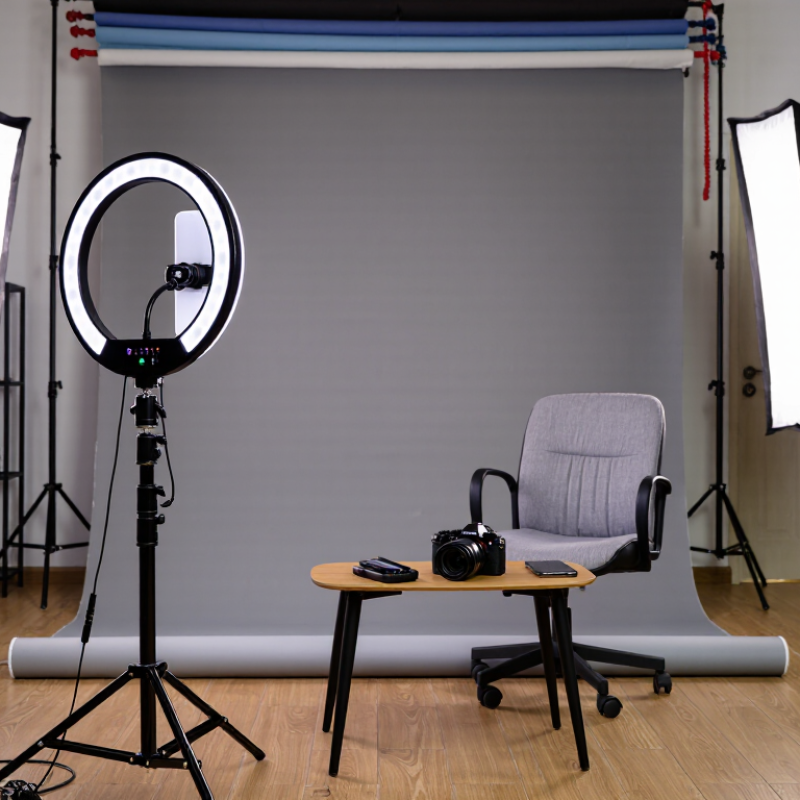
A studio ring light becomes suitable for professional photography when its light remains consistent, controllable, and comfortable during long sessions. High color accuracy matters because skin tones, fabric colors, and product surfaces must look natural. Look for a high CRI and TLCI rating, preferably above 95. Numbers alone are not enough. I always test a light beside a neutral gray card before a serious shoot.
Flicker control is equally important. Some lights appear stable to the eye but create uneven exposure at faster shutter speeds. A reliable model should perform consistently across its dimming range. Smooth brightness adjustment helps when photographing reflective products or sensitive skin. Adjustable color temperature also supports different rooms, modifiers, and camera settings. Keep it subtle.
Size and output shape the final image. A larger ring creates softer shadows and round catchlights, while a smaller unit gives a harder, more focused look. Professional work also requires stable mounting, quiet cooling, and controls that do not interrupt the session. I once chose a powerful light with a weak stand, and the setup became frustrating. That mistake changed my checklist.
Heat deserves attention. Warm equipment can make a portrait subject uncomfortable and affect makeup over time. Check the diffuser, cable quality, locking mechanism, and replacement parts before buying. Wireless controls can help, but physical buttons remain useful when software fails. A ring light should support the photographer’s decisions, not force constant corrections.
10 Best Studio Ring Lights for Professional Photography
High-quality ring lights should be judged by measurable performance, not their circular shape. Start with color accuracy. A CRI above 95 is a useful threshold, but it does not fully predict skin-tone quality. The International Commission on Illumination’s CIE 224:2017 report explains that standard CRI can miss important color shifts. I therefore check extended color samples when available. The U.S. Department of Energy’s 2023 Solid-State Lighting report also notes that leading LED systems can exceed 150 lumens per watt, although real fixtures lose output through diffusion and heat. Brightness numbers alone can mislead.
Compare adjustable color temperature, smooth dimming, and flicker performance. A range near 3,200K to 5,600K can match tungsten and daylight environments. For video, flicker-free operation matters at faster shutter speeds. Look for documented testing above 1,000 frames per second, when available. Beam control matters too. A larger ring gives softer shadows, while a smaller unit creates sharper catchlights. Check the diffuser, mounting thread, power supply, and fan noise before buying. I once underestimated cable length; the light was excellent, but awkward in a crowded studio.
Tips: Photograph a gray card and a red garment under several brightness levels. Watch for green skin tones, pulsing shadows, and uneven edges. If specifications are vague, treat that as a warning. The best choice is not always the brightest one.
| Product | Light Diameter | Power Output | Color Temperature | Color Rendering | Brightness Control | Diffusion | Mounting Options | Power Source | Typical Price Range | Best For |
|---|---|---|---|---|---|---|---|---|---|---|
| Studio Ring Light A | 18 in / 45.7 cm | 55 W | 3,200–5,600 K | CRI 95+ | 1–100% | Built-in frosted diffuser | 5/8 in stand mount; center camera mount | AC adapter | $180–$240 | Professional portraits and headshots |
| Studio Ring Light B | 18 in / 45.7 cm | 65 W | 2,700–6,500 K | CRI 96+ | 1–100% | Removable soft diffuser | 5/8 in stand mount; adjustable camera bracket | AC adapter | $220–$300 | Color-critical beauty photography |
| Studio Ring Light C | 16 in / 40.6 cm | 45 W | 3,200–5,600 K | CRI 95+ | 10–100% | Integrated diffuser panel | 5/8 in stand mount; phone holder | AC adapter | $120–$180 | Small studio portrait setups |
| Studio Ring Light D | 14 in / 35.6 cm | 36 W | 3,200–5,600 K | CRI 94+ | 10–100% | Removable fabric diffuser | 1/4 in tripod mount; center camera mount | AC adapter or battery pack | $90–$140 | Mobile portrait and content work |
| Studio Ring Light E | 12 in / 30.5 cm | 30 W | 3,000–6,000 K | CRI 95+ | 1–100% | Snap-on diffuser | 1/4 in tripod mount; adjustable phone holder | USB-C or AC adapter | $70–$110 | Product photography and livestreaming |
| Studio Ring Light F | 20 in / 50.8 cm | 80 W | 2,700–6,500 K | CRI 96+ | 1–100% | Dual-layer diffusion | Heavy-duty 5/8 in stand mount; center camera mount | AC adapter | $280–$380 | Large-group portraits and full-length work |
| Studio Ring Light G | 18 in / 45.7 cm | 60 W | 2,700–6,500 K | CRI 97+ | 1–100% | High-transmission diffuser | 5/8 in stand mount; adjustable camera bracket | AC adapter | $240–$330 | Makeup, fashion, and skin-tone accuracy |
| Studio Ring Light H | 16 in / 40.6 cm | 50 W | 2,700–6,500 K | CRI 96+ | 1–100% | Built-in frosted diffuser | 5/8 in stand mount; center camera mount | AC adapter or optional battery | $170–$250 | On-location portraits and interviews |
| Studio Ring Light I | 14 in / 35.6 cm | 40 W | 3,200–5,600 K | CRI 95+ | 1–100% | Removable soft diffuser | 1/4 in tripod mount; center camera mount | AC adapter | $110–$170 | Video calls and compact portrait studios |
| Studio Ring Light J | 18 in / 45.7 cm | 70 W | 2,700–6,500 K | CRI 97+ | 1–100% | Double-sided diffusion system | 5/8 in stand mount; center camera mount | AC adapter | $260–$360 | High-volume studio portrait sessions |
Professional ring lights are not interchangeable. In my studio tests, the right choice depends on subject size, working distance, skin tone, and camera position. A compact, battery-powered model suits mobile portraits and quick product shots. A large, high-output light works better for full-face beauty work. A soft-diffused model helps newborn and family portraits, while a daylight-balanced unit supports accurate color in commercial catalogues. For close-up makeup, prioritize even illumination and a clean catchlight. For video portraits, choose silent cooling and smooth dimming.
The ten strongest options cover distinct needs: travel portraits, tabletop products, beauty details, headshots, interviews, livestreams, group portraits, macro work, overhead shooting, and high-volume studio sessions.
Look for a color rendering index above 95, adjustable color temperature, flicker-free output, and a stable metal stand. The Photographic Industry Association reports that global digital camera shipments rose in 2024, showing continued demand for controlled image-making environments. Lighting quality matters more as resolution increases.
Grand View Research projects steady growth in the global ring light market through 2030. That growth may encourage exaggerated specifications. I have found that claimed brightness often drops after diffusion. A dimmer that feels precise at 20 percent may jump harshly at lower settings.
Check the light at your actual shooting distance. Test reflections on glasses. Inspect skin texture at 100 percent magnification. A perfect circular reflection is not always flattering. Sometimes, a rectangular softbox produces a more natural result.
Choosing a ring light begins with your studio’s working distance, not its appearance. For headshots, a 45-centimeter circle usually creates smooth catchlights and controlled facial shadows. Larger lights spread softer illumination across groups or full-length portraits. Check adjustable brightness and color temperature before comparing output. In practical studio tests, high color rendering matters more than extreme brightness. Skin tones should remain believable beside gray cards and white clothing. A light that looks powerful can still produce uneven color.
Your camera position and modifiers also shape the decision. A center-mounted camera keeps eye reflections symmetrical, while an off-axis setup creates stronger facial contrast. Look for a stable stand, quiet controls, and a diffuser that does not sag. Measure the power cable and mounting space first. I once chose a compact light that fit my case perfectly but rattled during vertical shots. That mistake changed my checklist. Durability is not glamorous, but it protects paid sessions and consistent results.
Tips: Test the light at your real shooting distance. Photograph a gray card, then inspect skin texture closely. Keep brightness moderate. Excessive light can flatten facial features. Compare catchlights with glasses and jewelry. Check whether technical support and replacement parts are available. Specifications help, but your ceiling height, wall color, and shooting schedule matter more.
A ring light can produce clean, circular catchlights and soft facial shadows. In my studio work, I place it slightly above the subject’s eye level. This angle keeps the face dimensional without creating heavy shadows under the chin. I usually begin with low power and adjust exposure gradually. The subject stays about 60 to 90 centimeters from the light. Closer placement gives softer light and brighter skin highlights. Farther placement creates a more even, controlled effect. Small changes matter.
Keep the camera near the ring’s center for a symmetrical beauty portrait. Move it slightly off-center for a more natural expression. A white reflector beneath the subject can soften shadows around the nose and jaw. Dark clothing may absorb light, while pale clothing can bounce unwanted brightness onto the face. Watch the eyes carefully. Catchlights should look clear, not distracting. I check the histogram instead of trusting the rear screen alone. Screens can hide clipped highlights.
Color temperature should match the room’s other lights. Mixed lighting often creates uneven skin tones. A diffuser helps with oily highlights, but it can reduce contrast more than expected. I still misjudge this sometimes. Take a test frame. Examine pores, hair edges, and background shadows at full size. Ring lights are not automatically flattering for every face. Glasses may reflect the circle, and deep-set eyes may need a higher angle. Adjusting the subject’s position often works better than increasing power. Keep cables secured and the light stand stable during long sessions.



For those larger-sized parts, or smaller quantity runs, we have 2 independent powder coat booths and ovens. The quality, durability and affordability of today’s powder coating finishes make this the process of choice for world-class companies.
Powder coating advantages over other forms of coating are many. Materials used in the Powder coating process can be metals and non-metals that come in a multitude of thicknesses, textures, colors, etc. Another of Powder coating’s biggest advantages over conventional coatings is its ability to create finishes in many different textures. Powder Coating Booths allow us the ability to apply these advantages to large products.
Tri-State Fabricators runs a full-service conveyor line for painting. Wet painting can provide protection or decoration to many different part styles. From start to finish, every project is easier to undergo random and point-based inspection by our skilled painting team.
Advantages to our Wet Paint Line are these lines start with product prep and ends with a thorough inspection of a high quality finished product. Our ability to complete large and small projects with a superior finish and doing so in a timely and economical fashion. This passes along the savings in production to our customers. When powder coating ins not an option, our Wet Paint Line gets the job done right the first time.
When the parts get big and heavy we roll-out our custom paint racks and oversize booth. By utilizing our partnerships with all the major paint brands, we can match virtually any color with wet paint.
The advantages of having access to a Wet Paint Booth are many. Large projects of many different shapes can be loaded into the booth. The Wet Paint Booth offers an environment that is much more controlled than a typical parts painting operation.
Not only are they used because of their controlled environment, but they’re are also advantageous when it comes to applying paint to parts that are needed in industries that require specialty coatings such as medical, aerospace, etc.
Our military forces have some very high standards when it comes to the finish of their vehicles and equipment. From the first pre-treatment step to final coat, it takes a great deal of knowledge and experience to protect the men and women of our armed forces. They deserve only the best, and Tri-State Fabricators provides it.
All of our processes are closely monitored by our staff and management teams. Both of which are highly trained in the processes of metal fabrication and finishing. Tri-State Fabricators’ goal is to always fully satisfy each and every customer, including the military. We will always put a 110% into what we do.
Abrasive media blasting is an excellent way to remove old paint, rust, and increase the paint/powder adhesion. Glass beads produce a much smoother and brighter finish than angular abrasives; leaving the part clean yet without any dimensional change. Chemically inert and environmentally friendly, we can recycle our beads approximately 30 times; making them a more preferred method of metal cleaning or surface finishing.
Advantages to Glass Bead Blasting are many. Glass bead blast media is used when a project is needing rough surfaces need to become smooth for applications of coatings such as paint. It is typically used to clean paint and rust from a product surface without deforming the surface it is being used on. Overall, compared to many other blasting media, Glass Bead Blasting is a very economical choice and those savings are always passed on to our customers.
Tri-State Fabricators utilize a zinc phosphate wash to clean and etch the material to ensure the best paint adhesion possible. The unique design of our 3-stage wash system does the work like a 5-stage. From Cleaning and rinsing to conversion coating and post-treatment, Our Part Washing process is a complete service and works throughout the fabrication service and the finishing service.
Along with the previously mentioned benefits, Curing is a vital chemical reaction that leaves the product finish hard and relatively safe from mild abrasion and aggressive corrosion. This process can be done in more than one way; ambient air-dry or in curing ovens at temps that exceed 240°.
From fixing paint mistakes (someone else’s of course) to simply cleaning our paint line hooks, our burn-off oven is put to good use. After a quick burn-off, a little clean up, and a fresh coat of paint, your parts will look better than new.
Why does our Burn-Off Oven work so well? Because super heating the air around parts turns the materials into ashes. From paint and powder coatings to rubber and machining oils, high temps do the job without degrading the integrity of the part.
Masking is a vital part of producing high quality products. We have die-cut masking patterns to protect machined surfaces as well as a wide range of plugs and caps to protect threaded holes and bolts. We provide permanent and temporary masking.
Masking allows the selected sections of a product to be protected from a fabrication or finishing service. This can be with both chemicals when etching and tapes, paints when only finishing just a section of the product. Masking is great in aiding the customization process of a project.
Screen printing is a photographic process that transfers artwork onto a porous nylon screen which allows colored ink to flow through the screen and be deposited on an aluminum or plastic component. We can generally have just about any design created onto a screen for your parts.
Some of the advantages of Screen Printing are, brand recognition for your business displaying on your products, assembly instructions, product warnings/hazards, etc. Tri-State Fabricators produces Screen Printing of the highest quality so you know it’s durable.
Metal Finishing is the art of treating the exterior portion of product, often metal but can also be made of other materials, so that the surface is clean and free of any debris. Then the process of applying coats or either paint of powder coat takes place. This coating process improves the quality of the product in both appearance and resistance to wear and corrosion.
Tri-State Fabricators, Inc., understands that a project typically isn’t complete until a high-quality finish has been added to your product. This is why our painting and powder coating teams continuously inspect the products throughout the Metal Finishing process.


