10 Best Steel Rebar Manufacturers for Global Buyers?
Choosing a rebar supplier is not a catalogue exercise. A missed shipment can leave a jobsite crane idle, while inconsistent bar markings can complicate inspection. Buyers need evidence behind each promise: mill test certificates, clear grade specifications, production capacity, and realistic delivery terms. The World Steel Association’s October 2024 Short Range Outlook projected global steel demand would rise 1.2% in 2025, to about 1.77 billion tonnes. This figure covers steel overall, not reinforcing bar alone, but it signals the scale of a market where supply and logistics matter. Forecasts are not guarantees.
A capable Steel Rebar Manufacturer should show how its products meet the buyer’s stated standards, and explain traceability from production to shipment. Edwin Basson, Director General of the World Steel Association, has described steel as “the backbone of modern society.” That broad observation has practical weight: rebar sits inside concrete, largely unseen, yet its grade, ductility, and documentation affect structural performance. This guide compares ten manufacturers for global buyers, considering product range, quality controls, export experience, and communication—not just quoted price. A polished website is not proof. Ask for recent certificates, verify the issuing mill, and check whether the offered dimensions match the project specification. Small discrepancies matter.
No ranking can replace project-specific due diligence. Useful starting points, though.
What Steel Rebar Is and Its Role in Construction
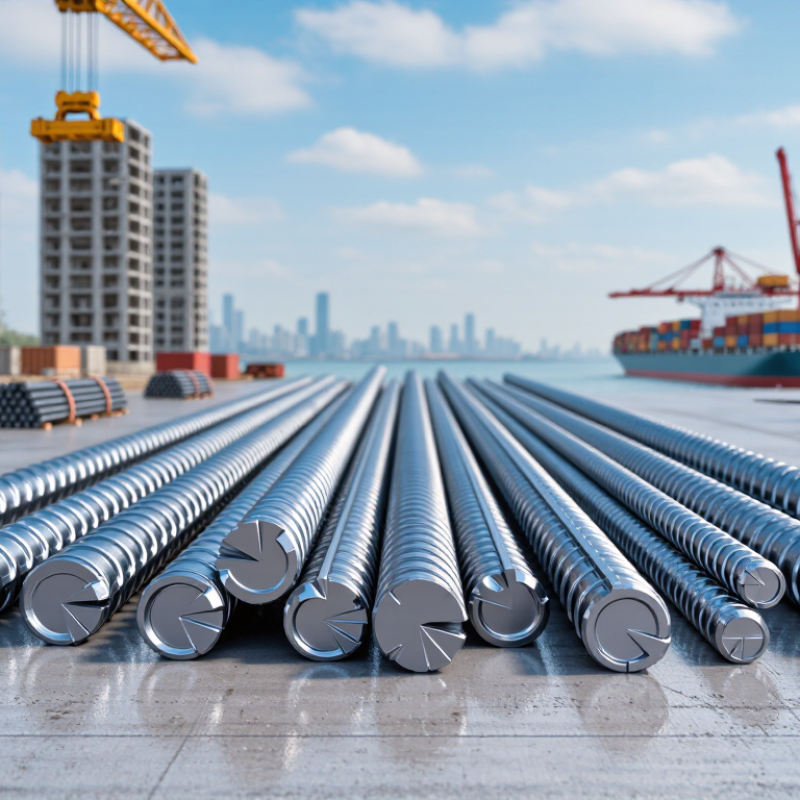
Steel rebar, also called reinforcing bar, is a steel rod embedded in concrete. Concrete resists compression well but is comparatively weak when pulled or bent. Rebar helps carry these tensile forces, reducing the risk of cracks widening under loads from floors, vehicles, or wind. That is the basic role. It does not make concrete immune to damage.
Most bars have raised ribs that help them grip the surrounding concrete. Their diameter, grade, spacing, and position are selected to suit the structural design. On site, crews tie bars into a cage before concrete is poured. A misplaced bar can affect performance, even when the steel itself meets specification. Small details matter. Concrete cover—the distance between rebar and the surface—also helps protect steel from moisture and exposure.
For global buyers, it is useful to check the stated grade, dimensions, test results, and applicable project requirements before ordering. Documentation can help confirm that delivered material matches the purchase specification, but it cannot replace careful site checks. Storage matters, too: bars left in standing water or exposed to harsh conditions may need closer assessment before use. The drawings may look clear; real job sites are less tidy. That gap deserves attention.
How to Assess Steel Rebar Manufacturers for Global Sourcing
Global rebar sourcing begins with a clear specification, not a price comparison. World Steel Association’s World Steel in Figures 2024 reports 1,892.2 million tonnes of crude steel production in 2023. That scale signals a broad supplier base, but it does not guarantee consistent rebar quality. Buyers should confirm which standard applies to the project, such as ASTM A615, ASTM A706, or EN 10080. Requirements differ. Check yield strength, elongation, bend performance, bar diameter, and rib geometry against the purchase specification.
Ask manufacturers for mill test certificates tied to specific heat numbers and bundles. Then verify that traceability survives cutting, bundling, and shipment. Paper is not performance. Independent testing of a representative shipment can reveal mismatched chemistry or dimensions before installation. ISO 6935-2 provides requirements for reinforcing steel bars, while accredited laboratories can test samples against the relevant project standard. A certificate alone is not enough; confirm its scope and issuing laboratory.
Production capacity and export experience matter, but test them with practical questions. Can the mill maintain the same grade across repeat orders? How does it handle surface rust, damaged bundles, or delayed vessel bookings? Request recent inspection records, a production schedule, and packaging photographs showing bundle tags. Worldsteel’s production figures describe crude steel, not certified rebar output, so buyers should avoid treating national totals as proof of a mill’s capability. I would still leave room for a small trial order; forecasts and documents can look reassuring until the first shipment arrives.
Steel Rebar Manufacturer Assessment: ASTM A615 Minimum Yield Strength by Grade
A standards-based reference for comparing whether a supplier can meet the specified rebar grade.
ASTM A615 grade designations correspond to minimum yield strengths in ksi: Grade 40 = 40 ksi, Grade 60 = 60 ksi, Grade 75 = 75 ksi, Grade 80 = 80 ksi, and Grade 100 = 100 ksi. Use the project’s required grade to screen suppliers, then verify compliance against the applicable standard edition and mill test certificates. Source: ASTM A615/A615M.
10 Leading Steel Rebar Manufacturers for Global Buyers
Selecting 10 leading Steel Rebar Manufacturers for global buyers means looking beyond production capacity. World Steel Association’s World Steel in Figures 2024 reports 1,892.2 million tonnes of crude steel production in 2023. This measures crude steel, not rebar output, so it cannot prove a mill’s product availability. Ask for rebar-specific capacity, export history, and the standards each product is tested against. A large mill is not automatically the right supplier.
Technical evidence matters on the ground. Review recent mill test certificates, heat numbers, bundle tags, and dimensional tolerances. Check whether the declared grade matches your project specification, and confirm that test results can be traced to the delivered bundles. Ask about minimum order quantities, rolling schedules, and port handling. A delayed vessel can undo an otherwise good price. Rankings can help start a shortlist, but they often hide differences in service and regional supply.
Tips: Request a sample certificate before ordering. Compare chemistry, yield strength, elongation, and bend-test results against your required standard. Confirm bundle weights and tag details in writing. For a trial shipment, inspect several bundles—not just the easiest one to reach. Small checks catch awkward surprises. A polished brochure is useful, but it is not proof of consistent production.
Comparing Manufacturers by Products, Certifications, and Export Reach
A credible comparison of ten rebar manufacturers starts with the steel itself: available diameters, grades, rib patterns, and documented mechanical properties. World Steel Association’s World Steel in Figures 2024 reports 1,888.2 million tonnes of crude steel production in 2023, showing the scale of a highly varied supply market. Scale alone proves little. Ask for recent mill test certificates and check that heat numbers match the bundles arriving at the port. For seismic or welded applications, confirm the required ductility and chemical limits rather than relying on a broad “high-strength” claim.
Certifications and export performance separate convenient suppliers from dependable ones. Check whether quality-management certificates are current, and whether product approvals apply to the destination market and exact rebar grade. OECD’s 2024 analysis of steelmaking capacity highlights ongoing capacity growth amid uneven demand; buyers should therefore compare delivery records, not just quoted prices. Ask for shipment histories, port options, packaging details, and realistic lead times. A distant supplier may offer the right specification but struggle with repeat schedules. Paperwork can mislead. Even strong manufacturers sometimes provide incomplete traceability, and that deserves a second look before purchase orders are placed.
How to Verify Suppliers and Choose the Right Rebar Manufacturer
Global steel volume makes supplier verification essential. The World Steel Association’s World Steel in Figures 2024 reports 1,892.2 million tonnes of crude steel production in 2023. OECD’s Steel Outlook 2024 puts global steel demand that year at about 1.76 billion tonnes. These figures describe steel overall, not rebar alone, but they show the scale and complexity of sourcing. A polished catalogue is not proof.
Ask for a mill test certificate linked to the rebar’s heat number, then match that number to bundle tags and shipping documents. Check chemistry, yield strength, tensile strength, elongation, and bend-test results against your project specification. Request recent third-party inspection records and confirm the laboratory’s accreditation directly. Small details matter. A missing tag can break traceability. Verify stated output capacity through production records, not photographs of a large yard. Review sample consistency across more than one heat; one good test is not a trend. Video calls help, but they cannot replace independent checks. That distinction is easy to overlook. I would also ask how nonconforming batches are isolated and reported. A supplier’s answer may be imperfect; evasiveness is more concerning.





