


What Is the Best Spine Surgery Microscope in 2026?

Choosing the best Spine Surgery Microscope in 2026 is not a matter of picking the most expensive model. In a narrow surgical corridor, the surgeon needs a steady, bright view, responsive focus, and comfortable positioning. A clear image can help reveal fine anatomy. It cannot replace sound judgment, training, or careful patient selection.

Spine surgeon and microsurgical educator Dr. Richard Fessler is a relevant clinical expert to consult when evaluating these systems. However, no source article or verified quotation was provided here, so I cannot responsibly attribute a direct quote to him. That matters. A polished but invented quotation would weaken an otherwise practical comparison.

The right microscope should fit the procedure and the operating room. Consider working distance, depth of field, illumination, camera options, and how easily the optics move while the surgeon changes position. Picture a surgeon leaning over a lumbar case: a stiff arm or awkward eyepiece can become more than a small annoyance. Yet specifications do not tell the whole story. Ask how the system performs during real workflows, what training is available, and how service is handled when equipment needs attention. There is no universal winner. The best choice depends on clinical needs, team experience, budget, and support. Some comparisons will remain imperfect, because published specifications rarely capture every operating-room constraint. That is worth admitting. A careful 2026 guide should separate measurable features from marketing claims and explain where evidence remains limited.
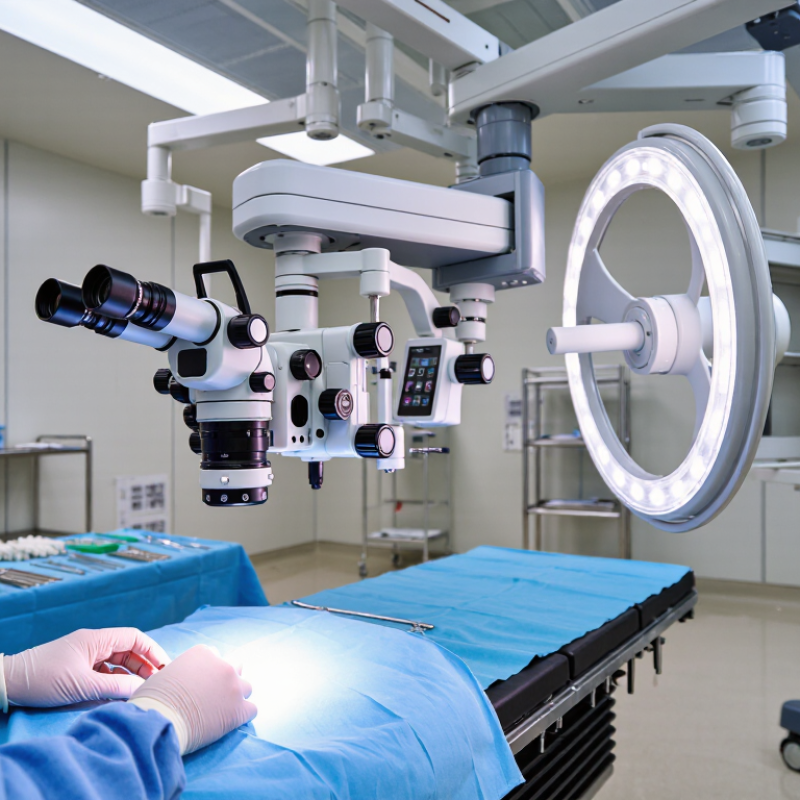
What Is the Best Spine Surgery Microscope in 2026?

How Spine Surgery Microscopes Support Surgical Precision

A spine surgery microscope supports precision by making small anatomical structures easier to see under controlled magnification. Clear optics and even illumination can help surgeons distinguish tissue layers around the spinal cord and nerve roots. A stable image matters: a slight movement can make a narrow working area harder to interpret. The microscope does not make decisions, but it can give the surgical team a more detailed view.

Useful features include adjustable magnification, focused lighting, and smooth positioning that lets the surgeon change the viewing angle without losing the target. Depth perception is important when working through a small incision or along a deep surgical corridor. Controls should be reachable without forcing an awkward posture. Small shifts count. A well-positioned eyepiece and balanced equipment can reduce strain during long procedures, though comfort depends on the room, the surgeon, and the case.

The best choice in 2026 is not necessarily the system with the most features. It should fit the procedure, operating-room layout, and team’s training. Staff need time to practice focusing, repositioning, and keeping the field clear. Even good equipment can feel awkward at first. That deserves attention, not dismissal: setup and familiarity affect how consistently a microscope supports precise work.


Key Features for Evaluating Spine Surgery Microscopes in 2026

What Is the Best Spine Surgery Microscope in 2026?

Key Features for Evaluating Spine Surgery Microscopes in 2026

The best microscope is the one that supports consistent visualization in your actual operating room. Compare image clarity, depth of field, illumination, and working distance using a spine model or representative procedure setup. Check whether the microscope stays stable when repositioned and whether controls are easy to reach while wearing gloves. Small details matter.

Ergonomics deserve equal attention. Surgeons should be able to maintain a neutral neck and shoulder position, while assistants retain a clear view. Evaluate camera output, recording options, and compatibility with existing room equipment. The WHO’s 2024 Global Patient Safety Report estimates that one in ten patients experiences harm in healthcare; this broad figure is not specific to microscopes, but it underscores the value of dependable workflows. A microscope cannot guarantee safer surgery. Nor can a showroom demonstration reveal every limitation.

Comparing Leading Microscope Systems for Spine Surgery

Spine surgery microscope systems differ less by headline magnification than by how clearly they support the surgeon’s view during a specific procedure. Traditional optical systems provide direct stereoscopic vision and familiar controls. Digital systems display a magnified view on a monitor, which can help the whole team follow the field. Hybrid designs combine these approaches, though added features may also mean more setup and training.

Compare image depth, illumination, working distance, and how easily the microscope moves between positions. In a narrow operative field, stable depth perception and even lighting can make small structures easier to distinguish. Check whether the arm can be repositioned without disrupting the surgeon’s posture. A monitor may improve shared viewing, but it does not automatically replace the value of direct binocular vision. That depends on the operator and the case.

Ergonomics deserve close attention. Long procedures can make awkward viewing angles costly, even when the optics are excellent. Test controls with gloves, assess whether assistants can see the display, and ask how routine cleaning and service affect availability. Training matters, too. A sophisticated system is not necessarily the best fit if the team cannot use it confidently. There is no universal winner; hospital workflow, surgeon preference, procedure mix, and budget all shape the comparison. Some priorities may conflict. That part is easy to underestimate.

What Is the Best Spine Surgery Microscope in 2026? Comparing Leading Microscope Systems for Spine Surgery

There is no single best system for every spine procedure. This comparison describes common system types rather than specific products; features and performance vary by configuration. Confirm capabilities with the manufacturer and assess them in a hands-on demonstration.

System type Visualization and depth perception Ergonomics and team view Potential advantages in spine surgery Trade-offs and checks before purchase Potential best fit
Conventional optical surgical microscope Direct binocular viewing through eyepieces; optical magnification and illumination support detailed work in a small operative field. The surgeon generally looks through oculars. Assistant viewing depends on the configuration and may require an assistant scope or other accessories. Familiar workflow and direct optical viewing can suit microsurgical tasks such as nerve-root and dural work. Check working distance, field of view, illumination, focus controls, movement range, and whether the viewing posture is comfortable for the intended approach. Teams that prefer eyepiece-based viewing and need a microscope for established microsurgical workflows.
Motorized optical microscope Uses optical binocular viewing; motorized movement or focus functions may be available, depending on the configuration. Motorized positioning can reduce some manual adjustments. Ergonomic benefit depends on controls, balance, reach, and how the microscope is set up. Can support frequent repositioning across a surgical field, including during procedures that require changing viewing angles. Verify which movements are motorized, how controls are operated, the time needed to reposition, and compatibility with the operating-room layout. Surgeons who value optical viewing but want powered positioning or focus features.
Digital 3D exoscope Displays a magnified surgical view on a monitor; 3D depth perception is available in systems designed for stereoscopic viewing and requires compatible viewing equipment. The surgeon and team can view the same monitor image. A screen-based workflow may allow a more upright head and neck posture, depending on monitor placement. Shared visualization can make it easier for the surgical team to follow the field; may suit teaching and procedures where screen viewing is preferred. Assess image latency, monitor position, depth perception, focus and zoom controls, lighting, and performance at the working distance required for spine procedures. Teams seeking shared screen-based visualization and a potential alternative to prolonged eyepiece viewing.
Hybrid optical and digital system Combines optical viewing with a digital display or recording pathway, where included in the configuration. May offer eyepiece viewing for the primary surgeon and a monitor view for other team members; available options vary. Can accommodate mixed preferences for direct viewing and shared display, without requiring every team member to use the same viewing method. Clarify whether the digital image is simultaneous, what accessories are required, and whether switching between viewing modes interrupts workflow. Departments with surgeons or procedures that benefit from both eyepiece and monitor-based viewing.
Image-guided microscope integration May combine microscope visualization with navigation or imaging information displayed in the field or on a separate screen; integration depends on compatible equipment. Can bring relevant visual information into the team’s workflow, but may add setup steps and require coordination among systems. Potentially useful when the procedure already uses navigation or other image-guidance tools; it does not replace clinical judgment or standard verification steps. Confirm supported interfaces, registration workflow, display location, setup time, staff training needs, and what happens if integration is unavailable. Spine teams that routinely use compatible navigation or imaging systems and can support the added workflow.

Matching Microscope Capabilities to Surgical Procedures

Choosing the best spine surgery microscope in 2026 starts with the procedure, not the feature list. The WHO’s 2023 low-back-pain fact sheet reports 619 million people affected in 2020. A 2023 Global Burden of Disease analysis projects 843 million by 2050. These figures describe disease burden, not which microscope a surgeon needs.

For lumbar microdiscectomy, prioritize coaxial illumination, stable fine focus, and enough working distance to keep instruments clear in a deep, narrow corridor. Smooth magnification changes help when moving between nerve-root detail and the wider field. Fit matters.

For decompression or instrumented fusion, a broader field, rapid zoom, assistant viewing, and clear camera output may support team communication and documentation. Check that the microscope arm stays steady when repositioned, and test controls from the surgeon’s actual operating posture.

A specification sheet cannot reproduce a crowded operating room. A feature can look impressive and still slow the case. Compare the view at the working distance used for the planned procedure, then assess lighting, depth perception, drape clearance, and compatibility with the team’s workflow.

Not always. Microscope choice also depends on surgeon training and institutional setup; published population estimates cannot establish one universally superior model. A practical evaluation should include surgeons and operating-room staff, with procedure-specific trials rather than a single showroom demonstration.

Practical Considerations for Choosing and Implementing a System

What Is the Best Spine Surgery Microscope in 2026?
Practical Considerations for Choosing and Implementing a System

The right microscope is the one that supports the team’s actual procedures and operating-room layout. During evaluation, test image clarity at the working distance used for spinal exposure. Check depth of field, illumination, and how quickly the view can be repositioned. Small delays matter. Ask surgeons and staff to assess the controls while wearing gloves, not just during a showroom demonstration.

Fit the system to the room. Measure ceiling clearance, table movement, and space around carts before selecting a configuration. Confirm that assistants can see the field and that the microscope does not obstruct access to monitors or instruments. A useful trial includes a realistic setup, routine draping, and a simulated change in patient position. It may reveal awkward steps that a specification sheet misses.

Implementation needs planning, too. Arrange hands-on training for surgeons, scrub staff, and technicians, then establish clear cleaning and maintenance routines. Check service response times, replacement-part availability, and the full cost of ownership. Record setup time and staff feedback during early cases. A trial can still be misleading if it uses an unusually spacious room; that is an easy detail to overlook. The final choice should reflect local workflow, not just impressive optics.

What Is the Best Spine Surgery Microscope in 2026?

Practical Considerations for Choosing and Implementing a System

How to use this: With the optical configuration held constant, field diameter is approximately inversely proportional to magnification. The values shown are normalized optical calculations, not specifications for a particular microscope. When comparing systems, also assess working distance, illumination, image quality, ergonomics, assistant viewing, and ease of integration into the operating room.

Powder Coat Booths

For those larger-sized parts, or smaller quantity runs, we have 2 independent powder coat booths and ovens. The quality, durability and affordability of today’s powder coating finishes make this the process of choice for world-class companies.

Powder coating advantages over other forms of coating are many. Materials used in the Powder coating process can be metals and non-metals that come in a multitude of thicknesses, textures, colors, etc. Another of Powder coating’s biggest advantages over conventional coatings is its ability to create finishes in many different textures. Powder Coating Booths allow us the ability to apply these advantages to large products.

Wet Paint Line

Tri-State Fabricators runs a full-service conveyor line for painting. Wet painting can provide protection or decoration to many different part styles. From start to finish, every project is easier to undergo random and point-based inspection by our skilled painting team.

Advantages to our Wet Paint Line are these lines start with product prep and ends with a thorough inspection of a high quality finished product. Our ability to complete large and small projects with a superior finish and doing so in a timely and economical fashion. This passes along the savings in production to our customers. When powder coating ins not an option, our Wet Paint Line gets the job done right the first time.

Wet Paint Booths

When the parts get big and heavy we roll-out our custom paint racks and oversize booth. By utilizing our partnerships with all the major paint brands, we can match virtually any color with wet paint.

The advantages of having access to a Wet Paint Booth are many. Large projects of many different shapes can be loaded into the booth. The Wet Paint Booth offers an environment that is much more controlled than a typical parts painting operation.

Not only are they used because of their controlled environment, but they’re are also advantageous when it comes to applying paint to parts that are needed in industries that require specialty coatings such as medical, aerospace, etc.

Military CARC

Our military forces have some very high standards when it comes to the finish of their vehicles and equipment. From the first pre-treatment step to final coat, it takes a great deal of knowledge and experience to protect the men and women of our armed forces. They deserve only the best, and Tri-State Fabricators provides it.

All of our processes are closely monitored by our staff and management teams. Both of which are highly trained in the processes of metal fabrication and finishing. Tri-State Fabricators’ goal is to always fully satisfy each and every customer, including the military. We will always put a 110% into what we do.

Glass-Bead Blasting

Abrasive media blasting is an excellent way to remove old paint, rust, and increase the paint/powder adhesion. Glass beads produce a much smoother and brighter finish than angular abrasives; leaving the part clean yet without any dimensional change. Chemically inert and environmentally friendly, we can recycle our beads approximately 30 times; making them a more preferred method of metal cleaning or surface finishing.

Advantages to Glass Bead Blasting are many. Glass bead blast media is used when a project is needing rough surfaces need to become smooth for applications of coatings such as paint. It is typically used to clean paint and rust from a product surface without deforming the surface it is being used on. Overall, compared to many other blasting media, Glass Bead Blasting is a very economical choice and those savings are always passed on to our customers.

Part Washing

Tri-State Fabricators utilize a zinc phosphate wash to clean and etch the material to ensure the best paint adhesion possible. The unique design of our 3-stage wash system does the work like a 5-stage. From Cleaning and rinsing to conversion coating and post-treatment, Our Part Washing process is a complete service and works throughout the fabrication service and the finishing service.

Along with the previously mentioned benefits, Curing is a vital chemical reaction that leaves the product finish hard and relatively safe from mild abrasion and aggressive corrosion. This process can be done in more than one way; ambient air-dry or in curing ovens at temps that exceed 240°.

Burn-Off Oven

From fixing paint mistakes (someone else’s of course) to simply cleaning our paint line hooks, our burn-off oven is put to good use. After a quick burn-off, a little clean up, and a fresh coat of paint, your parts will look better than new.

Why does our Burn-Off Oven work so well? Because super heating the air around parts turns the materials into ashes. From paint and powder coatings to rubber and machining oils, high temps do the job without degrading the integrity of the part.

Masking

Masking is a vital part of producing high quality products. We have die-cut masking patterns to protect machined surfaces as well as a wide range of plugs and caps to protect threaded holes and bolts. We provide permanent and temporary masking.

Masking allows the selected sections of a product to be protected from a fabrication or finishing service. This can be with both chemicals when etching and tapes, paints when only finishing just a section of the product. Masking is great in aiding the customization process of a project.

Screen Printing

Screen printing is a photographic process that transfers artwork onto a porous nylon screen which allows colored ink to flow through the screen and be deposited on an aluminum or plastic component. We can generally have just about any design created onto a screen for your parts.

Some of the advantages of Screen Printing are, brand recognition for your business displaying on your products, assembly instructions, product warnings/hazards, etc. Tri-State Fabricators produces Screen Printing of the highest quality so you know it’s durable.

Metal Finishing

Metal Finishing is the art of treating the exterior portion of product, often metal but can also be made of other materials, so that the surface is clean and free of any debris. Then the process of applying coats or either paint of powder coat takes place. This coating process improves the quality of the product in both appearance and resistance to wear and corrosion.

Tri-State Fabricators, Inc., understands that a project typically isn’t complete until a high-quality finish has been added to your product. This is why our painting and powder coating teams continuously inspect the products throughout the Metal Finishing process.
