Best SMPS Power Supply Manufacturers in 2026
Selecting a Smps Power Supply manufacturer in 2026 takes more than comparing prices or scanning product catalogs. Buyers need to match supply characteristics to real operating conditions, including input voltage, output load, temperature, cooling, and available installation space. A unit destined for a compact control cabinet may face very different demands from one used in a factory line. Small details matter.
This guide introduces manufacturers worth evaluating and the questions that can separate a suitable supplier from a poor fit. Look for clear technical data, relevant certifications, documented quality processes, and practical support after purchase. Check rated output against the actual load, and ask how performance changes under heat or continuous operation. A polished catalog helps, but it is not proof of field reliability. Ask for test documentation and references where appropriate.
No shortlist is perfect. Manufacturer capabilities, product ranges, and regional support can change, so verify current specifications directly before making a decision. Consider lead times, warranty terms, customization options, and replacement availability alongside electrical performance. The lowest quotation may not reflect the total cost of ownership. Nor does a familiar name guarantee that every model suits your application. This overview offers a starting point, not a substitute for engineering review. A careful comparison can help teams choose a dependable power supply with fewer surprises during installation and routine service.
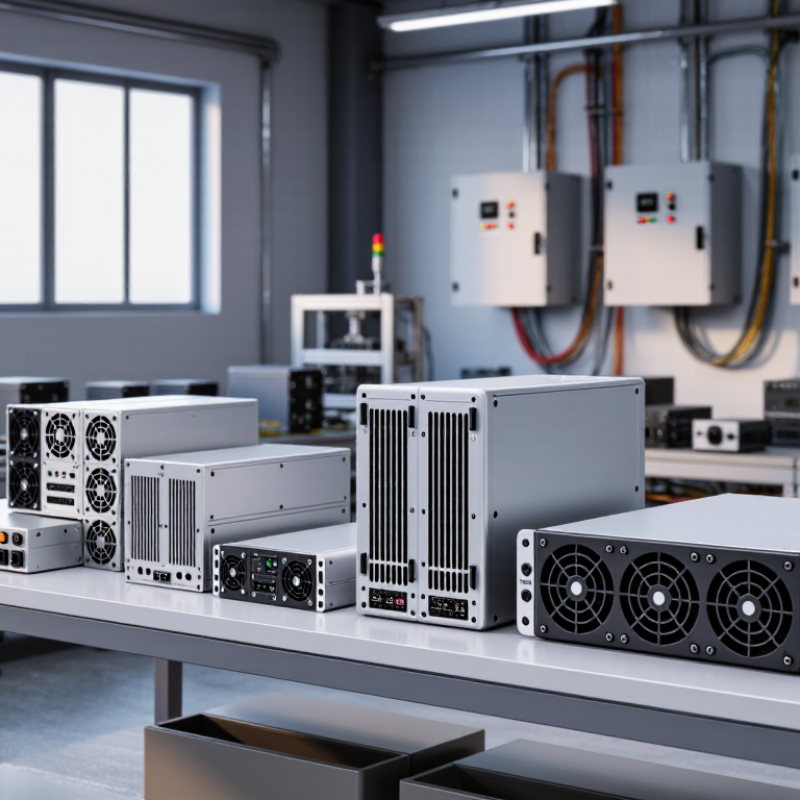
What Is an SMPS, and Where Are Its Switching Topologies Used?
An SMPS, or switched-mode power supply, converts electrical power by rapidly switching transistors and regulating energy through inductors, capacitors, or transformers. Compared with a linear supply, it can deliver similar output with less heat and a smaller enclosure. The trade-off is more complex control and potential electrical noise. That matters.
Topology depends on the job. A flyback design commonly serves lower-power isolated outputs, such as compact adapters and standby circuits. Buck and boost converters step DC voltage down or up without isolation, making them useful in battery systems and industrial controls. Forward and bridge designs can suit higher-power isolated supplies, including server and communications equipment. Actual selection depends on input range, isolation needs, load behavior, and thermal limits.
Demand makes efficiency consequential. The International Energy Agency’s Electricity 2024 report estimates that data centres, artificial intelligence, and cryptocurrency used about 460 TWh of electricity in 2022. Server power supplies are only one part of that total, but conversion losses add heat that cooling systems must also remove. Small losses add up. Topology alone does not guarantee efficiency: component choice, switching frequency, circuit layout, and testing all matter. A neat schematic can still become a noisy, hot unit in a crowded enclosure.
How Does 80 PLUS Gold’s 90% Efficiency at 50% Load Compare?
Best SMPS Power Supply Manufacturers in 2026
An 80 PLUS Gold rating is often described as delivering 90% efficiency at 50% load. For a 1,000-watt power supply, that point means it is providing about 500 watts to the system. At 90% efficiency, it draws roughly 556 watts from the wall. The remaining 56 watts becomes heat. That matters. It can affect room temperature, fan noise, and electricity use during long workloads.
Tip: Check the test conditions. The 90% figure is associated with testing at a specified input voltage; results can differ between 115V and 230V. Compare independent test results at the voltage and load you expect to use. Also check performance at lighter loads, since a computer may spend much of its day there.
Gold efficiency is useful, but it does not measure voltage regulation, ripple, protection features, or build quality. Those details need separate testing. A high-efficiency unit can still be a poor fit if it is oversized or noisy. And real-world efficiency shifts with temperature and workload. The label is a starting point, not a guarantee. It is worth checking the test data before choosing.
Which 2026 SMPS Makers Stand Out: Delta, Mean Well, and TDK-Lambda?
In 2026, the strongest SMPS suppliers are best compared by their engineering fit, not by a single league table. One group stands out for broad product coverage and global production capacity. Another offers a deep catalogue that helps buyers match common voltage and power needs quickly. A third is often considered for demanding applications where output stability and detailed technical support matter. These profiles overlap, and product-level testing still counts.
Look beyond headline efficiency. Check ripple and noise figures, transient response, isolation ratings, and derating curves at the temperatures your equipment will actually face. A compact supply mounted beside a warm motor drive may behave differently from the same unit on an open test bench. Review certifications and documentation for the exact model, too. Small details matter.
Procurement teams should compare sample units under realistic loads, then measure temperature rise and startup behavior. Ask about lifecycle notices, repair options, and lead-time consistency; a low purchase price can become costly if replacements are uncertain. Supplier reputation helps, but it is not a substitute for evidence. A datasheet can look reassuring. Sometimes it is not. Even experienced teams can overvalue brand familiarity and overlook a connector, mounting, or cooling constraint that surfaces late in integration.
How Do ATX 3.1 and 12V-2x6 Shape High-Power PSU Selection?
For high-power systems in 2026, ATX 3.1 matters because graphics cards can draw brief bursts far above their steady load. The ATX 3.1 Power Supply Design Guide specifies support for power excursions reaching 200% of rated output for 100 microseconds. Transient spikes matter. A unit that looks adequate from average wattage alone may still trigger shutdowns during a demanding game or render.
The 12V-2x6 connector, detailed in the PCI Express CEM 5.1 specification, revises contact lengths to improve connection detection and reduce risk from incomplete insertion. It does not make poor cable routing harmless. Check that the plug sits flush, avoid sharp bends near the housing, and follow the PSU maker’s clearance guidance. For selection, compare the GPU’s recommended supply capacity with the PSU’s continuous output, CPU load, and available native connector. Extra capacity helps, but oversizing without checking efficiency and operating temperature is not automatically better. That is easy to overlook.
Tips: Choose a certified ATX 3.1 model with a native 12V-2x6 cable. After installation, inspect the connector under bright light and confirm no gap remains. Cite: ATX 3.1 Power Supply Design Guide; PCI Express CEM 5.1 specification.
Best SMPS Power Supplies in 2026: How ATX 3.1 and 12V-2x6 Shape High-Power PSU Selection
The 12V-2x6 connector supports up to 600 W, compared with up to 150 W for a conventional 8-pin PCIe auxiliary power connector. ATX 3.1 PSU selection also calls for attention to handling brief GPU power excursions—not just the PSU’s continuous wattage rating. Check that the PSU, cable, and graphics card support the intended configuration.
How Should Buyers Compare Output, Protections, MTBF, and Compliance?
Choosing an SMPS in 2026 means checking more than its headline wattage. Match the rated output voltage and current to the actual load, including startup surges and brief peaks. Check the label. A supply rated for 24 volts may still struggle when a motor or relay draws more current at startup. Review ripple, voltage tolerance, and transient response against the equipment’s requirements. Also check derating curves: available power often falls as ambient temperature rises or airflow becomes restricted.
Protections matter in daily operation. Compare overvoltage, overcurrent, short-circuit, and overtemperature behavior, including whether the unit recovers automatically after a fault. That matters. A useful datasheet explains thresholds and operating conditions, not just protection acronyms. MTBF is a statistical estimate based on stated assumptions; it is not a promised service life. Look for the calculation method, temperature conditions, and supporting reliability data. I would not treat a tidy datasheet as proof of dependable field performance.
Compliance should be verified for the exact model and configuration being purchased. Check applicable safety and electromagnetic compatibility documentation, and confirm the intended market and installation environment. Easy to miss. Ask for test reports or certificates when the listing is unclear, and compare revision dates. For a fair supplier comparison, record output performance, protection details, MTBF assumptions, and compliance evidence in the same checklist. A compact unit may fit neatly on a panel, yet still need more clearance for cooling than its dimensions suggest.





