What Is the Best Smart Street Light in 2026?
A Smart Street Light can improve visibility, reduce wasted energy, and give city crews better insight into lighting conditions. But “best” depends on the street. A quiet residential road, a busy intersection, and a coastal walkway place different demands on a fixture. One product rarely suits every location.
This guide explains how to compare leading smart street lights in 2026. It looks at light output, beam control, energy use, dimming schedules, sensors, and remote management. It also considers practical details: pole compatibility, weather resistance, repair access, warranty terms, and the cost of maintaining a network over time. A bright specification sheet is not enough. Poorly aimed light can create glare, while an advanced control system may be difficult to manage or integrate.
The strongest choice is usually the one that meets a site’s lighting needs without adding unnecessary complexity. Buyers should check manufacturer documentation and request clear details about tested performance, software support, and replacement parts. Not every published figure tells the whole story. Some comparisons remain imperfect because cities use different roads, operating schedules, and evaluation methods. That deserves a closer look. The sections ahead offer a practical framework for assessing available options, asking better questions, and deciding which features matter most for a specific project.
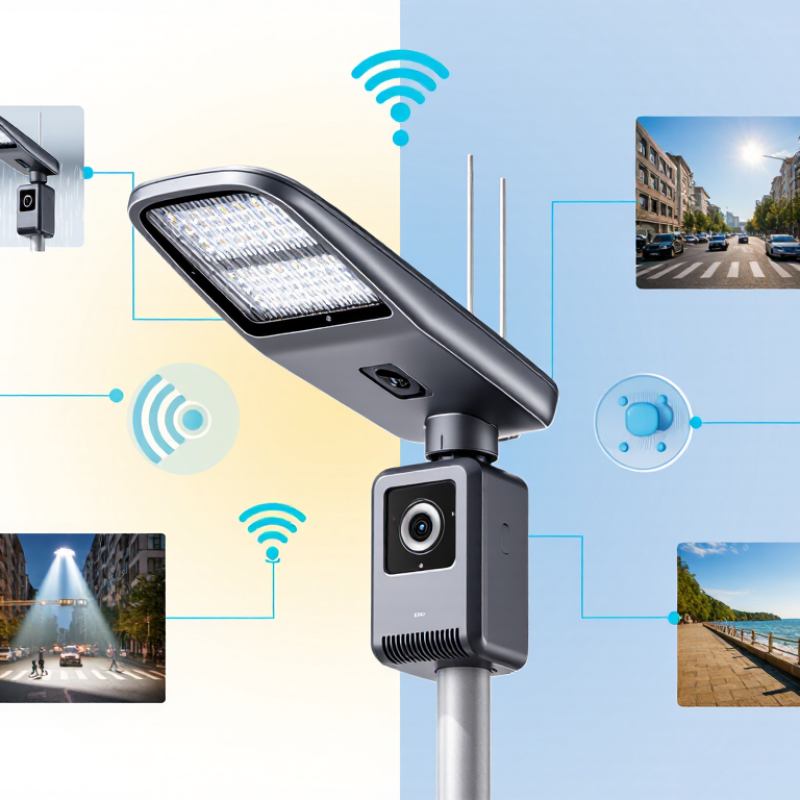
What Is a Smart Street Light and How Does It Work?
A smart street light is more than an LED lamp: it pairs a luminaire with a controller and, often, sensors.
The controller can adjust brightness, report faults, and receive settings over a wired or wireless network. At dusk, a photocell or scheduled command can switch lights on; overnight, dimming profiles can reduce output when streets are quiet. Some systems use motion or traffic data to brighten a block temporarily, but results depend on sensor placement and setup. That matters. A light on a busy corner may need a different schedule from one beside a park path.
Each fixture can send status information, such as power use or a lamp fault, to a gateway and management platform. Maintenance teams can then identify a failed light without waiting for a resident to report a dark stretch. The data is useful, though not always tidy: weather, blocked sensors, and network gaps can affect readings. Smart controls also need careful commissioning, since dimming too aggressively may leave sidewalks or crossings poorly lit. A dependable system combines suitable optics, measured light levels, secure communications, and regular checks. The technology helps operators make adjustments; it does not replace good lighting design or local judgment.
Which Features Define the Best Smart Street Lights in 2026?
The best smart street lights in 2026 do more than switch on at dusk. They adjust brightness to real conditions. Look for dimming schedules, motion or traffic sensing, and remote fault alerts. These features can keep an empty side street softly lit, then raise output when a cyclist approaches. The International Energy Agency’s 2023 lighting analysis estimates that lighting accounts for about 15% of global electricity use. That makes efficient operation worth measuring, not merely promising. A useful system should report actual energy use and outages, with clear data that maintenance crews can act on.
Interoperability matters, too. Open communication protocols can make future sensor or control upgrades easier, while secure access and software updates reduce avoidable risks. The U.S. Department of Energy’s 2017 report, Energy Savings Potential of Connected Lighting Systems, estimated about 46% average savings for connected lighting in commercial buildings. That figure is not a street-light guarantee; road layouts, traffic, and baseline lamps differ. Still, it shows why controls deserve careful trials. A dashboard can look impressive while poor dimming leaves dark patches. Glare, color temperature, and dependable repairs deserve equal attention.
Tips: Ask for a pilot on one varied route. Check measured power use, nighttime visibility, and fault-response times before expanding. Small details matter. Don’t trust estimates alone.
How Do Leading Smart Street Light Systems Compare?
The best smart street light is not simply the brightest or most connected; it is the system that maintains safe visibility while reducing energy use and maintenance visits. The International Energy Agency’s Energy Efficiency 2023 report estimates that lighting accounts for about 15% of global electricity consumption, making efficient controls relevant beyond individual streets. The U.S. Department of Energy’s outdoor-lighting guidance reports that LED street lighting can use at least 50% less energy than conventional technologies, though actual results depend on existing fixtures and operating schedules.
Leading systems differ in how they manage that potential. Basic platforms schedule dimming and flag failed lamps; more capable networks adjust output using traffic or ambient-light sensors and report faults remotely. Ask for measured energy use, not a projected percentage. DOE field evaluations show that retrofit outcomes vary with site conditions, so one city’s savings figure may not transfer neatly to another. Check whether the system supports open interfaces, clear outage records, and gradual dimming that avoids dark patches at crossings. Small details matter. A sensor can misread fog, and a dashboard can hide maintenance delays. I would compare pilot data across wet and dry nights, then review the logs with maintenance crews before scaling up.
What Factors Affect Smart Street Light Performance and Cost?
What Is the Best Smart Street Light in 2026?
What Factors Affect Smart Street Light Performance and Cost?
A smart street light performs well when its optics and controls fit the road, not just its lumen rating. Pole height and spacing affect how evenly light reaches pavement and sidewalks. A narrow beam may leave dark gaps, while excessive output can waste energy and cause glare. Color temperature, driver efficiency, dimming range, and weather exposure also matter. In coastal or dusty areas, sealed housings and corrosion-resistant parts can reduce failures. Small details matter.
Tips: Compare lighting layouts for the actual street. Check warranty terms, surge protection, and replacement-part availability. Ask for energy estimates at several dimming levels. A sensor that dims too aggressively may save power but leave pedestrians uneasy. Test settings at night, not only in a spreadsheet.
Cost goes beyond the fixture price. Network equipment, installation, commissioning, software fees, and maintenance can change the total significantly. Solar models may avoid trenching, but panel size, battery capacity, shade, and winter sunlight affect reliability. Grid-connected systems can be steadier, though wiring may raise upfront costs. I would not assume every connected feature pays back; usage data and maintenance records are often incomplete. Compare lifetime costs using realistic operating hours and repair rates, then revisit those assumptions after the first season.
What Is the Best Smart Street Light in 2026?
How fixture efficiency and adaptive dimming affect annual energy use
Illustrative scenario: One light operates 12 hours per night for 365 days. The smart-light estimate assumes the 70-watt LED averages 20% dimming during lit hours and its 2-watt controller draws power continuously. At $0.15 per kWh, modeled annual electricity costs are about $98.55, $45.99, and $39.42, respectively. Actual results depend on roadway lighting requirements, dimming schedules, local electricity rates, controls, installation, and maintenance; confirm lighting levels with a photometric design.
How Should Cities Choose a Smart Street Light System?
A smart street-light system should fit the street, not just the specification sheet. Start with a night-time survey: note dark crossings, tree cover, pole spacing, and where residents report glare. The U.S. Department of Energy reports that LED street lighting can use at least 50% less energy than traditional lighting. Actual savings depend on existing equipment, operating hours, and control settings. The International Energy Agency estimates that lighting overall consumes about 15% of global electricity; that figure covers all lighting, not streetlights alone. Measure real conditions.
Compare systems using total cost over their expected service life, including installation, connectivity, maintenance, and replacement parts. Ask whether crews can dim lights by schedule, detect faults remotely, and keep basic operation when communications fail. Check for open interfaces and documented cybersecurity practices; NIST’s IoT cybersecurity guidance recommends assessing device identity, configuration, and software updates. Test after dark. A spreadsheet can still flatter a system if it overlooks repair delays or awkward pole locations. Pilot a small area through different seasons, then compare measured energy use, outage records, and resident feedback against the baseline. Keep records. A few dim corners may reveal more than a polished dashboard.





