What Is the Best Smart Circuit Breaker for Global Buyers?
Global electricity systems are becoming more connected, distributed, and data-driven. The International Energy Agency’s Electricity 2024 report projects strong worldwide electricity-demand growth through 2026. More demand increases pressure on homes, factories, and commercial buildings to monitor power accurately. A Smart Circuit Breaker can respond by combining overload protection, remote switching, energy measurement, and fault notifications in one compact device.
Yet the best product is not automatically the model with the most app features. Global buyers must examine rated current, breaking capacity, voltage compatibility, communication stability, and installation requirements. IEC 60898-1 and IEC 60947-2 provide important reference points for circuit-breaker performance, while UL 489 remains highly relevant in North American projects. Certification must match the target market. It is a practical detail, not decoration.
Real-world evaluation should also include heat, humidity, Wi-Fi reliability, and manual operation during network failure. A breaker installed inside a warm distribution cabinet faces different conditions from one used in a dry apartment panel. Reports from organizations such as the IEA and the U.S. Department of Energy show why efficiency monitoring matters, but they do not identify one universal winner. No single model fits every grid.
This guide compares leading options through safety, interoperability, lifecycle value, and after-sales support. Cost alone can mislead. A cheaper breaker may create integration problems later. I may favor measurable performance over impressive marketing, but that judgment still needs local testing, certified documentation, and qualified installation. That is where global buyers should remain cautious.
What Is a Smart Circuit Breaker and How Does It Work?
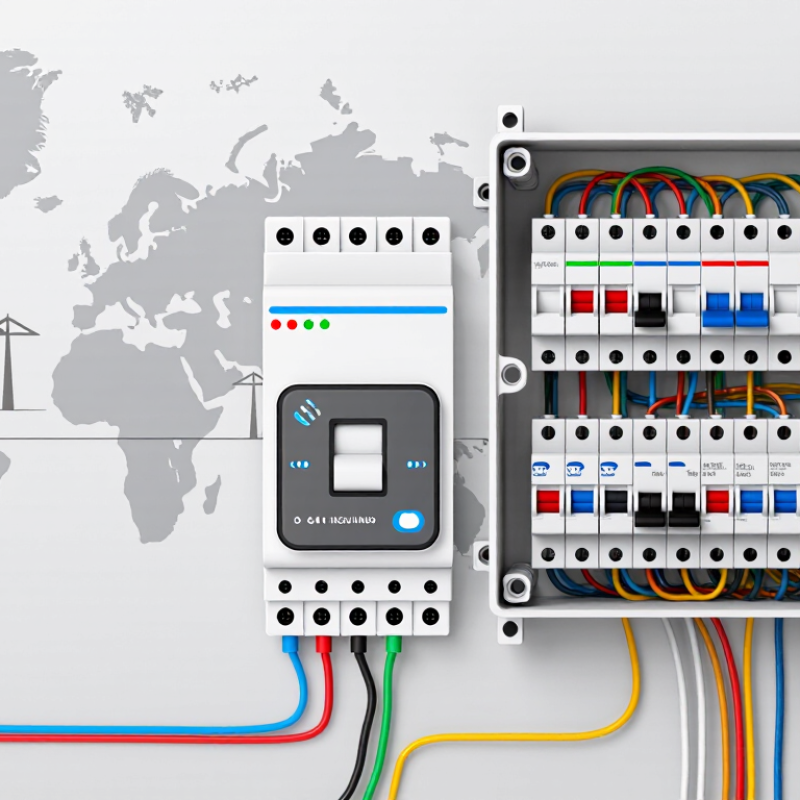
A smart circuit breaker is a protective switch with sensors, a control processor, and a communication interface. It measures current, voltage, power, and sometimes temperature in real time. When overload or short-circuit conditions appear, its trip mechanism disconnects the circuit locally. That response should not depend on Wi-Fi or a cloud server.
Through a mobile dashboard or building system, users can view energy consumption and receive fault alerts. Some models also allow remote switching, scheduling, and load management. The IEA’s Electricity 2024 report projects global electricity demand will grow by about 4% annually from 2024 through 2026. This growth increases the value of detailed circuit-level monitoring. Small data can reveal a heater running overnight or an aging connection warming inside a panel.
However, smart control does not replace traditional protection. NIST SP 800-82 Rev. 3 recommends authentication, network segmentation, and least-privilege access for connected operational technology. Buyers should check voltage, frequency, pole configuration, interrupting capacity, enclosure conditions, and local certification requirements. Communication standards matter too. A device that works in one region may fail to integrate elsewhere.
The cloud is convenient, but it is not magic. I would still require manual operation during an internet outage. Some energy readings may also be less precise than expected, especially with uneven loads. That limitation deserves honest testing before large-scale installation.
Which Features Matter Most for Global Buyers?
For global buyers, the best smart circuit breaker is not simply the one with the most app features. It must fit local electrical realities, installation practices, and maintenance skills. The IEA’s Electricity 2024 report forecasts average global electricity-demand growth of nearly 4% annually from 2024 to 2026. That pressure makes accurate monitoring more valuable, especially in homes with heat pumps, batteries, or electric vehicles.
Voltage and frequency compatibility should come before connectivity. Buyers should verify rated current, breaking capacity, pole configuration, neutral switching, and residual-current protection. A device should continue basic protection when the internet fails. Local manual control matters. Remote switching, schedules, overload alerts, energy metering, and downloadable records add practical value. The IEA’s Energy Efficiency 2023 report estimates that buildings use about 30% of global energy. Circuit-level data can expose waste monthly bills hide. Yet monitoring is not savings by itself.
Interoperability is another decisive feature. Look for documented communication protocols, multilingual software, firmware-update policies, and clear data ownership. Cybersecurity deserves equal attention, including encrypted communication, strong authentication, and access logs. Independent testing against applicable IEC standards and transparent regional certification reduce procurement risk. Specifications are often optimistic. I would still request installation samples, test nuisance-trip behavior, and inspect the app under weak connectivity. A polished dashboard can conceal poor sensing accuracy. Global buyers should compare measured performance, service response, and replacement availability—not screenshots.
How Do Smart Circuit Breakers Compare by Application?
The best smart circuit breaker depends on the application, not its feature list. A small home may need remote switching, overload protection, and energy reports. A phone alert is useful when a freezer or water pump loses power. However, some households do not need complex automation. Extra functions can increase setup errors.
Commercial buildings require a different balance. Offices, shops, and rental properties benefit from scheduled control, circuit-level monitoring, and fault notifications. Facility staff can identify an overloaded lighting circuit before tenants notice repeated outages. Models with clear event records also support maintenance decisions. Local voltage, frequency, wiring systems, and certification requirements must be checked before purchase. Compatibility is not universal.
Industrial sites demand stronger evidence. Motor loads, dust, heat, and frequent switching can challenge a residential device. Buyers should examine interrupting capacity, temperature limits, enclosure protection, communication stability, and manual override options. A stable wired connection may outperform wireless control in a metal-filled plant. Agriculture adds long cable runs, pumps, moisture, and unstable supply conditions. Use suitable enclosures and professional installation.
One detail is often missed: installation space. A breaker may fit electrically but fail inside a crowded distribution board. Another concern is data security. Remote access should use controlled permissions and updated software. Field trials are valuable because product sheets rarely show behavior during nuisance trips or weak networks. No option is perfect. Recheck the assumptions.
What Safety Standards and Certifications Should Buyers Check?
Choosing the best smart circuit breaker starts with its safety evidence, not its mobile application. A suitable device should match the installation’s voltage, current, short-circuit rating, and circuit type. For household systems, check compliance with IEC 60898-1. Industrial panels may require IEC 60947-2. If residual-current protection is included, review IEC 61008 or IEC 61009 requirements. The label should show clear ratings, test references, and manufacturing traceability.
Do not treat a CE mark as complete safety proof. It usually represents a manufacturer’s declaration, while independent test reports provide stronger verification. Buyers should request certificates from recognized testing bodies and confirm their certificate numbers in official databases. Check EMC testing under the IEC 61000 series, especially when the breaker uses wireless communication. Regional radio approvals may also apply. In North America, relevant requirements can include UL 489. Local rules still decide final acceptance. This part is often overlooked.
Tips: Ask for the full installation manual, wiring diagram, temperature range, and enclosure rating. Confirm whether the protection works when internet access fails. A useful field check is simple: inspect the breaker’s markings beside the panel schedule, then compare them with the certificate. Some documents look convincing but lack model-specific details. I have seen this create uncertainty during inspections. If the certificate covers only a product family, verify that the exact model and current rating are included. Have a qualified electrician review the installation before energizing the circuit.
How Can Buyers Select and Install the Right Model?
Choosing the right smart circuit breaker starts with the electrical system, not the mobile app. Check the local voltage, frequency, number of poles, and required breaking capacity. A model designed for 230 volts may not suit a 120-volt panel. Confirm these values on the distribution board and the equipment label.
Look for overload, short-circuit, and residual-current protection when the application requires it. Verify the rated current against the cable size and expected load. Wi-Fi is convenient, but poor signal strength can make remote control unreliable. A wired communication option may work better in metal cabinets. Check the enclosure size, DIN-rail fit, neutral connection, and operating temperature. Certification marks should match the destination market. They are not decorative details.
Installation needs more care than product selection. Power must be isolated and tested with an appropriate meter before work begins. A qualified electrician should confirm terminal positions, cable stripping length, and tightening torque. Loose terminals can heat slowly inside a closed panel. That fault is easy to miss. After installation, test manual switching, overload response, remote commands, and power recovery. I have seen buyers focus on energy data while ignoring the breaker’s basic protection function. That is a costly mistake. Another imperfect choice is installing the largest current rating “for future use”; it can reduce cable protection instead. Keep the device, wiring, and actual load within one verified design.





