Best SCSI Cable Manufacturer in China?
Choosing the Best Scsi Cable Manufacturer in China requires more than comparing prices or browsing product photos. A Scsi Cable must match the intended SCSI interface, connector layout, signaling requirements, and installation environment. A mismatch can cause unreliable connections, difficult troubleshooting, or wasted time during integration. Small details matter.
A capable manufacturer should explain its available cable designs, materials, shielding options, and production controls in clear terms. Ask how connectors are assembled, how cable batches are identified, and what electrical or continuity checks are performed. Request a sample that reflects the final specification, not merely a similar item from the catalog. A polished catalog proves little by itself. Factory experience is better assessed through documented processes, consistent samples, and direct technical answers.
This guide outlines practical ways to compare Chinese SCSI cable suppliers, from product selection and customization to quality checks and communication. Buyers should confirm connector pinouts, cable length, compatibility, and packaging requirements before approving an order. Where possible, review relevant test records and inspect samples under realistic installation conditions. No supplier is the right choice for every project. That is worth remembering. A lower quote may suit a simple replacement order, while a more demanding application may need closer engineering support and traceability. The goal is not to find the loudest claim, but a manufacturer that can demonstrate a reliable fit for the actual system. There may still be gaps in the available information, so verify key details before production begins.
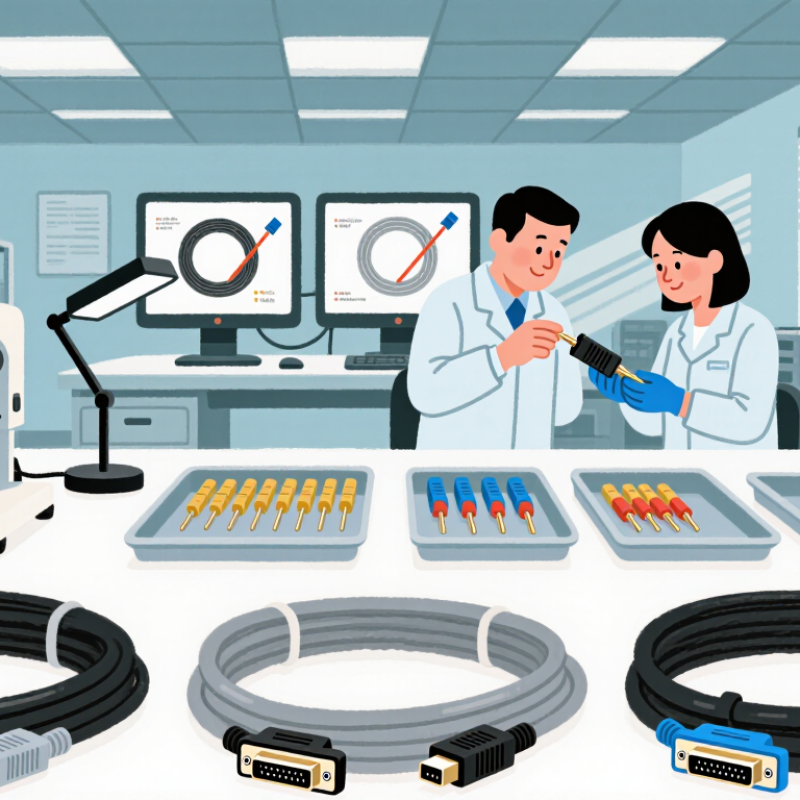
What SCSI Cables Are and Where They Are Used
SCSI cables connect a computer’s host adapter to storage devices and other peripherals. In parallel SCSI systems, several devices can share a bus, so cable choice affects signal quality and reliability. Internal ribbon cables run inside a computer or storage enclosure; shielded external cables connect separate equipment. Details matter. Connector shape alone does not confirm compatibility: check the SCSI generation, bus width, and device requirements before installation.
These cables are found in legacy servers, disk arrays, tape systems, and some industrial equipment. Correct termination at the bus ends helps prevent communication errors, while suitable cable length and secure connections reduce signal problems. Technicians may also check device IDs and inspect pins when a system reports intermittent faults. A neat cable run is useful, but it cannot correct a mismatched connector or bus configuration. That is an easy detail to miss. SCSI equipment is less common in new installations, yet careful cable selection remains important when maintaining older systems.
Types of SCSI Cables and Their Compatibility Requirements
SCSI cables are not interchangeable just because their plugs look similar. Parallel SCSI commonly uses 50-pin narrow or 68-pin wide connections; newer storage systems may use 80-pin SCA connectors. Connector count is only the start. Check the device interface, bus width, signaling type, transfer speed, and termination before ordering. T10’s SPI-5 specification defines electrical and timing requirements for parallel SCSI, while SCSI Trade Association guidance gives a maximum bus length of 12 meters for LVD and 6 meters for single-ended SCSI under specified conditions. Fast single-ended buses can require shorter runs. That matters. A cable that fits may still cause errors or prevent the bus from working.
For a real installation, match the cable to the host adapter and every device on the bus. LVD and single-ended devices can share some setups, but mixing signaling types may force the bus into a slower mode; verify the adapter and device documentation. Keep the cable within the applicable length limit, use the correct terminators at both ends, and avoid extra branches. The naming gets messy. SCSI-2 and SCSI-3 describe generations of standards, not one universal connector. SAS cables are also not substitutes for parallel SCSI cables. For manufacturers in China, request documented pinout, conductor, shielding, and impedance specifications, then test a sample with the intended hardware. I would still check legacy equipment carefully: its connector may be unusual, and a familiar-looking cable can be the wrong match.
Key Qualities of a Reliable SCSI Cable Manufacturer
Best SCSI Cable Manufacturer in China?
Key Qualities of a Reliable SCSI Cable Manufacturer
A reliable SCSI cable manufacturer understands that small construction details can affect signal stability. Look for clear specifications covering impedance, shielding, conductor quality, connector types, and supported cable lengths. Connectors should fit securely without excessive force, while shielding and strain relief should suit the installation environment. In practice, a cable that looks sturdy may still perform poorly if its electrical characteristics do not match the system.
Ask how products are inspected and tested. Useful checks include continuity, pin mapping, connector retention, and performance with representative SCSI equipment. Request sample test records and confirm that production batches follow consistent procedures. Traceable materials and documented inspection steps make troubleshooting easier later. Still, no checklist can predict every issue in an older setup; controllers and devices may have different requirements.
Tips: Confirm connector style and termination needs before ordering. Test a sample in your actual configuration, especially with longer cable runs. Keep specifications and batch details on file. A careful supplier should answer technical questions clearly, not just promise compatibility.
How to Evaluate SCSI Cable Manufacturers in China
Best SCSI Cable Manufacturer in China?
How to Evaluate SCSI Cable Manufacturers in China
A reliable supplier should explain how its cable matches your SCSI interface, device, and installation. Ask for connector drawings, pinout details, cable length limits, shielding construction, and termination guidance. Details matter. “SCSI cable” covers different generations and connector arrangements, so a broad catalog description is not enough.
Review how the manufacturer controls materials and production. Request sample specifications, conductor and insulation information, shielding details, and inspection records. Check that connector fit is consistent and that cables are tested for continuity and shorts. For a practical evaluation, connect a sample to your equipment and run it under normal data loads. Visual inspection alone cannot reveal every fault. Ask how batches are identified and how defects are handled. Clear answers are useful.
Communication deserves attention, too. A capable factory should confirm drawings, packaging, lead times, and changes in writing, then flag uncertainty rather than promise everything. Compare the same technical requirements across several quotations. Low prices can hide missing tests or substitutions. One weakness in this process: buyers sometimes approve a sample but never verify later production. Ask for a pre-shipment check on the first order, especially when cable length or connector type is customized.
How to Evaluate SCSI Cable Manufacturers in China
Use the maximum theoretical transfer rate of each SCSI generation as a compatibility reference when checking a cable’s stated performance, connector type, and termination requirements.
Values show commonly cited maximum interface rates, not measured cable performance. Actual operation depends on the SCSI standard, bus width, devices, cable length, and correct termination. Confirm these specifications with a manufacturer before purchasing.
Choosing a Manufacturer for Your Technical and Supply Needs
Choosing a SCSI cable manufacturer in China starts with your actual setup, not just a low unit price. Share the interface generation, connector type, pin count, cable length, and installation conditions. A warm equipment cabinet may need different jacket and shielding choices than a test bench. Details matter. Ask for drawings, material information, and sample units before production. Check connector fit and flexibility inside the real enclosure; a tidy-looking sample can still strain at a tight bend.
Technical evidence should be specific. Request continuity and short-circuit test records, plus inspection criteria for terminations, labels, and packaging. For longer runs or sensitive equipment, confirm that impedance, shielding, and termination requirements match the system design. Don’t assume “SCSI cable” means one interchangeable product. Supply reliability matters too: compare quoted lead times with delivery records, and clarify minimum order quantities and replacement handling. A supplier may pass a sample review yet struggle with repeat orders; that risk deserves a frank conversation. Keep an approved sample and drawing to compare across batches. It is not foolproof, but it can help reveal variation.





