What Is the Best Rubber Track Tractor to Buy?
Choosing the best Rubber Track Tractor starts with the ground beneath it. A machine that feels steady in a dealership may behave differently on wet headlands, sloping fields, or soft soil. Track width, operating weight, engine power, and implement requirements all matter. So does transport distance. Small details count: the turning space at the field entrance, the clearance beneath a shed door, and the cost of replacement tracks.
The Food and Agriculture Organization’s 2015 Status of the World’s Soil Resources identifies soil compaction as a major threat to soil health. That makes ground pressure and field conditions practical buying considerations, not just brochure specifications. Nebraska Tractor Test Laboratory reports offer measured comparisons of tractor performance, including drawbar power and fuel use. Use those figures alongside dealer quotes, warranty terms, and service availability. Test results help, but they cannot predict every field.
Soil scientist Rattan Lal, a World Food Prize laureate, has said, “Healthy soils are the basis for healthy food production.” That principle is relevant when comparing tracked machines. Still, no single model is best for every farm. A heavier tractor may provide needed traction, yet add weight the operation does not need. I would not choose by horsepower alone. Match the tractor to your soil, implements, annual hours, and maintenance capacity. Then verify the details with a hands-on demonstration. A careful shortlist can still miss something. The best choice is the one that performs reliably in your actual conditions.
What a Rubber Track Tractor Is and How It Works
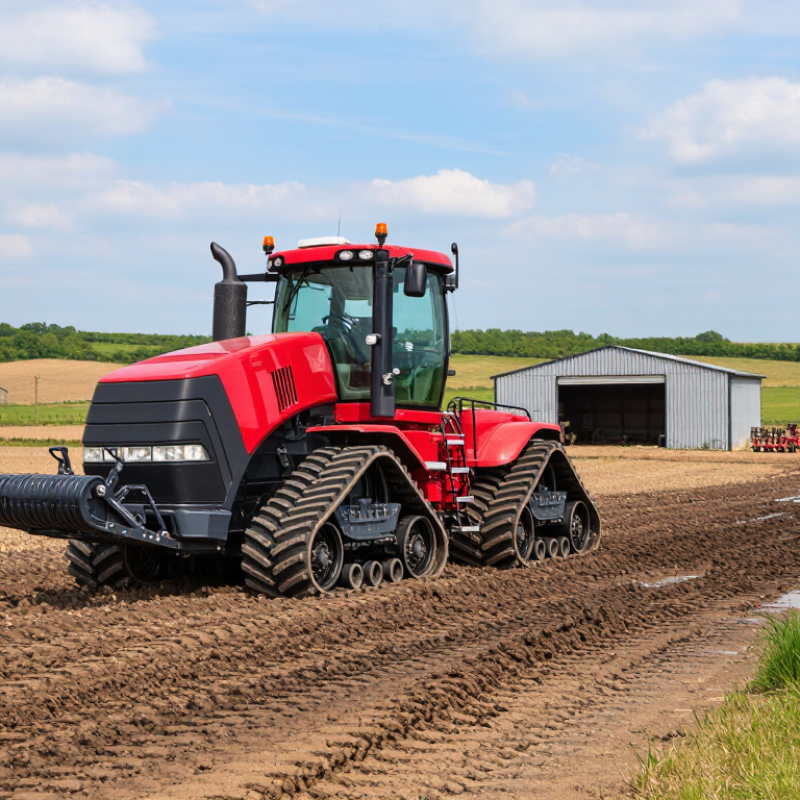
A rubber track tractor is a tractor that moves on continuous rubber belts instead of conventional wheels. Each track wraps around a drive wheel, smaller rollers, and guide wheels beneath the chassis. The engine sends power through the transmission to the drive wheels, which pull the belts forward. The tractor’s weight rests across a wider contact area. That can help reduce ground pressure and limit deep ruts on soft fields.
The tracks also provide grip on loose soil, but performance depends on track design, soil moisture, and machine weight. A wide, muddy belt may still slip. When turning, the tractor slows or varies the speed of each track, helping it pivot without a front axle steering the machine like a car. That feels different. Operators often notice it on headlands, where sharp turns can disturb soil or strain the undercarriage.
Rubber tracks can ride more smoothly than steel tracks on firm ground, yet they are not maintenance-free. Check for cuts, exposed cords, uneven wear, and packed mud around the rollers. It is tempting to judge a tractor by traction alone; transport speed, crop rows, and repair access matter too. Even careful checks can miss a developing problem, so inspect again after demanding work.
How Intended Tasks Determine the Right Tractor Type
What Is the Best Rubber Track Tractor to Buy?
How Intended Tasks Determine the Right Tractor Type
The right choice starts with the work, not the machine’s size. For muddy lanes, soft fields, or sloped ground, rubber tracks can improve traction and spread weight over a larger area. That can reduce rutting, though it does not prevent soil compaction in every condition. After rain, even tracks can leave marks.
For landscaping, grading, and moving soil in tight spaces, a compact tracked machine with a loader may be more useful than a larger crawler tractor. Check lift capacity, hydraulic flow, and attachment compatibility against the tools you expect to use. For field work, consider whether the tractor needs a power take-off, three-point hitch, or enough drawbar pull for the implements. These details matter.
Think about travel, too. Rubber tracks can wear faster on hard pavement than on soil, so frequent road travel may change the calculation. Measure gates and work areas, and check ground clearance before buying. A wider machine may feel steadier on slopes but may not fit through a narrow access path. There is no perfect setup. Buyers sometimes focus on traction and overlook service access, replacement-track cost, or transport requirements. Compare those factors with your actual weekly tasks, then choose a machine that handles the most demanding regular job without being awkward for everyday work.
Which Performance and Comfort Features Matter Most
When choosing a rubber track tractor, judge performance under your real workload, not just peak engine power. OECD Standard Codes for the Official Testing of Agricultural and Forestry Tractor Performance report comparable PTO and drawbar results, including fuel-use measurements. Nebraska Tractor Test Laboratory reports also publish drawbar performance and fuel consumption. Compare these figures at working loads; a high horsepower rating alone cannot tell you how efficiently a tractor pulls a loaded implement.
Tracks can improve traction on soft ground, but comfort depends on more than the undercarriage. Check cab noise, seat adjustment, visibility, control reach, and how clearly the display shows machine warnings. The ISO 2631 whole-body vibration standard assesses vibration using frequency-weighted acceleration, a useful framework when reviewing dealer test data or arranging a field trial. Ask to drive on a rough headland, not only a smooth yard. That matters.
During a trial, note whether the seat stays supportive after an hour and whether track movement feels steady during turns. I would not choose the softest ride alone; excessive bounce can make precise implement control harder. Compare fuel use at similar loads, then check whether routine track inspection is simple from ground level. Small detail. Mud packed around the rollers can turn a quick walkaround into an annoying job. Some test conditions may not match your soil, so treat published figures as a baseline, not a promise.
What Is the Best Rubber Track Tractor to Buy?
Ground pressure is one useful performance measure when comparing tractors for soft or sensitive ground.
How to read this chart: These values are calculated for a hypothetical 10,000 kg tractor using ground pressure = weight force ÷ total track contact area. A larger contact area lowers calculated ground pressure. Actual pressure varies with machine weight, track dimensions, and operating conditions. For comfort, compare cab noise, seat adjustability, vibration, visibility, and control layout during a test drive.
How to Compare Reliability, Dealer Support, and Service Costs
The best rubber track tractor is not always the newest or most powerful. Reliability starts with the machine’s service history and the conditions it worked in. Ask for maintenance records, hours, and details of major repairs. During inspection, look for uneven track wear, damaged guide lugs, hydraulic leaks, and loose fittings. Check cold-start behavior, too. A warm engine can hide problems.
A clean cab can fool you. Ask a local technician to inspect the undercarriage and test the machine under load. Their findings may reveal wear that photographs miss. Then compare dealer support: How quickly can the service team respond during planting or harvest? Are common parts stocked nearby, or shipped from far away? A friendly promise matters less than clear response times and access to trained technicians. Speak with nearby owners about how support works after the sale.
Estimate service costs over several seasons, not just the purchase price. Request quotes for scheduled maintenance, track replacement, and common repairs. Confirm what labor and parts are included in any warranty, and note exclusions in writing. Track life varies with soil, turning habits, and operator care, so avoid relying on one seller’s estimate. I would leave room for surprises; even a careful budget can miss a worn component. Compare total ownership costs against the work you actually need done.
How to Choose the Best Tractor for Your Budget and Workload
The best rubber track tractor is not automatically the largest or most powerful. It is the machine that handles your regular jobs without stretching your budget. Start with a workload list: mowing, loader work, grading, planting, or moving material. Note hours per week and the heaviest implement you expect to use. Be specific. A tractor that spends most days mowing needs different capacity from one lifting wet soil or pulling a loaded trailer.
Match engine power and hydraulic flow to your implements, then check lift capacity at the actual working position. Published lift figures can be measured differently, so compare manuals and ask for a demonstration with your attachment. For soft fields or finished lawns, rubber tracks can improve flotation and reduce rutting, but they do not make every surface harmless. Mud, sharp gravel, and frequent hard-surface turns can accelerate wear. Track replacement is a real budget line.
Compare purchase price with fuel, scheduled service, track life, transport, and access to repairs. Ask for written maintenance intervals and the cost of common wear parts. If possible, test the tractor with your own implement on representative ground; a short demonstration may reveal poor visibility or awkward controls. Check carefully. Leave some capacity for future work, but avoid paying for power you rarely use. Soil and seasons change, so no choice is perfect; a measured workload and total ownership cost make the decision more reliable.
What Is the Best Rubber Track Tractor to Buy? - How to Choose the Best Tractor for Your Budget and Workload
The best choice depends on implement requirements, acreage, soil conditions, transport needs, and total ownership cost. The ranges below are general planning guides, not specifications for a particular machine.
| Tractor class | Typical engine power | Best suited to | Budget fit | Main advantages | Trade-offs to consider | Best buying check |
| Compact or specialty tracked tractor | Usually below 150 hp | Small farms, orchards, vineyards, wet ground, and lighter field tasks | Lower initial outlay within the tracked-tractor market; compare carefully with wheeled alternatives | Compact footprint and reduced ground pressure can help in confined areas or soft conditions | Limited power and lift capacity for large implements; track options and local service may be limited | Confirm that the tractor can run your implements and safely fit your rows, gates, and transport trailer |
| Mid-size tracked field tractor | About 150–350 hp | Mixed farming, medium-to-large implements, and fields where traction or soil protection is important | Moderate to high; price depends heavily on power, track configuration, and equipment | A practical balance of drawbar capability, flotation, and field productivity for many larger farms | Tracks, undercarriage parts, and specialized repairs can add cost compared with a simpler wheeled machine | Match drawbar power and hydraulic flow to the heaviest implement you expect to use regularly |
| High-horsepower tracked tractor | Above 350 hp | Large-acreage operations, demanding tillage, and wide or high-draft implements | High; plan for substantial purchase, transport, fuel, and service costs | High drawbar capability and a large track footprint can support heavy field work and traction on challenging soils | Large capital commitment, higher fuel use under heavy work, and possible restrictions on road transport | Estimate annual hours and payback; verify transport width, turning space, and dealer support before purchase |
| Used tracked tractor | Varies by model and age | Buyers seeking lower upfront cost who can inspect the machine and budget for repairs | Potentially lower purchase cost; condition and remaining component life matter more than age alone | Can provide useful capacity at a lower initial cost than a comparable new machine | Hidden wear or deferred repairs may erase the savings; parts availability can vary | Arrange an independent inspection of tracks, drive components, engine, transmission, hydraulics, and service records |
Quick decision rule: Choose the lowest-power class that reliably handles your heaviest regular implement and annual workload. Compare total ownership cost—including fuel, track and undercarriage wear, maintenance, financing, and resale value—not purchase price alone. Track life varies substantially with soil, operation, maintenance, and track design.





