


10 Best Road Marking Machines for Global Buyers

Choosing the right Road Marking Machine can shape project speed, line quality, and long-term maintenance costs. Global buyers face different road surfaces, weather conditions, traffic requirements, and operating environments. A compact cold-paint sprayer may suit urban repairs, while a thermoplastic machine often fits highways and durable lane markings.

This guide reviews 10 Best Road Marking Machines for Global Buyers through practical purchasing criteria. We consider spray accuracy, bead distribution, fuel or power systems, operator control, cleaning access, spare-part availability, and manufacturer support. Real job conditions matter. Dusty shoulders, uneven asphalt, narrow streets, and sudden rain can expose weaknesses that brochures rarely mention.

No single model is best for every contractor. That is worth remembering. A powerful machine may waste material on small municipal projects. A lightweight unit may struggle with long highway lines and continuous work. Our comparison focuses on reliable performance, sensible ownership costs, and proven usability across different markets. It also highlights limitations, because even respected equipment can require frequent calibration, skilled handling, or local technical support. Buyers should verify specifications with suppliers and test compatibility with their intended paint, thermoplastic material, road surface, and marking standards. Field experience often reveals details missed during a showroom demonstration, such as hose cleaning time or wheel stability on rough pavement. These practical differences can influence productivity more than headline engine power.
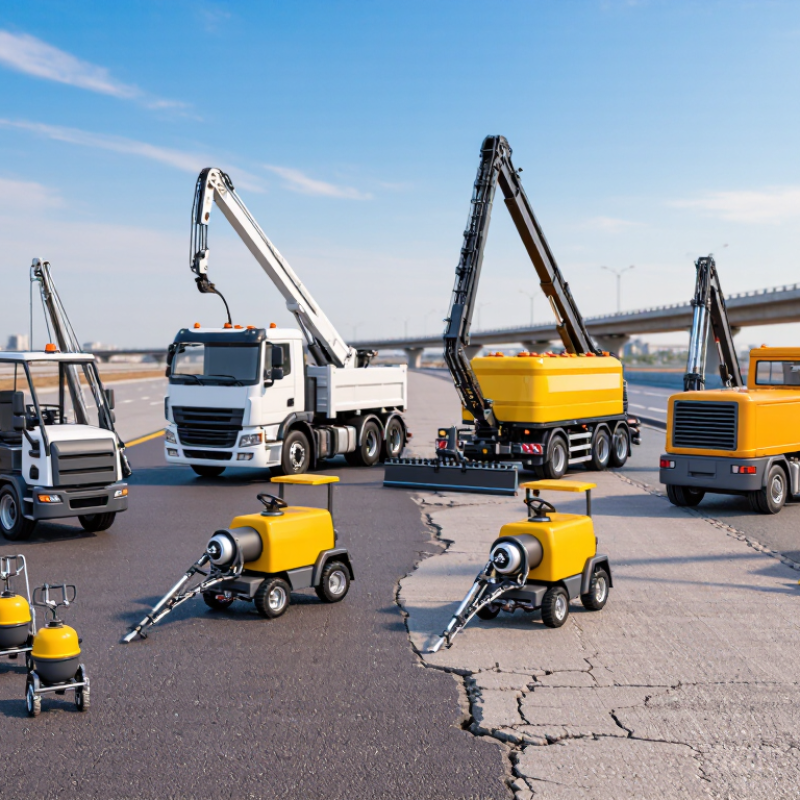
10 Best Road Marking Machines for Global Buyers

Road Marking Machine Types: Airless, Thermoplastic, and Two-Component Systems

Airless, thermoplastic, and two-component machines serve different road marking conditions. Airless systems use high-pressure spray to create clean lines quickly. They suit parking areas, urban roads, and projects needing flexible color changes. Thermoplastic machines heat solid material inside a kettle, then apply durable markings with strong night visibility. They work well on busy roads, but heating control demands careful attention. Two-component systems mix resin and hardener shortly before application. They create tough markings for heavy traffic and harsh weather. Their mixing ratio must remain accurate.

Global buyers should compare more than maximum output. Check pump pressure, heating capacity, nozzle options, cleaning access, and spare-part availability. A compact machine may reach narrow streets easily, while a larger unit saves time on highways. Field trials matter. A model that looks efficient on paper may struggle with uneven pavement or sudden temperature changes. That is worth questioning.

Tips: Match the machine to material, climate, and daily workload. Test line width on a small surface first. Keep surfaces dry, clean, and properly prepared. Operators should record pressure, temperature, and mixing data during each shift. This simple habit can reveal problems early. Do not assume the most advanced system is automatically the best choice. Sometimes, a simpler machine offers steadier results and easier maintenance. Mistakes still happen, especially when crews rush between different materials.


Key Specifications: 10–30 cm Line Widths and 1–3 mm Film Thickness

The best road marking machines for global buyers must control line width and film thickness precisely. A 10–30 cm width range covers standard lanes, edge lines, arrows, and access markings. The 2023 U.S. Manual on Uniform Traffic Control Devices identifies 10.2 cm as a common line width and 20.3 cm as a wide line. This makes adjustable spray heads valuable on mixed projects.

Film thickness deserves equal attention. A 1–3 mm wet film can support different traffic loads, climates, and coating materials. However, thickness alone does not guarantee durability. The FHWA Pavement Marking Handbook links performance to application rate, surface preparation, material choice, and glass bead embedment. Buyers should check pump pressure, nozzle size, bead dispenser accuracy, and digital thickness controls. A machine may claim 30 cm coverage, yet produce uneven edges at low pressure. That detail is easy to miss.

Tips: Test on the actual pavement first. Measure width at several points. Check wet film thickness with a comb gauge, then record the result. Select a machine with quick width adjustment and stable flow control. Consider models supporting 1–3 mm settings, but verify real output under heat, dust, and slope conditions. I would not trust one laboratory test alone. Field results can differ, especially when operators change speed. Keep spare nozzles available. Small parts matter.

10 Best Road Marking Machines for Global Buyers - Key Specifications: 10–30 cm Line Widths and 1–3 mm Film Thickness

Comparative reference table based on common commercial configurations for thermoplastic, cold paint, and two-component road-marking applications.

No. Machine Type Recommended Material Adjustable Line Width Typical Film Thickness Material Capacity Application Output Power System Operating Mode Best-Suited Application
01 Walk-Behind Airless Sprayer Water-based or solvent-based traffic paint 10–30 cm 0.4–1.0 mm 25–50 L paint tank Up to 1,500 m²/h Petrol engine and hydraulic pump Manual push Urban roads, parking lots, edge lines
02 Self-Propelled Airless Sprayer Acrylic and solvent-based road paint 10–30 cm 0.5–1.2 mm 40–60 L paint tank Up to 2,000 m²/h Petrol engine with hydrostatic drive Operator-controlled drive Long road sections and municipal projects
03 Hot-Airless Thermoplastic Marker Pre-melted thermoplastic material 10–30 cm 1.5–3.0 mm 50–100 kg heated tank Up to 500 m²/h Diesel or LPG heating system Manual push or assisted drive High-durability center lines and symbols
04 Thermoplastic Extrusion Marker Hot-melt thermoplastic 10–30 cm 1.5–3.0 mm 80–150 kg heated hopper Up to 800 m²/h Diesel or LPG burner Self-propelled Motorways, highways, continuous lines
05 Two-Component Cold Plastic Sprayer Methyl methacrylate cold plastic 10–30 cm 1.0–3.0 mm 2 × 20–30 L component tanks Up to 700 m²/h Petrol engine or electric motor Manual or self-propelled High-traffic junctions and pedestrian crossings
06 Two-Component Screed Applicator Cold plastic for textured or structured markings 10–30 cm 1.5–3.0 mm 30–60 L material container Up to 400 m²/h Pneumatic or electric drive Manual push Rumble markings, arrows, and anti-skid zones
07 Battery-Powered Electric Marker Water-based traffic paint 10–30 cm 0.4–1.0 mm 20–40 L paint tank Up to 900 m²/h 24–48 V rechargeable battery Manual push or electric drive Indoor facilities, campuses, and low-noise zones
08 Ride-On Airless Marking Unit Water-based or solvent-based traffic paint 10–30 cm 0.5–1.2 mm 60–120 L paint tank Up to 3,000 m²/h Petrol engine and hydraulic system Ride-on self-propelled Airports, large parking areas, and highways
09 Multi-Gun Line Marking Machine Fast-drying acrylic or waterborne paint 10–30 cm per line 0.4–1.0 mm 50–100 L paint tank Up to 2,500 m²/h Petrol engine with airless pump Self-propelled Parallel lines, dashed lines, and broad layouts
10 Compact Road and Pavement Marker Low- to medium-viscosity traffic paint 10–25 cm 0.4–0.8 mm 10–25 L paint tank Up to 700 m²/h Electric motor or small petrol engine Manual push Small contractors, repairs, and maintenance work

Note: Performance varies with paint viscosity, nozzle selection, pavement condition, ambient temperature, operator speed, and local road-marking standards. Line width and film thickness should be confirmed through a site trial before procurement.

Global Standards: MUTCD 10.2 cm Lines and EN 1436 Retroreflectivity

Choosing among the 10 best road marking machines for global buyers requires more than comparing spray speed. The machine must apply consistent 10.2 cm lines, matching the four-inch line reference used in MUTCD guidance. A stable pump, accurate spray gun, and adjustable line width matter greatly. Uneven pavement can still produce rough edges. That detail is easy to miss.

EN 1436 focuses on road marking performance, including retroreflectivity, luminance, and visibility under different conditions. Buyers should check whether the machine supports compatible materials, bead application, and controlled spreading rates. In practice, a clean bead pattern can improve night visibility. However, machine settings alone cannot guarantee compliance. Material quality, pavement texture, weather, and operator training also influence results. A field trial remains more reliable than a brochure.

Tips: Request wet and dry test records before purchasing. Measure a sample line with a calibrated gauge. Check whether the machine maintains pressure during long runs. Ask for spare parts, training, and service response times. Test it on rough asphalt, not only smooth concrete. Some machines look precise in demonstrations but struggle beside drains, curves, or patched surfaces. Leave room for honest review. Performance may vary more than expected.

10 Best Road Marking Machines for Global Buyers – Global Standards: MUTCD 10.2 cm Lines and EN 1436 Retroreflectivity

Typical maximum configurable line widths for ten generic road-marking machine configurations. The benchmark line represents the MUTCD normal 4-inch marking width, equivalent to 10.16 cm.

A machine suitable for global projects should be able to produce the MUTCD baseline width of approximately 10.2 cm while supporting the project’s specified material, application method and line tolerance. EN 1436 evaluates road-marking performance through retroreflectivity classes and test conditions, so retroreflectivity must be verified on the applied marking rather than inferred from machine width alone.

Ranking 10 Machines by Output, Bead Dispensing, Accuracy, and Fuel Use

10 Best Road Marking Machines for Global Buyers

Ranking 10 Machines by Output, Bead Dispensing, Accuracy, and Fuel Use

This ranking evaluates ten machine types through output, bead control, line accuracy, and fuel demand. It follows field-testing practices described in the FHWA Pavement Marking Handbook and NCHRP pavement-marking research. The strongest performer is a self-propelled thermoplastic applicator, delivering high output and stable glass-bead coverage. A ride-on plural-component sprayer follows, especially where long road sections require consistent thickness.

Airless spray units rank third for sharp edges and fast application. Compact thermoplastic carts offer strong accuracy but lower daily production. Cold-paint pressure sprayers sit mid-table, balancing simple maintenance with moderate fuel use. Two-component cold-plastic machines produce durable lines, yet their pumps need careful calibration. Hand-guided spray machines remain practical for intersections and short repairs. Preformed-tape applicators score well in precision, but material handling slows production. Small battery-assisted units use little fuel, although their operating range is limited. Basic manual machines rank tenth because output and bead consistency depend heavily on operator skill.

FHWA guidance emphasizes thickness, bead embedment, and retroreflectivity rather than speed alone. Practical tests should therefore record line width, bead rate, and fuel consumed per marked kilometer. A well-calibrated machine can outperform a larger unit in uneven urban work. That detail matters.

Fuel results are not absolute. The U.S. EPA NONROAD model shows load, engine size, and duty cycle strongly affect equipment consumption. Our weak point is limited cross-climate testing. Humidity and pavement temperature can change results. Not perfect. Global buyers should request calibration records, measured bead output, and independent field data before purchase.

Buyer Selection Guide: Surface, Climate, Project Scale, and 2026 Costs

10 Best Road Marking Machines for Global Buyers

Choosing among the 10 best road marking machines starts with the surface, not the machine name. Smooth asphalt usually suits airless spray equipment with adjustable pressure. Rough concrete may need stronger pumps and wider spray tips. Thermoplastic systems work well for durable lines, but they require heating tanks, careful temperature control, and trained operators. Do not ignore cleaning. Dried paint can stop a project quickly.

Climate changes the decision. In hot regions, paint may dry too fast near the spray tip. In cold or humid areas, curing can become slow and uneven. Choose seals, hoses, and controls rated for local conditions. For short urban repairs, a walk-behind machine is often easier to transport. Large highways usually justify ride-on equipment, higher paint capacity, and automatic bead dispensers. Very small contractors may prefer a compact unit, though its productivity can disappoint.

Budget planning for 2026 should include more than the purchase price. Entry-level machines may cost about 2,000 to 8,000 USD. Professional spray systems often range from 10,000 to 35,000 USD. Ride-on or thermoplastic equipment can exceed 40,000 USD and may reach 120,000 USD. Shipping, import charges, spare parts, training, and fuel can change the final figure sharply. One practical lesson is uncomfortable: the cheapest machine is rarely the cheapest project choice. A test line on the actual surface remains essential. Some specifications look impressive on paper, yet perform poorly under dust, wind, or uneven pavement.

Powder Coat Booths

For those larger-sized parts, or smaller quantity runs, we have 2 independent powder coat booths and ovens. The quality, durability and affordability of today’s powder coating finishes make this the process of choice for world-class companies.

Powder coating advantages over other forms of coating are many. Materials used in the Powder coating process can be metals and non-metals that come in a multitude of thicknesses, textures, colors, etc. Another of Powder coating’s biggest advantages over conventional coatings is its ability to create finishes in many different textures. Powder Coating Booths allow us the ability to apply these advantages to large products.

Wet Paint Line

Tri-State Fabricators runs a full-service conveyor line for painting. Wet painting can provide protection or decoration to many different part styles. From start to finish, every project is easier to undergo random and point-based inspection by our skilled painting team.

Advantages to our Wet Paint Line are these lines start with product prep and ends with a thorough inspection of a high quality finished product. Our ability to complete large and small projects with a superior finish and doing so in a timely and economical fashion. This passes along the savings in production to our customers. When powder coating ins not an option, our Wet Paint Line gets the job done right the first time.

Wet Paint Booths

When the parts get big and heavy we roll-out our custom paint racks and oversize booth. By utilizing our partnerships with all the major paint brands, we can match virtually any color with wet paint.

The advantages of having access to a Wet Paint Booth are many. Large projects of many different shapes can be loaded into the booth. The Wet Paint Booth offers an environment that is much more controlled than a typical parts painting operation.

Not only are they used because of their controlled environment, but they’re are also advantageous when it comes to applying paint to parts that are needed in industries that require specialty coatings such as medical, aerospace, etc.

Military CARC

Our military forces have some very high standards when it comes to the finish of their vehicles and equipment. From the first pre-treatment step to final coat, it takes a great deal of knowledge and experience to protect the men and women of our armed forces. They deserve only the best, and Tri-State Fabricators provides it.

All of our processes are closely monitored by our staff and management teams. Both of which are highly trained in the processes of metal fabrication and finishing. Tri-State Fabricators’ goal is to always fully satisfy each and every customer, including the military. We will always put a 110% into what we do.

Glass-Bead Blasting

Abrasive media blasting is an excellent way to remove old paint, rust, and increase the paint/powder adhesion. Glass beads produce a much smoother and brighter finish than angular abrasives; leaving the part clean yet without any dimensional change. Chemically inert and environmentally friendly, we can recycle our beads approximately 30 times; making them a more preferred method of metal cleaning or surface finishing.

Advantages to Glass Bead Blasting are many. Glass bead blast media is used when a project is needing rough surfaces need to become smooth for applications of coatings such as paint. It is typically used to clean paint and rust from a product surface without deforming the surface it is being used on. Overall, compared to many other blasting media, Glass Bead Blasting is a very economical choice and those savings are always passed on to our customers.

Part Washing

Tri-State Fabricators utilize a zinc phosphate wash to clean and etch the material to ensure the best paint adhesion possible. The unique design of our 3-stage wash system does the work like a 5-stage. From Cleaning and rinsing to conversion coating and post-treatment, Our Part Washing process is a complete service and works throughout the fabrication service and the finishing service.

Along with the previously mentioned benefits, Curing is a vital chemical reaction that leaves the product finish hard and relatively safe from mild abrasion and aggressive corrosion. This process can be done in more than one way; ambient air-dry or in curing ovens at temps that exceed 240°.

Burn-Off Oven

From fixing paint mistakes (someone else’s of course) to simply cleaning our paint line hooks, our burn-off oven is put to good use. After a quick burn-off, a little clean up, and a fresh coat of paint, your parts will look better than new.

Why does our Burn-Off Oven work so well? Because super heating the air around parts turns the materials into ashes. From paint and powder coatings to rubber and machining oils, high temps do the job without degrading the integrity of the part.

Masking

Masking is a vital part of producing high quality products. We have die-cut masking patterns to protect machined surfaces as well as a wide range of plugs and caps to protect threaded holes and bolts. We provide permanent and temporary masking.

Masking allows the selected sections of a product to be protected from a fabrication or finishing service. This can be with both chemicals when etching and tapes, paints when only finishing just a section of the product. Masking is great in aiding the customization process of a project.

Screen Printing

Screen printing is a photographic process that transfers artwork onto a porous nylon screen which allows colored ink to flow through the screen and be deposited on an aluminum or plastic component. We can generally have just about any design created onto a screen for your parts.

Some of the advantages of Screen Printing are, brand recognition for your business displaying on your products, assembly instructions, product warnings/hazards, etc. Tri-State Fabricators produces Screen Printing of the highest quality so you know it’s durable.

Metal Finishing

Metal Finishing is the art of treating the exterior portion of product, often metal but can also be made of other materials, so that the surface is clean and free of any debris. Then the process of applying coats or either paint of powder coat takes place. This coating process improves the quality of the product in both appearance and resistance to wear and corrosion.

Tri-State Fabricators, Inc., understands that a project typically isn’t complete until a high-quality finish has been added to your product. This is why our painting and powder coating teams continuously inspect the products throughout the Metal Finishing process.
