What Are the Best Rig Accessories from China?
Choosing the best rig accessories from China requires more than comparing prices online. The right components must match the rig’s workload, operating environment, and maintenance schedule. Common options include drill rods, hydraulic fittings, clamps, winches, lighting systems, filters, control valves, and protective covers. Each part affects safety, uptime, and operating costs.
China has a broad manufacturing base for these products. Experienced suppliers often support custom dimensions, private labeling, and small trial orders. However, product quality can vary between factories. A polished catalog proves little. Request material certificates, dimensional drawings, load ratings, and recent inspection records. Ask for sample parts before approving a larger shipment. Inspect threads, welds, seals, and surface finishes closely. Small defects matter.
Application knowledge remains essential. A replacement hydraulic hose may look correct but fail under unsuitable pressure or temperature. A clamp may fit the frame yet loosen during vibration. Verify compatibility with the rig model, connection standards, local electrical requirements, and approved safety procedures. Suppliers with documented quality systems and responsive technical teams deserve closer attention.
Price is only one factor. Delivery reliability, spare-part availability, packaging, warranty terms, and communication can determine the real value. Some buyers focus too heavily on the lowest quotation. That assumption can fail. An honest review should also acknowledge uncertainty: supplier claims require independent checking, and one successful sample does not guarantee every batch. This guide examines practical selection methods, reliable sourcing signals, and rig accessories that can support safer, more efficient equipment operation.
Types of Rig Accessories Made in China
What Are the Best Rig Accessories from China?
Types of Rig Accessories Made in China
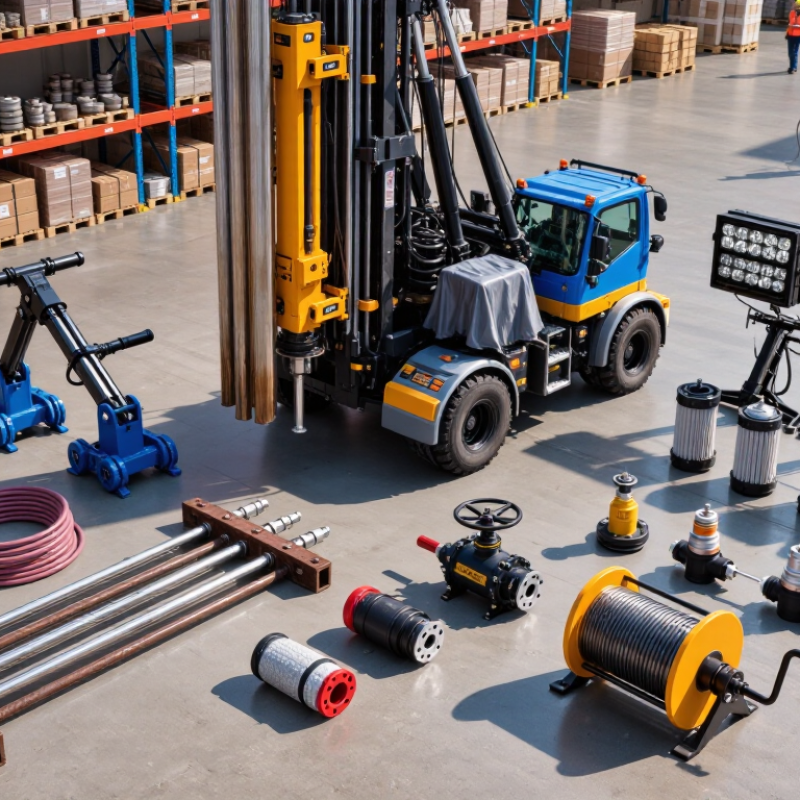
Chinese manufacturers produce a broad range of rig accessories for mining, construction, water-well, and energy projects. Common items include drill pipes, drill collars, stabilizers, Rotary Tables, kelly bars, mud pumps, winches, mast sections, and crawler undercarriages. Each type solves a different field problem. Drill pipes transfer torque and drilling fluid, while stabilizers improve hole direction. Mud pumps maintain circulation and help remove cuttings. For compact sites, foldable masts and lighter hydraulic systems can reduce transport costs. Small details matter.
The World Steel Association reported about 1.02 billion tonnes of crude steel production in China during 2023, representing roughly 54% of global output. This large industrial base supports the production of wear plates, shafts, housings, and high-strength structural parts. The Energy Institute’s Statistical Review 2024 also recorded China as producing more than half of the world’s coal in 2023. That demand encourages continuous development of mining-rig components, including carbide-tipped drilling tools and reinforced conveyor parts. Buyers should request material certificates, dimensional inspection records, load-test results, and traceability documents. ISO-based quality systems are useful, but they do not replace independent inspection. Price alone misleads. A cheaper stabilizer may use softer steel or weaker heat treatment. Specifications can also be incomplete. Confirm thread compatibility, torque limits, operating temperature, and replacement-part availability before ordering. Report figures vary slightly by source, so purchasing decisions still need field testing and technical review.
Key Features to Compare Before Choosing Rig Accessories
What Are the Best Rig Accessories from China?
Key Features to Compare Before Choosing Rig Accessories
Choosing rig accessories from China requires more than comparing prices. Start with the material. Aircraft-grade aluminum keeps weight manageable, while hardened steel suits heavy-duty mounting points. Check the actual load rating, not just the advertised maximum. A safety margin matters.
Compatibility can prevent costly mistakes. Measure thread sizes, mounting holes, tube diameters, and connection standards before ordering. Adjustable clamps should move smoothly without unwanted play. Quick-release parts need firm locking mechanisms. Test them repeatedly with gloves, especially in cold or dusty conditions. Small details matter.
Surface treatment also deserves attention. An even anodized or powder-coated finish can resist scratches and moisture, but appearance alone proves little. Ask for material certificates, dimensional drawings, inspection records, and sample units. Reliable suppliers should explain tolerances and replacement procedures clearly. Packaging should protect corners and threads during transport.
A sample may look excellent.
Then production can vary.
That risk deserves honest attention. Compare several samples from different batches when possible. Inspect welds, fasteners, edges, and moving joints under practical loads. I would not approve an accessory based on photographs alone. A polished image cannot reveal weak threads or poor alignment. Clear documentation, repeatable quality checks, and responsive technical support usually matter more than a low initial quote.
What Are the Best Rig Accessories from China?
Key features to compare before choosing rig accessories
This indicative comparison uses a 10-point evaluation scale based on commonly specified professional rig requirements. Prioritize load capacity and compatibility for larger camera setups, while portability and adjustment range are especially important for mobile production.
Best Chinese Rig Accessories for Drilling and Oilfield Operations
What Are the Best Rig Accessories from China?
Chinese rig accessory suppliers offer practical equipment for drilling and oilfield operations. Their product ranges often include mud pump liners, high-pressure hoses, swivel seals, drill pipe tools, elevators, slips, valves, gauges, and lifting accessories. The best choice depends on operating pressure, temperature, load rating, connection size, and drilling conditions.
Field experience shows that small dimensional errors can create serious delays. A hose may fit the thread but fail under pressure. A lifting tool may look solid but lack clear load markings. These details matter.
Quality checks should include material certificates, pressure-test records, heat numbers, and dimensional reports. Third-party inspection can add confidence before shipment.
However, paperwork is not enough.
Inspectors should also check surface damage, weld quality, thread protection, and packaging.
For offshore or remote sites, spare seals, gaskets, bolts, and adapters deserve careful planning.
Corrosion-resistant materials may cost more, but they can reduce replacement work in harsh environments. Suppliers should provide traceability and documents that match local regulations and site procedures.
Communication can still be imperfect, especially when technical drawings use different standards. Confirm every measurement in writing.
A cheaper accessory is not always economical when downtime, transport, and rework are included.
How to Evaluate Chinese Rig Accessory Manufacturers
What Are the Best Rig Accessories from China?
How to Evaluate Chinese Rig Accessory Manufacturers
Chinese manufacturers produce many useful rig accessories, including mounting plates, camera cages, handles, clamps, and adjustable arms. The best choice depends on engineering quality, not catalog size. Check the material specification carefully. Aluminum alloy, stainless steel, and polymer parts should match the accessory’s expected load and environment.
Request a complete technical drawing before ordering. It should show thread sizes, tolerances, surface treatment, and load limits. Ask how each batch is inspected. Reliable factories can explain their sampling process, torque checks, coating tests, and packaging controls. Factory photos help, but an independent audit provides stronger evidence. Short video calls can also reveal production details, such as measurement tools and assembly methods.
Order samples before discussing large quantities. Test every joint with the camera setup you actually use. Check for loose threads, uneven coating, sharp edges, and slipping clamps. Test repeated adjustments, not just one successful installation. My early mistake was judging a handle by appearance. It looked solid, yet its locking mechanism weakened after repeated use. That experience changed my evaluation process.
Review communication quality as well. A capable supplier answers technical questions directly and records requested changes. Confirm production time, replacement procedures, carton protection, and inspection documents in writing. Be cautious when specifications change without explanation. Low prices can be attractive, but inconsistent dimensions may create costly compatibility problems. One overlooked detail can affect an entire rig.
Safety, Quality Standards, and Shipping Considerations
The best rig accessories from China should be judged by safety evidence, not catalog photos. For lifting accessories, request material certificates, rated-load markings, batch traceability, and documented proof-load or nondestructive tests. Components used near drilling equipment should align with relevant requirements, such as API Spec 7K, ISO 9001 quality controls, and local workplace regulations. A factory audit should check calibration records, welding procedures, operator training, and storage conditions. Rust under plastic wrapping is not a minor detail.
Ask for inspection reports from an independent testing body when the accessory carries serious loads. IOGP safety performance reports repeatedly identify dropped objects and lifting activities as major sources of severe incidents in oil and gas operations. That makes shackles, slings, elevators, guards, and hydraulic fittings safety-critical purchases. I still treat certificates as clues, not proof. Some documents look complete but lack serial-number matching. That weakness needs attention.
Shipping also affects quality. The World Bank’s 2023 Logistics Performance Index gave China a score of 3.7 out of 5, showing strong logistics capability but not flawless execution. UNCTAD’s Review of Maritime Transport 2023 states that ships carry over 80% of global merchandise trade by volume. Use moisture barriers, shock indicators, desiccant, and sealed wooden cases for sensitive parts. Confirm gross weight, lifting points, HS codes, insurance, and port responsibilities before dispatch. A cheaper freight quote may hide poor packing, demurrage exposure, or delayed customs documents. Track photos before sealing the container.





