


Choosing a Reflow Machine in 2026 is not simply a contest of heating zones or advertised throughput. The right system must match your board dimensions, solder paste, component mix, and production volume. A compact benchtop unit may suit prototypes, while a conveyor oven can support repeatable, higher-volume assembly. But bigger is not always better.
Dr. Ning-Cheng Lee is known for his work on soldering materials and processes. A practical takeaway from his published expertise is: “Judge the process by the solder joints it produces, not by the machine’s feature list.” This is a paraphrase, not a verbatim quotation. It points to what buyers should examine: temperature uniformity, profile control, conveyor stability, maintenance needs, and usable technical support.
Small details count. A few degrees of variation across a board can affect wetting and joint consistency. This guide compares seven reflow machines for PCB assembly in 2026, considering both shop-floor realities and specifications. It also highlights where a model may fit—and where it may not. Published performance figures are useful, but they do not replace trials with your own boards and materials. That step is easy to underestimate. Reflow results depend on the complete process, including paste, placement, board design, and profiling. Use the shortlist as a starting point, then verify claims against your production needs.
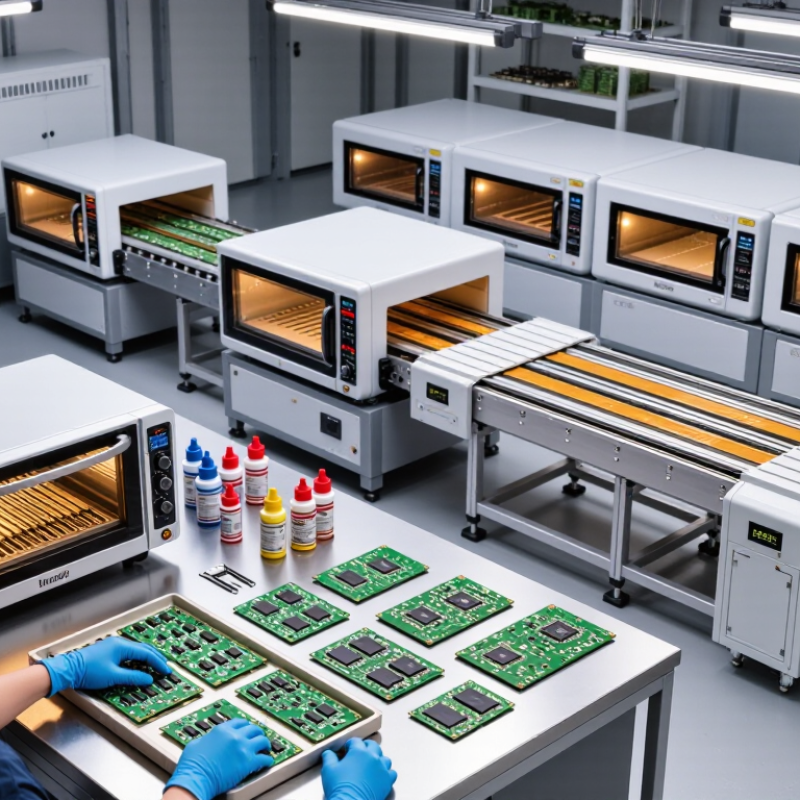
A reflow machine forms solder joints by controlling heat over time, not by simply reaching a target temperature. Printed solder paste holds each component in place before heating. As the board moves through the oven, preheat removes moisture and reduces thermal shock; the soak zone helps temperatures even out across copper-heavy areas and small components.
For common lead-free SAC305 paste, the alloy’s melting range is approximately 217–220°C, as specified in IPC J-STD-006. Above liquidus, molten solder wets the component terminals and PCB pads. Surface tension draws the metal into a joint; controlled cooling then solidifies it. The result depends on the whole profile. IPC-7530A, its temperature-profiling guideline, emphasizes measuring actual board temperatures rather than relying on oven settings alone.
A useful profile starts with thermocouples attached to representative locations: a large ground plane, a fine-pitch component, and a board edge. Watch the temperature differences. A heavy copper area may lag behind. Too little time above liquidus can leave incomplete wetting; excessive heat can damage components or degrade flux. Even a clean-looking profile can miss a cold joint if the sensor sits in the wrong place. That is easy to overlook. Recheck after changing board thickness, loading, or conveyor speed.

Representative lead-free SAC305 reflow profile: controlled heating activates solder paste, the peak melts it to form joints, and cooling solidifies the connections.
Illustrative process profile, not a machine ranking. Actual settings vary with solder paste, PCB design, and component temperature limits.
A reflow machine should match your boards, solder paste, and production pace—not just a headline temperature.
Compare usable heating width with your largest panel, including room for rails and edge clearance. Check the number of heating and cooling zones, the conveyor speed range, and the stated temperature uniformity. These figures affect how closely the oven can follow a thermal profile across different board areas.
Look for profile storage, clear temperature controls, and practical access for thermocouples. Ask how the machine handles repeat runs, recipe changes, and alarms; a polished touchscreen matters less if operators cannot verify a profile quickly. Convection systems often provide controlled, even heating, but airflow and board loading still affect results. Confirm the rated throughput with your actual board size and spacing. Published capacity can be optimistic. It is worth checking.
Tips: Request a profile run using a representative board, with thermocouples placed on both large components and heat-sensitive areas. Compare measured results with your paste supplier’s process window. Also inspect exhaust connections, conveyor maintenance access, power requirements, and cooling performance before purchase. A machine that fits the floor plan but complicates routine cleaning may become a daily frustration.
Choosing one of the seven best reflow machines for PCB assembly in 2026 starts with matching capacity to real production needs. A compact benchtop unit suits prototypes and short runs, while a narrow conveyor model supports steady, low-volume assembly. Mid-size systems offer more board space and repeatable throughput. Larger multi-zone machines handle continuous production, but require more floor space and careful setup.
The seven options can be compared by their working width, heating zones, conveyor speed, and profile controls. Entry-level models may provide basic temperature settings; more advanced units often support recipe storage, zone adjustment, and profile monitoring. These features help operators manage different board sizes and component mixes. Yet extra controls do not guarantee better joints. A poorly calibrated sensor can still mislead. Capacity figures also deserve scrutiny: advertised throughput may assume small boards and ideal spacing.
Tips: Test a representative board before committing. Record temperatures at several points, including near heavy components, and check the profile against solder paste requirements. Ask how quickly recipes can be changed between jobs. Small shops may value easy maintenance more than peak speed. I would not treat any single specification as decisive; actual results depend on board design, loading, and operator practice. Some comparisons remain imperfect without a production trial.
| Machine configuration | Typical heating setup | Capacity profile | Process-control strengths | Best suited to | Key trade-off |
|---|---|---|---|---|---|
| Compact batch convection oven | Enclosed chamber; boards or carriers are heated in batches rather than conveyed continuously. | Low; output depends on chamber load and the full heat-up, soak, and cooling cycle. | Recipe-based temperature settings; straightforward to verify a profile with thermocouples attached to a test board. | Prototyping, repair work, and low-volume assembly. | Batch loading and cooling make continuous production impractical. |
| Benchtop conveyor reflow oven | Short conveyor with multiple independently controlled heating zones; forced convection is common. | Low to medium; board spacing and conveyor speed determine the practical output. | Repeatable conveyor speed and zone-temperature settings; suitable for developing and repeating a thermal recipe. | Small production runs, engineering labs, and pilot lines. | Limited heating length and conveyor width can constrain larger boards and higher throughput. |
| Four-zone inline convection oven | Continuous conveyor with separate heating zones and a cooling section. | Medium; supports continuous flow, but available profile length is more limited than on longer ovens. | Independent zone setpoints and conveyor-speed adjustment; profile validation is needed for each board and solder paste combination. | Small-to-medium production with a relatively stable product mix. | Fewer zones provide less flexibility to shape preheat, soak, and peak-temperature stages. |
| Six-zone inline convection oven | Continuous conveyor with multiple controlled heating zones and a cooling section. | Medium to high; practical capacity depends on board dimensions, spacing, and line speed. | More opportunities to tune ramp, soak, and reflow stages than a short-zone configuration; supports repeatable recipe control. | General-purpose SMT production with changing board designs. | Requires careful recipe setup; zone count alone does not guarantee a suitable board temperature profile. |
| Eight-zone inline convection oven | Longer continuous heating path with several independently controlled zones and downstream cooling. | High potential for continuous production when matched to the upstream and downstream line. | Greater flexibility to shape the thermal profile and accommodate different board thermal masses. | Medium-to-high-volume lines and assemblies with more demanding profile requirements. | Higher space, power, and operating requirements; actual throughput remains line- and product-dependent. |
| Nitrogen-capable inline reflow oven | Conveyor oven designed to operate with nitrogen in the process chamber; zone count varies by configuration. | Medium to high, depending on conveyor design, heating length, and line speed. | Can control the atmosphere as well as the thermal recipe; oxygen monitoring is needed when low-oxygen processing is required. | Assemblies or soldering processes where reduced oxidation is a process requirement. | Nitrogen supply and atmosphere monitoring add operating costs; nitrogen capability does not replace profile validation. |
| Dual-lane inline reflow oven | Two conveyor lanes; lane arrangement and whether speeds are independently controlled vary by design. | Potentially high for compatible boards and balanced production flow. | Can increase board flow through a shared oven; temperature profiling and lane-specific setup must be checked for the chosen configuration. | High-output lines running suitable board formats or parallel production. | Lane width, board clearance, conveyor control, and line balance can limit the benefit of a second lane. |
Comparison note: These are representative machine configurations, not specifications for individual products. Capacity is described qualitatively because actual output depends on board size, loading interval, conveyor speed, recipe, cooling requirements, and the rest of the assembly line. Confirm the production recipe with instrumented thermal profiling; zone count by itself is not a measure of throughput or solder-joint quality.
Prototype shops and high-mix lines often benefit from a compact batch reflow machine. Operators can change profiles without tying up a continuous conveyor. That matters when today’s run contains a dozen boards and tomorrow’s uses different solder paste. Keep a thermocouple on the board, not just the oven display. Small boards can heat quickly; thick copper planes may lag. There is no magic profile.
For steady, high-volume production, inline convection machines offer repeatable transport and controlled heating zones. Prismark’s 2024 mid-year industry forecast projected roughly 5% growth in global PCB production value for 2024, following a downturn in 2023. That outlook signals demand volatility, not a reason to buy maximum capacity. Match conveyor width, zone count, and cooling capacity to actual board mix and shift volume. Oversizing can waste floor space and energy.
Large boards, heavy copper, or dense assemblies may need longer heating zones and careful profiling to limit temperature differences across the board. Nitrogen can help some processes, but verify the benefit with solder-joint results and operating costs. IPC-7530 guidance emphasizes profiling assemblies to understand thermal behavior. A practical selection test: run the smallest, largest, and most thermally demanding boards you build. Measure them. I’d still leave room for operator judgment; a specification sheet cannot reveal every awkward board.
A reflow machine performs best when installation matches the workshop and the board’s needs. Leave enough clearance for service access and airflow, then level the unit and secure its conveyor. Check the electrical supply and exhaust connection against the machine manual. A hurried setup can cause avoidable temperature variation. Small details matter.
Temperature profiling should use a populated board, not an empty test panel. Attach thermocouples securely at representative points, including a large component and a heat-sensitive area. Run the board through the oven and record ramp rate, soak time, peak temperature, and time above liquidus. Compare the readings with the solder paste and component specifications. Adjust the profile gradually, then verify it with another run. A saved recipe is useful, but it is not proof that every board will heat the same way. Not always.
Routine maintenance helps keep those measurements trustworthy. Remove flux residue as directed, and check filters, fans, conveyor rails, and belt tension on a regular schedule. Inspect thermocouple leads for worn insulation, and confirm sensor calibration at planned intervals. Log each service and note unusual noises or temperature drift. These records can reveal a small problem before it affects a production batch. I have seen people skip the log when the line is busy; it seems harmless, until nobody can explain a changed profile.


For those larger-sized parts, or smaller quantity runs, we have 2 independent powder coat booths and ovens. The quality, durability and affordability of today’s powder coating finishes make this the process of choice for world-class companies.
Powder coating advantages over other forms of coating are many. Materials used in the Powder coating process can be metals and non-metals that come in a multitude of thicknesses, textures, colors, etc. Another of Powder coating’s biggest advantages over conventional coatings is its ability to create finishes in many different textures. Powder Coating Booths allow us the ability to apply these advantages to large products.
Tri-State Fabricators runs a full-service conveyor line for painting. Wet painting can provide protection or decoration to many different part styles. From start to finish, every project is easier to undergo random and point-based inspection by our skilled painting team.
Advantages to our Wet Paint Line are these lines start with product prep and ends with a thorough inspection of a high quality finished product. Our ability to complete large and small projects with a superior finish and doing so in a timely and economical fashion. This passes along the savings in production to our customers. When powder coating ins not an option, our Wet Paint Line gets the job done right the first time.
When the parts get big and heavy we roll-out our custom paint racks and oversize booth. By utilizing our partnerships with all the major paint brands, we can match virtually any color with wet paint.
The advantages of having access to a Wet Paint Booth are many. Large projects of many different shapes can be loaded into the booth. The Wet Paint Booth offers an environment that is much more controlled than a typical parts painting operation.
Not only are they used because of their controlled environment, but they’re are also advantageous when it comes to applying paint to parts that are needed in industries that require specialty coatings such as medical, aerospace, etc.
Our military forces have some very high standards when it comes to the finish of their vehicles and equipment. From the first pre-treatment step to final coat, it takes a great deal of knowledge and experience to protect the men and women of our armed forces. They deserve only the best, and Tri-State Fabricators provides it.
All of our processes are closely monitored by our staff and management teams. Both of which are highly trained in the processes of metal fabrication and finishing. Tri-State Fabricators’ goal is to always fully satisfy each and every customer, including the military. We will always put a 110% into what we do.
Abrasive media blasting is an excellent way to remove old paint, rust, and increase the paint/powder adhesion. Glass beads produce a much smoother and brighter finish than angular abrasives; leaving the part clean yet without any dimensional change. Chemically inert and environmentally friendly, we can recycle our beads approximately 30 times; making them a more preferred method of metal cleaning or surface finishing.
Advantages to Glass Bead Blasting are many. Glass bead blast media is used when a project is needing rough surfaces need to become smooth for applications of coatings such as paint. It is typically used to clean paint and rust from a product surface without deforming the surface it is being used on. Overall, compared to many other blasting media, Glass Bead Blasting is a very economical choice and those savings are always passed on to our customers.
Tri-State Fabricators utilize a zinc phosphate wash to clean and etch the material to ensure the best paint adhesion possible. The unique design of our 3-stage wash system does the work like a 5-stage. From Cleaning and rinsing to conversion coating and post-treatment, Our Part Washing process is a complete service and works throughout the fabrication service and the finishing service.
Along with the previously mentioned benefits, Curing is a vital chemical reaction that leaves the product finish hard and relatively safe from mild abrasion and aggressive corrosion. This process can be done in more than one way; ambient air-dry or in curing ovens at temps that exceed 240°.
From fixing paint mistakes (someone else’s of course) to simply cleaning our paint line hooks, our burn-off oven is put to good use. After a quick burn-off, a little clean up, and a fresh coat of paint, your parts will look better than new.
Why does our Burn-Off Oven work so well? Because super heating the air around parts turns the materials into ashes. From paint and powder coatings to rubber and machining oils, high temps do the job without degrading the integrity of the part.
Masking is a vital part of producing high quality products. We have die-cut masking patterns to protect machined surfaces as well as a wide range of plugs and caps to protect threaded holes and bolts. We provide permanent and temporary masking.
Masking allows the selected sections of a product to be protected from a fabrication or finishing service. This can be with both chemicals when etching and tapes, paints when only finishing just a section of the product. Masking is great in aiding the customization process of a project.
Screen printing is a photographic process that transfers artwork onto a porous nylon screen which allows colored ink to flow through the screen and be deposited on an aluminum or plastic component. We can generally have just about any design created onto a screen for your parts.
Some of the advantages of Screen Printing are, brand recognition for your business displaying on your products, assembly instructions, product warnings/hazards, etc. Tri-State Fabricators produces Screen Printing of the highest quality so you know it’s durable.
Metal Finishing is the art of treating the exterior portion of product, often metal but can also be made of other materials, so that the surface is clean and free of any debris. Then the process of applying coats or either paint of powder coat takes place. This coating process improves the quality of the product in both appearance and resistance to wear and corrosion.
Tri-State Fabricators, Inc., understands that a project typically isn’t complete until a high-quality finish has been added to your product. This is why our painting and powder coating teams continuously inspect the products throughout the Metal Finishing process.

