


Choosing the best Rapid Injection Molding company in China requires more than comparing hourly rates. It requires evidence, process control, and clear communication. China remains a major global manufacturing hub, supported by extensive polymer, tooling, and precision machining capabilities. The United Nations Industrial Development Organization’s industrial statistics also recognize China’s significant role in global manufacturing output.
Market demand is expanding. Grand View Research reports continued growth in the global injection molding machine market, driven by automotive, medical, electronics, and consumer-product production. This growth creates more supplier options, but not every factory offers dependable rapid tooling. A capable company should demonstrate mold-design expertise, documented material traceability, ISO 9001-based quality systems, and repeatable dimensional inspection. It should also provide realistic lead times, DFM feedback, T1 samples, and corrective-action reports.
Details matter.
In practical sourcing, the strongest supplier is rarely the one with the lowest quotation. A fast response may hide weak engineering review, unclear tolerances, or limited after-sales support. Buyers should examine machine capacity, steel selection, cooling-channel design, surface finishing, and inspection equipment. For medical or safety-related parts, regulatory documentation deserves additional scrutiny.
No supplier is perfect. Even experienced manufacturers can miss a tolerance or underestimate warpage. That is why a reliable evaluation should include sample approval, measurable acceptance criteria, and direct communication with engineers. This guide compares China’s Rapid Injection Molding providers through capability, quality evidence, delivery performance, pricing transparency, and customer reliability. The goal is practical: identify a partner that can move from CAD data to consistent production without sacrificing control.
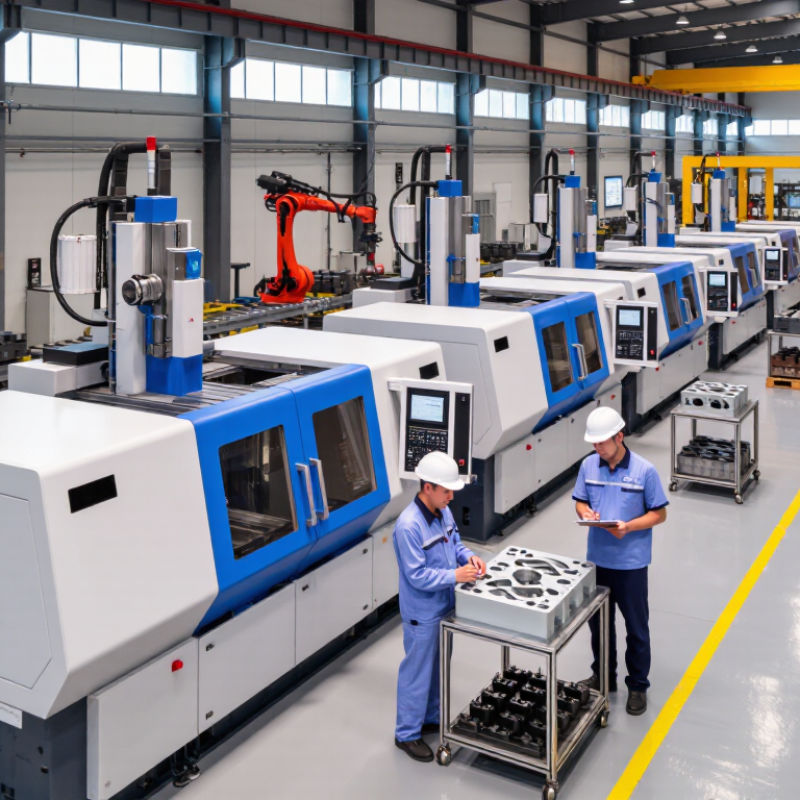
Rapid injection molding creates plastic parts quickly using simplified, low-volume molds. Engineers begin with a 3D CAD model and review wall thickness, draft angles, gates, and shrinkage. The mold is commonly machined from aluminum or softer steel. It usually costs less and takes less time than hardened production tooling.
The workflow is practical. A CNC machine cuts the mold cavity, while electrical discharge machining handles sharp or deep features. Molten plastic enters under pressure, cools against the mold, and ejects as a finished part. Engineers then inspect dimensions, surface quality, and assembly fit. Typical projects serve prototype or small-batch needs, often from dozens to several thousand parts.
Speed has limits. Rapid tooling cannot remove poor part design. Thin ribs may warp, and uneven cooling can leave sink marks. The process is not magic. According to the Plastics Industry Association’s 2024 Size and Impact report, U.S. plastics manufacturing supports about 1.7 million jobs, showing the scale behind these production methods. Grand View Research also reports strong growth in the global plastic injection molding market through 2030. These figures suggest expanding demand, but market forecasts vary by scope and year. My practical caution is simple: confirm tolerances and resin behavior before approving the mold.

What Is the Best Rapid Injection Molding Company in China?
How to Evaluate Rapid Injection Molding Companies in China
The best rapid injection molding partner is not always the cheapest. Evaluate its engineering depth, production control, and response speed. Grand View Research reported that the global injection molding market was valued at over USD 180 billion in 2022. Its analysis also projects steady growth through 2030. This growth increases supplier choices, but it also makes screening more important.
Request a design-for-manufacturing review before placing an order. A capable factory should identify thin walls, sink marks, draft problems, and difficult ejection areas. Ask for material certificates, dimensional inspection records, and sample approval procedures. Check whether the company can support prototype molds, bridge production, and repeat orders. ISO 9001 certification can indicate structured quality management, but certification alone proves little. Production evidence matters more.
Tips: Ask for a detailed quotation. Separate tooling, resin, machining, inspection, and shipping costs. Confirm mold steel, expected cycle life, tolerance limits, and repair responsibility. Request recent sample photos and a live factory video. Also test communication with one technical question. A vague reply is a warning.
Use a written timeline with design review, mold trial, first-article inspection, and shipment dates. According to the 2024 DHL Global Connectedness Report, supply chains remain exposed to transport and disruption risks. Therefore, ask about backup material sources and contingency planning. A low quote still tempts buyers. That is where judgment can fail. In practice, the strongest supplier is the one that documents risks early, admits limitations, and provides measurable corrective actions.
| Evaluation Dimension | Recommended Benchmark | Why It Matters | Evidence to Request | Suggested Weight |
|---|---|---|---|---|
| Rapid Quotation | Initial feasibility review and quotation within 1–2 business days | Shortens project planning time and identifies manufacturing risks early. | Quotation sample, response-time records, and a written list of assumptions. | 10% |
| Prototype Tooling Lead Time | Approximately 7–15 business days for simple, low-cavity aluminum or soft-steel molds | Rapid tooling is intended to validate design, fit, function, and production risk quickly. | Detailed project schedule, milestone dates, and examples of comparable tooling. | 12% |
| Part Production Lead Time | Sample parts typically available within 2–5 business days after tool approval, depending on complexity | Helps engineering teams complete functional testing without unnecessary delays. | Production workflow, sample approval process, and actual lead-time commitments. | 10% |
| Dimensional Capability | Published tolerances should be matched to the part drawing; approximately ±0.05 mm may be achievable for selected features under controlled conditions | Suitable tolerances reduce assembly problems and improve functional consistency. | Inspection report, calibrated measurement equipment list, and capability data for similar parts. | 15% |
| Material Selection | Ability to process common engineering plastics such as ABS, PC, PA, POM, PP, and glass-filled grades | Material choice affects strength, temperature resistance, shrinkage, appearance, and cost. | Material datasheets, resin traceability procedure, and confirmation of approved substitutions. | 10% |
| Design for Manufacturability | Formal review of draft angles, wall thickness, ribs, bosses, undercuts, weld lines, and shrinkage | Early design corrections can prevent sink marks, warpage, short shots, and expensive tool changes. | DFM report, mold-flow recommendations where needed, and marked-up 3D drawings. | 14% |
| Quality Management | Documented inspection procedures, traceability, first-article approval, and corrective-action processes | A controlled quality system improves repeatability from prototype to small-batch production. | Quality manual, inspection checklist, calibration records, and sample inspection reports. | 14% |
| Surface Finish and Appearance | Clear definition of texture, gloss, color, gate location, flash limits, and acceptable cosmetic defects | Appearance requirements are subjective unless they are documented and approved in advance. | Approved samples, texture references, color standards, and cosmetic acceptance criteria. | 8% |
| Tool Ownership and Maintenance | Contract should clearly define mold ownership, storage, maintenance, modification approval, and end-of-life handling | Clear ownership terms protect intellectual property and support future production continuity. | Tooling agreement, maintenance schedule, storage terms, and transfer conditions. | 7% |
| Total Cost Transparency | Separate pricing for tooling, parts, materials, secondary operations, packaging, shipping, taxes, and revisions | A transparent quotation makes suppliers easier to compare and reduces unexpected charges. | Itemized quotation, payment terms, revision charges, and shipping assumptions. | 10% |
| Total Suggested Evaluation Weight | 100% | |||
Note: Lead times and tolerances are general evaluation benchmarks. Actual results depend on part geometry, resin, tooling design, surface finish, inspection method, order quantity, and project specifications.
The best rapid injection molding company in China is not always the cheapest. It should provide practical engineering support, stable production, and clear communication. Leading Chinese molding companies usually begin with design-for-manufacturing analysis. Engineers review wall thickness, draft angles, ribs, and material flow before cutting steel. This step can prevent sink marks, warping, and expensive mold changes.
Key services often include rapid prototyping, mold design, CNC machining, steel or aluminum tooling, and small-batch production. Experienced teams can recommend suitable materials, such as ABS, PP, PC, or glass-filled nylon. They should also provide first-article samples for dimensional checks. Reliable suppliers document inspection results with gauges, coordinate measuring machines, and visual standards. Surface finishing may include polishing, texturing, painting, or pad printing. Some companies also manage assembly, packaging, and international shipping. That broader service reduces handoffs, although it may increase the quotation.
Tips: Ask for a detailed mold-flow review. Request material certificates and inspection records. Confirm tool ownership, revision control, and replacement-part support. A video call from the production floor can reveal useful details. Still, remote checks are imperfect. I would not approve a complex mold from photos alone. A small test order may expose communication gaps, uneven finishing, or unrealistic delivery promises before full production begins. Be specific about tolerances, annual volume, packaging needs, and approval samples. Clear drawings help, but honest feedback matters more.
What Is the Best Rapid Injection Molding Company in China?
The best Chinese supplier balances quality, speed, cost, and production capacity. Quality begins with mold design, resin control, and dimensional inspection. Ask for CMM reports, first-article samples, and process records. ISO 9001:2015 certification supports traceability, but it does not guarantee perfect parts. Supplier experience still matters.
Speed needs a definition. A ten-day mold is meaningless if sampling takes another week. Confirm design review timing, steel availability, trial-shot scheduling, and shipping arrangements. The International Federation of Robotics reported 541,302 industrial robots installed worldwide in 2023. This signals stronger automation, yet automation cannot replace skilled process adjustment. PlasticsEurope reported global plastics production reached about 413.8 million tonnes in 2023. Material planning therefore deserves close attention, especially for engineering resins.
Cost comparisons should include tooling, samples, inspection, packaging, and later revisions. The cheapest quotation may hide thin mold steel or limited maintenance support. Production capability must match demand. Check available machine tonnage, cavity count, monthly capacity, and backup equipment. My practical concern is simple: many evaluations overvalue the first shipment and ignore the tenth.
Tips: Request a small pilot batch. Measure warpage after conditioning. Compare three written quotations. Ask how defects are logged and corrected. Confirm ownership of mold files and tools. Keep one uncomfortable question: what happens when the supplier misses your target date?
Choosing the best rapid injection molding partner in China requires more than comparing quoted prices. Review its experience with similar parts, materials, and production volumes. A housing with thin walls needs different expertise from a simple prototype. Ask for photos, inspection reports, and examples of difficult tooling projects. Details matter.
Technical communication should be precise and fast. Your partner should review 3D files, draft angles, wall thickness, ribs, and likely sink marks before machining begins. Request a design-for-manufacturing report with marked-up drawings. Confirm resin grades, color standards, shrinkage allowances, and critical tolerances. A capable team will explain trade-offs instead of promising everything. That honesty is valuable.
Quality systems must be visible, not merely described. Check whether the company uses calibrated gauges, first-article inspection, process records, and material traceability. Ask how it controls flash, short shots, warpage, and dimensional drift across batches. A factory audit, video inspection, or independent sample check can reveal gaps. Do not trust one perfect sample. It may hide process weakness. Lead-time promises also deserve testing; mold trials, corrections, shipping, and customs can change the schedule. A shared timeline with named responsibilities helps, although it will not prevent every delay. My own preference is a partner that reports problems early, even when the update is uncomfortable. Silence costs more than an imperfect first trial.


For those larger-sized parts, or smaller quantity runs, we have 2 independent powder coat booths and ovens. The quality, durability and affordability of today’s powder coating finishes make this the process of choice for world-class companies.
Powder coating advantages over other forms of coating are many. Materials used in the Powder coating process can be metals and non-metals that come in a multitude of thicknesses, textures, colors, etc. Another of Powder coating’s biggest advantages over conventional coatings is its ability to create finishes in many different textures. Powder Coating Booths allow us the ability to apply these advantages to large products.
Tri-State Fabricators runs a full-service conveyor line for painting. Wet painting can provide protection or decoration to many different part styles. From start to finish, every project is easier to undergo random and point-based inspection by our skilled painting team.
Advantages to our Wet Paint Line are these lines start with product prep and ends with a thorough inspection of a high quality finished product. Our ability to complete large and small projects with a superior finish and doing so in a timely and economical fashion. This passes along the savings in production to our customers. When powder coating ins not an option, our Wet Paint Line gets the job done right the first time.
When the parts get big and heavy we roll-out our custom paint racks and oversize booth. By utilizing our partnerships with all the major paint brands, we can match virtually any color with wet paint.
The advantages of having access to a Wet Paint Booth are many. Large projects of many different shapes can be loaded into the booth. The Wet Paint Booth offers an environment that is much more controlled than a typical parts painting operation.
Not only are they used because of their controlled environment, but they’re are also advantageous when it comes to applying paint to parts that are needed in industries that require specialty coatings such as medical, aerospace, etc.
Our military forces have some very high standards when it comes to the finish of their vehicles and equipment. From the first pre-treatment step to final coat, it takes a great deal of knowledge and experience to protect the men and women of our armed forces. They deserve only the best, and Tri-State Fabricators provides it.
All of our processes are closely monitored by our staff and management teams. Both of which are highly trained in the processes of metal fabrication and finishing. Tri-State Fabricators’ goal is to always fully satisfy each and every customer, including the military. We will always put a 110% into what we do.
Abrasive media blasting is an excellent way to remove old paint, rust, and increase the paint/powder adhesion. Glass beads produce a much smoother and brighter finish than angular abrasives; leaving the part clean yet without any dimensional change. Chemically inert and environmentally friendly, we can recycle our beads approximately 30 times; making them a more preferred method of metal cleaning or surface finishing.
Advantages to Glass Bead Blasting are many. Glass bead blast media is used when a project is needing rough surfaces need to become smooth for applications of coatings such as paint. It is typically used to clean paint and rust from a product surface without deforming the surface it is being used on. Overall, compared to many other blasting media, Glass Bead Blasting is a very economical choice and those savings are always passed on to our customers.
Tri-State Fabricators utilize a zinc phosphate wash to clean and etch the material to ensure the best paint adhesion possible. The unique design of our 3-stage wash system does the work like a 5-stage. From Cleaning and rinsing to conversion coating and post-treatment, Our Part Washing process is a complete service and works throughout the fabrication service and the finishing service.
Along with the previously mentioned benefits, Curing is a vital chemical reaction that leaves the product finish hard and relatively safe from mild abrasion and aggressive corrosion. This process can be done in more than one way; ambient air-dry or in curing ovens at temps that exceed 240°.
From fixing paint mistakes (someone else’s of course) to simply cleaning our paint line hooks, our burn-off oven is put to good use. After a quick burn-off, a little clean up, and a fresh coat of paint, your parts will look better than new.
Why does our Burn-Off Oven work so well? Because super heating the air around parts turns the materials into ashes. From paint and powder coatings to rubber and machining oils, high temps do the job without degrading the integrity of the part.
Masking is a vital part of producing high quality products. We have die-cut masking patterns to protect machined surfaces as well as a wide range of plugs and caps to protect threaded holes and bolts. We provide permanent and temporary masking.
Masking allows the selected sections of a product to be protected from a fabrication or finishing service. This can be with both chemicals when etching and tapes, paints when only finishing just a section of the product. Masking is great in aiding the customization process of a project.
Screen printing is a photographic process that transfers artwork onto a porous nylon screen which allows colored ink to flow through the screen and be deposited on an aluminum or plastic component. We can generally have just about any design created onto a screen for your parts.
Some of the advantages of Screen Printing are, brand recognition for your business displaying on your products, assembly instructions, product warnings/hazards, etc. Tri-State Fabricators produces Screen Printing of the highest quality so you know it’s durable.
Metal Finishing is the art of treating the exterior portion of product, often metal but can also be made of other materials, so that the surface is clean and free of any debris. Then the process of applying coats or either paint of powder coat takes place. This coating process improves the quality of the product in both appearance and resistance to wear and corrosion.
Tri-State Fabricators, Inc., understands that a project typically isn’t complete until a high-quality finish has been added to your product. This is why our painting and powder coating teams continuously inspect the products throughout the Metal Finishing process.

