


7 Best Pusher Seals for Global Buyers?

Choosing the seven best Pusher Seals for global buyers requires more than comparing prices or polished product pages. A seal that performs well in a food-processing pump may fail quickly in a hot chemical line. Pressure, shaft speed, temperature, fluid type, installation space, and elastomer compatibility all matter. Small details often decide service life.

Mechanical-sealing authority Dr. Robert Flitney offers a useful principle: “Seal selection begins with understanding the application, not the catalogue.” That idea guides this review. Each featured Pusher Seals option is considered through practical performance, material quality, design stability, supplier support, and available technical documentation. Buyers should also examine testing methods, replacement parts, warranty terms, and regional delivery capability. These points are especially important when equipment operates far from the original manufacturer.

There is no universal winner. A compact pusher seal may suit standard water pumps, while a balanced design may handle higher pressure more confidently. Some listings still provide incomplete temperature or compatibility data. That weakness deserves attention. Real purchasing decisions often involve imperfect information, tight maintenance schedules, and different industrial standards. This guide therefore focuses on realistic strengths and limitations, not exaggerated claims. It aims to help engineers, distributors, and maintenance teams compare seven dependable choices with clearer expectations. Before ordering, confirm dimensions, operating limits, and fluid compatibility with the supplier. A careful check can prevent a costly shutdown.
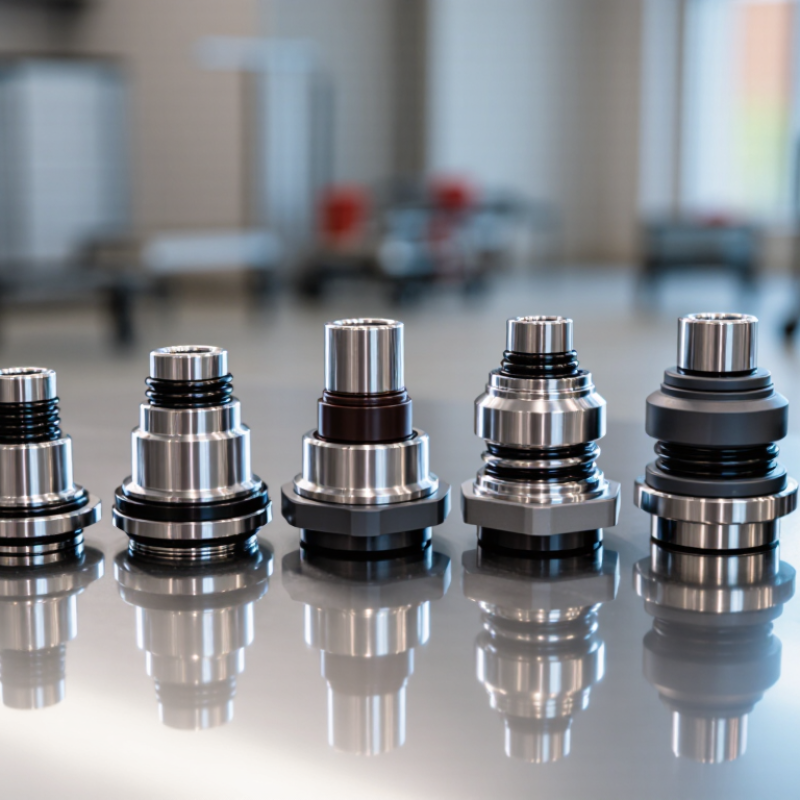
7 Best Pusher Seals for Global Buyers?

What Pusher Seals Are and How They Work

7 Best Pusher Seals for Global Buyers

Pusher seals use a spring-loaded secondary seal to maintain contact during shaft movement. The O-ring slides axially along the shaft or sleeve. This action compensates for face wear, vibration, and minor installation changes. The primary sealing faces remain pressed together by spring force and fluid pressure. Simple in principle. Sensitive in practice.

For global buyers, seven useful configurations include single-spring, multi-spring, balanced, unbalanced, cartridge, split, and high-temperature pusher seals. Selection depends on pressure, speed, temperature, fluid chemistry, and shaft movement. Carbon against silicon carbide suits many water services. Harder face combinations handle abrasive fluids better. Elastomer choice also matters. EPDM, FKM, and PTFE each respond differently to chemicals and heat. ISO 21049 provides valuable guidance for mechanical seal selection and testing.

Market data shows why reliability deserves attention. Grand View Research estimates the global mechanical seals market reached about USD 4.1 billion in 2023. It also forecasts continued growth through 2030. The U.S. Department of Energy reports pumping systems can consume nearly 25% of industrial electricity. Small leakage can therefore signal larger maintenance losses. In field inspections, poor alignment often causes premature failure, even when the seal design is suitable. That lesson is easy to overlook. A “best” pusher seal is not universal; engineers should verify operating data, installation quality, and maintenance access before purchasing.


Key Factors for Comparing Pusher Seals Worldwide

7 Best Pusher Seals for Global Buyers?

Key Factors for Comparing Pusher Seals Worldwide

Choosing the seven best pusher seals requires more than comparing prices. Global buyers should examine pressure, temperature, shaft speed, fluid chemistry, and installation conditions. A seal that survives clean water may fail quickly in abrasive slurry. Tiny scratches on a shaft can also create visible leakage within days.

Industry data offers useful context. Grand View Research reports that the global mechanical seals market was valued at over USD 4 billion in 2023, with continued growth expected through the decade. However, published reports rarely separate pusher seals from other designs. Buyers should treat broad market figures carefully. They are useful for demand planning, not direct product selection.

Compare seven candidates using the same test sheet. Check carbon, silicon carbide, ceramic, and elastomer compatibility against the actual medium. Confirm pressure and temperature ratings under continuous operation, not short laboratory peaks. ISO 21049 and API 682 provide helpful reference points for seal design and testing, although not every industrial application follows them fully. Ask for leakage results, material certificates, dimensional drawings, and batch traceability. Look closely at spring protection in dirty fluids. A clogged spring can stop compensation. Installation matters too. Incorrect compression remains a common field problem. The most reliable choice may not be the cheapest one, and that judgment sometimes needs revisiting after real operating data arrives.

Seven Leading Pusher Seal Types for Global Buyers

7 Best Pusher Seals for Global Buyers?

Seven Leading Pusher Seal Types for Global Buyers

Global buyers often compare pusher seals by pressure, temperature, fluid, and shaft movement. Seven leading types deserve attention: single-spring, multi-spring, O-ring, wedge, balanced, unbalanced, and cartridge-mounted pusher seals. Single-spring designs suit general water service and tolerate moderate contamination. Multi-spring seals distribute closing force more evenly. They need cleaner operating conditions. O-ring pusher seals offer practical flexibility across many equipment designs, but elastomer compatibility remains critical.

PTFE-wedge pusher seals handle some corrosive fluids and higher temperatures. Their wedge can increase friction when shaft movement becomes rough. Balanced pusher seals reduce hydraulic loading at higher pressures. Unbalanced versions are simpler and often cost less for moderate-duty pumps. Cartridge-mounted seals arrive preassembled, which can reduce installation errors and maintenance time. Small details matter, such as shaft finish, gland dimensions, and spring orientation.

Experienced maintenance teams should confirm fluid concentration, pressure spikes, dry-running risk, and expected service hours. A seal that works in clean cooling water may fail quickly in abrasive slurry. Do not select by price alone. Check applicable industry requirements, including API 682 where relevant, and request material certificates and test records. No design is universally best. In practice, equipment alignment and installation quality can matter as much as seal selection. That point is easy to underestimate.

7 Best Pusher Seals for Global Buyers? - Seven Leading Pusher Seal Types for Global Buyers

No. Pusher Seal Type Primary Design Feature Typical Operating Temperature Typical Pressure Capability Recommended Applications Common Face and Secondary-Seal Materials Main Advantages Key Limitations
1 Single Pusher Seal An elastomer or polymer secondary seal moves axially with the rotating face. Approximately −20°C to 180°C, depending on the elastomer and face materials. Commonly up to about 10 bar; higher values require suitable design and speed limits. General pumps, water circulation, HVAC systems, and low-to-moderate duty process equipment. Carbon versus silicon carbide or tungsten carbide; elastomer options include EPDM, NBR, FKM, or PTFE-based compounds. Simple construction, broad availability, and straightforward installation. The sliding secondary seal can be affected by shaft damage, deposits, or excessive axial movement.
2 O-Ring Pusher Seal A dynamic O-ring provides secondary sealing while the spring-loaded face compensates for wear. Approximately −40°C to 200°C, depending on O-ring compound and process fluid. Typically up to about 10–15 bar in standard pump service. Clean water, oils, mild chemicals, rotating equipment, and applications requiring easy size availability. Carbon, ceramic, silicon carbide, or tungsten carbide faces; NBR, EPDM, FKM, or PTFE O-rings. Cost-effective, easy to source, and adaptable to many standard shaft sizes. O-ring friction and chemical compatibility must be checked carefully; unsuitable elastomers may swell or harden.
3 Multi-Spring Pusher Seal Several springs distribute closing force around the seal circumference. Approximately −40°C to 220°C, subject to material selection and spring exposure. Usually up to about 16 bar for suitable pump designs. Process pumps, industrial water systems, oils, solvents, and moderate-duty chemical services. Carbon, silicon carbide, or tungsten carbide faces; elastomers selected according to temperature and chemical exposure. More balanced face loading than many single-spring designs and good tolerance of moderate operating variation. Exposed springs may collect solids or crystallized process fluid, increasing the risk of uneven loading.
4 Stationary-Spring Pusher Seal The spring assembly remains stationary while the mating seal face rotates. Approximately −40°C to 220°C, depending on the secondary seal and face materials. Commonly up to about 20 bar in properly selected equipment. Higher-speed pumps, equipment with solids in the fluid, and services where spring balance is important. Silicon carbide or tungsten carbide faces are common for abrasive service; elastomers or PTFE-based secondary seals are selected by compatibility. Reduced rotational spring stress and lower sensitivity to centrifugal effects at elevated speed. Typically requires more installation space and may be less suitable where axial movement is substantial.
5 Cartridge Pusher Seal The seal, sleeve, gland, and setting elements are supplied as a pre-assembled unit. Approximately −40°C to 220°C, depending on the complete material package. Often rated around 15–25 bar, subject to diameter, speed, pressure, and balance ratio. Industrial pumps, energy equipment, chemical processing, and maintenance-sensitive installations. Carbon, silicon carbide, tungsten carbide, stainless steel, and elastomers selected for the process fluid. Fast installation, reduced setting errors, and good repeatability during maintenance. Higher purchase cost and larger axial envelope than many component-style seals.
6 Balanced Pusher Seal A hydraulic balancing arrangement lowers the closing force acting on the seal faces. Approximately −40°C to 250°C, depending on face, spring, and secondary-seal materials. Often suitable for approximately 20–40 bar when correctly engineered. High-pressure pumps, hot fluids, hydrocarbons, boiler-feed systems, and demanding process services. Silicon carbide, tungsten carbide, or carbon faces; graphite, FKM, PTFE, or other compatible secondary seals. Lower face loading helps control heat generation, wear, and leakage at higher pressure. More sensitive to dimensional accuracy, pressure changes, and correct installation than unbalanced designs.
7 Heavy-Duty Slurry Pusher Seal A reinforced pusher arrangement uses wear-resistant faces and robust components for abrasive fluids. Approximately −20°C to 180°C, depending on slurry composition and material selection. Typically about 6–16 bar in abrasive slurry service; actual limits depend strongly on speed and solids content. Mining pumps, mineral processing, wastewater with solids, pulp handling, and abrasive suspension service. Silicon carbide or tungsten carbide faces, hard metal components, and abrasion-resistant elastomers or PTFE-based materials. Improved resistance to abrasion, solids contamination, and demanding operating conditions. Higher cost, greater installation requirements, and potential face damage if dry running occurs.

Note: Temperature and pressure figures are typical selection ranges rather than universal ratings. Final suitability depends on shaft speed, seal diameter, pressure balance, fluid chemistry, solids concentration, installation conditions, and the manufacturer’s technical data.

Material, Pressure, Temperature, and Compatibility Considerations

7 Best Pusher Seals for Global Buyers?

Choosing the best pusher seal starts with the fluid, not the price. Seven practical configurations commonly fit global applications: carbon-ceramic, carbon-silicon carbide, silicon carbide-silicon carbide, tungsten carbide pairs, metal-loaded carbon, EPDM elastomer sets, and FKM elastomer sets. Each combination behaves differently under heat, pressure, abrasion, and chemical exposure.

Carbon offers smooth running and reasonable cost. Silicon carbide handles abrasive fluids well. Tungsten carbide is tougher, but usually less forgiving during dry running.

Pressure deserves close attention. A seal rated for 10 bar may perform poorly if pressure spikes during startup. Check shaft speed, chamber pressure, and pressure direction together.

Temperature is equally important. EPDM suits many water-based services, while FKM often handles oils and higher temperatures better. Neither choice is universal.

Always verify the actual fluid temperature, including cleaning cycles.

Compatibility testing should include concentration, pH, suspended solids, and sudden temperature changes. A seal can look perfect on paper and still fail after a week. I have seen specifications copied from old equipment, with no allowance for worn shafts or distorted faces. That is an avoidable weakness.

Confirm shaft size, seat dimensions, spring design, and elastomer swelling before purchase. Ask for test data when the service is critical.

Keep a small margin below the stated pressure and temperature limits. Conservative selection usually costs less than repeated leakage repairs.

How to Select, Install, and Maintain the Right Pusher Seal

7 Best Pusher Seals for Global Buyers?

How to Select, Install, and Maintain the Right Pusher Seal

Selecting a pusher seal starts with the operating conditions, not the purchase price. Record shaft diameter, speed, pressure, temperature, fluid chemistry, and expected start-stop cycles. For process pumps, API Standard 682 provides useful seal-selection guidance. Check elastomer compatibility carefully, especially with solvents, acids, and high-temperature fluids. A 2024 mechanical-seals market assessment reports continued demand for reliable sealing in chemical, water, and energy applications. The market is expanding, but application errors remain common.

Installation needs patience. Clean the shaft and seal chamber thoroughly. Remove burrs that could cut the dynamic O-ring. Confirm the spring direction and stationary-face position. Lubricate only with a fluid approved for the elastomer and process. Never force the seal across sharp threads. Keep faces protected from dust. A small scratch can become a visible leak within hours. The U.S. Department of Energy reports that pumping systems may consume about 25% of industrial electricity in some facilities. Poor sealing increases maintenance losses and can worsen pump efficiency.

Maintenance should begin with a baseline. Record leakage, vibration, temperature, and flush pressure after commissioning. Inspect trends weekly during the first month. A sudden temperature rise deserves attention. Do not tighten components blindly; pusher seals need correct compression, not excessive force. Field inspections often find dry-running damage caused by blocked flush lines. I have also seen clean installations fail because the shaft was misaligned. That detail is easy to miss. Review the installation, then question the assumption.

Powder Coat Booths

For those larger-sized parts, or smaller quantity runs, we have 2 independent powder coat booths and ovens. The quality, durability and affordability of today’s powder coating finishes make this the process of choice for world-class companies.

Powder coating advantages over other forms of coating are many. Materials used in the Powder coating process can be metals and non-metals that come in a multitude of thicknesses, textures, colors, etc. Another of Powder coating’s biggest advantages over conventional coatings is its ability to create finishes in many different textures. Powder Coating Booths allow us the ability to apply these advantages to large products.

Wet Paint Line

Tri-State Fabricators runs a full-service conveyor line for painting. Wet painting can provide protection or decoration to many different part styles. From start to finish, every project is easier to undergo random and point-based inspection by our skilled painting team.

Advantages to our Wet Paint Line are these lines start with product prep and ends with a thorough inspection of a high quality finished product. Our ability to complete large and small projects with a superior finish and doing so in a timely and economical fashion. This passes along the savings in production to our customers. When powder coating ins not an option, our Wet Paint Line gets the job done right the first time.

Wet Paint Booths

When the parts get big and heavy we roll-out our custom paint racks and oversize booth. By utilizing our partnerships with all the major paint brands, we can match virtually any color with wet paint.

The advantages of having access to a Wet Paint Booth are many. Large projects of many different shapes can be loaded into the booth. The Wet Paint Booth offers an environment that is much more controlled than a typical parts painting operation.

Not only are they used because of their controlled environment, but they’re are also advantageous when it comes to applying paint to parts that are needed in industries that require specialty coatings such as medical, aerospace, etc.

Military CARC

Our military forces have some very high standards when it comes to the finish of their vehicles and equipment. From the first pre-treatment step to final coat, it takes a great deal of knowledge and experience to protect the men and women of our armed forces. They deserve only the best, and Tri-State Fabricators provides it.

All of our processes are closely monitored by our staff and management teams. Both of which are highly trained in the processes of metal fabrication and finishing. Tri-State Fabricators’ goal is to always fully satisfy each and every customer, including the military. We will always put a 110% into what we do.

Glass-Bead Blasting

Abrasive media blasting is an excellent way to remove old paint, rust, and increase the paint/powder adhesion. Glass beads produce a much smoother and brighter finish than angular abrasives; leaving the part clean yet without any dimensional change. Chemically inert and environmentally friendly, we can recycle our beads approximately 30 times; making them a more preferred method of metal cleaning or surface finishing.

Advantages to Glass Bead Blasting are many. Glass bead blast media is used when a project is needing rough surfaces need to become smooth for applications of coatings such as paint. It is typically used to clean paint and rust from a product surface without deforming the surface it is being used on. Overall, compared to many other blasting media, Glass Bead Blasting is a very economical choice and those savings are always passed on to our customers.

Part Washing

Tri-State Fabricators utilize a zinc phosphate wash to clean and etch the material to ensure the best paint adhesion possible. The unique design of our 3-stage wash system does the work like a 5-stage. From Cleaning and rinsing to conversion coating and post-treatment, Our Part Washing process is a complete service and works throughout the fabrication service and the finishing service.

Along with the previously mentioned benefits, Curing is a vital chemical reaction that leaves the product finish hard and relatively safe from mild abrasion and aggressive corrosion. This process can be done in more than one way; ambient air-dry or in curing ovens at temps that exceed 240°.

Burn-Off Oven

From fixing paint mistakes (someone else’s of course) to simply cleaning our paint line hooks, our burn-off oven is put to good use. After a quick burn-off, a little clean up, and a fresh coat of paint, your parts will look better than new.

Why does our Burn-Off Oven work so well? Because super heating the air around parts turns the materials into ashes. From paint and powder coatings to rubber and machining oils, high temps do the job without degrading the integrity of the part.

Masking

Masking is a vital part of producing high quality products. We have die-cut masking patterns to protect machined surfaces as well as a wide range of plugs and caps to protect threaded holes and bolts. We provide permanent and temporary masking.

Masking allows the selected sections of a product to be protected from a fabrication or finishing service. This can be with both chemicals when etching and tapes, paints when only finishing just a section of the product. Masking is great in aiding the customization process of a project.

Screen Printing

Screen printing is a photographic process that transfers artwork onto a porous nylon screen which allows colored ink to flow through the screen and be deposited on an aluminum or plastic component. We can generally have just about any design created onto a screen for your parts.

Some of the advantages of Screen Printing are, brand recognition for your business displaying on your products, assembly instructions, product warnings/hazards, etc. Tri-State Fabricators produces Screen Printing of the highest quality so you know it’s durable.

Metal Finishing

Metal Finishing is the art of treating the exterior portion of product, often metal but can also be made of other materials, so that the surface is clean and free of any debris. Then the process of applying coats or either paint of powder coat takes place. This coating process improves the quality of the product in both appearance and resistance to wear and corrosion.

Tri-State Fabricators, Inc., understands that a project typically isn’t complete until a high-quality finish has been added to your product. This is why our painting and powder coating teams continuously inspect the products throughout the Metal Finishing process.
