


Power rail insulators may look like small components, but each one helps maintain electrical separation along an exposed, vibration-prone route. A cracked housing, loose fixing, or poorly matched creepage distance can turn a routine inspection into a costly interruption. Small parts matter.
The International Energy Agency’s 2019 report, The Future of Rail, describes rail as a comparatively energy-efficient mode of transport. Its 2023 report, Electricity Grids and Secure Energy Transitions, says annual grid investment needs to rise above $600 billion by 2030. That figure concerns electricity networks broadly, not rail insulators specifically. Still, it signals the scale of infrastructure upgrades that can shape procurement choices. IEA Executive Director Fatih Birol has emphasized that grids are the backbone of secure, sustainable energy systems. Applied to rail procurement, that is a useful reminder: reliable infrastructure depends on dependable components.
This guide compares seven Power Rail Insulator options for global buyers, focusing on material, voltage suitability, mechanical strength, environmental resistance, and supplier documentation. Look closely at sheds, mounting points, and surface finish. Fit matters. But a product list cannot replace engineering review against the route’s actual conditions, operating voltage, and maintenance plan. Buyers should verify test records and clarify specifications with manufacturers before ordering. A neat catalog page is not proof of field performance.
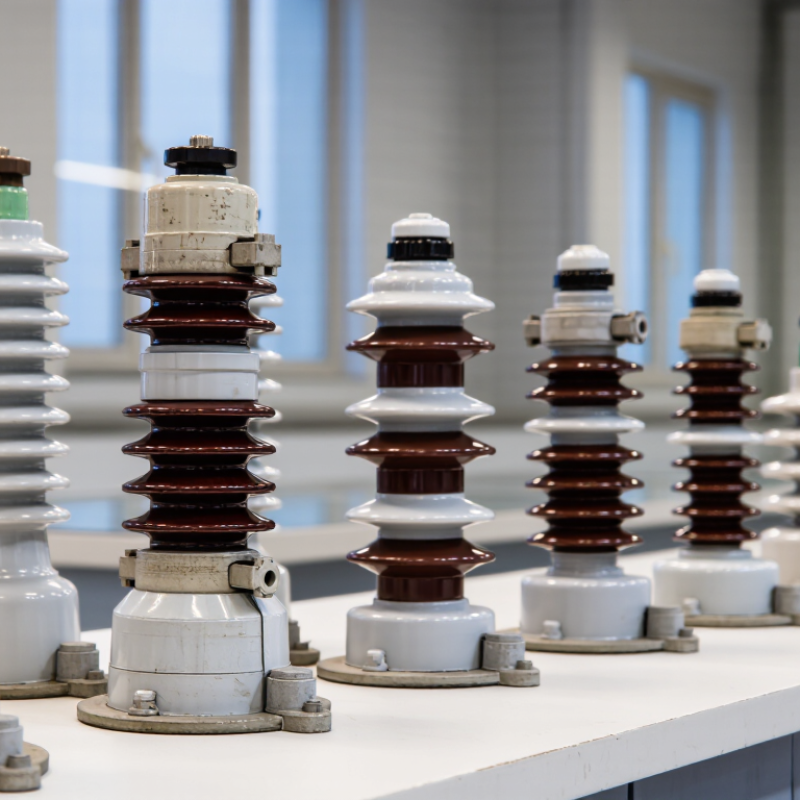
Power rail insulators support energized conductors while keeping them electrically separated from frames, mounting rails, and nearby components. They also help resist movement caused by vibration, switching forces, or the weight of cables and busbars. In practice, a sound insulator is easy to overlook. A cracked surface or loose mounting point is not.
These components appear in substations, switchgear, industrial control panels, and some electrified transport systems. Their form depends on the installation: compact supports may hold copper busbars inside a cabinet, while larger assemblies separate conductors in outdoor equipment. Materials such as porcelain and engineered polymers are selected for electrical strength, mechanical load, temperature range, and exposure to moisture or dust. Conditions matter.
Choosing one by voltage rating alone can miss important details. Engineers also check clearances, creepage paths, mounting dimensions, pollution levels, and expected mechanical stress. A rail that looks straight during installation may shift slightly as equipment heats and cools. That detail deserves a second look. Regular inspection can reveal tracking marks, loosened hardware, or surface damage before these issues compromise insulation. The right choice is specific to the site, not just the catalogue.

Power-rail insulators commonly use porcelain, toughened glass, or composite materials. Their form matters too: suspension strings suit overhead spans, while post insulators support conductors on substations and compact rail structures. Porcelain handles heat and weather well, but its weight complicates handling. Glass makes cracks easier to spot. Composite units pair a fiberglass core with silicone-rubber sheds, reducing weight and helping resist surface wetting. Details matter.
The U.S. Department of Energy’s 2023 National Transmission Needs Study estimates transmission capacity may need to grow 57% by 2035, compared with 2020. That projected expansion makes material selection and maintenance practical concerns, not just purchasing details. For polluted or coastal sites, salt, dust, and moisture can form conductive films across an insulator’s surface. IEC 60815 provides guidance for selecting insulation under polluted conditions, including creepage-distance considerations. Buyers should compare voltage rating, pollution exposure, mechanical load, and inspection access—not just unit price. A composite unit may be lighter, yet damaged seals or installation cuts deserve attention. Porcelain may feel more robust, but it can chip during transport. There is no effortless choice.
7 Best Power Rail Insulators for Global Buyers
How to Compare Power Rail Insulators for Different Applications
Choosing a power rail insulator starts with the system voltage, but voltage alone is not enough. IEC 60850:2014 specifies traction supply ranges: a 750 V DC system may operate from 500 to 900 V, while a 1,500 V system may range from 1,000 to 1,800 V. These figures help buyers check operating conditions, not simply match a catalogue’s nominal rating. Small details matter.
Next, compare creepage distance, electrical clearance, mechanical strength, and resistance to heat, moisture, dust, or salt. For exposed outdoor rails, pollution and water can increase surface leakage, so inspect the stated creepage path and test conditions. IEC 60815-1 offers guidance for selecting insulators in polluted environments. Indoor depots may need less weather protection, but frequent vibration and maintenance access still matter. Application changes the trade-offs.
Ask suppliers for test reports showing the tested voltage, load, material, and environmental conditions. A mechanical rating without its test method is hard to compare. Also check mounting dimensions against the rail and support structure; a small mismatch can complicate installation. One limitation: standards provide a common reference, but they cannot replace site-specific engineering review. A neat specification sheet may still leave questions. Request evidence for the actual operating environment, especially where contamination or temperature varies seasonally.
Compare common material families as an initial screening aid. The ranges are indicative material-level values in kV/mm, not guaranteed ratings for a finished insulator.
Ceramics suit high-temperature environments; glass-epoxy and molded compounds are common choices for rigid supports; and polyamides, PBT, and silicone can suit designs prioritizing molding flexibility or resilience. Final selection should also consider creepage distance, pollution, humidity, mechanical loading, temperature, and the relevant electrical standards. Actual performance varies by grade, thickness, test method, and component geometry.
Seven power rail insulators for global buyers can mean several distinct designs, not just different materials. Porcelain post insulators suit rigid support points, while polymer posts are lighter and easier to handle. Epoxy supports offer compact electrical insulation. Glass-fiber-reinforced supports can provide strength with reduced weight. Third-rail blocks hold conductor rails at a set height. Tunnel-mounted bracket insulators fit restricted spaces, and section insulators separate rail sections. Each option has trade-offs. There is no universal winner.
Tips: Check the rail profile, mounting holes, operating voltage, load, and clearance before comparing prices. Ask for drawings and test documentation. A neat catalog photo can still hide a mismatched fixing pattern.
Outdoor exposure, dust, moisture, vibration, and temperature swings all affect service life. Review the supplier’s stated material limits and installation instructions, then confirm they match the actual site conditions. Pay attention to creepage distance and mechanical loading; these details are easy to overlook. Procurement teams may also need compatible fasteners and replacement parts. A small mismatch can delay installation. Not every catalogue term is used consistently across regions, so request dimensions in clear units and verify the exact configuration before ordering.
| Insulator Type | Typical Material | Common Application | Key Advantages | Points to Check | Suitable Conditions |
|---|---|---|---|---|---|
| Porcelain Support Insulator | Electrical-grade ceramic | Fixed supports for power rails and electrical conductors | Rigid; good resistance to heat, weathering, and surface tracking when correctly designed | Relatively heavy and brittle; inspect for cracks, chips, and mounting damage | Installations where rigidity and long-term outdoor exposure are priorities |
| Toughened-Glass Insulator | Tempered insulating glass | Selected rail-support and high-voltage insulation arrangements | Non-combustible and resistant to ultraviolet exposure; surface condition is readily visible | Can be damaged by impact; confirm that the form and fittings suit the rail assembly | Applications using a glass-insulator design with compatible mechanical fittings |
| Cast Epoxy Insulator | Molded electrical-grade epoxy resin, sometimes reinforced or filled | Compact indoor busbar and conductor supports; some rail-support designs | Can be molded into compact shapes and integrated mounting features; good electrical insulation when properly formulated | Temperature, ultraviolet, moisture, and tracking performance depend on formulation and design | Indoor or protected locations, subject to the product’s stated environmental ratings |
| SMC/BMC Thermoset Insulator | Glass-fiber-reinforced sheet or bulk molding compound | Molded supports, brackets, and insulating components for electrical equipment | Allows complex molded shapes; reinforcement can provide useful mechanical strength and dimensional stability | Properties vary with resin, reinforcement, fillers, and molding quality; check tracking and flame-performance data | Applications requiring a shaped, rigid molded component |
| Silicone-Rubber Composite Insulator | Silicone elastomer housing over a structural core, commonly fiberglass-reinforced polymer | Outdoor insulation and support assemblies where a composite design is specified | Lightweight; silicone surfaces can provide water-repellent behavior that helps limit wetting under suitable conditions | Check core, end-fitting seals, pollution performance, and suitability for the actual voltage and environment | Outdoor locations where reduced weight and polymeric construction are beneficial |
| EPDM-Rubber Insulator | Ethylene-propylene-diene rubber, used in product-specific molded or composite designs | Flexible insulating covers, boots, and selected rail-support components | Flexible and commonly used in weather-exposed sealing or covering applications | Electrical, ultraviolet, ozone, and temperature performance depend on the compound and construction | Applications needing a compliant molded part, provided its electrical rating is suitable |
| Polyamide Insulator | Molded engineering polyamide, sometimes reinforced with glass fiber | Compact molded supports and insulating components in specified rail systems | Can be molded into detailed shapes and may offer good mechanical strength in reinforced grades | Moisture absorption can affect dimensions and material properties; verify grade-specific electrical and environmental data | Protected or controlled applications where the selected grade meets the design requirements |
Note: These are general material and application characteristics, not guaranteed product ratings. Confirm creepage distance, clearance, voltage, mechanical load, temperature range, pollution exposure, applicable standards, and compatibility with the specific power-rail system before selection.
For global buyers, power rail insulators should be assessed against the requirements of the project’s destination, not just a supplier’s general claims. Applicable railway and electrical standards can differ by country and system. Check rated voltage, creepage distance, mechanical load, temperature range, and pollution exposure. Ask for current test reports and material traceability. A clean datasheet is useful, but it cannot replace evidence.
Sourcing decisions also affect installation reliability. Confirm dimensions, mounting-hole positions, and rail profiles against approved drawings before production. Request samples when interfaces are unusual, and agree on packaging that protects ceramic or polymer surfaces during long-distance shipping. On site, inspect each unit for cracks, chips, contamination, or deformation. Follow the project’s installation torque and clearance requirements; overtightening can create stress that is easy to miss. Small details matter.
Tips: Keep one controlled drawing revision for purchasing and installation. Photograph received parts before fitting them. If a supplier’s test scope is unclear, ask for the exact method and acceptance limits. That extra check may feel slow, but replacing a mismatched insulator after commissioning is slower. Be cautious: field conditions rarely match a catalogue’s ideal examples.


For those larger-sized parts, or smaller quantity runs, we have 2 independent powder coat booths and ovens. The quality, durability and affordability of today’s powder coating finishes make this the process of choice for world-class companies.
Powder coating advantages over other forms of coating are many. Materials used in the Powder coating process can be metals and non-metals that come in a multitude of thicknesses, textures, colors, etc. Another of Powder coating’s biggest advantages over conventional coatings is its ability to create finishes in many different textures. Powder Coating Booths allow us the ability to apply these advantages to large products.
Tri-State Fabricators runs a full-service conveyor line for painting. Wet painting can provide protection or decoration to many different part styles. From start to finish, every project is easier to undergo random and point-based inspection by our skilled painting team.
Advantages to our Wet Paint Line are these lines start with product prep and ends with a thorough inspection of a high quality finished product. Our ability to complete large and small projects with a superior finish and doing so in a timely and economical fashion. This passes along the savings in production to our customers. When powder coating ins not an option, our Wet Paint Line gets the job done right the first time.
When the parts get big and heavy we roll-out our custom paint racks and oversize booth. By utilizing our partnerships with all the major paint brands, we can match virtually any color with wet paint.
The advantages of having access to a Wet Paint Booth are many. Large projects of many different shapes can be loaded into the booth. The Wet Paint Booth offers an environment that is much more controlled than a typical parts painting operation.
Not only are they used because of their controlled environment, but they’re are also advantageous when it comes to applying paint to parts that are needed in industries that require specialty coatings such as medical, aerospace, etc.
Our military forces have some very high standards when it comes to the finish of their vehicles and equipment. From the first pre-treatment step to final coat, it takes a great deal of knowledge and experience to protect the men and women of our armed forces. They deserve only the best, and Tri-State Fabricators provides it.
All of our processes are closely monitored by our staff and management teams. Both of which are highly trained in the processes of metal fabrication and finishing. Tri-State Fabricators’ goal is to always fully satisfy each and every customer, including the military. We will always put a 110% into what we do.
Abrasive media blasting is an excellent way to remove old paint, rust, and increase the paint/powder adhesion. Glass beads produce a much smoother and brighter finish than angular abrasives; leaving the part clean yet without any dimensional change. Chemically inert and environmentally friendly, we can recycle our beads approximately 30 times; making them a more preferred method of metal cleaning or surface finishing.
Advantages to Glass Bead Blasting are many. Glass bead blast media is used when a project is needing rough surfaces need to become smooth for applications of coatings such as paint. It is typically used to clean paint and rust from a product surface without deforming the surface it is being used on. Overall, compared to many other blasting media, Glass Bead Blasting is a very economical choice and those savings are always passed on to our customers.
Tri-State Fabricators utilize a zinc phosphate wash to clean and etch the material to ensure the best paint adhesion possible. The unique design of our 3-stage wash system does the work like a 5-stage. From Cleaning and rinsing to conversion coating and post-treatment, Our Part Washing process is a complete service and works throughout the fabrication service and the finishing service.
Along with the previously mentioned benefits, Curing is a vital chemical reaction that leaves the product finish hard and relatively safe from mild abrasion and aggressive corrosion. This process can be done in more than one way; ambient air-dry or in curing ovens at temps that exceed 240°.
From fixing paint mistakes (someone else’s of course) to simply cleaning our paint line hooks, our burn-off oven is put to good use. After a quick burn-off, a little clean up, and a fresh coat of paint, your parts will look better than new.
Why does our Burn-Off Oven work so well? Because super heating the air around parts turns the materials into ashes. From paint and powder coatings to rubber and machining oils, high temps do the job without degrading the integrity of the part.
Masking is a vital part of producing high quality products. We have die-cut masking patterns to protect machined surfaces as well as a wide range of plugs and caps to protect threaded holes and bolts. We provide permanent and temporary masking.
Masking allows the selected sections of a product to be protected from a fabrication or finishing service. This can be with both chemicals when etching and tapes, paints when only finishing just a section of the product. Masking is great in aiding the customization process of a project.
Screen printing is a photographic process that transfers artwork onto a porous nylon screen which allows colored ink to flow through the screen and be deposited on an aluminum or plastic component. We can generally have just about any design created onto a screen for your parts.
Some of the advantages of Screen Printing are, brand recognition for your business displaying on your products, assembly instructions, product warnings/hazards, etc. Tri-State Fabricators produces Screen Printing of the highest quality so you know it’s durable.
Metal Finishing is the art of treating the exterior portion of product, often metal but can also be made of other materials, so that the surface is clean and free of any debris. Then the process of applying coats or either paint of powder coat takes place. This coating process improves the quality of the product in both appearance and resistance to wear and corrosion.
Tri-State Fabricators, Inc., understands that a project typically isn’t complete until a high-quality finish has been added to your product. This is why our painting and powder coating teams continuously inspect the products throughout the Metal Finishing process.

