


A Portable Mini Fridge can keep drinks cold on a road trip, snacks ready in a dorm, or lunch fresh beside a desk. Yet compact size does not guarantee dependable cooling. Capacity, power options, ventilation, and noise all shape everyday performance.
Refrigeration engineer James M. Stoecker’s published work offers a useful principle, paraphrased here: match cooling capacity to the heat load, not merely to the container’s size. That matters when a fridge sits in a warm car, holds room-temperature groceries, or runs in a tight corner with little airflow. Small footprint. Real trade-offs.
This guide introduces 10 portable mini fridges for travel and home, comparing practical features rather than relying on appearance alone. It considers usable storage, temperature control, energy needs, portability, and care requirements. A model suited to a weekend drive may feel cramped for a shared bedroom. A quiet bedside unit may not recover quickly after frequent opening. Check each model’s specifications, and leave space around its vents. Also remember that cooling results vary with ambient temperature, loading, and power supply. No compact fridge fits every routine. The best choice is the one that suits your space, your trips, and what you actually need to keep cool.
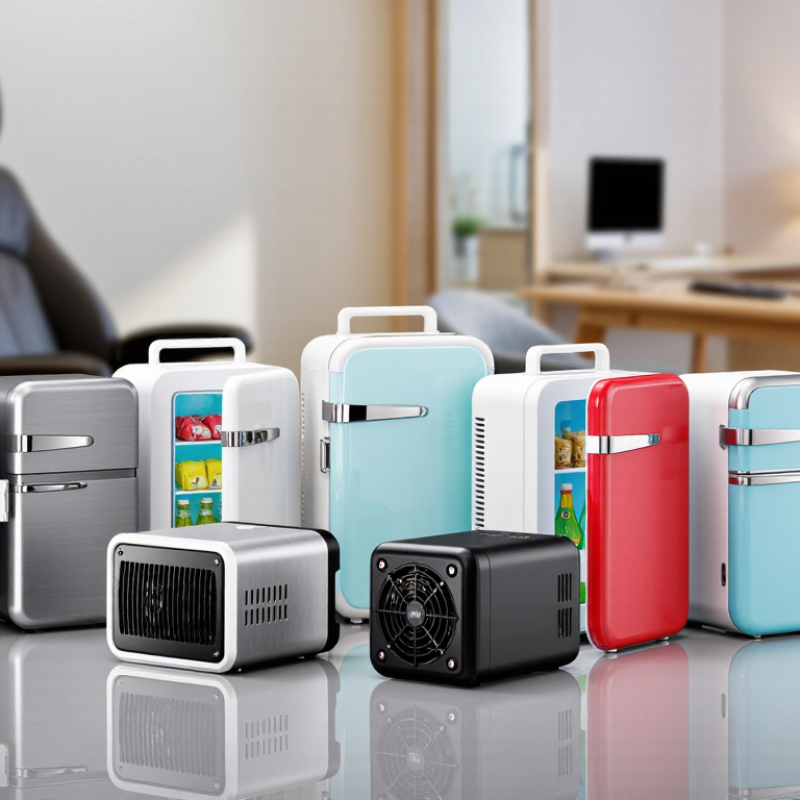
A portable mini fridge is a compact cooler that can run from a household outlet, and some models also accept vehicle power. Its main purpose is to keep a small, convenient supply of food or drinks nearby. On a road trip, that might mean a chilled water bottle behind the front seats. At home, it could hold yogurt beside a desk or skincare products in a bedroom. That distinction matters. Many compact units cool gradually, so they work better when loaded with already-chilled items than when asked to cool warm groceries quickly.
Everyday usefulness depends on capacity, power access, and the space around the fridge. Check the interior measurements before buying; a tall bottle may not fit even when the advertised capacity sounds generous. Leave room around ventilation openings, since a cramped cabinet can limit heat release. Small, but useful. In a car, secure the unit so it cannot slide during a turn, and check whether its power connection suits your vehicle. At home, consider the operating noise, especially near a bed. Portable does not mean effortless: cords take space, and cooling performance varies with room temperature. I would also think twice about treating one as a replacement for a full-size refrigerator. For short trips or a few frequently used items, the convenience can outweigh those compromises.

Portable mini fridges differ most in how they move heat. Thermoelectric models are light and have few moving parts, but their cooling depends heavily on room temperature. A parked car in summer can expose that weakness quickly. Compressor models usually cool more consistently and can reach lower temperatures, though they add weight, noise, and startup power demand. Absorption units run quietly, but often cool slowly and need careful ventilation. Quiet is not always practical.
Capacity figures also need context. A 10-liter compartment may fit a few cans, but not a lunch box and tall bottle together. Measure the items you actually carry, and leave room for airflow around them. Power options matter just as much: household AC suits a bedroom, while 12-volt DC is useful in a vehicle. Check whether the unit supports both, and whether its cable reaches the outlet safely. The U.S. Department of Energy’s refrigerator test procedures use standardized energy measurements, so compare annual kWh figures where available. ENERGY STAR reports that certified compact refrigerators use at least 10% less energy than standard models. Still, test conditions do not fully reflect a hot tent or a frequently opened lid. The neatest specification sheet can mislead.
Choosing a mini fridge for travel, work, or home starts with matching its capacity to real use. A few cans and a lunch container need less space than meal prep for several days. Check the internal dimensions, not just the advertised volume; shelves and compressor housings can steal useful room. For travel, compare the power options, cable length, weight, and ventilation clearance. A unit that fits neatly beside a desk may be awkward to carry. Small details matter.
Energy use deserves a look, too. The U.S. EPA’s ENERGY STAR program reports that certified compact refrigerators use about 10% less energy than standard models. Compare the annual energy figure on the product label, since efficiency varies by size and design. At home or work, leave space around vents and avoid placing the fridge in direct sun. Warm surroundings can make cooling harder. For food storage, the U.S. Food and Drug Administration advises keeping a refrigerator at 40°F (4°C) or below. A small fridge may cool unevenly, so check the temperature with a separate thermometer. Capacity claims can feel generous on paper. Measure your usual containers before choosing.
A portable mini fridge works best when its size and cooling method match your routine. For road trips, a compressor model handles changing cabin temperatures better. A thermoelectric lunch cooler suits short commutes, while a tiny USB-powered cooler can sit beside a desk. A compact dorm fridge offers space for snacks and drinks. A small skincare cooler keeps cosmetics neatly separated, though it is not a substitute for a dependable food refrigerator.
Other useful choices include a beverage-focused fridge for cans, a quiet office model for shared workspaces, and a dual-power unit for campsites with suitable electrical access. A larger portable fridge can serve families on long drives, while a low-noise bedside model keeps water within reach. That is ten different needs, not ten interchangeable machines. I would check interior dimensions before buying; advertised capacity can be misleading when shelves and door bins take up room.
Tips: Leave airflow around vents, pre-chill food at home, and secure the fridge so it cannot slide during travel. Check the stated temperature range and power draw against your actual conditions. Small details matter. A sunny car can warm a cooler quickly, and I have underestimated that before.
| Type | Best For | Typical Capacity | Cooling Method | Power Options | Typical Weight | Practical Considerations |
|---|---|---|---|---|---|---|
| 12V Thermoelectric Car Cooler | Road trips and keeping drinks or snacks cool in a vehicle | 8–20 L | Thermoelectric; typically cools about 15–20°C below the surrounding air temperature | 12V DC vehicle outlet | About 3–7 kg | Cooling depends on ambient temperature. It generally cannot maintain refrigerator temperatures in very hot conditions. |
| Portable Compressor Fridge-Freezer | Camping, road travel, and off-grid trips where reliable chilling or freezing is needed | 20–40 L | Compressor; many models offer an adjustable temperature range that can extend below 0°C | Usually 12/24V DC; some models also support AC power | About 10–20 kg | More effective than thermoelectric cooling in hot weather, but heavier and generally more expensive. |
| Compact 12V Compressor Cooler | Solo travelers, small cars, and short trips | 10–20 L | Compressor refrigeration; temperature can usually be set near or below normal refrigerator temperatures | 12V DC; some models also accept 24V DC | About 6–12 kg | Check the internal dimensions before buying; a stated capacity does not guarantee that tall bottles will fit. |
| Dual-Zone Portable Compressor Fridge | Long trips requiring separate chilled and frozen storage | 30–50 L total | Compressor with two independently controlled compartments on many models | Typically 12/24V DC; AC compatibility varies | About 15–25 kg | Useful for mixed storage, but the larger size and weight can make carrying and vehicle placement more difficult. |
| AC/DC Portable Mini Fridge | Moving between a home, hotel room, and vehicle | 10–25 L | Thermoelectric or compressor, depending on the design | May support household AC and 12V DC; confirm which adapters are included | About 4–12 kg | Cooling performance varies substantially by cooling method. Check the product’s stated temperature range and power requirements. |
| USB-Powered Desk Cooler | A desk or personal space for a small number of drinks | 4–8 L | Usually thermoelectric, with modest cooling performance | USB power; required voltage and current vary | About 1–3 kg | Designed for light-duty use rather than food storage. USB power alone may not provide enough cooling in a warm room. |
| Skincare or Personal-Care Mini Fridge | Bedroom, bathroom, or dressing area | 4–10 L | Usually thermoelectric | Commonly household AC; some models also offer USB power | About 2–5 kg | Check the actual temperature range and usable shelf space. Not a substitute for a temperature-controlled medical refrigerator. |
| Countertop Compact Refrigerator | Home offices, dorm rooms, and small kitchens | 30–50 L | Usually compressor refrigeration | Household AC | About 10–20 kg | Offers more dependable food storage than a small thermoelectric cooler, but needs a stable, ventilated location. |
| Small Upright Mini Refrigerator | Shared rooms, apartments, and longer-term home use | 40–70 L (about 1.4–2.5 cu ft) | Usually compressor refrigeration | Household AC | About 15–25 kg | Provides more organized storage than most travel coolers. Measure the space and check door clearance before purchase. |
| Battery-Compatible Portable Compressor Fridge | Camping and travel without continuous access to vehicle power | 15–40 L | Compressor; some units can operate with a compatible removable battery | 12/24V DC; battery support and AC options vary | About 8–20 kg, excluding some removable batteries | Battery runtime depends on battery capacity, set temperature, ambient conditions, and how often the lid is opened. |
Specifications are typical ranges for these product categories, not guaranteed specifications. Actual capacity, cooling performance, power use, and weight vary by model and operating conditions.
Using and Caring for a Portable Mini Fridge Safely
A portable mini fridge is only as safe as its temperature. Place a small appliance thermometer inside and check it after loading groceries or changing power sources. The USDA Food Safety and Inspection Service recommends keeping refrigerated food at 40°F (4°C) or below. Its guidance identifies 40°F to 140°F as the “danger zone,” where bacteria can grow quickly. Keep raw meat sealed and below ready-to-eat food, so drips cannot contaminate fruit or sandwiches. Small details matter.
In a parked car, keep the fridge upright, shaded, and secured against sudden stops. Leave space around its vents; blocked airflow can make cooling less reliable. Avoid opening the lid repeatedly, especially on hot days. The USDA advises discarding perishable food left unrefrigerated for over two hours, or one hour when temperatures exceed 90°F (32°C). A cold-looking interior is not proof. Check the thermometer.
Before cleaning, disconnect the unit and follow its manual. Wipe spills promptly, then dry the interior to discourage odors and mold. Inspect the power cord for cracks, and do not use a damaged plug. The CDC estimates that foodborne illness affects about 48 million people in the United States each year, based on its 2011 analysis. That figure stays with me; I still sometimes forget how quickly a warm cooler can undo careful packing.
Food-safety temperature benchmarks (°C). Keep refrigerated food at or below 4°C; the commonly recognized danger zone is approximately 4–60°C. A freezer compartment should be kept at or below −18°C.
Use an appliance thermometer to check the actual temperature, avoid overpacking so cool air can circulate, and follow the manufacturer’s ventilation and power-supply instructions. The freezer benchmark applies only to units with a freezer compartment.


For those larger-sized parts, or smaller quantity runs, we have 2 independent powder coat booths and ovens. The quality, durability and affordability of today’s powder coating finishes make this the process of choice for world-class companies.
Powder coating advantages over other forms of coating are many. Materials used in the Powder coating process can be metals and non-metals that come in a multitude of thicknesses, textures, colors, etc. Another of Powder coating’s biggest advantages over conventional coatings is its ability to create finishes in many different textures. Powder Coating Booths allow us the ability to apply these advantages to large products.
Tri-State Fabricators runs a full-service conveyor line for painting. Wet painting can provide protection or decoration to many different part styles. From start to finish, every project is easier to undergo random and point-based inspection by our skilled painting team.
Advantages to our Wet Paint Line are these lines start with product prep and ends with a thorough inspection of a high quality finished product. Our ability to complete large and small projects with a superior finish and doing so in a timely and economical fashion. This passes along the savings in production to our customers. When powder coating ins not an option, our Wet Paint Line gets the job done right the first time.
When the parts get big and heavy we roll-out our custom paint racks and oversize booth. By utilizing our partnerships with all the major paint brands, we can match virtually any color with wet paint.
The advantages of having access to a Wet Paint Booth are many. Large projects of many different shapes can be loaded into the booth. The Wet Paint Booth offers an environment that is much more controlled than a typical parts painting operation.
Not only are they used because of their controlled environment, but they’re are also advantageous when it comes to applying paint to parts that are needed in industries that require specialty coatings such as medical, aerospace, etc.
Our military forces have some very high standards when it comes to the finish of their vehicles and equipment. From the first pre-treatment step to final coat, it takes a great deal of knowledge and experience to protect the men and women of our armed forces. They deserve only the best, and Tri-State Fabricators provides it.
All of our processes are closely monitored by our staff and management teams. Both of which are highly trained in the processes of metal fabrication and finishing. Tri-State Fabricators’ goal is to always fully satisfy each and every customer, including the military. We will always put a 110% into what we do.
Abrasive media blasting is an excellent way to remove old paint, rust, and increase the paint/powder adhesion. Glass beads produce a much smoother and brighter finish than angular abrasives; leaving the part clean yet without any dimensional change. Chemically inert and environmentally friendly, we can recycle our beads approximately 30 times; making them a more preferred method of metal cleaning or surface finishing.
Advantages to Glass Bead Blasting are many. Glass bead blast media is used when a project is needing rough surfaces need to become smooth for applications of coatings such as paint. It is typically used to clean paint and rust from a product surface without deforming the surface it is being used on. Overall, compared to many other blasting media, Glass Bead Blasting is a very economical choice and those savings are always passed on to our customers.
Tri-State Fabricators utilize a zinc phosphate wash to clean and etch the material to ensure the best paint adhesion possible. The unique design of our 3-stage wash system does the work like a 5-stage. From Cleaning and rinsing to conversion coating and post-treatment, Our Part Washing process is a complete service and works throughout the fabrication service and the finishing service.
Along with the previously mentioned benefits, Curing is a vital chemical reaction that leaves the product finish hard and relatively safe from mild abrasion and aggressive corrosion. This process can be done in more than one way; ambient air-dry or in curing ovens at temps that exceed 240°.
From fixing paint mistakes (someone else’s of course) to simply cleaning our paint line hooks, our burn-off oven is put to good use. After a quick burn-off, a little clean up, and a fresh coat of paint, your parts will look better than new.
Why does our Burn-Off Oven work so well? Because super heating the air around parts turns the materials into ashes. From paint and powder coatings to rubber and machining oils, high temps do the job without degrading the integrity of the part.
Masking is a vital part of producing high quality products. We have die-cut masking patterns to protect machined surfaces as well as a wide range of plugs and caps to protect threaded holes and bolts. We provide permanent and temporary masking.
Masking allows the selected sections of a product to be protected from a fabrication or finishing service. This can be with both chemicals when etching and tapes, paints when only finishing just a section of the product. Masking is great in aiding the customization process of a project.
Screen printing is a photographic process that transfers artwork onto a porous nylon screen which allows colored ink to flow through the screen and be deposited on an aluminum or plastic component. We can generally have just about any design created onto a screen for your parts.
Some of the advantages of Screen Printing are, brand recognition for your business displaying on your products, assembly instructions, product warnings/hazards, etc. Tri-State Fabricators produces Screen Printing of the highest quality so you know it’s durable.
Metal Finishing is the art of treating the exterior portion of product, often metal but can also be made of other materials, so that the surface is clean and free of any debris. Then the process of applying coats or either paint of powder coat takes place. This coating process improves the quality of the product in both appearance and resistance to wear and corrosion.
Tri-State Fabricators, Inc., understands that a project typically isn’t complete until a high-quality finish has been added to your product. This is why our painting and powder coating teams continuously inspect the products throughout the Metal Finishing process.

