


A Pipeline Strainer can look like a minor fitting: a metal body, a removable screen, and a drain plug. In service, however, its opening size and pressure drop can affect pump protection, flow, and maintenance intervals. The U.S. Department of Energy’s Improving Pumping System Performance: A Sourcebook for Industry (2006) treats pumps as parts of larger systems, reinforcing why strainer selection should account for the full operating circuit—not just the pipe diameter.
That matters on a real line. A screen that catches debris too finely may clog quickly; one that is too open may let damaging particles reach downstream equipment. Startup contamination, fluid viscosity, available cleaning access, and differential-pressure monitoring all deserve attention. Small details. Costly consequences.
This guide compares ten Pipeline Strainer options for industrial buyers, focusing on construction, connection style, screen access, and practical service needs. It is intended as a selection aid, not a substitute for checking process conditions or manufacturer data. One limitation: no verifiable expert interview or quotation was supplied, so I have not attributed a statement to a named industry specialist. A made-up quotation would undermine the reliability this topic requires.
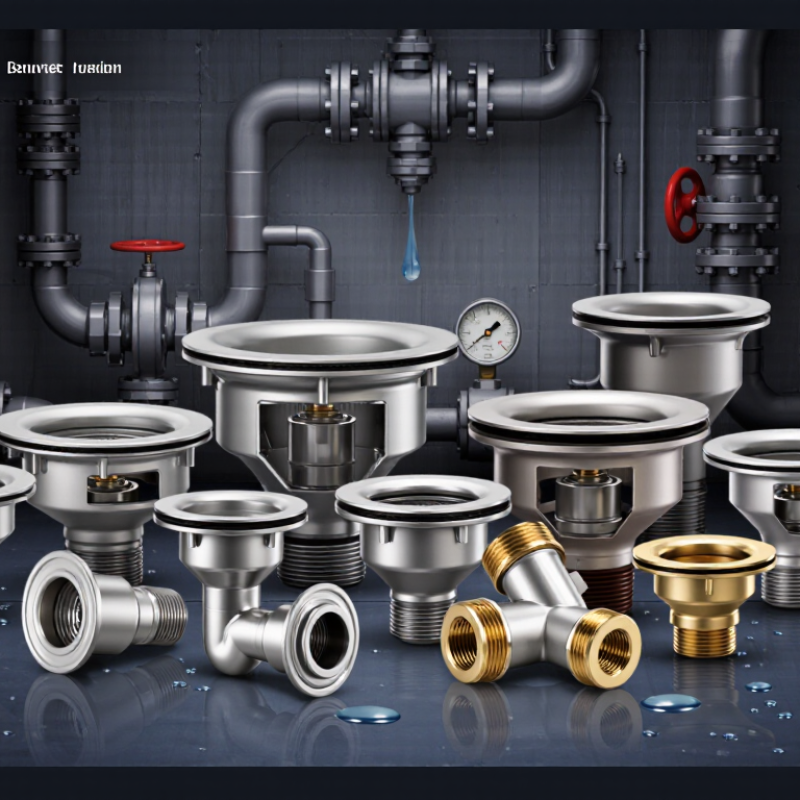
A pipeline strainer is an inline device that captures solid debris before it reaches pumps, control valves, meters, or heat exchangers. Its screen or perforated basket may stop weld slag, rust flakes, scale, and other particles carried by the fluid. The openings must suit the process: a finer screen catches smaller debris but can clog faster and restrict flow. Small details matter. A sudden rise in pressure difference across the strainer can signal a loaded screen, while a drop in downstream flow may indicate trouble. The U.S. Department of Energy’s 2002 United States Industrial Electric Motor Systems Market Opportunities Assessment estimated that motor-driven systems used 63% of U.S. industrial electricity. That figure does not measure strainer savings, but it shows why protecting pump-driven processes matters.
In practice, strainers help limit wear and unplanned stoppages, especially during startup or after pipe maintenance. Operators commonly check the screen, cleanout access, and pressure readings as part of routine inspection. A strainer is not a cure-all. It will not remove dissolved contaminants, and an undersized unit can create excessive pressure loss. Selection should consider fluid, operating temperature, flow rate, particle size, and acceptable pressure drop. One detail is easy to overlook: a basket that catches debris still needs safe access for cleaning. The right choice protects equipment without becoming the system’s bottleneck.
Pipeline strainers remove unwanted solid particles from flowing liquids, gases, or steam to help protect pumps, valves, meters, heat exchangers, and other downstream equipment. The configurations below are commonly used in industrial systems; the appropriate choice depends on the fluid, debris load, required screen opening, allowable pressure drop, maintenance plan, and operating conditions.
| Strainer configuration | How it works | Typical applications | Main advantage | Selection considerations |
|---|---|---|---|---|
| Y-type strainer | A screen sits in an angled branch of the Y-shaped body and retains debris as fluid passes through. | Liquid, gas, and steam lines where a compact inline unit is useful. | Compact, versatile, and available in a broad range of materials and pressure classes. | Check screen access and cleaning frequency; the debris pocket may require periodic shutdown or isolation for service. |
| Simplex basket strainer | Fluid flows through a removable basket element housed in a larger chamber. | Liquid lines with moderate or heavier solids loading and room for a larger strainer body. | The basket can provide more debris-holding capacity than many compact strainers. | Typically requires flow interruption or a bypass during basket removal unless the system has another arrangement. |
| Duplex basket strainer | Two strainer chambers are connected through a changeover valve so flow can be directed through one chamber while the other is cleaned. | Continuous-duty liquid services where stopping flow for routine cleaning is undesirable. | Allows one basket to be serviced while the other remains in operation, when properly operated. | Confirm changeover-valve design, chamber sizing, venting, draining, and safe maintenance procedures. |
| T-type strainer | A screen is fitted inside a tee-shaped body, with a removable cover or closure for access. | Large-bore or high-capacity lines, including installations where piping layout favors a tee body. | Can be configured for larger pipelines and substantial flow capacity. | Allow adequate space to remove the screen and verify the pressure drop at the required flow rate. |
| Temporary conical strainer | A cone-shaped screen is installed between flanges to catch construction debris during commissioning or initial operation. | Pipeline flushing, startup, and commissioning, where temporary protection is specified. | Simple temporary protection against scale, weld slag, and other installation debris. | Not generally intended as a permanent strainer; monitor pressure drop and remove it according to the commissioning plan. |
| Automatic backwashing strainer | A control system initiates a cleaning cycle that reverses flow locally or uses a directed flush to remove accumulated solids. | Continuous liquid processes with recurring particulate loading and limited manual-cleaning access. | Can reduce routine manual cleaning and maintain operation through automated cycles. | Requires suitable controls, a cleaning discharge arrangement, and solids that the cleaning cycle can dislodge. |
| Mechanically cleaned scraper strainer | A moving scraper or cleaning element removes deposits from the screening surface, often discharging them through a purge connection. | Liquid services where sticky or fibrous debris can build up on a screen. | Provides active cleaning for applications where passive screens may foul quickly. | Moving parts need maintenance; confirm that the debris type and process conditions suit the cleaning mechanism. |
| Steam strainer | Usually a Y-pattern unit with a screen and a blowdown connection arranged for steam-line service. | Steam lines upstream of control valves, traps, meters, and other equipment sensitive to debris. | Helps intercept pipe scale and other particles in steam service; blowdown can assist with debris removal where designed for it. | Install in the orientation specified by the manufacturer and account for condensate drainage, thermal conditions, and safe blowdown. |
| Fabricated large-bore basket strainer | A purpose-designed housing holds a removable screen basket sized for a large pipeline or specific process duty. | Water intake, cooling-water, and other large-flow liquid systems. | Can be engineered for large flow rates, site-specific connections, and substantial debris capacity. | Review structural design, screen support, lifting and access requirements, corrosion resistance, and pressure-drop data. |
| Duplex Y-type strainer arrangement | Two Y-type strainers are installed with suitable isolation and changeover piping so one can be cleaned while flow uses the other. | Continuous-operation services where a compact strainer body is preferred and planned changeover piping is feasible. | Provides a maintainable alternative to a single inline strainer when flow interruption must be minimized. | The complete piping and valve arrangement must support safe changeover and prevent unintended flow interruption. |
Buyer note: Screen opening, material, pressure rating, temperature rating, connection type, and allowable pressure drop are application-specific. Confirm these against process data and applicable engineering requirements; do not select a strainer by mesh count alone.

Selecting a pipeline strainer starts with the actual process conditions, not just pipe diameter. Record the fluid, operating temperature, pressure, flow rate, and likely particle sizes. A sample taken during normal operation may miss debris released during startup. That matters. Ask operators what they have found in screens after cleaning, and check whether contamination changes between batches or seasons.
Choose the screen opening to protect downstream equipment without restricting flow unnecessarily. Mesh count alone can be misleading because wire thickness and open area affect capacity. Check the manufacturer’s pressure-drop data at your expected flow, and consider how much debris the basket can hold before cleaning. Check the dirty case. A strainer that performs well when clean may cause a costly pressure loss as solids collect. Leave room for removal and maintenance, especially where a cover needs clearance above a crowded pipe rack.
Confirm that the body, screen, and seals suit the fluid and temperature. Review pressure ratings, connection type, and installation orientation against the site specification. For abrasive or fibrous solids, ask whether the screen can withstand repeated cleaning and whether the opening will trap material reliably. Calculations help, but they are not perfect. If operating data is uncertain, treat the first sizing estimate as provisional and plan to verify differential pressure after installation.
Pipeline strainers protect pumps, valves, meters, and other equipment by catching debris before it travels downstream. Common designs include Y-strainers, T-strainers, simplex basket strainers, duplex basket strainers, cone strainers, temporary startup strainers, perforated-screen strainers, wire-mesh strainers, automatic self-cleaning strainers, and backwashing strainers. Each handles solids differently. Some are better suited to compact piping; others provide more screen area for heavier debris loads.
Y-strainers are often selected where space is limited, while basket designs can offer greater dirt-holding capacity in liquid service. Duplex baskets allow one chamber to operate while the other is cleaned, but valves and changeover procedures need careful attention. Cone and temporary strainers are commonly used during commissioning, when welding scale or construction debris may remain. Perforated plates catch larger particles; finer wire mesh can capture smaller ones, though it may clog sooner. That trade-off matters.
Selection should reflect fluid, temperature, pressure, particle size, flow rate, and maintenance access. Check the screen’s open area and the allowable pressure drop, not just the connection size. A differential-pressure gauge can help show when cleaning is needed. Automatic units may reduce manual intervention, but they add controls and service requirements. A tidy selection chart can still mislead: actual debris is rarely as uniform as a sample specification suggests. Test assumptions against operating conditions.
This comparison groups ten common designs: Y-type, T-type, simplex basket, duplex basket, temporary cone, temporary basket, suction, inline screen, automatic backwash, and mechanically cleaned self-cleaning strainers. The bars count designs in this selected list, not market share or performance. Duplex strainers can keep flow running while an operator services one chamber; they are classified here as operator-serviced rather than automatic.
A pipeline strainer’s material and screen design affect corrosion resistance, pressure loss, and maintenance intervals. Stainless steel can suit many clean-water and process duties, while duplex alloys may be considered where chloride exposure raises corrosion concerns. These are starting points, not universal rules. The NACE IMPACT study estimated global corrosion costs at US$2.5 trillion annually, or 3.4% of global GDP. That figure underscores why material compatibility deserves attention, even in a small strainer body.
Screen openings must balance particle capture against flow. A finer mesh can catch smaller debris, but it may clog sooner and increase pressure drop. Measure differential pressure under actual operating conditions; a clean-screen reading alone can mislead. Check the specified flow rate, fluid temperature, solids load, and cleaning access before selecting a basket or screen. A convenient drain or removable cover can save time beside a hot, noisy line. Yet no feature compensates for an incorrectly sized unit.
Tips: Match mesh opening to the smallest particle that truly needs removal. Confirm pressure and temperature limits against the equipment data sheet. Record clean and loaded pressure readings, then set a service threshold. Small detail. Review the choice after startup: real debris often differs from the sample, and that uncertainty should remain part of the maintenance plan.
Matching a pipeline strainer to an application starts with the fluid, not the catalogue. In cooling-water lines, a coarse screen may catch rust flakes and gasket fragments without frequent cleaning. Fine process streams need closer mesh selection, but finer openings can increase pressure loss and clogging risk. Check operating flow, temperature, pressure, particle size, and cleaning access before choosing a Y-type or basket design. The U.S. Department of Energy’s Improving Pumping System Performance: A Sourcebook for Industry reports that pumping systems can account for 25–50% of energy use in some industrial facilities. That figure is not the energy cost of a strainer; it highlights why avoidable resistance deserves attention.
Tips: Compare clean and dirty pressure-drop readings. Set a cleaning trigger from site measurements, not guesswork. A screen that looks adequate during commissioning may behave differently after months of corrosion or variable feed. That part is easy to overlook.
For viscous fluids or heavy debris loads, a larger screen area can extend service intervals, provided the housing fits the line and maintenance routine. For critical equipment protection, confirm the required particle retention with the pump or process engineer. Do not assume the smallest mesh is safest. It may blind quickly. Record the selected mesh, differential pressure, and debris found at each inspection; those notes help refine the choice, though operating data can still be imperfect.


For those larger-sized parts, or smaller quantity runs, we have 2 independent powder coat booths and ovens. The quality, durability and affordability of today’s powder coating finishes make this the process of choice for world-class companies.
Powder coating advantages over other forms of coating are many. Materials used in the Powder coating process can be metals and non-metals that come in a multitude of thicknesses, textures, colors, etc. Another of Powder coating’s biggest advantages over conventional coatings is its ability to create finishes in many different textures. Powder Coating Booths allow us the ability to apply these advantages to large products.
Tri-State Fabricators runs a full-service conveyor line for painting. Wet painting can provide protection or decoration to many different part styles. From start to finish, every project is easier to undergo random and point-based inspection by our skilled painting team.
Advantages to our Wet Paint Line are these lines start with product prep and ends with a thorough inspection of a high quality finished product. Our ability to complete large and small projects with a superior finish and doing so in a timely and economical fashion. This passes along the savings in production to our customers. When powder coating ins not an option, our Wet Paint Line gets the job done right the first time.
When the parts get big and heavy we roll-out our custom paint racks and oversize booth. By utilizing our partnerships with all the major paint brands, we can match virtually any color with wet paint.
The advantages of having access to a Wet Paint Booth are many. Large projects of many different shapes can be loaded into the booth. The Wet Paint Booth offers an environment that is much more controlled than a typical parts painting operation.
Not only are they used because of their controlled environment, but they’re are also advantageous when it comes to applying paint to parts that are needed in industries that require specialty coatings such as medical, aerospace, etc.
Our military forces have some very high standards when it comes to the finish of their vehicles and equipment. From the first pre-treatment step to final coat, it takes a great deal of knowledge and experience to protect the men and women of our armed forces. They deserve only the best, and Tri-State Fabricators provides it.
All of our processes are closely monitored by our staff and management teams. Both of which are highly trained in the processes of metal fabrication and finishing. Tri-State Fabricators’ goal is to always fully satisfy each and every customer, including the military. We will always put a 110% into what we do.
Abrasive media blasting is an excellent way to remove old paint, rust, and increase the paint/powder adhesion. Glass beads produce a much smoother and brighter finish than angular abrasives; leaving the part clean yet without any dimensional change. Chemically inert and environmentally friendly, we can recycle our beads approximately 30 times; making them a more preferred method of metal cleaning or surface finishing.
Advantages to Glass Bead Blasting are many. Glass bead blast media is used when a project is needing rough surfaces need to become smooth for applications of coatings such as paint. It is typically used to clean paint and rust from a product surface without deforming the surface it is being used on. Overall, compared to many other blasting media, Glass Bead Blasting is a very economical choice and those savings are always passed on to our customers.
Tri-State Fabricators utilize a zinc phosphate wash to clean and etch the material to ensure the best paint adhesion possible. The unique design of our 3-stage wash system does the work like a 5-stage. From Cleaning and rinsing to conversion coating and post-treatment, Our Part Washing process is a complete service and works throughout the fabrication service and the finishing service.
Along with the previously mentioned benefits, Curing is a vital chemical reaction that leaves the product finish hard and relatively safe from mild abrasion and aggressive corrosion. This process can be done in more than one way; ambient air-dry or in curing ovens at temps that exceed 240°.
From fixing paint mistakes (someone else’s of course) to simply cleaning our paint line hooks, our burn-off oven is put to good use. After a quick burn-off, a little clean up, and a fresh coat of paint, your parts will look better than new.
Why does our Burn-Off Oven work so well? Because super heating the air around parts turns the materials into ashes. From paint and powder coatings to rubber and machining oils, high temps do the job without degrading the integrity of the part.
Masking is a vital part of producing high quality products. We have die-cut masking patterns to protect machined surfaces as well as a wide range of plugs and caps to protect threaded holes and bolts. We provide permanent and temporary masking.
Masking allows the selected sections of a product to be protected from a fabrication or finishing service. This can be with both chemicals when etching and tapes, paints when only finishing just a section of the product. Masking is great in aiding the customization process of a project.
Screen printing is a photographic process that transfers artwork onto a porous nylon screen which allows colored ink to flow through the screen and be deposited on an aluminum or plastic component. We can generally have just about any design created onto a screen for your parts.
Some of the advantages of Screen Printing are, brand recognition for your business displaying on your products, assembly instructions, product warnings/hazards, etc. Tri-State Fabricators produces Screen Printing of the highest quality so you know it’s durable.
Metal Finishing is the art of treating the exterior portion of product, often metal but can also be made of other materials, so that the surface is clean and free of any debris. Then the process of applying coats or either paint of powder coat takes place. This coating process improves the quality of the product in both appearance and resistance to wear and corrosion.
Tri-State Fabricators, Inc., understands that a project typically isn’t complete until a high-quality finish has been added to your product. This is why our painting and powder coating teams continuously inspect the products throughout the Metal Finishing process.

