


What Is the Best Pick and Place Machine in China?

Choosing the best Pick Place Machine in China requires more than comparing placement speed or advertising claims. A reliable decision begins with your actual production needs. Board size, component range, feeder stability, placement accuracy, and expected monthly volume all matter. A machine designed for smartphone boards may not suit automotive controllers or small-batch prototypes.

Michael Ford, an electronics manufacturing strategist, offers a practical view: “The best machine is not always the fastest; it is the one that delivers stable, repeatable results.” This principle is especially relevant in China’s competitive equipment market. A high-speed machine can appear impressive under showroom lighting, yet performance may change with difficult components, uneven feeders, or poorly maintained nozzles. Real production is less perfect.

Look beyond the headline specification. Examine placement accuracy under continuous operation, software usability, spare-part availability, and local technical support. Ask whether the supplier can provide sample-board testing and clear maintenance records. Watch how the machine handles tiny 0201 components, large connectors, and mixed component heights. These details reveal more than a polished brochure.

Cost also needs a wider view. A cheaper Pick Place Machine may create hidden expenses through downtime, rejected boards, training delays, or limited upgrades. An expensive model may still be unsuitable for a factory with unstable power or inexperienced operators. That possibility deserves honest consideration. The best choice is usually the machine that matches your process, people, and growth plan—not simply the model with the largest number.
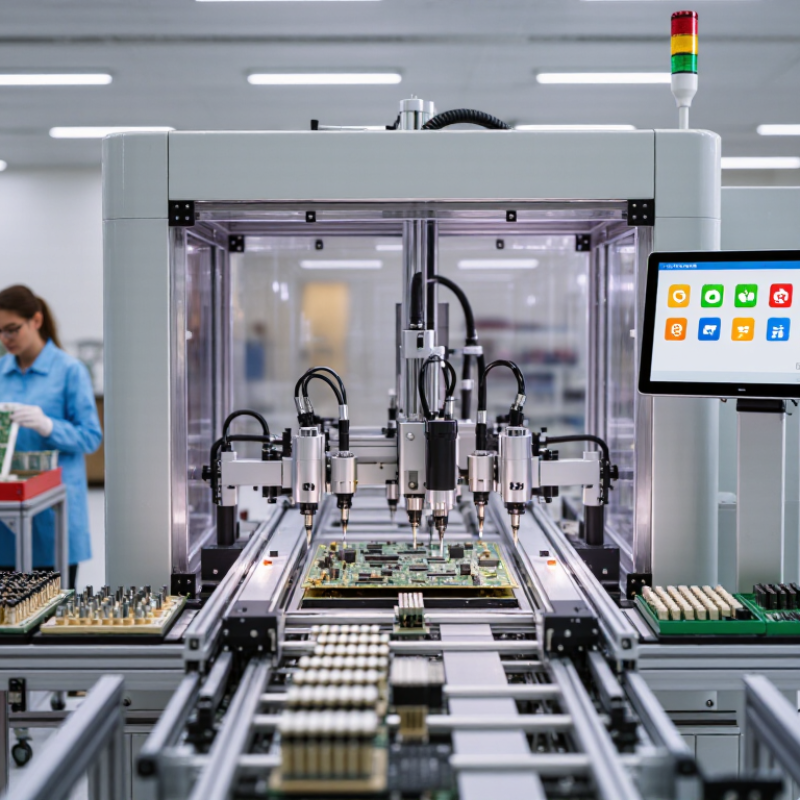
What Is the Best Pick and Place Machine in China?

Chinese Pick-and-Place Machine Types and Core SMT Performance Metrics

What Is the Best Pick and Place Machine in China?

Chinese pick-and-place machines serve different production needs. Manual machines suit prototypes, repairs, and low-volume workshops. Semi-automatic models improve consistency without requiring a large technical team. High-speed modular machines support mass production with multiple placement heads. Odd-form machines handle connectors, relays, and larger components. The best choice depends on board complexity, output targets, and changeover frequency.

Core SMT performance metrics reveal real capability. Placement speed is usually measured in components per hour, or CPH. Advertised speed can differ from practical output. Placement accuracy matters when boards use fine-pitch packages or small passive components. Repeatability and Cpk values show whether accuracy remains stable across long runs. Feeder capacity affects downtime during material replacement. Vision-system recognition should handle rotated, reflective, and poorly marked components. Check actual uptime, setup time, and first-pass yield. These figures are more useful than speed alone.

Tips: Ask for a sample-board trial before purchasing. Measure output with your components, feeders, and operators. Inspect nozzle wear after extended testing. A machine may look impressive on paper, yet struggle with frequent product changes. I have found that maintenance access is often underestimated. Easy cleaning, software diagnostics, and available spare parts can protect production more effectively than a higher headline speed. No machine is perfect. Leave room for learning.


How 20,000–100,000 CPH and ±0.03 mm Accuracy Define Machine Quality

What Is the Best Pick and Place Machine in China?

A strong pick and place machine must balance speed with placement control. The 20,000–100,000 CPH range sounds impressive, but CPH usually reflects ideal conditions. It may exclude feeder changes, vision checks, nozzle movement, and mixed component sizes. Grand View Research estimated the global surface mount technology equipment market at about USD 5 billion in 2023, with continued growth through 2030. That expansion increases pressure on manufacturers to measure real production output, not only catalog speed.

±0.03 mm accuracy is more meaningful when its test conditions are clear. Engineers should ask whether the figure represents repeatability, absolute accuracy, or a three-sigma result. Board size, component geometry, feeder stability, and solder paste variation can change performance. IPC-9851 provides a recognized framework for evaluating placement equipment, including throughput and placement capability. Use the standard.

On a practical line, a 100,000 CPH machine may slow sharply when handling tiny passives beside large connectors. A 40,000 CPH machine can sometimes produce more accepted boards per hour. That difference matters. Operators should compare first-pass yield, changeover time, feeder capacity, nozzle availability, and maintenance records. A camera alignment check is not enough. Data should come from several production runs, with actual boards and mixed components. I would still question any claim that combines maximum speed and ±0.03 mm accuracy without defining the measurement method. The specification may be correct, but incomplete.

Comparing Chinese Machines by 0201 Support, Vision Systems, and Feeder Capacity

Choosing the best pick and place machine in China depends on three practical tests: 0201 support, vision accuracy, and feeder capacity. A machine may advertise high speed, yet struggle with 0201 components under real factory conditions. During production trials, inspect placement stability after several hours, not just during a short demonstration. Tiny parts demand controlled vibration, accurate nozzles, and consistent component recognition.

Vision systems deserve close attention. A reliable system should inspect component edges, polarity marks, and placement offsets under changing light. Dual-camera arrangements can improve inspection flexibility, especially when boards contain mixed package sizes. Ask for measured accuracy data, repeatability results, and sample images from your own components. Marketing claims alone are not enough. I would also test dark, reflective, and slightly rotated parts, because laboratory samples can look unrealistically perfect.

Feeder capacity affects both output and operator workload. A wider feeder area supports complex boards with fewer interruptions, while intelligent feeder monitoring can reduce loading errors. However, maximum feeder count is not the only concern. Check changeover time, feeder compatibility, storage access, and maintenance procedures. A large capacity can become inconvenient if operators need excessive space around the machine. My own evaluation would include a full shift trial, although one trial cannot reveal every long-term weakness. Ask for service records, training arrangements, spare-part availability, and documented calibration procedures before making a purchase.

Using IPC-9851 Benchmarks to Evaluate Placement Speed and Repeatability

What Is the Best Pick and Place Machine in China?

Using IPC-9851 Benchmarks to Evaluate Placement Speed and Repeatability

The best pick and place machine in China is not always the fastest model. IPC-9851B provides a controlled method for measuring placement speed, accuracy, and repeatability. Its test process uses a defined board, component mix, placement program, and statistical evaluation. This creates fairer comparisons between machines.

A practical factory acceptance test should record placements per hour, X-Y error, theta error, and Cpk values. It should also separate theoretical speed from verified production output. A machine may advertise 100,000 placements per hour, yet mixed components, feeder changes, and inspection pauses can reduce actual output. That difference matters.

Repeatability deserves close attention. Small positional errors can create open joints, skewed parts, or weak solder connections. IPC-9851 results should therefore include repeated runs, not one impressive trial. The IPC Global Electronics Manufacturing Industry Survey 2024 identifies quality consistency and production efficiency as continuing priorities for electronics manufacturers. WSTS reported 16.0% semiconductor market growth for 2024, adding pressure to improve capacity without sacrificing quality.

A sensible comparison asks for raw test records. Request the board design, component list, operating speed, and environmental conditions. Also check maintenance response and feeder stability. Speed is not everything.

One weakness remains. IPC testing may not fully represent every factory’s products. Fine-pitch assemblies, heavy connectors, and flexible boards can behave differently. The final choice should combine IPC-9851 data with a production trial and operator feedback.

Selecting the Best Machine for High-Mix, High-Volume, and PCB Assembly Lines

What Is the Best Pick and Place Machine in China?

For high-mix production, the best pick and place machine is not simply the fastest model. It must change feeders quickly, recognize varied components, and manage frequent program updates. A 2024 report by Grand View Research estimated the global surface-mount technology equipment market at several billion dollars, with steady growth through 2030. That growth reflects a practical problem: factories need flexibility without losing placement accuracy.

High-volume lines need a different balance. A machine should maintain stable throughput, feeder capacity, and uptime across long shifts. IPC production guidance places strong emphasis on process control, traceability, and repeatable inspection. These factors matter when a PCB line produces thousands of boards daily. Yet speed claims can be misleading. Real output falls when operators replace reels, clear errors, or handle difficult packages.

Look closely at PCB assembly data. For fine-pitch parts, verify placement accuracy, vision performance, nozzle availability, and support for odd-shaped components. For mixed production, compare changeover minutes, software learning time, and actual first-pass yield. A 2023 report from MarketsandMarkets projected continued expansion in the SMT equipment sector, driven by automotive, communications, and consumer electronics demand. Still, the “best” machine may be the one that fits your factory’s constraints, not the one with the highest headline speed. Measure it on your own boards. Mistakes appear there.

Powder Coat Booths

For those larger-sized parts, or smaller quantity runs, we have 2 independent powder coat booths and ovens. The quality, durability and affordability of today’s powder coating finishes make this the process of choice for world-class companies.

Powder coating advantages over other forms of coating are many. Materials used in the Powder coating process can be metals and non-metals that come in a multitude of thicknesses, textures, colors, etc. Another of Powder coating’s biggest advantages over conventional coatings is its ability to create finishes in many different textures. Powder Coating Booths allow us the ability to apply these advantages to large products.

Wet Paint Line

Tri-State Fabricators runs a full-service conveyor line for painting. Wet painting can provide protection or decoration to many different part styles. From start to finish, every project is easier to undergo random and point-based inspection by our skilled painting team.

Advantages to our Wet Paint Line are these lines start with product prep and ends with a thorough inspection of a high quality finished product. Our ability to complete large and small projects with a superior finish and doing so in a timely and economical fashion. This passes along the savings in production to our customers. When powder coating ins not an option, our Wet Paint Line gets the job done right the first time.

Wet Paint Booths

When the parts get big and heavy we roll-out our custom paint racks and oversize booth. By utilizing our partnerships with all the major paint brands, we can match virtually any color with wet paint.

The advantages of having access to a Wet Paint Booth are many. Large projects of many different shapes can be loaded into the booth. The Wet Paint Booth offers an environment that is much more controlled than a typical parts painting operation.

Not only are they used because of their controlled environment, but they’re are also advantageous when it comes to applying paint to parts that are needed in industries that require specialty coatings such as medical, aerospace, etc.

Military CARC

Our military forces have some very high standards when it comes to the finish of their vehicles and equipment. From the first pre-treatment step to final coat, it takes a great deal of knowledge and experience to protect the men and women of our armed forces. They deserve only the best, and Tri-State Fabricators provides it.

All of our processes are closely monitored by our staff and management teams. Both of which are highly trained in the processes of metal fabrication and finishing. Tri-State Fabricators’ goal is to always fully satisfy each and every customer, including the military. We will always put a 110% into what we do.

Glass-Bead Blasting

Abrasive media blasting is an excellent way to remove old paint, rust, and increase the paint/powder adhesion. Glass beads produce a much smoother and brighter finish than angular abrasives; leaving the part clean yet without any dimensional change. Chemically inert and environmentally friendly, we can recycle our beads approximately 30 times; making them a more preferred method of metal cleaning or surface finishing.

Advantages to Glass Bead Blasting are many. Glass bead blast media is used when a project is needing rough surfaces need to become smooth for applications of coatings such as paint. It is typically used to clean paint and rust from a product surface without deforming the surface it is being used on. Overall, compared to many other blasting media, Glass Bead Blasting is a very economical choice and those savings are always passed on to our customers.

Part Washing

Tri-State Fabricators utilize a zinc phosphate wash to clean and etch the material to ensure the best paint adhesion possible. The unique design of our 3-stage wash system does the work like a 5-stage. From Cleaning and rinsing to conversion coating and post-treatment, Our Part Washing process is a complete service and works throughout the fabrication service and the finishing service.

Along with the previously mentioned benefits, Curing is a vital chemical reaction that leaves the product finish hard and relatively safe from mild abrasion and aggressive corrosion. This process can be done in more than one way; ambient air-dry or in curing ovens at temps that exceed 240°.

Burn-Off Oven

From fixing paint mistakes (someone else’s of course) to simply cleaning our paint line hooks, our burn-off oven is put to good use. After a quick burn-off, a little clean up, and a fresh coat of paint, your parts will look better than new.

Why does our Burn-Off Oven work so well? Because super heating the air around parts turns the materials into ashes. From paint and powder coatings to rubber and machining oils, high temps do the job without degrading the integrity of the part.

Masking

Masking is a vital part of producing high quality products. We have die-cut masking patterns to protect machined surfaces as well as a wide range of plugs and caps to protect threaded holes and bolts. We provide permanent and temporary masking.

Masking allows the selected sections of a product to be protected from a fabrication or finishing service. This can be with both chemicals when etching and tapes, paints when only finishing just a section of the product. Masking is great in aiding the customization process of a project.

Screen Printing

Screen printing is a photographic process that transfers artwork onto a porous nylon screen which allows colored ink to flow through the screen and be deposited on an aluminum or plastic component. We can generally have just about any design created onto a screen for your parts.

Some of the advantages of Screen Printing are, brand recognition for your business displaying on your products, assembly instructions, product warnings/hazards, etc. Tri-State Fabricators produces Screen Printing of the highest quality so you know it’s durable.

Metal Finishing

Metal Finishing is the art of treating the exterior portion of product, often metal but can also be made of other materials, so that the surface is clean and free of any debris. Then the process of applying coats or either paint of powder coat takes place. This coating process improves the quality of the product in both appearance and resistance to wear and corrosion.

Tri-State Fabricators, Inc., understands that a project typically isn’t complete until a high-quality finish has been added to your product. This is why our painting and powder coating teams continuously inspect the products throughout the Metal Finishing process.
