What Is the Best Partition Glass Type in 2026?
Choosing the best Partition Glass in 2026 is not simply a matter of appearance. A clear panel can carry daylight deep into an office, while the wrong acoustic specification may let every phone call travel across the room. Small details matter: glass thickness, laminated interlayers, frame design, door seals, and installation quality all affect the finished result.
Industry research offers useful context, though it does not name one universal winner. The U.S. General Services Administration’s Sound Matters report examines acoustic comfort in office environments and highlights how workplace sound influences the user experience. The World Green Building Council’s Health, Wellbeing and Productivity in Offices report also identifies lighting, indoor environmental quality, and acoustics as important workplace considerations. These sources support a practical point: partition selection should respond to how a space is used, not just how it looks in a sample room.
There is no perfect glass type. A meeting room needs privacy and speech control; a collaborative area may benefit more from openness and borrowed light. In 2026, buyers can compare monolithic, laminated, double-glazed, and switchable glass against those needs, along with safety, maintenance, and project cost. Some product claims sound impressive, but performance depends on the complete assembly and careful installation. That part is easy to underestimate. This guide weighs the trade-offs and explains what evidence to request before specifying a system.
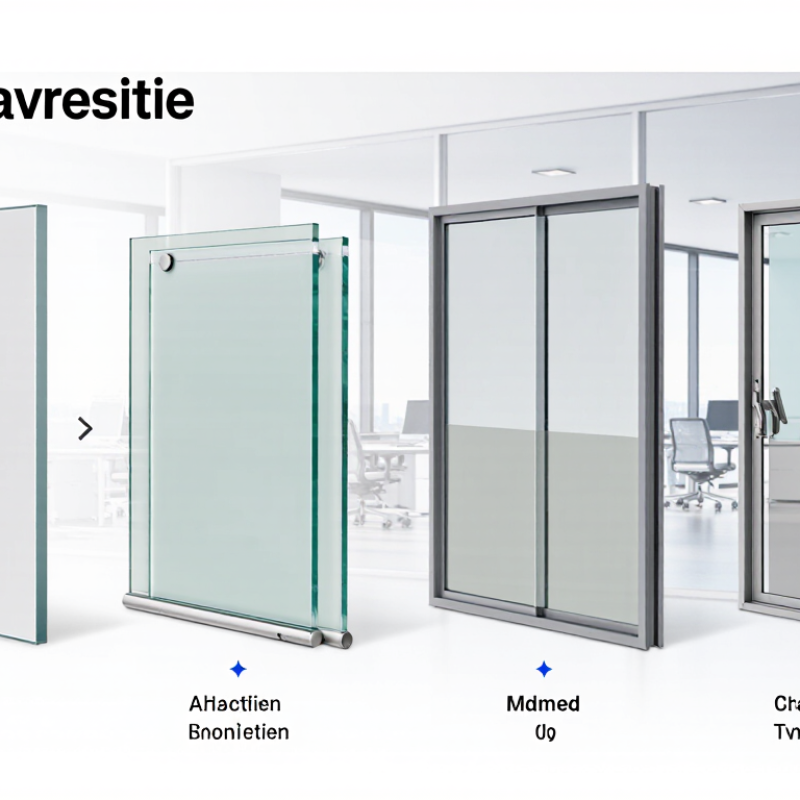
Define Partition Glass Types Using ANSI Z97.1 and CPSC 16 CFR 1201
What Is the Best Partition Glass Type in 2026?
Define Partition Glass Types Using ANSI Z97.1 and CPSC 16 CFR 1201
“Best” depends on the opening, impact risk, and required safety rating. Tempered and laminated glass are common partition choices, but their names alone do not establish compliance. The relevant evidence is the tested glazing assembly and its documented classification.
ANSI Z97.1-2015 (R2020) identifies Class A glazing at 400 ft-lb and Class B at 150 ft-lb. CPSC 16 CFR 1201 sets Category II at 400 ft-lb and Category I at 150 ft-lb. These figures come from the standards’ impact-test requirements; matching energy values do not make the classifications interchangeable. Check the product documentation for the specific standard and class or category.
The materials behave differently after impact. Tempered glass typically breaks into small pieces, while laminated glass is designed to hold fragments together between its interlayer and glass sheets. That distinction matters beside a busy corridor or near a door. A rating is essential, but it is not the whole decision. Confirm glass thickness, panel size, framing, and installation details with the project specification.
Small details matter. I would not choose from a sample alone; real openings can expose assumptions that look sound on paper.
Compare Tempered, Laminated, and Insulating Glass for Safety and Use
Choosing partition glass starts with the room’s risks, not its appearance. Tempered glass is heat-treated for strength and usually breaks into small pieces if it fails. This can reduce the risk of severe cuts, but it does not make glass harmless. Edges, fittings, and nearby furniture still matter.
Laminated glass holds many fragments together with a plastic interlayer after impact. That can help where people may collide with a partition, such as a busy corridor or a low glass divider. It is heavier, and the added thickness can affect frames and installation. Insulating glass combines panes with a sealed air or gas space. It mainly improves thermal performance and can help reduce sound transfer; it is not automatically the safest option. A meeting room beside a noisy workspace may benefit from it, but the full assembly matters.
There is no perfect choice. A combination of glass types may suit some projects, but it can raise cost and design complexity. Check product specifications, frame compatibility, and applicable safety requirements with a qualified glass professional. Small details matter. The right answer can change when children, impact exposure, or temperature control enter the picture.
Assess Tempered Glass’s Commonly Cited 4× Strength Over Annealed Glass
Tempered glass is often described as four times stronger than annealed glass, but that figure needs context. The National Glass Association’s technical guidance uses this comparison for glass of similar thickness and composition, mainly when discussing resistance to bending. It is a useful starting point, not a guaranteed performance rating for every partition. Edge damage, holes, cut-outs, and installation conditions can change how a panel performs. Small flaws matter.
ASTM C1048 specifies requirements for heat-strengthened and fully tempered flat glass, but it does not make “four times” a universal design value. In practice, a 10 mm tempered panel may tolerate greater bending stress than a matching annealed panel, yet it can still fail after a hard impact near an exposed corner. Tempered glass also breaks into smaller fragments, which is different from being unbreakable. For a partition near a doorway or busy corridor, compare the specified glass thickness, tested safety-glazing classification, support details, and expected impact conditions. That distinction is easy to miss. The four-times claim is informative, but project-specific testing and professional review should guide the final glass selection.
What Is the Best Partition Glass Type in 2026?
Assessing tempered glass’s commonly cited 4× strength over annealed glass
Tempered glass is commonly described as having about four times the flexural strength of annealed glass. This chart uses a normalized comparison (annealed glass = 1); actual performance varies with glass thickness, composition, edge condition, and testing method. Select partition glass based on the project’s safety requirements and applicable building codes.
Compare Typical Glass-Partition Sound Ratings, Often Around STC 30–40
In 2026, many Glass Partitions are described with sound ratings around STC 30–40. That range is useful, but it is not a promise of silence. STC measures how well a partition reduces certain airborne sounds under laboratory conditions. A rating near 30 may soften normal conversation, while a system closer to 40 can make speech less intelligible in an adjoining room.
The glass alone does not determine the result. A single pane in a slim frame may perform differently from two panes with an air gap, but the full assembly matters: seals, framing, ceiling junctions, and installation all affect sound leakage. A narrow gap under a door can undermine an otherwise solid partition. Sound may also travel through a shared ceiling or floor. Small details matter.
Ask for test data for the complete partition, not just the glass. Check whether the stated STC rating includes doors and frame connections, and compare it with the room’s actual needs. For private conversations, a rating near the upper end may help, though speech privacy also depends on background noise and layout. It is easy to focus too much on one number. I would inspect the seals, too. A real room is messier than a lab.
Match Glass Type to Privacy, Safety, Acoustics, and Building-Code Needs
What Is the Best Partition Glass Type in 2026?
Match Glass Type to Privacy, Safety, Acoustics, and Building-Code Needs
Choose partition glass by asking what must be seen, heard, or protected. Clear glass keeps sightlines open, while frosted or patterned glass softens views without blocking daylight. Switchable privacy glass can change from clear to opaque, but its controls and power supply add maintenance needs.
For impact safety, tempered glass breaks into smaller pieces; laminated glass holds fragments together with an interlayer. Neither choice automatically meets every code requirement. The International Building Code identifies certain doors and hazardous locations where safety glazing is required; confirm the locally adopted edition and exact opening conditions.
Acoustics depend on the complete partition, not just the glass. Ask for laboratory sound-transmission ratings tested under ASTM E90, and check the frame, seals, and door gaps. A high-rated pane can disappoint when sound leaks around its edges.
The World Health Organization’s 2018 Environmental Noise Guidelines recommend keeping average nighttime outdoor exposure below 40 dB Lnight. That is an outdoor health guideline, not a promised indoor result, but it shows why project-specific acoustic targets matter. A small caveat: ratings from different test methods may not compare directly. Review the tested assembly details, then match glass thickness and construction to the room’s actual privacy, safety, and noise needs.





