


Choosing the right Oem Optical Sight Factory requires more than comparing prices or viewing polished product photos. Global buyers need evidence of optical expertise, repeatable production, and responsible supply-chain management. A capable factory should explain glass selection, lens coating performance, reticle clarity, sealing methods, and recoil or vibration testing in practical terms. Its engineers should also provide inspection records, sample reports, and clear tolerance data.
Optical engineer Dr. John E. Greivenkamp offers a useful guiding observation: “Good optical performance depends on controlling every tolerance, not just choosing premium glass.” That principle applies directly to OEM sourcing. A sight may look sharp in a showroom, yet show edge distortion under changing light. Small alignment errors can also become visible during field observation. Buyers should request test samples under bright sunlight, low light, and temperature variation. Ask for the same inspection standards used in mass production.
Trust is built slowly.
The 2026 market will reward factories that combine optical design with transparent communication. Reliable partners should confirm applicable product-safety requirements, import documentation, labeling rules, and destination-market compliance. They should protect buyer specifications and respect trademarks. No factory is flawless, and some suppliers may overstate coating life or production capacity. That weakness deserves attention, not polite silence. This guide examines manufacturing experience, quality controls, customization limits, lead times, and after-sales support. It also recognizes that the lowest quote can hide unstable materials, inconsistent assembly, or expensive rework. Careful buyers will compare evidence, not promises.
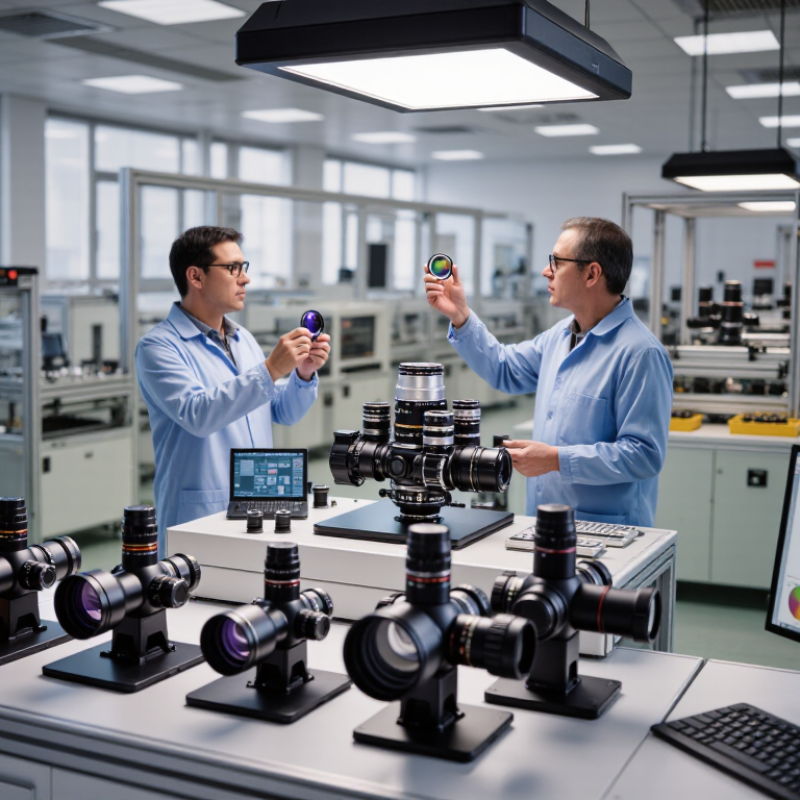
2026 Best OEM Optical Sight Factory for Global Buyers
OEM optical sight manufacturing means producing optical viewing systems to another company’s specifications, quality targets, and market requirements. The work may cover concept design, lens selection, housing machining, surface treatment, assembly, calibration, packaging, and technical documentation. These products can support lawful sporting, surveying, wildlife observation, and industrial inspection applications.
A capable OEM factory combines optical engineering with disciplined production control. Engineers check light transmission, image clarity, focus movement, alignment, sealing, and impact resistance. Technicians use collimators, resolution charts, torque tools, and environmental testing equipment. Each production stage needs traceable records. Small errors matter. A slightly tilted lens can reduce accuracy across the entire viewing field.
For global buyers, the factory’s role extends beyond production. It should clarify material standards, labeling rules, export documents, warranty terms, and destination-market requirements before sampling. Reliable suppliers usually provide inspection reports and controlled sample approvals. However, no factory performs perfectly in every batch. A recurring weakness may appear in coating consistency or assembly speed. Honest communication matters more than polished promises. Buyers should audit processes, test representative samples, and review corrective actions before placing larger orders. OEM manufacturing is not only a cost decision. It is a long-term quality and compliance relationship.

OEM Optical Sight Manufacturing: Definition, Scope, and Industry Role
The chart presents representative maximum magnification levels across common optical sight categories. These product classes reflect the practical scope of OEM manufacturing, including compact aiming optics, low-power variable optics, hunting scopes, precision scopes, and long-range scopes. OEM programs typically combine optical design, mechanical housing, illumination, coatings, environmental sealing, assembly, and quality inspection.
Modern optical sight production depends on controlled light, precise alignment, and repeatable inspection. OEM factories begin with optical design software that models field of view, magnification, eye relief, and edge clarity. Engineers then select coated lenses for higher transmission and reduced glare. Every lens is inspected for scratches, bubbles, and coating inconsistency.
Precision machining shapes the housing from stable metal alloys. CNC equipment holds tight dimensional tolerances around the lens seats and adjustment interfaces. Assembly takes place in a clean area, where technicians use torque-controlled tools. Small errors matter. A slight tilt can shift the point of view.
ELECTRONIC MODELS may include illuminated reticles, low-power controls, and sealed battery compartments. These features require careful circuit testing and moisture protection. Factories also use collimators, vibration tables, temperature chambers, and waterproofing checks. Test records should connect each finished unit to its materials, operator, and inspection results.
Reliable OEM cooperation requires more than attractive samples. Technical drawings, approved tolerances, optical data, and packaging requirements must remain synchronized. Production teams should review early samples with practical users. A design can look perfect on a screen but feel awkward during real handling. That lesson is easy to miss.
Quality systems still need honest review. No production line is flawless. Occasional coating variation or alignment drift may appear despite strong controls. The responsible response is documented correction, repeated testing, and clearer prevention. For global buyers, transparent reports build more confidence than exaggerated claims.
Choosing the best OEM optical sight factory requires more than comparing catalog prices. According to Grand View Research’s 2024 optical instruments report, the broader market is expected to grow steadily through 2030. That growth increases supplier pressure and makes quality evidence essential. Request ISO 9001 records, process maps, and recent inspection data. Traceability matters.
A capable factory should show measurable control at every stage. Check lens coating consistency, adjustment repeatability, sealing performance, and shock-test results. ISO 2859-based sampling can support batch inspections, while ISO 10110 provides useful guidance for optical drawing and surface specifications. Ask for test conditions, not only pass certificates. A clear report should show sample size, equipment, tolerance, and corrective action. Numbers can mislead.
Production experience also deserves close review. Visit the assembly area, observe torque control, and examine how operators prevent dust near optical surfaces. The 2024 World Quality Report highlights growing reliance on digital quality records and real-time production visibility. A factory with barcode tracking can reduce unnoticed batch errors. However, software does not replace skilled inspection. I would also compare pilot samples with mass-production units, because early samples may receive extra attention. No audit is perfect. Leave room for independent testing, realistic lead times, and lawful export documentation.
Global buyers need more than sharp glass and competitive pricing. A reliable OEM optical sight factory should document material sources, inspection methods, and production records. In lawful sporting, surveying, and industrial observation applications, every specification matters. Lens clarity, reticle alignment, sealing, and shock resistance require measurable standards. ISO 9001-based procedures can support consistent production, but certification alone never replaces factory evidence.
Ask for optical test reports, dimensional records, coating data, and sample inspection photos. Confirm compliance with applicable RoHS, REACH, packaging, labeling, and export-control requirements. End-use screening should be handled carefully. Customs documents must match the actual product. Small inconsistencies can delay a shipment. Regional rules also differ, so buyers should obtain local legal advice before ordering.
Customization often includes tube dimensions, mounting interfaces, reticle patterns, surface finishes, packaging, and user manuals. Clear drawings reduce expensive revisions. A pilot order can reveal problems hidden by digital samples, such as stiff adjustment knobs or uneven sealing. Perfect first samples are uncommon. We have learned that honest feedback improves the second version. Factory audits, traceable batch numbers, and calibrated testing equipment build stronger confidence. Response time matters too. A technically capable supplier should explain limits, not promise everything.
2026 Best OEM Optical Sight Factory for Global Buyers
OEM Partnership, Production, and Delivery Workflow
For global buyers, an OEM optical sight project should begin with a documented partnership, not a sales promise. The factory should confirm intended application, market requirements, tolerances, and forecast volume before quoting. A practical kickoff includes drawings, sample references, inspection criteria, packaging needs, and approved communication channels. Clear ownership prevents small changes from becoming expensive delays. Buyers should request production records and realistic lead times. This is where trust becomes measurable.
During production, engineering teams convert the approved design into controlled work instructions. They verify lens alignment, reticle placement, sealing, adjustment movement, and surface finish at defined checkpoints. Incoming materials need traceable batches. In-process inspections catch drift before final assembly. A capable partner also retains approved samples and records corrective actions. However, no process is perfect. A common production lesson is that late revisions can disrupt schedules when they reach the workshop without signed approval. That failure is avoidable, but it deserves honest review.
Before shipment, the factory should complete final inspection, functional checks, carton verification, and export documentation. A delivery workflow should show sample approval, pilot production, mass production, inspection release, and dispatch dates. Use agreed acceptance standards rather than vague claims of premium quality. Protective packaging, moisture control, spare-part planning, and tracking updates reduce disruption. Buyers should review inspection reports before releasing the balance. Small details matter. Reliable OEM cooperation is built through evidence, repeatable controls, and timely correction when reality differs from the plan.
| Workflow Stage | Buyer Input | Factory Deliverable | Key Technical and Quality Checks | Typical Planning Range | Delivery Milestone |
|---|---|---|---|---|---|
| 1. Requirement Definition | Target application, magnification, objective diameter, reticle type, mounting interface, operating environment, target market, and estimated annual volume. | Requirement review, feasibility feedback, preliminary specification sheet, and open-question list. | Optical performance targets, mechanical envelope, battery requirements, environmental exposure, regulatory needs, and packaging constraints. | 3–7 business days | Approved technical brief |
| 2. OEM Partnership Review | Expected order quantity, forecast, destination countries, preferred incoterm, target cost, payment conditions, and intellectual-property requirements. | Quotation, minimum order quantity, production capacity statement, tooling estimate, sample policy, and proposed commercial terms. | Capacity allocation, component sourcing risk, export documentation capability, confidentiality controls, and after-sales process. | 5–10 business days | Commercial and technical alignment |
| 3. Optical and Mechanical Design | Approved specifications, logo artwork if applicable, reticle requirements, user interface preferences, and mounting details. | 2D drawings, 3D design files, optical layout, bill of materials, interface drawings, and design-for-manufacturing review. | Field of view, eye relief, adjustment range, parallax setting, sealing interfaces, material selection, and serviceability. | 2–5 weeks | Design freeze approval |
| 4. Prototype and Engineering Sample | Sample quantity, inspection checklist, evaluation schedule, and required packaging or labeling format. | Prototype units, sample inspection report, test records, revised drawings, and engineering change recommendations. | Image quality, reticle alignment, adjustment repeatability, focus operation, control function, finish quality, and assembly fit. | 3–8 weeks | Buyer sample approval |
| 5. Tooling and Process Preparation | Final artwork, approved sample, packaging specification, inspection criteria, and purchase-order release. | Tooling plan, work instructions, inspection fixtures, assembly flow, control plan, and production schedule. | Critical-to-quality dimensions, incoming-material inspection, calibration status, traceability method, and operator inspection points. | 2–6 weeks | Production-readiness approval |
| 6. Pilot Production | Pilot-lot acceptance criteria, sampling level, independent inspection requirements, and approval authority. | Pilot batch, first-article report, defect analysis, process capability findings, and corrective-action plan where required. | Assembly consistency, optical axis alignment, reticle position, adjustment tracking, sealing, surface finish, and functional testing. | 1–3 weeks | Pilot lot released for mass production |
| 7. Mass Production | Purchase order, confirmed quantity, delivery window, approved packaging, and payment according to agreed terms. | Manufactured and assembled units, batch records, production updates, and shipment-readiness notice. | Incoming, in-process, and final inspection; calibration records; functional testing; cosmetic inspection; quantity reconciliation. | 4–10 weeks | Finished-goods acceptance |
| 8. Final Quality Inspection | Inspection method, acceptable quality limit, required certificates, and pre-shipment approval process. | Final inspection report, product photographs, carton list, serial-number list where applicable, and certificate package. | Quantity, workmanship, dimensions, operation, optical appearance, accessories, labeling, cartons, and documentation completeness. | 2–5 business days | Pre-shipment approval |
| 9. Export Packing and Documentation | Consignee details, shipping instructions, customs information, labeling language, and required commercial documents. | Commercial invoice, packing list, transport document, origin documentation where applicable, and export declaration support. | Carton protection, moisture control, palletization, shipping marks, document consistency, and destination-country requirements. | 2–7 business days | Cargo handed to logistics provider |
| 10. International Delivery | Preferred transport mode, customs broker, delivery appointment, and receiving inspection plan. | Shipment tracking, dispatch confirmation, document updates, and exception handling. | Transit protection, customs status, delivery condition, quantity received, and damage reporting. | Air: 3–10 days Sea: 20–45 days | Delivered to buyer or nominated warehouse |
| 11. After-Sales and Continuous Improvement | Field feedback, warranty claims, replacement requirements, sales forecast, and product-improvement requests. | Root-cause analysis, corrective-action report, spare-parts support, replacement process, and revision-control updates. | Failure classification, response time, recurring-defect monitoring, change approval, and retained product records. | Ongoing; response commonly within 1–5 business days | Closed-loop OEM support |


For those larger-sized parts, or smaller quantity runs, we have 2 independent powder coat booths and ovens. The quality, durability and affordability of today’s powder coating finishes make this the process of choice for world-class companies.
Powder coating advantages over other forms of coating are many. Materials used in the Powder coating process can be metals and non-metals that come in a multitude of thicknesses, textures, colors, etc. Another of Powder coating’s biggest advantages over conventional coatings is its ability to create finishes in many different textures. Powder Coating Booths allow us the ability to apply these advantages to large products.
Tri-State Fabricators runs a full-service conveyor line for painting. Wet painting can provide protection or decoration to many different part styles. From start to finish, every project is easier to undergo random and point-based inspection by our skilled painting team.
Advantages to our Wet Paint Line are these lines start with product prep and ends with a thorough inspection of a high quality finished product. Our ability to complete large and small projects with a superior finish and doing so in a timely and economical fashion. This passes along the savings in production to our customers. When powder coating ins not an option, our Wet Paint Line gets the job done right the first time.
When the parts get big and heavy we roll-out our custom paint racks and oversize booth. By utilizing our partnerships with all the major paint brands, we can match virtually any color with wet paint.
The advantages of having access to a Wet Paint Booth are many. Large projects of many different shapes can be loaded into the booth. The Wet Paint Booth offers an environment that is much more controlled than a typical parts painting operation.
Not only are they used because of their controlled environment, but they’re are also advantageous when it comes to applying paint to parts that are needed in industries that require specialty coatings such as medical, aerospace, etc.
Our military forces have some very high standards when it comes to the finish of their vehicles and equipment. From the first pre-treatment step to final coat, it takes a great deal of knowledge and experience to protect the men and women of our armed forces. They deserve only the best, and Tri-State Fabricators provides it.
All of our processes are closely monitored by our staff and management teams. Both of which are highly trained in the processes of metal fabrication and finishing. Tri-State Fabricators’ goal is to always fully satisfy each and every customer, including the military. We will always put a 110% into what we do.
Abrasive media blasting is an excellent way to remove old paint, rust, and increase the paint/powder adhesion. Glass beads produce a much smoother and brighter finish than angular abrasives; leaving the part clean yet without any dimensional change. Chemically inert and environmentally friendly, we can recycle our beads approximately 30 times; making them a more preferred method of metal cleaning or surface finishing.
Advantages to Glass Bead Blasting are many. Glass bead blast media is used when a project is needing rough surfaces need to become smooth for applications of coatings such as paint. It is typically used to clean paint and rust from a product surface without deforming the surface it is being used on. Overall, compared to many other blasting media, Glass Bead Blasting is a very economical choice and those savings are always passed on to our customers.
Tri-State Fabricators utilize a zinc phosphate wash to clean and etch the material to ensure the best paint adhesion possible. The unique design of our 3-stage wash system does the work like a 5-stage. From Cleaning and rinsing to conversion coating and post-treatment, Our Part Washing process is a complete service and works throughout the fabrication service and the finishing service.
Along with the previously mentioned benefits, Curing is a vital chemical reaction that leaves the product finish hard and relatively safe from mild abrasion and aggressive corrosion. This process can be done in more than one way; ambient air-dry or in curing ovens at temps that exceed 240°.
From fixing paint mistakes (someone else’s of course) to simply cleaning our paint line hooks, our burn-off oven is put to good use. After a quick burn-off, a little clean up, and a fresh coat of paint, your parts will look better than new.
Why does our Burn-Off Oven work so well? Because super heating the air around parts turns the materials into ashes. From paint and powder coatings to rubber and machining oils, high temps do the job without degrading the integrity of the part.
Masking is a vital part of producing high quality products. We have die-cut masking patterns to protect machined surfaces as well as a wide range of plugs and caps to protect threaded holes and bolts. We provide permanent and temporary masking.
Masking allows the selected sections of a product to be protected from a fabrication or finishing service. This can be with both chemicals when etching and tapes, paints when only finishing just a section of the product. Masking is great in aiding the customization process of a project.
Screen printing is a photographic process that transfers artwork onto a porous nylon screen which allows colored ink to flow through the screen and be deposited on an aluminum or plastic component. We can generally have just about any design created onto a screen for your parts.
Some of the advantages of Screen Printing are, brand recognition for your business displaying on your products, assembly instructions, product warnings/hazards, etc. Tri-State Fabricators produces Screen Printing of the highest quality so you know it’s durable.
Metal Finishing is the art of treating the exterior portion of product, often metal but can also be made of other materials, so that the surface is clean and free of any debris. Then the process of applying coats or either paint of powder coat takes place. This coating process improves the quality of the product in both appearance and resistance to wear and corrosion.
Tri-State Fabricators, Inc., understands that a project typically isn’t complete until a high-quality finish has been added to your product. This is why our painting and powder coating teams continuously inspect the products throughout the Metal Finishing process.

