


Choosing the best Multi Axis Motion System in 2026 is not a spec-sheet contest. It is a machine-level decision. A packaging line, a CNC router, and a camera-positioning stage place very different demands on coordinated motion. Axis count alone tells little. Engineers also need to assess payload, travel, repeatability, cycle time, and the working environment. A gantry moving a heavy load may need stiff mechanics and careful tuning. A compact inspection stage may depend more on smooth, precise positioning. Small details matter: cable routing, motor heating, and vibration can shape real performance. That distinction matters.
Peter Nachtwey, a motion-control engineer and founder of Delta Computer Systems, is a useful industry reference. A practical paraphrase of his control-focused perspective is: “Coordinate the axes before optimizing speed.” This is a paraphrase, not a verbatim quotation. It points to a central selection question: can the controller keep every axis synchronized under actual operating conditions? Buyers should compare servo and stepper options, feedback methods, controller capabilities, software support, and integration demands. Then test the system with representative loads and motion profiles, not just ideal conditions. No selection is perfect. A fast system may be harder to tune, while a simpler design may limit future expansion. Those trade-offs deserve honest scrutiny. This guide examines how to match system architecture to application needs, evaluate vendors, and avoid common selection mistakes. The best choice is the one that performs reliably in the machine you actually need to build.
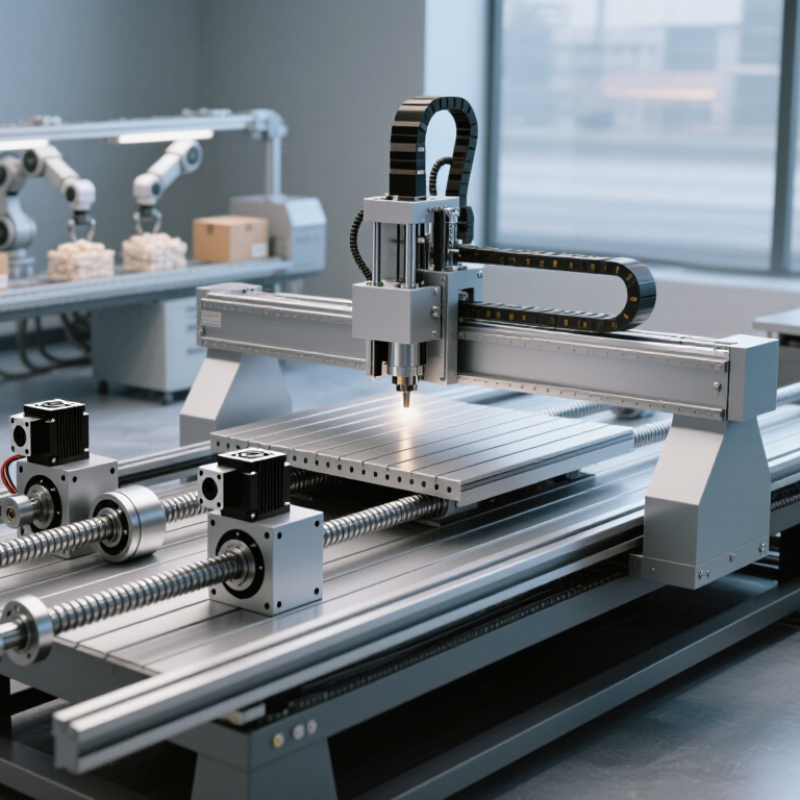
The best system is the one that meets the machine’s load, travel, accuracy, and cycle-time needs. There is no universal configuration. A two-axis gantry may need coordinated positioning, while a packaging machine may require several synchronized axes. Each axis combines a motor, drive, mechanical transmission, and feedback device. The controller coordinates motion and handles faults. Small details matter. A heavy vertical load, for example, may need a brake and careful tuning, not simply a larger motor.
The International Federation of Robotics reported 541,302 industrial robot installations worldwide in 2023 in World Robotics 2024. This is not a motion-system sales figure, but it shows the scale of automation placing demands on coordinated movement. When comparing systems, check continuous and peak torque, speed, inertia matching, encoder resolution, and controller update rate. Also confirm that drives support the required synchronization and safety functions.
Not just peak speed. A fast axis that overshoots a small target can reduce yield and increase wear. Real machines are messy; catalog calculations still need commissioning tests under actual loads.
Tip: Map each axis’s motion profile before selecting hardware. Record payload, stroke, acceleration, and duty cycle. Then test positioning and settling time with the real fixture. Leave margin, but avoid oversizing every component.

A credible comparison starts with measurement, not a brochure’s peak-speed claim. ISO 9283 defines test methods for industrial robot performance, including pose accuracy, pose repeatability, and path accuracy. For a multi-axis system, test the complete assembly under a stated payload, speed, and approach direction. Record the warm-up period and test location too. Temperature and mounting stiffness can shift results. Small differences matter.
Repeatability and accuracy are not interchangeable. A system may return to nearly the same point every time yet miss the commanded position consistently. Measure both, across multiple poses and repeated cycles. Report the mean error, spread, and test conditions; one impressive reading is not enough.
The International Federation of Robotics’ World Robotics 2024 report counted 541,302 industrial robot installations worldwide in 2023. That figure signals broad automation demand, not a performance ranking. ISO 9283 is robot-focused, so applying its methods to a motion platform may require documented adaptations. I would treat any single “best” score cautiously: cable drag, tool offset, and real operating loads can change the result.
For a multi-axis motion system in 2026, synchronization depends on more than choosing a fast network. EtherCAT can coordinate servo drives through distributed clocks, giving axes a shared timing reference. A 100 μs cycle-time benchmark is useful, but it is not a guarantee of precise motion. Actual performance depends on drive response, controller load, network configuration, and the number of active axes.
A practical commissioning check is to compare commanded and reported positions while several axes accelerate together. Watch for following error, timing variation, and uneven motion at transitions. A cycle time of 100 μs means the controller updates commands every 100 microseconds; it does not mean every mechanical axis responds perfectly within that interval. Cable layout and careful clock configuration matter. So does realistic testing.
Short cycles help. But they are not the whole story. A system should maintain stable timing under its expected traffic and workload, not just pass a lightly loaded bench test. Record cycle-time variation over a representative run, then inspect the traces for missed updates or rising position error. One awkward detail: reducing the cycle time can increase controller and network demands, and may add little value if the mechanics are the limiting factor. The right benchmark is repeatable synchronization under real operating conditions.
A strong multi-axis motion system must coordinate movement and respond predictably to safety demands. IEC 61800-5-2 covers safety-related power drive systems, including the Safe Torque Off function. STO prevents a drive from producing torque. It does not disconnect electrical power or guarantee that a moving load will stop. A vertical axis may still descend, and a spinning tool may coast. That distinction matters on the factory floor.
Tips: Check STO response times, channel architecture, diagnostics, and safety ratings against your risk assessment. Test each axis under realistic load conditions. Confirm how the system handles faults and restoration of power. Keep the test record.
Good commissioning is more than seeing a safety input change state. Observe the machine, verify that torque is removed as intended, and confirm that brakes or other protective measures address gravity and stored energy. A qualified safety engineer should validate the design against applicable requirements. Do not assume every axis behaves alike. Even a well-designed system can expose gaps in real operating conditions, so review the results and revise the safety design when needed.
What Is the Best Multi Axis Motion System in 2026?
System Selection: Payload, Travel, Throughput, and Total Cost of Ownership
The best multi-axis motion system is the one sized for the real task, not the largest specification sheet. Start with the complete moving load: product, gripper, cables, and fixtures. A 4-kilogram part can become a much heavier moving assembly. Check travel against the work area, including space for guards and maintenance access. That detail is easy to miss.
Tips: Record payload, axis travel, cycle time, and daily operating hours before comparing designs. Measure the actual work envelope, not just the part dimensions. Small errors add up.
Throughput depends on more than maximum speed. Acceleration, settling time, path complexity, and handoff delays all affect the cycle. It is easy to obsess over peak speed; we sometimes do. Yet a fast axis that vibrates or needs frequent adjustment may reduce usable output. Ask for cycle estimates using your motion profile, and verify them with representative loads where possible. For total cost of ownership, include installation, controls, energy, spare parts, service access, and expected downtime. A lower purchase price can cost more over several years. Still, forecasts are imperfect; leave room for change.
Compare the motion architecture with the actual payload, working envelope, accuracy, duty cycle, and installation environment. The figures below are broad, brand-neutral planning ranges—not guaranteed specifications. Verify each application against a supplier’s rated data and a representative cycle test.
| Motion Architecture | Typical Payload Range | Typical Travel or Working Envelope | Typical Positioning Performance | Throughput Considerations | Total Cost of Ownership (TCO) Considerations | Best-Fit Applications |
|---|---|---|---|---|---|---|
| Belt- or rack-driven Cartesian gantry Usually 2–3 linear axes | About 5–100 kg, depending on span, drive, and moving mass | Approximately 0.5–5 m per axis; long travel is a common strength | Often around ±0.05–0.2 mm repeatability in general-purpose configurations | Can achieve fast point-to-point moves over long distances. Settling time, payload inertia, and gantry racking can limit cycle rate. | Often economical for large work envelopes. Include frame and guarding, alignment, belt or rack maintenance, and floor-space costs. | Machine tending, packaging, palletizing, dispensing, and large-area pick-and-place |
| Ball-screw Cartesian stage Usually 1–3 linear axes | About 1–100 kg across different stage sizes and configurations | Commonly about 0.1–1.5 m per axis; longer strokes are possible but may reduce speed or stiffness | Typically around ±2–20 μm repeatability for appropriately configured stages | Good for controlled positioning and moderate-to-high cycle rates. Maximum speed and duty cycle depend on screw lead, critical speed, and thermal limits. | Moderate initial cost. Budget for lubrication, screw and bearing wear, alignment, and periodic replacement under high duty. | Inspection, assembly, dispensing, and automated test requiring precise linear positioning |
| Direct-drive linear-motor stage Usually 1–3 linear axes | About 1–50 kg for many precision configurations; larger loads require purpose-built systems | Commonly about 0.1–2 m per axis | Often around ±1–10 μm repeatability when paired with suitable feedback, structure, and controls | High acceleration and fast settling are possible because there is no screw or belt transmission. Heat management and motion-profile tuning matter at sustained high duty. | Higher initial cost and more demanding controls. Consider cooling, power electronics, feedback, and the cost of maintaining precision. | Semiconductor and electronics handling, high-speed inspection, and precision automation |
| SCARA robot Typically 4 axes | About 3–20 kg for common industrial-sized units | Horizontal reach is commonly about 0.4–1.0 m; vertical stroke is often about 0.1–0.3 m | Repeatability is commonly in the ±0.01–0.03 mm range, depending on model and conditions | Designed for fast planar pick-and-place and assembly. Actual cycle time depends heavily on distance, payload, orientation, and settling requirements. | Compact footprint and integrated motion can reduce cell complexity. Include tooling, safety equipment, programming, and application-specific integration. | Small-part assembly, sorting, loading, and high-cycle planar transfer |
| Six-axis articulated robot 6 rotary axes | About 3–300 kg across the range of industrial robot sizes | Reach is commonly about 0.5–3 m, depending on robot size and configuration | Repeatability is often around ±0.02–0.1 mm for general industrial classes; accuracy can differ from repeatability. | Provides flexible paths and orientations. Throughput varies with reach, payload, path, controller settings, and required process accuracy. | Can serve many tasks, but requires safety-rated guarding or scanners, end-of-arm tooling, integration, and skilled maintenance. | Welding, machine tending, material handling, dispensing, and tasks requiring varied orientations |
| Hexapod parallel platform 6 coordinated axes | From a few kilograms to over 100 kg in application-specific designs | Typically short translation ranges—often tens of millimetres—with angular motion commonly measured in degrees; exact range depends on geometry. | Can provide fine multi-axis motion; achievable accuracy depends on calibration, metrology, load, and workspace position. | Well suited to synchronized small motions and precise orientation changes. Limited travel makes it unsuitable as a substitute for a long-stroke gantry. | Specialized mechanics and control can raise initial and integration costs. Evaluate calibration, payload changes, and service requirements. | Optical alignment, vibration testing, precision simulation, and fine positioning |
Selection check: Compare systems using the same payload, tool, travel distance, path, settling tolerance, and duty cycle. For a credible throughput estimate, measure the full application cycle—including acceleration, deceleration, settling, process time, and part exchange. For TCO, include purchase and integration, energy, preventive maintenance, downtime, consumables, floor space, and expected service life.


For those larger-sized parts, or smaller quantity runs, we have 2 independent powder coat booths and ovens. The quality, durability and affordability of today’s powder coating finishes make this the process of choice for world-class companies.
Powder coating advantages over other forms of coating are many. Materials used in the Powder coating process can be metals and non-metals that come in a multitude of thicknesses, textures, colors, etc. Another of Powder coating’s biggest advantages over conventional coatings is its ability to create finishes in many different textures. Powder Coating Booths allow us the ability to apply these advantages to large products.
Tri-State Fabricators runs a full-service conveyor line for painting. Wet painting can provide protection or decoration to many different part styles. From start to finish, every project is easier to undergo random and point-based inspection by our skilled painting team.
Advantages to our Wet Paint Line are these lines start with product prep and ends with a thorough inspection of a high quality finished product. Our ability to complete large and small projects with a superior finish and doing so in a timely and economical fashion. This passes along the savings in production to our customers. When powder coating ins not an option, our Wet Paint Line gets the job done right the first time.
When the parts get big and heavy we roll-out our custom paint racks and oversize booth. By utilizing our partnerships with all the major paint brands, we can match virtually any color with wet paint.
The advantages of having access to a Wet Paint Booth are many. Large projects of many different shapes can be loaded into the booth. The Wet Paint Booth offers an environment that is much more controlled than a typical parts painting operation.
Not only are they used because of their controlled environment, but they’re are also advantageous when it comes to applying paint to parts that are needed in industries that require specialty coatings such as medical, aerospace, etc.
Our military forces have some very high standards when it comes to the finish of their vehicles and equipment. From the first pre-treatment step to final coat, it takes a great deal of knowledge and experience to protect the men and women of our armed forces. They deserve only the best, and Tri-State Fabricators provides it.
All of our processes are closely monitored by our staff and management teams. Both of which are highly trained in the processes of metal fabrication and finishing. Tri-State Fabricators’ goal is to always fully satisfy each and every customer, including the military. We will always put a 110% into what we do.
Abrasive media blasting is an excellent way to remove old paint, rust, and increase the paint/powder adhesion. Glass beads produce a much smoother and brighter finish than angular abrasives; leaving the part clean yet without any dimensional change. Chemically inert and environmentally friendly, we can recycle our beads approximately 30 times; making them a more preferred method of metal cleaning or surface finishing.
Advantages to Glass Bead Blasting are many. Glass bead blast media is used when a project is needing rough surfaces need to become smooth for applications of coatings such as paint. It is typically used to clean paint and rust from a product surface without deforming the surface it is being used on. Overall, compared to many other blasting media, Glass Bead Blasting is a very economical choice and those savings are always passed on to our customers.
Tri-State Fabricators utilize a zinc phosphate wash to clean and etch the material to ensure the best paint adhesion possible. The unique design of our 3-stage wash system does the work like a 5-stage. From Cleaning and rinsing to conversion coating and post-treatment, Our Part Washing process is a complete service and works throughout the fabrication service and the finishing service.
Along with the previously mentioned benefits, Curing is a vital chemical reaction that leaves the product finish hard and relatively safe from mild abrasion and aggressive corrosion. This process can be done in more than one way; ambient air-dry or in curing ovens at temps that exceed 240°.
From fixing paint mistakes (someone else’s of course) to simply cleaning our paint line hooks, our burn-off oven is put to good use. After a quick burn-off, a little clean up, and a fresh coat of paint, your parts will look better than new.
Why does our Burn-Off Oven work so well? Because super heating the air around parts turns the materials into ashes. From paint and powder coatings to rubber and machining oils, high temps do the job without degrading the integrity of the part.
Masking is a vital part of producing high quality products. We have die-cut masking patterns to protect machined surfaces as well as a wide range of plugs and caps to protect threaded holes and bolts. We provide permanent and temporary masking.
Masking allows the selected sections of a product to be protected from a fabrication or finishing service. This can be with both chemicals when etching and tapes, paints when only finishing just a section of the product. Masking is great in aiding the customization process of a project.
Screen printing is a photographic process that transfers artwork onto a porous nylon screen which allows colored ink to flow through the screen and be deposited on an aluminum or plastic component. We can generally have just about any design created onto a screen for your parts.
Some of the advantages of Screen Printing are, brand recognition for your business displaying on your products, assembly instructions, product warnings/hazards, etc. Tri-State Fabricators produces Screen Printing of the highest quality so you know it’s durable.
Metal Finishing is the art of treating the exterior portion of product, often metal but can also be made of other materials, so that the surface is clean and free of any debris. Then the process of applying coats or either paint of powder coat takes place. This coating process improves the quality of the product in both appearance and resistance to wear and corrosion.
Tri-State Fabricators, Inc., understands that a project typically isn’t complete until a high-quality finish has been added to your product. This is why our painting and powder coating teams continuously inspect the products throughout the Metal Finishing process.

