What Is the Best Microgrid Solution for 2026?

In 2026, the best Microgrid Solution will not be a single product or a fixed equipment package. It will be a system designed around a community’s actual loads, local energy resources, budget, and resilience goals. A rural clinic may need dependable backup for refrigeration and essential medical equipment. A factory may care more about peak demand, power quality, and keeping production lines running. The difference matters.

Microgrid pioneer Robert H. Lasseter described a microgrid as “a cluster of loads and microsources operating as a single controllable system that provides both power and heat to its local area.” That idea remains useful: generation, storage, controls, and loads must work together. In practice, that could mean rooftop solar, a battery room, switchgear, and a controller that can disconnect the site from the utility during an outage. The right design also needs clear operating plans, tested islanding controls, and maintenance support—not just impressive equipment specifications.

There is no universal winner. A strong solution should be sized using measured load data, realistic outage scenarios, and local resource conditions. It should also explain how it will be commissioned, monitored, and expanded. Those details are easy to overlook. And projections can be wrong; weather, demand, and equipment costs change. This guide compares the main options and the questions buyers should ask before choosing a Microgrid Solution for 2026.
What Is the Best Microgrid Solution for 2026?

What a Microgrid Solution Includes and How It Works

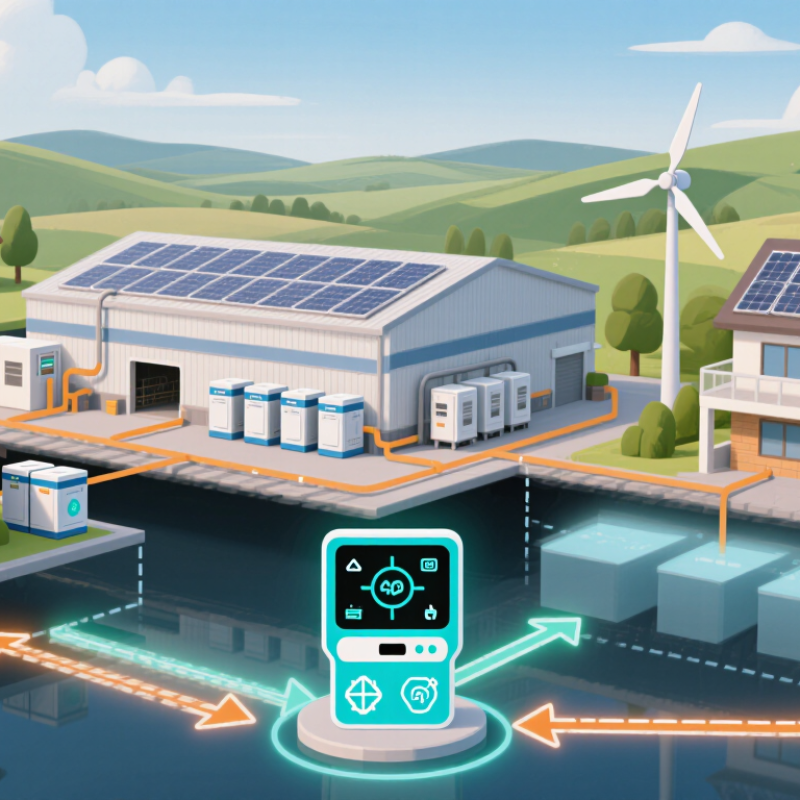
A microgrid is a local energy system built around specific buildings or facilities. It usually combines electricity sources, storage, controls, and switchgear. Sources may include rooftop solar or a generator, depending on site needs. Batteries store surplus power and release it when production falls or demand rises. A controller monitors output, battery charge, and electrical loads, then coordinates how power is used. Not magic.

When connected to the main grid, a microgrid can draw power from it and export electricity if its design allows. If the connection fails, protective equipment can separate the microgrid and let it operate independently. The controller may then reserve energy for critical loads, such as refrigeration, communications, or medical equipment. This islanded mode requires careful planning; a battery may not support every load through a long outage. Protection settings, equipment compatibility, and local operating conditions all matter. Commissioning should test real transitions, not just screen displays. Forecasts can be wrong, and that is worth admitting: reliable operation depends on clear priorities, maintained equipment, and people who know what the system can—and cannot—do.

Which Performance Criteria Matter Most in 2026

What Is the Best Microgrid Solution for 2026?
Which Performance Criteria Matter Most in 2026

The best microgrid is the one that meets a site’s real operating needs, not the one with the longest feature list. In 2026, compare reliability, islanding response, energy efficiency, and lifecycle cost. Ask how quickly the system can separate from the grid during an outage and keep critical loads running. Numbers need context. Check performance under changing demand, low renewable output, and equipment failure—not only under ideal conditions. Review maintenance access, replacement timelines, and whether the system can work with existing equipment.

Tips: Request measured results from comparable sites. Check how the supplier defines availability and includes downtime. Test controls during a planned outage, where safe and practical. A short test can reveal slow transitions or confusing alerts.

Cybersecurity and interoperability also deserve careful review. Confirm access controls, update procedures, data ownership, and how different energy assets exchange information. Ask for a clear explanation of system limits and support responsibilities. Test it live. No scorecard is perfect: a low-cost design may carry higher maintenance needs, while extra capacity can sit unused. Compare options using your site’s outage risks, load profile, and budget assumptions, then revisit those assumptions as conditions change.

What Is the Best Microgrid Solution for 2026?

Key performance criteria and illustrative project targets

A strong microgrid design balances resilience, reliability, clean energy, and efficiency. These illustrative targets are project-planning examples, not universal guarantees: critical-load service applies during an islanding event; availability is annual; renewable share is the fraction of annual electricity supplied by renewables; battery round-trip efficiency measures energy recovered versus energy stored; and emissions reduction is relative to a defined baseline.

How Grid-Connected, Islandable, and Remote Microgrids Differ

What Is the Best Microgrid Solution for 2026?

How Grid-Connected, Islandable, and Remote Microgrids Differ

The best fit depends on what happens when the utility line fails. A grid-connected microgrid exchanges power with the local network and can help manage peak demand. It suits campuses, factories, and commercial sites with reliable utility service. But it cannot necessarily keep critical loads running during an outage.

An islandable system adds protective switchgear, controls, and often batteries or onsite generation. When a feeder trips, it can disconnect and serve selected loads, such as refrigeration, pumps, or clinic equipment. That is not automatic. Operators need to test black-start procedures and confirm that generation can meet demand. The IEA’s Electricity 2024 report projects average global electricity-demand growth of 3.4% annually through 2026. That is a system-wide forecast, not a guarantee for any one microgrid.

Remote microgrids have no dependable utility connection. They must cover night loads, seasonal peaks, and delivery delays, often combining solar, storage, and dispatchable backup. The IEA’s Renewables 2024 report forecasts nearly 5,500 GW of renewable capacity growth over 2024–2030. Yet that global figure says little about a remote site’s battery replacement schedule or fuel deliveries. A design can look elegant on paper and still fail at 2 a.m. That detail gets missed.

How to Match Generation, Storage, and Controls to a Site

What Is the Best Microgrid Solution for 2026?

How to Match Generation, Storage, and Controls to a Site

The best microgrid starts with the site’s load, not a standard equipment package. Map hourly demand, critical circuits, seasonal peaks, and the time needed to operate independently. A clinic may prioritize operating rooms and refrigeration; a warehouse may need cold-storage compressors through a long outage. Small details matter. Meter data helps reveal them.

Then match generation to local resources and operating needs. Solar can reduce daytime grid purchases, while dispatchable generation may cover cloudy periods or sustained outages. Storage bridges short gaps, smooths peaks, and supports fast transitions. NREL’s 2024 Annual Technology Baseline uses about 85% round-trip efficiency for utility-scale lithium-ion batteries. That means usable energy is lower than the battery’s stated capacity. Duration matters more than a big nameplate number.

Controls must coordinate equipment against real priorities: which loads shed first, when batteries recharge, and how reserves are protected. The IEA’s Electricity 2024 report estimates data-centre electricity use could exceed 1,000 TWh globally by 2026, highlighting how quickly some sites’ loads can change. A design based on last year’s profile may age poorly. Still, forecasts are imperfect; validate assumptions with operators and interval-meter data. Test islanding, restart sequences, and fuel or solar availability before sizing the final system.

Which Microgrid Design Best Fits Each Use Case in 2026

A microgrid works best when its design matches the site’s daily loads, fuel access, and outage risks. In 2026, a remote community may need solar, battery storage, and dispatchable backup sized for several low-sun days. A hospital campus has different priorities: critical circuits, tested islanding controls, and enough stored energy to bridge outages. No design fits every site.

Tips: Map critical loads by hour, not just by total monthly use. Test islanding plans with facility staff. Keep room for future capacity.

For factories and commercial buildings, a grid-connected microgrid can coordinate rooftop generation, batteries, and flexible equipment. This may reduce peak demand, but only when operating schedules and tariffs support the investment. A data center may favor fast-response storage and redundant power paths. A farm may need simpler controls and backup that can run for longer periods. These are starting points, not guarantees.

Before choosing equipment, review interval meter data, outage history, available space, and maintenance skills. Model seasonal conditions, then test the design against a real operating scenario. The awkward part is that forecasts can be wrong. Revisit assumptions as loads change, and confirm that operators can manage the system safely.


Powder Coat Booths

For those larger-sized parts, or smaller quantity runs, we have 2 independent powder coat booths and ovens. The quality, durability and affordability of today’s powder coating finishes make this the process of choice for world-class companies.

Powder coating advantages over other forms of coating are many. Materials used in the Powder coating process can be metals and non-metals that come in a multitude of thicknesses, textures, colors, etc. Another of Powder coating’s biggest advantages over conventional coatings is its ability to create finishes in many different textures. Powder Coating Booths allow us the ability to apply these advantages to large products.

Wet Paint Line

Tri-State Fabricators runs a full-service conveyor line for painting. Wet painting can provide protection or decoration to many different part styles. From start to finish, every project is easier to undergo random and point-based inspection by our skilled painting team.

Advantages to our Wet Paint Line are these lines start with product prep and ends with a thorough inspection of a high quality finished product. Our ability to complete large and small projects with a superior finish and doing so in a timely and economical fashion. This passes along the savings in production to our customers. When powder coating ins not an option, our Wet Paint Line gets the job done right the first time.

Wet Paint Booths

When the parts get big and heavy we roll-out our custom paint racks and oversize booth. By utilizing our partnerships with all the major paint brands, we can match virtually any color with wet paint.

The advantages of having access to a Wet Paint Booth are many. Large projects of many different shapes can be loaded into the booth. The Wet Paint Booth offers an environment that is much more controlled than a typical parts painting operation.

Not only are they used because of their controlled environment, but they’re are also advantageous when it comes to applying paint to parts that are needed in industries that require specialty coatings such as medical, aerospace, etc.

Military CARC

Our military forces have some very high standards when it comes to the finish of their vehicles and equipment. From the first pre-treatment step to final coat, it takes a great deal of knowledge and experience to protect the men and women of our armed forces. They deserve only the best, and Tri-State Fabricators provides it.

All of our processes are closely monitored by our staff and management teams. Both of which are highly trained in the processes of metal fabrication and finishing. Tri-State Fabricators’ goal is to always fully satisfy each and every customer, including the military. We will always put a 110% into what we do.

Glass-Bead Blasting

Abrasive media blasting is an excellent way to remove old paint, rust, and increase the paint/powder adhesion. Glass beads produce a much smoother and brighter finish than angular abrasives; leaving the part clean yet without any dimensional change. Chemically inert and environmentally friendly, we can recycle our beads approximately 30 times; making them a more preferred method of metal cleaning or surface finishing.

Advantages to Glass Bead Blasting are many. Glass bead blast media is used when a project is needing rough surfaces need to become smooth for applications of coatings such as paint. It is typically used to clean paint and rust from a product surface without deforming the surface it is being used on. Overall, compared to many other blasting media, Glass Bead Blasting is a very economical choice and those savings are always passed on to our customers.

Part Washing

Tri-State Fabricators utilize a zinc phosphate wash to clean and etch the material to ensure the best paint adhesion possible. The unique design of our 3-stage wash system does the work like a 5-stage. From Cleaning and rinsing to conversion coating and post-treatment, Our Part Washing process is a complete service and works throughout the fabrication service and the finishing service.

Along with the previously mentioned benefits, Curing is a vital chemical reaction that leaves the product finish hard and relatively safe from mild abrasion and aggressive corrosion. This process can be done in more than one way; ambient air-dry or in curing ovens at temps that exceed 240°.

Burn-Off Oven

From fixing paint mistakes (someone else’s of course) to simply cleaning our paint line hooks, our burn-off oven is put to good use. After a quick burn-off, a little clean up, and a fresh coat of paint, your parts will look better than new.

Why does our Burn-Off Oven work so well? Because super heating the air around parts turns the materials into ashes. From paint and powder coatings to rubber and machining oils, high temps do the job without degrading the integrity of the part.

Masking

Masking is a vital part of producing high quality products. We have die-cut masking patterns to protect machined surfaces as well as a wide range of plugs and caps to protect threaded holes and bolts. We provide permanent and temporary masking.

Masking allows the selected sections of a product to be protected from a fabrication or finishing service. This can be with both chemicals when etching and tapes, paints when only finishing just a section of the product. Masking is great in aiding the customization process of a project.

Screen Printing

Screen printing is a photographic process that transfers artwork onto a porous nylon screen which allows colored ink to flow through the screen and be deposited on an aluminum or plastic component. We can generally have just about any design created onto a screen for your parts.

Some of the advantages of Screen Printing are, brand recognition for your business displaying on your products, assembly instructions, product warnings/hazards, etc. Tri-State Fabricators produces Screen Printing of the highest quality so you know it’s durable.

Metal Finishing

Metal Finishing is the art of treating the exterior portion of product, often metal but can also be made of other materials, so that the surface is clean and free of any debris. Then the process of applying coats or either paint of powder coat takes place. This coating process improves the quality of the product in both appearance and resistance to wear and corrosion.

Tri-State Fabricators, Inc., understands that a project typically isn’t complete until a high-quality finish has been added to your product. This is why our painting and powder coating teams continuously inspect the products throughout the Metal Finishing process.



