


What Are the Best Metal Molar Bands in 2026?

Choosing Metal Molar Bands in 2026 is not simply a matter of picking the strongest-looking ring. A band must fit the tooth securely, support the planned orthodontic appliance, and feel acceptable in daily use. Small details matter: a rounded edge, a well-positioned buccal tube, and clear size markings can affect placement and comfort. A poor fit may irritate the gums or loosen during treatment. Not glamorous, but important.

This guide explains how to compare bands by fit, material quality, design, sizing options, and manufacturer information. It also considers practical details, such as whether the tube aligns with the treatment plan and whether product instructions are clear. No single band is best for every patient or case. Tooth shape, bite, appliance design, and the orthodontist’s assessment all influence the choice. That part can be easy to overlook when product descriptions sound alike. Look for consistent specifications and ask a qualified orthodontic professional about suitability, rather than relying on appearance or price alone. The comparisons ahead aim to make those decisions clearer, while recognizing that even a carefully reviewed product may not suit every mouth.
What Are the Best Metal Molar Bands in 2026?

What Molar Bands Do: Tooth Coverage, Attachments, and Stainless-Steel Grades

What Are the Best Metal Molar Bands in 2026?
What Molar Bands Do: Tooth Coverage, Attachments, and Stainless-Steel Grades

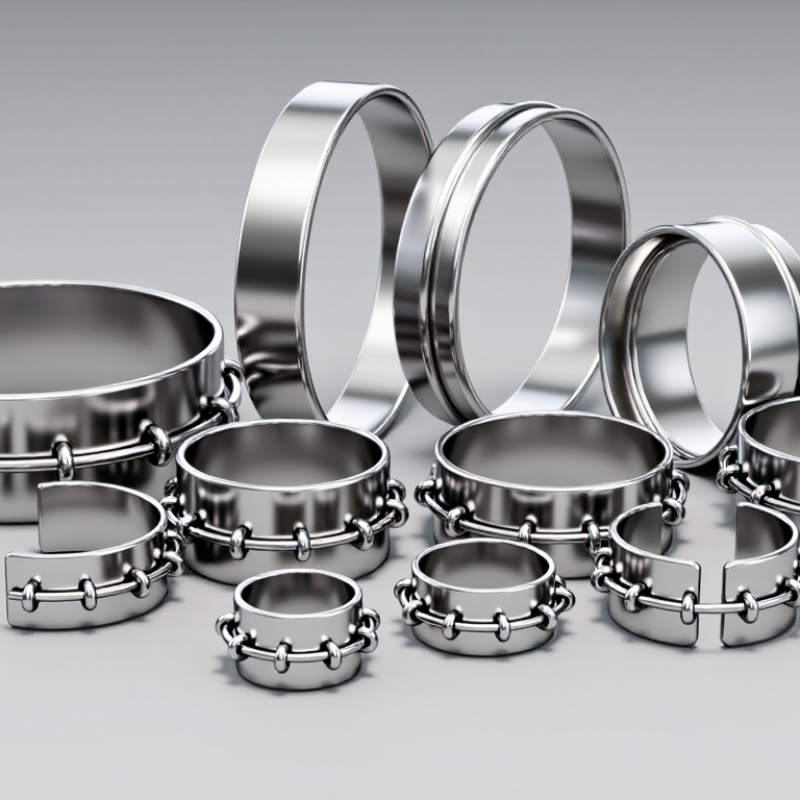
A molar band is a thin metal ring fitted around a back tooth and secured with dental cement. It covers more of the tooth than a small bonded attachment, helping provide stable support during orthodontic treatment. The band’s edges should sit comfortably near the gumline without pinching tissue. Fit matters. A band that feels loose may need clinical adjustment, while excessive tightness is not a sign of better performance.

Tips: Notice how the band feels when you bite and brush. Report persistent soreness, a loose fit, or irritation to your orthodontic professional. Keep the area clean; food can collect around the band’s edges and attachments.

Bands may carry tubes, hooks, or other attachments that connect with archwires or elastics. Their placement and shape depend on the treatment plan, not appearance alone. Stainless-steel grades can differ in composition and properties, but a grade label by itself does not establish comfort or suitability. Ask your clinician which material is being used and why. Small details count. Even a well-made band can feel awkward at first, and individual tooth shape can make fitting less predictable.


What Are the Best Metal Molar Bands in 2026?

Molar bands fit around a molar to provide coverage and a base for orthodontic attachments. The chart compares minimum chromium, nickel, and molybdenum content specified for two common stainless-steel grades; it is a material reference, not a claim about the grade used in any particular dental band.

Values show specification minimums by mass, based on ASTM A240 composition ranges. A zero indicates no minimum requirement for that element, not necessarily zero content. Actual dental-band materials and attachments vary; check product specifications and consult an orthodontic professional for selection.

How 304 Steel Compares: ASTM A240 Specifies 18–20% Chromium and 8–10.5% Nickel

A metal molar band’s alloy is a useful starting point, but it cannot tell the whole story. ASTM A240/A240M specifies Grade 304 stainless steel with 18–20% chromium and 8–10.5% nickel. Chromium helps form a protective surface oxide, while nickel supports the alloy’s austenitic structure and formability. These are composition limits, not guarantees of fit, weld quality, or performance in the mouth. Small details matter.

For orthodontic bands, ISO 27020:2019 covers bands, tubes, and related accessories. A “304” label alone does not establish that a finished band meets every relevant requirement. Check its material traceability and conformity documentation, and look for evidence addressing corrosion resistance and nickel release. A standard is a benchmark, not a substitute for product-specific records. That distinction is easy to miss.

Tips: Compare the material certificate with ASTM A240/A240M, then inspect the band’s edges, welds, and fit. Smooth edges are easy to overlook. They still matter.

How to Judge Fit and Retention: Read Clinical Bond-Strength Results in MPa

What Are the Best Metal Molar Bands in 2026?

A strong MPa result can be useful, but it cannot prove that a molar band fits well. MPa means force per unit area, and laboratory values depend on the test setup, cement, tooth preparation, and loading direction. Reynolds’ review in the British Journal of Orthodontics (1975) is often cited for a 5.9–7.8 MPa range in orthodontic bonding. That figure concerns bracket bonding, not a validated pass mark for molar bands. The distinction matters.

For bands, check whether a study reports peak force in newtons or calculates stress in MPa, and ask how it defined bonded area. A curved band’s contact area is difficult to measure consistently. ISO/TS 11405:2015 outlines methods for testing adhesion to tooth structure, but it does not set a clinical threshold for band retention. Look for clear methods, sample sizes, tooth types, cement details, and failure descriptions. In practice, close adaptation, stable seating, and intact cement margins matter alongside lab strength. No rocking. No obvious gaps. A high number can still mislead if the band was poorly fitted or the test conditions differ from clinical use.

How to Check Corrosion Resistance: Apply Dental Alloy Tests in ISO 10271

What Are the Best Metal Molar Bands in 2026?

The best molar band is not simply the shiniest one. Its alloy should resist corrosion in the mouth, where saliva, food acids, and plaque create changing conditions. ISO 10271:2020 provides standardized methods for assessing corrosion in dental metallic materials. Its immersion procedure exposes specimens to a defined test solution at 37°C for seven days. That controlled period allows laboratories to compare material behavior under repeatable conditions. Looks can deceive.

For a meaningful comparison, ask whether testing followed ISO 10271 and request the test method and results. Mass loss and released metal ions can reveal changes that a visual inspection may miss. A pass in one laboratory test does not guarantee identical performance in every patient’s mouth. Real exposure varies with diet, oral hygiene, and appliance design. That limitation matters.

Tips: Check for an ISO 10271 test report, not just a corrosion-resistant claim. Confirm the alloy and test conditions match the band being considered. Keep the report; small differences in preparation can affect results.

How to Choose a Band: Match Tooth, Tube, Cement, and Nickel Sensitivity

What Are the Best Metal Molar Bands in 2026?
How to Choose a Band: Match Tooth, Tube, Cement, and Nickel Sensitivity

The best band is the one that fits the specific molar and treatment plan—not simply the one that looks sturdy. Molar shapes vary, even within the same mouth. During fitting, an orthodontist checks that the band seats fully, does not pinch the gums, and stays clear of the bite. A built-in tube must also match the planned archwire and attachment setup. Small details matter.

Cement choice affects how securely a band stays in place. The tooth must be clean and dry during placement, and the orthodontist should check the fit before cementing. If you have a known nickel sensitivity, mention it before treatment. Some stainless-steel appliances contain nickel, so ask whether a suitable alternative is available. Symptoms and sensitivities vary; do not assume a past reaction confirms an allergy. I used to think material was the main decision, but fit and clinical checks deserve equal attention.

Tips: Bring a list of past metal reactions. Ask what material the band contains, whether the tube suits your plan, and how to care for the area. If a band feels loose or irritates your gum, contact your orthodontist rather than trying to adjust it yourself.

What Are the Best Metal Molar Bands in 2026? — How to Choose a Band: Match Tooth, Tube, Cement, and Nickel Sensitivity

Selection factor What to match Practical selection guidance What to check
Tooth and fit The individual tooth’s shape, size, eruption, and available clinical space. Choose a band that seats fully and closely around the intended tooth without rocking or excessive pressure. Band size is tooth-specific; a size that fits one molar may not fit another. Confirm the band is fully seated and does not interfere with the bite or irritate nearby tissues. Final selection and fitting should be performed by an orthodontic professional.
Tooth position Whether the band is intended for a first molar, second molar, or another tooth requiring a band. Use a band designed for the tooth being treated. A band should not be selected by age or a general size chart alone, since tooth dimensions and eruption vary. Check the tooth’s clinical condition and whether there is enough erupted tooth structure for stable placement.
Buccal tube The archwire dimensions and the prescribed tube configuration and prescription. Match the tube slot and configuration to the orthodontist’s treatment plan. Single, double, and triple tube designs serve different appliance needs; more tubes are not automatically better. Verify tube orientation, arch, and prescription, and ensure the intended wire and auxiliary components are compatible.
Band material Strength, corrosion resistance, and the patient’s material sensitivities. Orthodontic metal bands are commonly made from stainless steel. The precise composition varies by product, so material suitability should not be assumed from appearance alone. Review the material declaration when a metal allergy or sensitivity is known or suspected.
Nickel sensitivity Documented history of contact allergy or reactions to nickel-containing jewelry or dental materials. Many stainless-steel orthodontic appliances contain nickel. For a patient with a known or suspected nickel allergy, discuss a verified nickel-free or otherwise suitable alternative with the orthodontist before placement. Do not rely on a “hypoallergenic” label alone. Confirm the actual composition and seek clinical advice; suspected allergy may require assessment by a qualified healthcare professional.
Band cement Moisture control, retention needs, and the clinician’s bonding protocol. Glass-ionomer and resin-modified glass-ionomer cements are commonly used for orthodontic banding. The clinician selects the cement based on the case and follows its instructions for use. Check isolation, tooth preparation, seating, and cleanup. Cement choice and handling affect retention and should be managed by a trained clinician.
Oral condition Tooth integrity, gum health, and the patient’s ability to maintain hygiene around the appliance. Assess the tooth and surrounding tissues before banding. A band may not be appropriate until active dental or gum problems have been addressed. Plan regular hygiene and orthodontic follow-up. Contact the orthodontist if a band loosens, causes persistent pain, or damages nearby tissue.
Overall choice Fit, tube prescription, cement protocol, and material compatibility together. The best band is the one that fits the specific tooth, supports the prescribed appliance, can be cemented appropriately, and is suitable for the patient’s material history. Have the orthodontist confirm all four factors— tooth, tube, cement, and sensitivity—before placement.

Note: This table provides general educational guidance, not a diagnosis or a substitute for individualized orthodontic care. Product composition and clinical suitability can vary.

Powder Coat Booths

For those larger-sized parts, or smaller quantity runs, we have 2 independent powder coat booths and ovens. The quality, durability and affordability of today’s powder coating finishes make this the process of choice for world-class companies.

Powder coating advantages over other forms of coating are many. Materials used in the Powder coating process can be metals and non-metals that come in a multitude of thicknesses, textures, colors, etc. Another of Powder coating’s biggest advantages over conventional coatings is its ability to create finishes in many different textures. Powder Coating Booths allow us the ability to apply these advantages to large products.

Wet Paint Line

Tri-State Fabricators runs a full-service conveyor line for painting. Wet painting can provide protection or decoration to many different part styles. From start to finish, every project is easier to undergo random and point-based inspection by our skilled painting team.

Advantages to our Wet Paint Line are these lines start with product prep and ends with a thorough inspection of a high quality finished product. Our ability to complete large and small projects with a superior finish and doing so in a timely and economical fashion. This passes along the savings in production to our customers. When powder coating ins not an option, our Wet Paint Line gets the job done right the first time.

Wet Paint Booths

When the parts get big and heavy we roll-out our custom paint racks and oversize booth. By utilizing our partnerships with all the major paint brands, we can match virtually any color with wet paint.

The advantages of having access to a Wet Paint Booth are many. Large projects of many different shapes can be loaded into the booth. The Wet Paint Booth offers an environment that is much more controlled than a typical parts painting operation.

Not only are they used because of their controlled environment, but they’re are also advantageous when it comes to applying paint to parts that are needed in industries that require specialty coatings such as medical, aerospace, etc.

Military CARC

Our military forces have some very high standards when it comes to the finish of their vehicles and equipment. From the first pre-treatment step to final coat, it takes a great deal of knowledge and experience to protect the men and women of our armed forces. They deserve only the best, and Tri-State Fabricators provides it.

All of our processes are closely monitored by our staff and management teams. Both of which are highly trained in the processes of metal fabrication and finishing. Tri-State Fabricators’ goal is to always fully satisfy each and every customer, including the military. We will always put a 110% into what we do.

Glass-Bead Blasting

Abrasive media blasting is an excellent way to remove old paint, rust, and increase the paint/powder adhesion. Glass beads produce a much smoother and brighter finish than angular abrasives; leaving the part clean yet without any dimensional change. Chemically inert and environmentally friendly, we can recycle our beads approximately 30 times; making them a more preferred method of metal cleaning or surface finishing.

Advantages to Glass Bead Blasting are many. Glass bead blast media is used when a project is needing rough surfaces need to become smooth for applications of coatings such as paint. It is typically used to clean paint and rust from a product surface without deforming the surface it is being used on. Overall, compared to many other blasting media, Glass Bead Blasting is a very economical choice and those savings are always passed on to our customers.

Part Washing

Tri-State Fabricators utilize a zinc phosphate wash to clean and etch the material to ensure the best paint adhesion possible. The unique design of our 3-stage wash system does the work like a 5-stage. From Cleaning and rinsing to conversion coating and post-treatment, Our Part Washing process is a complete service and works throughout the fabrication service and the finishing service.

Along with the previously mentioned benefits, Curing is a vital chemical reaction that leaves the product finish hard and relatively safe from mild abrasion and aggressive corrosion. This process can be done in more than one way; ambient air-dry or in curing ovens at temps that exceed 240°.

Burn-Off Oven

From fixing paint mistakes (someone else’s of course) to simply cleaning our paint line hooks, our burn-off oven is put to good use. After a quick burn-off, a little clean up, and a fresh coat of paint, your parts will look better than new.

Why does our Burn-Off Oven work so well? Because super heating the air around parts turns the materials into ashes. From paint and powder coatings to rubber and machining oils, high temps do the job without degrading the integrity of the part.

Masking

Masking is a vital part of producing high quality products. We have die-cut masking patterns to protect machined surfaces as well as a wide range of plugs and caps to protect threaded holes and bolts. We provide permanent and temporary masking.

Masking allows the selected sections of a product to be protected from a fabrication or finishing service. This can be with both chemicals when etching and tapes, paints when only finishing just a section of the product. Masking is great in aiding the customization process of a project.

Screen Printing

Screen printing is a photographic process that transfers artwork onto a porous nylon screen which allows colored ink to flow through the screen and be deposited on an aluminum or plastic component. We can generally have just about any design created onto a screen for your parts.

Some of the advantages of Screen Printing are, brand recognition for your business displaying on your products, assembly instructions, product warnings/hazards, etc. Tri-State Fabricators produces Screen Printing of the highest quality so you know it’s durable.

Metal Finishing

Metal Finishing is the art of treating the exterior portion of product, often metal but can also be made of other materials, so that the surface is clean and free of any debris. Then the process of applying coats or either paint of powder coat takes place. This coating process improves the quality of the product in both appearance and resistance to wear and corrosion.

Tri-State Fabricators, Inc., understands that a project typically isn’t complete until a high-quality finish has been added to your product. This is why our painting and powder coating teams continuously inspect the products throughout the Metal Finishing process.
