China Best MCB Riveting Machine Manufacturer?
Choosing the China best MCB riveting machine manufacturer requires more than comparing prices or polished factory photographs. A reliable supplier should understand miniature circuit breaker production, not merely assemble equipment. The right MCB Riveting Machine must deliver consistent rivet height, stable feeding, accurate pressure, and repeatable cycle times. These details directly affect terminal strength and finished product safety.
Experienced manufacturers usually support customers from sample testing to line installation. Ask for recorded test results, component specifications, maintenance guidance, and clear acceptance criteria. Inspect the riveting head, feeding mechanism, sensors, control system, and emergency protection features. A professional factory should explain how it controls vibration, misalignment, and rivet deformation. It should also provide traceable quality records and practical after-sales support.
No supplier is perfect. That matters. A brochure may promise high speed, while production reveals jams during long shifts. A lower quotation may exclude tooling, training, or spare parts. The strongest candidates welcome factory audits, video demonstrations, and sample validation using your actual MCB components. They should discuss applicable quality requirements without making unsupported certification claims. Their engineers should answer specific questions clearly, even when a limitation exists. This transparency builds trust better than exaggerated guarantees. When evaluating a China-based partner, consider technical capability, response time, export experience, customization depth, and long-term service. The best choice is not always the largest manufacturer. It is the supplier that proves stable performance, communicates honestly, and helps your production team improve over time.
What Is an MCB Riveting Machine?
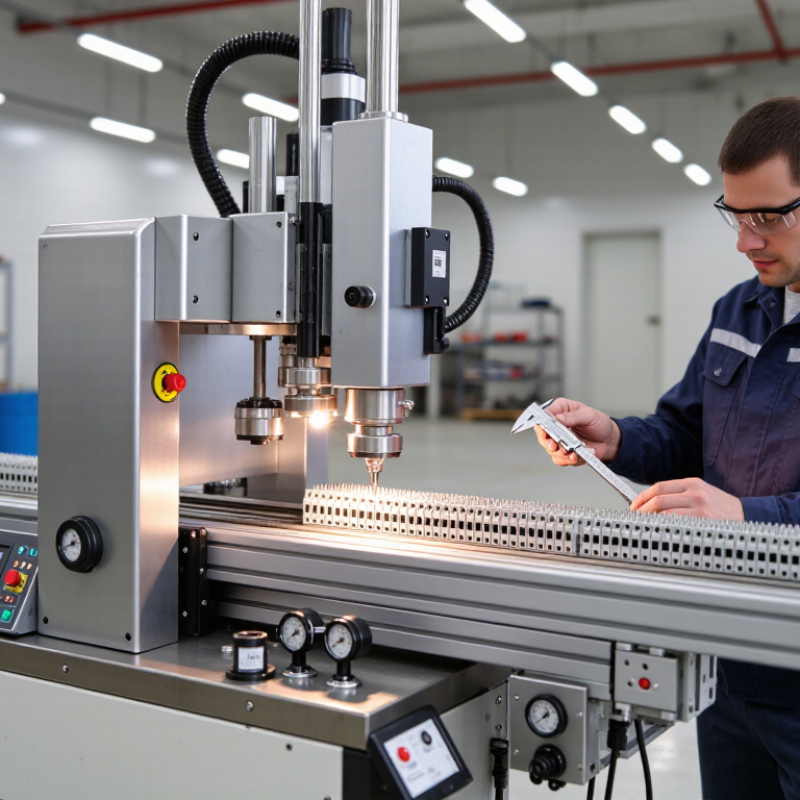
An MCB riveting machine is specialized equipment used to join selected components inside a miniature circuit breaker. It commonly secures terminals, contact supports, and mechanism plates with controlled rivets. It is not simply a press with a faster cycle. It is a controlled joining system.
During operation, a feeder presents each rivet to the tooling area. A punch then forms the rivet head with measured force and stroke. Pneumatic, hydraulic, or servo-driven systems may be used, depending on production requirements. Sensors can check part presence, rivet position, and incomplete forming. The machine should also prevent a cycle when an assembly is incorrectly placed.
In practical production, tooling accuracy matters as much as machine speed. A loose rivet may cause movement, while excessive force can deform nearby insulating parts. Small alignment errors create larger problems later. The first setup is rarely perfect. Engineers usually adjust feed timing, punch height, and pressure after sample testing. I would not judge a machine by cycle time alone. Stable riveting, repeatable dimensions, easy maintenance, and clear inspection records are more meaningful. Operators should examine rivet heads, joint tightness, and component movement at regular intervals. A camera inspection system can help, but it cannot replace sensible mechanical checks. Mistakes still happen. That is why process records and scheduled tooling inspections remain essential.
What Is an MCB Riveting Machine?
An MCB riveting machine is automated equipment used to assemble miniature circuit breakers by fastening internal components with rivets. Since each pole normally has two external terminal connection points, the terminal count increases with the number of poles. This structure helps determine the required assembly tooling and riveting sequence.
Key Features of a Reliable MCB Riveting Machine
China Best MCB Riveting Machine Manufacturer?
Key Features of a Reliable MCB Riveting Machine
A reliable MCB riveting machine should deliver stable force, accurate positioning, and repeatable results. During practical production checks, operators often inspect rivet height, head shape, and contact alignment. Small details matter. Even a slight offset can affect assembly quality and later testing.
A precision servo system helps control riveting pressure and stroke length. Sensors should confirm component placement before each cycle begins. Force monitoring can detect missing parts, loose rivets, or abnormal resistance. A clear control panel also allows technicians to adjust speed and pressure without confusion. Safety guarding, emergency stops, and interlocked doors are essential for responsible operation.
Tooling deserves equal attention. Hardened dies should resist wear and remain easy to replace. The machine should support quick setup for different MCB specifications. Maintenance access must be practical, especially around the riveting head and feeding system. I have seen equipment perform well during early trials but lose accuracy after poor cleaning. That weakness needs honest attention. No machine is perfect. A dependable manufacturer should provide test records, operator training, spare-part guidance, and responsive technical support. Production data, sample rivets, and inspection results offer stronger evidence than attractive specifications alone.
How to Choose the Best MCB Riveting Machine Manufacturer
Choosing the best MCB riveting machine manufacturer in China requires more than comparing prices. Start with the machine’s practical performance. Ask for the riveting cycle, feeding accuracy, compatible MCB sizes, and acceptable rivet tolerance. A reliable manufacturer should provide sample test results, layout drawings, and clear technical specifications.
Visit the factory or request a live video inspection. Look for organized assembly areas, traceable component records, and documented quality checks. During evaluation, test several batches of MCB housings, not just one successful sample. Check rivet height, pressure stability, noise, and operator safety. Small variations can become costly production defects.
Technical support matters after delivery. Confirm installation guidance, training, spare-part availability, software access, and response times. Ask for references from comparable electrical component manufacturers, while verifying those claims independently. A strong supplier should explain maintenance intervals and common failure points without hiding limitations.
A polished brochure is not proof. I have seen machines perform well during demonstrations but struggle with continuous feeding. That weakness deserves attention before signing a contract.
Also review warranty terms, inspection procedures, and export documentation carefully. The best choice is the manufacturer that combines stable engineering, honest communication, and measurable after-sales support.
Quality Standards and Manufacturing Capabilities to Evaluate
Choosing the best MCB riveting machine manufacturer requires more than comparing prices or polished factory photographs. A reliable evaluation starts with measurable quality standards, documented testing, and practical production experience.
Ask for riveting force records, stroke accuracy, cycle-time data, and tool-life estimates. The machine should maintain stable pressure across repeated operations. Small variations can loosen a rivet or damage the breaker housing. Request sample parts from your own MCB design. Inspect rivet height, joint strength, surface marks, and electrical assembly clearance. Real samples reveal more than brochures.
Manufacturing capability also matters. Check whether the supplier designs feeders, fixtures, controls, and replacement tooling internally. A capable engineering team should explain tolerance control in clear technical language. Review calibration records, inspection plans, software version control, and operator training documents. Traceability is essential. Each machine should support production records linked to batches, settings, and maintenance actions.
Factory experience is visible on the workshop floor. Look for controlled assembly areas, inspection equipment, spare-part storage, and technicians who understand failure analysis. Ask how they handle feeder jams, misalignment, and inconsistent rivet batches. Their answer should include evidence, not promises. One weakness deserves attention: even a well-built machine may need adjustment after installation. Material hardness, ambient conditions, and operator habits can affect performance. A careful manufacturer acknowledges this limitation and provides commissioning support, acceptance criteria, and corrective procedures.





