


What Is the Best Manual Ceramic Coffee Grinder in 2026?

Choosing the best Manual Ceramic Coffee Grinder in 2026 depends on more than its burr material or price. A grinder should feel steady in your hand, turn without excessive effort, and produce grounds suited to your brewing method. Small details matter.

This guide compares practical features: grind adjustment, consistency, capacity, handle comfort, cleaning, and portability. Ceramic burrs can resist corrosion, but they do not automatically guarantee an even grind. Burr alignment and the grinder’s overall construction also matter. For pour-over, uneven particles may create a flat or bitter cup. For a French press, a coarse setting should remain reasonably consistent, not swing from dust to oversized chunks.

Daily use reveals the trade-offs. A narrow handle may become tiring when grinding beans for two cups. A compact body may fit neatly in a travel bag, yet hold too few beans for a household. Some adjustment systems are precise but fiddly. Not always a deal-breaker.

A trustworthy recommendation should explain how each model performs, where it falls short, and who is likely to appreciate it. It should distinguish manufacturer claims from observable features and avoid treating one grinder as ideal for every kitchen. The perfect choice may not exist. This comparison will help you weigh convenience, grind quality, durability, and value before choosing a Manual Ceramic Coffee Grinder that suits your routine.
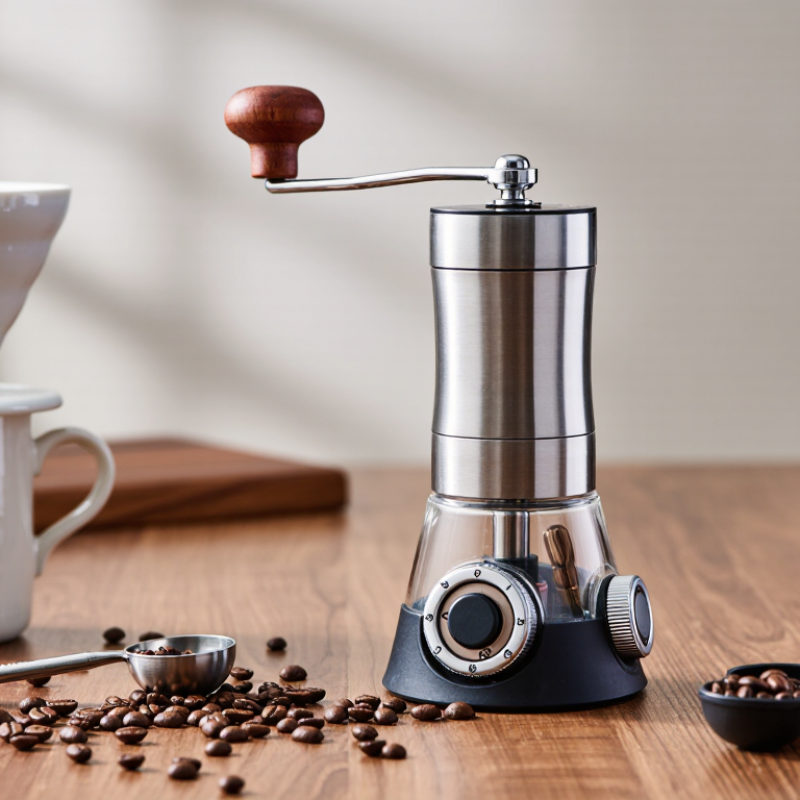
What Is the Best Manual Ceramic Coffee Grinder in 2026?

What Defines a Manual Ceramic Coffee Grinder?

A manual ceramic coffee grinder is defined by its hand-powered mechanism and ceramic burrs, not by a ceramic outer body. Turning the crank moves beans between two burrs, which crush them into grounds. A stable handle, secure shaft, and clear adjustment dial make daily use easier. Small details matter.

Ceramic burrs resist rust and can stay sharp with careful handling, but they are not automatically better than steel. Their performance depends on alignment, burr shape, and how evenly the grinder holds its setting. A light, uneven grind can make a cup taste both thin and bitter. Ceramic can also chip if dropped, so durability deserves a closer look.

Tips: Set the grind before brewing, then adjust in small steps. For pour-over coffee, check whether the grounds look fairly even, not perfectly identical. Brush out dry residue; avoid soaking parts unless the maker’s care instructions allow it. Keep notes on grind settings and taste. It helps. A grinder may feel smooth yet produce inconsistent grounds, so judge it by the coffee as well as the crank. No single burr material suits every brewer.


How Ceramic Burrs Grind Coffee Beans

Ceramic burrs grind coffee by drawing beans between two ridged surfaces. As the handle turns, the beans break into smaller pieces, then pass through the gap between the burrs. A tighter gap usually produces finer grounds; a wider one leaves them coarser. The adjustment clicks should feel steady, not loose. That matters.

With a manual grinder, you can feel resistance change as beans move through the burrs. A light, even turn is easier to control than forcing the handle through a jam. Ceramic burrs are hard and resist wear, but they can chip if dropped or struck. Their material alone does not guarantee an even grind. Burr alignment, adjustment design, and bean freshness matter too.

For a practical check, grind a small dose and look for a consistent texture. French press grounds should resemble coarse sand, while espresso needs a much finer setting. Some variation is normal. Not perfectly. In real use, a few dusty particles may cling inside the chamber, and cleaning can take longer than expected. A good manual ceramic grinder should adjust reliably, feel comfortable in the hand, and produce grounds suited to your brewing method.

Which Features Matter When Comparing Grinders in 2026?

What Is the Best Manual Ceramic Coffee Grinder in 2026? Which Features Matter When Comparing Grinders in 2026?

A useful comparison starts with grind consistency, not the number of settings printed on a dial. Uneven particles can extract at different rates, leaving a cup both sharp and flat. The Specialty Coffee Association’s Brewing Control Chart identifies 18–22% extraction yield and 1.15–1.35% brew strength as reference ranges for brewed coffee. A grinder cannot guarantee those results, but repeatable particle size makes them easier to pursue. Check whether adjustments are fine enough for your brewing method, from coarse French press grounds to powdery espresso settings. More clicks are not automatically better.

For daily use, assess handle comfort, capacity, cleaning, and burr alignment. A long handle can ease grinding, but it may make packing less convenient. Ceramic burrs resist corrosion, though their performance still depends on careful construction and handling. Ask whether the inner burr stays stable while grinding; wobble can undermine consistency. A clear adjustment scale helps, but tiny markings can be hard to read in a dim kitchen. There is no perfect design. Your preferred brewing method matters more than a feature list.

Tips: Grind the same dose at two settings and compare the grounds on white paper. Look for obvious boulders and dust. Note the time and effort, too; a grinder that performs well but strains your wrist may not suit everyday use. SCA targets are useful benchmarks, not a promise that every cup will taste balanced.

What Is the Best Manual Ceramic Coffee Grinder in 2026? — Which Features Matter When Comparing Grinders in 2026?

A practical comparison guide for evaluating manual grinders with ceramic burrs. The best choice depends on brewing method, dose size, grind consistency, and ease of use.

Comparison Dimension What Is Factually Different? What to Check Who Should Prioritize It?
Burr material Ceramic burrs resist corrosion and are hard, but ceramic is more brittle than steel and can chip if dropped or struck by a hard object. Material alone does not determine grind quality. Look for securely mounted burrs, a stable central shaft, and clear care instructions. Do not assume ceramic automatically produces more uniform grounds. People who want corrosion-resistant burrs and are willing to handle the grinder carefully.
Grind adjustment Grinders differ in how many adjustment positions they offer and whether settings are stepped or continuously adjustable. More settings can make fine-tuning easier, but do not guarantee better results. Check that adjustments are repeatable and cover the settings you need, from fine espresso-style grinding to coarse immersion brewing. Brewers who switch between methods or regularly fine-tune recipes.
Grind range Espresso-style brewing generally needs a finer grind than pour-over, while French press and cold-brew recipes commonly use coarser grounds. A grinder’s usable range is model-specific. Confirm that the grinder can reach your intended setting and return to a previous setting reliably. If possible, test it with your brewing method. Anyone comparing grinders for a particular brewing method, especially espresso-style brewing.
Particle consistency Grind uniformity affects extraction: a broad spread of particle sizes can cause finer particles to extract faster than coarser ones. Burr alignment and construction matter alongside burr material. Look for stable burr alignment and independent testing or a hands-on assessment at the settings you use. Avoid judging consistency by burr material alone. Pour-over and espresso-style brewers seeking more repeatable extraction.
Capacity and dose Bean capacity varies by grinder. The amount that fits in a hopper is not necessarily the same as the amount you need for one brew. Compare the stated bean capacity with your usual dose. Check whether you will need to grind in multiple batches for larger brews. People making multiple cups at once or preparing coffee for more than one person.
Crank and handle Handle length, grip shape, and crank stability affect leverage and comfort. Finer settings and harder beans can require more effort when grinding by hand. Check whether the handle folds or detaches for storage, whether the knob is comfortable, and whether the crank feels secure during use. Daily users, travelers, and anyone who finds hand grinding tiring.
Body and portability Body materials and dimensions affect weight, durability, and packability. A compact grinder is easier to carry, but may have a smaller capacity. Compare the grinder’s listed weight and dimensions with your storage space or travel setup. Check that the grounds container attaches securely. Campers, travelers, and people with limited kitchen storage.
Cleaning and maintenance Ground coffee residue and oils can accumulate around burrs and in the grounds chamber. Cleaning access differs by design; water-cleaning suitability depends on the manufacturer’s instructions. Check whether the burr assembly can be accessed without special tools and follow the product’s cleaning guidance. Dry parts fully before reassembly when required. Users who change beans often or want straightforward routine maintenance.
Build and replacement parts Bearings, shafts, adjustment parts, and containers vary between designs. A repairable grinder may remain useful longer if compatible replacement parts are available. Check warranty terms, spare-part availability, and whether the grinder can be disassembled for service. Buyers who value long-term use and repairability over the lowest initial price.
Overall suitability There is no single best grinder for every user: brewing method, required dose, portability, adjustment range, and comfort all affect the choice. Rank your top three needs first, then compare grinders against those needs rather than relying on one feature or a broad “best” label. All buyers comparing manual ceramic coffee grinders in 2026.

Practical takeaway: Choose a grinder with a usable adjustment range for your brew method, stable burr alignment, a comfortable crank, and a capacity that matches your normal dose. Ceramic burrs are one consideration—not a stand-alone measure of performance.

How to Assess Grind Consistency, Capacity, and Ease of Use

What Is the Best Manual Ceramic Coffee Grinder in 2026?

Grind consistency matters more than a long list of settings. Brew the same coffee several times, using one grind setting and a scale. Look for similar drawdown times and balanced flavors, not just particles that appear uniform. The Specialty Coffee Association’s Brewing Standards recommend 55 grams of coffee per liter of water, with a target beverage strength of 1.15–1.35% TDS and extraction yield of 18–22%. These values offer useful brewing benchmarks, though they do not measure grinder quality directly. A tidy grind chart cannot predict every cup.

Capacity should match your usual recipe. Check whether the hopper holds enough beans for one full brew, then weigh the dose rather than trusting the markings. For a single cup, a small chamber may be convenient; for several servings, repeated loading gets tedious. Manual ceramic grinders can also vary in crank resistance, so test one with the beans you actually use. Harder beans may make a stiff handle feel worse.

Ease of use shows up in small details: clear adjustment clicks, a secure handle, and grounds that empty without tapping the counter repeatedly. Note how easily you can return to a previous setting. One honest caveat: hand-grinding takes time. If you rush, inconsistent cranking can undermine an otherwise capable burr set. Compare results across several brews, not just one morning.

How to Choose a Grinder for Your Brewing Method

What Is the Best Manual Ceramic Coffee Grinder in 2026?
How to Choose a Grinder for Your Brewing Method

The best grinder is the one that suits your brew method and makes repeatable adjustments. For pour-over, start with a medium grind; for French press, try a coarser setting. Espresso needs a much finer grind and small, precise adjustment steps. Ceramic burrs can resist corrosion, but the material alone does not guarantee even grounds. Burr shape, alignment, and adjustment range matter too. Check that the handle turns smoothly and the setting stays put between brews.

Use your cup as a guide. If pour-over drains too quickly and tastes thin, try a finer setting; if it stalls and tastes harsh, go coarser. The Specialty Coffee Association’s Golden Cup Standard gives a useful brewing reference: 18–22% extraction and 1.15–1.35% total dissolved solids. These are targets for brewed coffee, not promises a grinder can deliver. Taste before tweaking. A coarse setting will not fix every muddy French press; uneven particles and old coffee can contribute too.

Tips: Weigh your beans, keep the dose constant, and change one setting at a time. Note the grind setting and brew time. Then compare cups side by side. It can feel fussy. But a small adjustment often teaches more than buying a more complicated grinder.

Powder Coat Booths

For those larger-sized parts, or smaller quantity runs, we have 2 independent powder coat booths and ovens. The quality, durability and affordability of today’s powder coating finishes make this the process of choice for world-class companies.

Powder coating advantages over other forms of coating are many. Materials used in the Powder coating process can be metals and non-metals that come in a multitude of thicknesses, textures, colors, etc. Another of Powder coating’s biggest advantages over conventional coatings is its ability to create finishes in many different textures. Powder Coating Booths allow us the ability to apply these advantages to large products.

Wet Paint Line

Tri-State Fabricators runs a full-service conveyor line for painting. Wet painting can provide protection or decoration to many different part styles. From start to finish, every project is easier to undergo random and point-based inspection by our skilled painting team.

Advantages to our Wet Paint Line are these lines start with product prep and ends with a thorough inspection of a high quality finished product. Our ability to complete large and small projects with a superior finish and doing so in a timely and economical fashion. This passes along the savings in production to our customers. When powder coating ins not an option, our Wet Paint Line gets the job done right the first time.

Wet Paint Booths

When the parts get big and heavy we roll-out our custom paint racks and oversize booth. By utilizing our partnerships with all the major paint brands, we can match virtually any color with wet paint.

The advantages of having access to a Wet Paint Booth are many. Large projects of many different shapes can be loaded into the booth. The Wet Paint Booth offers an environment that is much more controlled than a typical parts painting operation.

Not only are they used because of their controlled environment, but they’re are also advantageous when it comes to applying paint to parts that are needed in industries that require specialty coatings such as medical, aerospace, etc.

Military CARC

Our military forces have some very high standards when it comes to the finish of their vehicles and equipment. From the first pre-treatment step to final coat, it takes a great deal of knowledge and experience to protect the men and women of our armed forces. They deserve only the best, and Tri-State Fabricators provides it.

All of our processes are closely monitored by our staff and management teams. Both of which are highly trained in the processes of metal fabrication and finishing. Tri-State Fabricators’ goal is to always fully satisfy each and every customer, including the military. We will always put a 110% into what we do.

Glass-Bead Blasting

Abrasive media blasting is an excellent way to remove old paint, rust, and increase the paint/powder adhesion. Glass beads produce a much smoother and brighter finish than angular abrasives; leaving the part clean yet without any dimensional change. Chemically inert and environmentally friendly, we can recycle our beads approximately 30 times; making them a more preferred method of metal cleaning or surface finishing.

Advantages to Glass Bead Blasting are many. Glass bead blast media is used when a project is needing rough surfaces need to become smooth for applications of coatings such as paint. It is typically used to clean paint and rust from a product surface without deforming the surface it is being used on. Overall, compared to many other blasting media, Glass Bead Blasting is a very economical choice and those savings are always passed on to our customers.

Part Washing

Tri-State Fabricators utilize a zinc phosphate wash to clean and etch the material to ensure the best paint adhesion possible. The unique design of our 3-stage wash system does the work like a 5-stage. From Cleaning and rinsing to conversion coating and post-treatment, Our Part Washing process is a complete service and works throughout the fabrication service and the finishing service.

Along with the previously mentioned benefits, Curing is a vital chemical reaction that leaves the product finish hard and relatively safe from mild abrasion and aggressive corrosion. This process can be done in more than one way; ambient air-dry or in curing ovens at temps that exceed 240°.

Burn-Off Oven

From fixing paint mistakes (someone else’s of course) to simply cleaning our paint line hooks, our burn-off oven is put to good use. After a quick burn-off, a little clean up, and a fresh coat of paint, your parts will look better than new.

Why does our Burn-Off Oven work so well? Because super heating the air around parts turns the materials into ashes. From paint and powder coatings to rubber and machining oils, high temps do the job without degrading the integrity of the part.

Masking

Masking is a vital part of producing high quality products. We have die-cut masking patterns to protect machined surfaces as well as a wide range of plugs and caps to protect threaded holes and bolts. We provide permanent and temporary masking.

Masking allows the selected sections of a product to be protected from a fabrication or finishing service. This can be with both chemicals when etching and tapes, paints when only finishing just a section of the product. Masking is great in aiding the customization process of a project.

Screen Printing

Screen printing is a photographic process that transfers artwork onto a porous nylon screen which allows colored ink to flow through the screen and be deposited on an aluminum or plastic component. We can generally have just about any design created onto a screen for your parts.

Some of the advantages of Screen Printing are, brand recognition for your business displaying on your products, assembly instructions, product warnings/hazards, etc. Tri-State Fabricators produces Screen Printing of the highest quality so you know it’s durable.

Metal Finishing

Metal Finishing is the art of treating the exterior portion of product, often metal but can also be made of other materials, so that the surface is clean and free of any debris. Then the process of applying coats or either paint of powder coat takes place. This coating process improves the quality of the product in both appearance and resistance to wear and corrosion.

Tri-State Fabricators, Inc., understands that a project typically isn’t complete until a high-quality finish has been added to your product. This is why our painting and powder coating teams continuously inspect the products throughout the Metal Finishing process.
