


What Is the Best Magnetic Track Lighting in 2026?

Choosing the best Magnetic Track Lighting in 2026 means looking beyond a sleek rail. The right system should deliver useful light, reliable dimming, and flexibility without locking you into incompatible components. A narrow beam can pick out artwork; a softer flood can brighten a kitchen counter. Small choices matter.

Energy performance deserves attention, too. The U.S. Department of Energy’s Energy Saver guidance reports that LED bulbs use at least 75% less energy and last up to 25 times longer than incandescent bulbs. That comparison is not a magnetic-track product rating, but it helps explain why LED efficiency is a sensible baseline. For practical selection, compare color-rendering quality, beam angle, glare control, driver compatibility, and whether replacement heads fit the same track. Check the details. A magnetic connector alone does not guarantee compatibility.

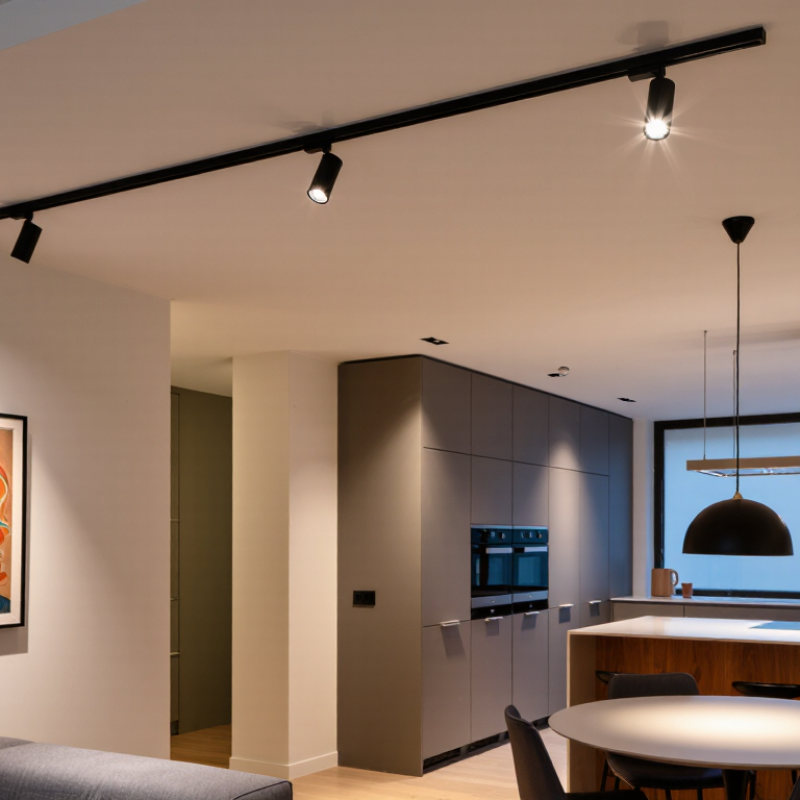
Lighting designer Richard Kelly’s framework—“focal glow,” “ambient luminescence,” and “play of brilliants”—offers a useful way to judge a complete installation. A well-planned track can combine all three: a pendant over a table, even light across a wall, and a precise accent on a shelf. Yet product pages rarely show how those effects look in a real room. That is a limitation worth admitting. This guide compares the features, installation demands, and trade-offs that shape a genuinely good system, rather than declaring one fixture universally best.
What Is the Best Magnetic Track Lighting in 2026?

How Magnetic Track Lighting Systems Work

What Is the Best Magnetic Track Lighting in 2026?
How Magnetic Track Lighting Systems Work

A magnetic track lighting system combines a powered rail with movable light fixtures. Inside the rail, conductive strips carry electricity along its length. Many systems use a driver to convert household power into low-voltage direct current. Check the system specifications, since voltage and components can vary.

Each fixture has magnetic parts that hold it against the rail, plus electrical contacts that connect it to the conductors. Once attached, the light can often slide along the track or be repositioned without rewiring. Click, then adjust. For example, a narrow beam can highlight a framed print, while a wider fixture can brighten the dining table. The rail’s power capacity still limits how many fixtures it can support.

Compatibility matters more than a fixture’s appearance. Tracks, drivers, connectors, and dimmers need to be designed to work together. A mismatch may cause flickering, poor dimming, or no light at all. I’ve found that planning fixture positions on paper helps, but real rooms can expose awkward shadows or glare. Magnetic attachment also does not mean every adjustment is safe while the system is powered. Follow the manufacturer’s instructions, and have a qualified electrician handle mains wiring.


How Magnetic Track Lighting Works: Typical System Voltages

A power supply feeds the track, and magnetic fixtures connect to its conductors to receive power. Low-voltage systems commonly use 24V or 48V DC; mains-voltage examples include 120V AC and 230V AC, depending on the region and system design. These are typical examples, not a performance ranking—check the fixture and track specifications for compatibility.

Key Components and Compatibility Standards

A magnetic track lighting system typically includes a track rail, power feed, driver, connectors, and magnetic light modules. The rail carries both the modules and the electrical conductors. Magnetic attachment makes repositioning easy, but it does not guarantee electrical compatibility. Check the track’s voltage, polarity, and profile before mixing components. Drivers also need sufficient wattage for the connected fixtures, with some capacity left over.

Tips: Photograph the track label before ordering replacements. Confirm the driver’s output and dimming method. Small detail, big consequence.

Compatibility standards are not universal. Two rails can look alike yet use different conductor layouts or mechanical profiles. Check the manufacturer’s technical sheet for the exact rail-and-module series, connector type, voltage, and approved driver range. If dimming matters, confirm that the driver and control system use the same method, such as a compatible phase-cut or digital protocol. A frequent planning miss is checking only the fixture’s shape. Review the full chain, from power feed to light module, and follow local electrical requirements. When specifications are unclear, pause and ask a qualified electrician to verify them.

Criteria for Evaluating Magnetic Track Lights in 2026

A useful magnetic track-light comparison starts with the complete system, not the spotlight’s advertised wattage. Check the driver’s input, output, and efficiency, then compare delivered lumens per watt across the full fixture. The U.S. Department of Energy’s Energy Saver guidance says LEDs can use up to 90% less energy and last up to 25 times longer than incandescent lamps. That benchmark is useful, but it does not prove one magnetic system outperforms another.

Next, inspect light quality and comfort. Look for a stated color-rendering value, preferably CRI 90 or higher for artwork, fabrics, and food. Ask for flicker data and glare-control details; a bright beam can still feel harsh at a kitchen island. Check whether modules dim smoothly and whether replacement drivers and heads remain compatible. Compatibility matters.

Installation details deserve equal weight. Confirm the track’s voltage, load limit, connector design, and driver location before planning a ceiling run. A 48-volt system may simplify low-voltage distribution, but it still needs correctly matched components. On a real ceiling, note where the driver can be reached without removing cabinetry. One weak point in many comparisons is missing thermal or flicker testing. I would treat vague claims as unanswered questions, not proof of poor quality. Ask for test methods and published results.

What Is the Best Magnetic Track Lighting in 2026? - Criteria for Evaluating Magnetic Track Lights in 2026

Use these criteria to compare systems. The target values below are practical evaluation benchmarks, not universal specifications; confirm suitability against the project, local regulations, and the manufacturer’s technical documentation.

Evaluation criterion What to check Practical comparison benchmark Why it matters Suggested weight
Track and fixture compatibility Confirm the track voltage, connector type, polarity, mechanical fit, and supported fixture families. Check whether components from different systems can be mixed. All track, power supplies, connectors, and luminaires should be explicitly listed as compatible within the same system. Do not assume magnetic tracks are interchangeable. Magnetic attachment alone does not guarantee electrical or mechanical compatibility. 20%
Light output and efficacy Compare delivered lumens and lumens per watt for each fixture, not just LED-chip wattage. Check photometric files when available. For general comparison, look for published fixture-level efficacy around 80–100 lm/W or higher, while matching lumen output to the intended task and beam angle. Higher wattage does not necessarily mean more useful light; optics and thermal design affect delivered output. 15%
Color quality Review correlated color temperature (CCT), color rendering index (CRI), and, if provided, TM-30 data. Choose a CCT suited to the space; 2700–3000 K is commonly used for warmer residential settings, while 3500–4000 K is often selected for more neutral spaces. CRI 90+ is a useful target where color appearance matters. CCT affects perceived warmth, while color rendering affects how surfaces, materials, and products appear. 12%
Beam control and visual comfort Check available beam angles, shielding, glare control, and whether the distribution suits accent, task, or ambient lighting. Compare documented beam angles and IES/LDT photometric files where available; assess glare in the actual viewing positions and mounting heights. A high lumen figure alone cannot show whether light is aimed effectively or causes uncomfortable glare. 12%
Dimming and controls Verify dimmer or control protocol compatibility, minimum dimming level, smoothness, and whether flicker data is published. Require documented compatibility with the intended control system and test the complete driver–fixture–dimmer combination before installation. A fixture may be dimmable but still perform poorly with an incompatible control or driver. 10%
Electrical safety and installation Check rated input, power-supply capacity, wiring instructions, grounding requirements, and applicable electrical safety approvals for the installation location. Use products with recognized certification applicable in the project jurisdiction; have mains-voltage installation completed in accordance with local electrical codes by a qualified professional. The track system includes electrical components and must be installed and loaded within its ratings. 12%
Thermal performance and service life Review rated ambient temperature, thermal management, lumen-maintenance data, and the stated conditions behind lifetime claims. Prefer documented lifetime and lumen-maintenance figures with a stated test basis; compare like-for-like data rather than relying on an unsupported lifetime number. LED life and light output depend on operating temperature, driver quality, and use conditions. 8%
Environmental suitability Check the fixture’s ingress protection (IP) rating and stated suitability for the room’s moisture, dust, and temperature conditions. Use only a rating appropriate to the location and local requirements; do not assume an indoor magnetic track fixture is suitable for wet areas. Environmental protection varies by fixture and is not guaranteed by the track system itself. 5%
Modularity and future changes Assess the range of compatible spotlights, linear modules, pendants, track lengths, connectors, and replacement parts. Favor a documented, expandable system that offers the fixture types and replacement components required for the planned layout. A broad compatible range can make it easier to adjust lighting without replacing the whole installation. 6%
Total suggested evaluation weight 100%

Comparing Track Types, Fixtures, and Light Quality

Magnetic track systems generally come in recessed, surface-mounted, and suspended forms. Recessed tracks create a clean ceiling line, but require suitable ceiling depth and careful planning before installation. Surface-mounted tracks are easier to access and can work well in renovated rooms. Suspended tracks bring light closer to a dining table or work surface. They may feel visually heavy in a low room.

Fixture choice changes the result more than the track itself. Adjustable spotlights help highlight artwork or a kitchen counter, while linear modules spread light across desks and shelves. Wall-wash fixtures brighten vertical surfaces, making a narrow room feel more open. Check how each fixture locks into the rail and whether its position can be adjusted without tools. Small details matter.

Light quality deserves a close look.

For natural-looking colors, compare color-rendering ratings and test the light on familiar materials, such as a red book cover or wooden cabinet. A warm color temperature can feel comfortable in a living area, while a neutral tone may suit focused tasks. Dimming should remain smooth, without flicker or sudden jumps.

Not always.

A high specification alone cannot predict comfort; beam angle, glare, ceiling height, and surface finishes all affect what you see. If possible, sample the system in the actual room before choosing.

Choosing a System for Different Rooms and Uses

Choosing magnetic track lighting starts with the room, not the fixture. In a kitchen, use focused, adjustable beams over counters, then softer light above an island. In a living room, wider beams can wash a wall without putting glare on a television. Bedrooms benefit from dimming and low-glare positions near reading chairs. Keep it practical.

The U.S. Energy Information Administration’s 2018 Commercial Buildings Energy Consumption Survey found that lighting used about 17% of commercial-building electricity. That makes efficient LEDs relevant, but savings still depend on operating hours, controls, and the existing system.

For galleries or workspaces, choose track lengths and heads that can be repositioned as displays or tasks change. Check beam angles, dimmer compatibility, and whether the power supply supports the planned number of lights. A neat sample layout can still feel harsh at night. Test a short section in the actual room before committing.

The U.S. Department of Energy says LEDs use at least 75% less energy and last up to 25 times longer than incandescent lighting; those figures compare light sources, not magnetic track systems as a whole. I would avoid treating them as guaranteed project savings. Ceiling height, surface color, and control habits can change the result.

Powder Coat Booths

For those larger-sized parts, or smaller quantity runs, we have 2 independent powder coat booths and ovens. The quality, durability and affordability of today’s powder coating finishes make this the process of choice for world-class companies.

Powder coating advantages over other forms of coating are many. Materials used in the Powder coating process can be metals and non-metals that come in a multitude of thicknesses, textures, colors, etc. Another of Powder coating’s biggest advantages over conventional coatings is its ability to create finishes in many different textures. Powder Coating Booths allow us the ability to apply these advantages to large products.

Wet Paint Line

Tri-State Fabricators runs a full-service conveyor line for painting. Wet painting can provide protection or decoration to many different part styles. From start to finish, every project is easier to undergo random and point-based inspection by our skilled painting team.

Advantages to our Wet Paint Line are these lines start with product prep and ends with a thorough inspection of a high quality finished product. Our ability to complete large and small projects with a superior finish and doing so in a timely and economical fashion. This passes along the savings in production to our customers. When powder coating ins not an option, our Wet Paint Line gets the job done right the first time.

Wet Paint Booths

When the parts get big and heavy we roll-out our custom paint racks and oversize booth. By utilizing our partnerships with all the major paint brands, we can match virtually any color with wet paint.

The advantages of having access to a Wet Paint Booth are many. Large projects of many different shapes can be loaded into the booth. The Wet Paint Booth offers an environment that is much more controlled than a typical parts painting operation.

Not only are they used because of their controlled environment, but they’re are also advantageous when it comes to applying paint to parts that are needed in industries that require specialty coatings such as medical, aerospace, etc.

Military CARC

Our military forces have some very high standards when it comes to the finish of their vehicles and equipment. From the first pre-treatment step to final coat, it takes a great deal of knowledge and experience to protect the men and women of our armed forces. They deserve only the best, and Tri-State Fabricators provides it.

All of our processes are closely monitored by our staff and management teams. Both of which are highly trained in the processes of metal fabrication and finishing. Tri-State Fabricators’ goal is to always fully satisfy each and every customer, including the military. We will always put a 110% into what we do.

Glass-Bead Blasting

Abrasive media blasting is an excellent way to remove old paint, rust, and increase the paint/powder adhesion. Glass beads produce a much smoother and brighter finish than angular abrasives; leaving the part clean yet without any dimensional change. Chemically inert and environmentally friendly, we can recycle our beads approximately 30 times; making them a more preferred method of metal cleaning or surface finishing.

Advantages to Glass Bead Blasting are many. Glass bead blast media is used when a project is needing rough surfaces need to become smooth for applications of coatings such as paint. It is typically used to clean paint and rust from a product surface without deforming the surface it is being used on. Overall, compared to many other blasting media, Glass Bead Blasting is a very economical choice and those savings are always passed on to our customers.

Part Washing

Tri-State Fabricators utilize a zinc phosphate wash to clean and etch the material to ensure the best paint adhesion possible. The unique design of our 3-stage wash system does the work like a 5-stage. From Cleaning and rinsing to conversion coating and post-treatment, Our Part Washing process is a complete service and works throughout the fabrication service and the finishing service.

Along with the previously mentioned benefits, Curing is a vital chemical reaction that leaves the product finish hard and relatively safe from mild abrasion and aggressive corrosion. This process can be done in more than one way; ambient air-dry or in curing ovens at temps that exceed 240°.

Burn-Off Oven

From fixing paint mistakes (someone else’s of course) to simply cleaning our paint line hooks, our burn-off oven is put to good use. After a quick burn-off, a little clean up, and a fresh coat of paint, your parts will look better than new.

Why does our Burn-Off Oven work so well? Because super heating the air around parts turns the materials into ashes. From paint and powder coatings to rubber and machining oils, high temps do the job without degrading the integrity of the part.

Masking

Masking is a vital part of producing high quality products. We have die-cut masking patterns to protect machined surfaces as well as a wide range of plugs and caps to protect threaded holes and bolts. We provide permanent and temporary masking.

Masking allows the selected sections of a product to be protected from a fabrication or finishing service. This can be with both chemicals when etching and tapes, paints when only finishing just a section of the product. Masking is great in aiding the customization process of a project.

Screen Printing

Screen printing is a photographic process that transfers artwork onto a porous nylon screen which allows colored ink to flow through the screen and be deposited on an aluminum or plastic component. We can generally have just about any design created onto a screen for your parts.

Some of the advantages of Screen Printing are, brand recognition for your business displaying on your products, assembly instructions, product warnings/hazards, etc. Tri-State Fabricators produces Screen Printing of the highest quality so you know it’s durable.

Metal Finishing

Metal Finishing is the art of treating the exterior portion of product, often metal but can also be made of other materials, so that the surface is clean and free of any debris. Then the process of applying coats or either paint of powder coat takes place. This coating process improves the quality of the product in both appearance and resistance to wear and corrosion.

Tri-State Fabricators, Inc., understands that a project typically isn’t complete until a high-quality finish has been added to your product. This is why our painting and powder coating teams continuously inspect the products throughout the Metal Finishing process.
