How to Choose the Best Linked Smoke Detectors in 2026
A smoke alarm in the hallway may be easy to ignore—until smoke reaches the bedroom at night. Linked Smoke Detectors are designed to sound together, so an alarm in one area can alert people elsewhere in the home. That added warning can matter when a closed door, a large floor plan, or background noise makes a single alarm harder to hear.
Choosing a system in 2026 takes more than comparing prices. Check whether the detectors connect by wire or wirelessly, and confirm that every unit is compatible with the others. Look for clear information about recognized safety certification, power options, battery backup, and the manufacturer’s installation instructions. Some models also distinguish between smoke and carbon monoxide alerts, but features and coverage vary. Read the product details carefully.
Think about the rooms, ceilings, and people the system must serve. A loud alarm in a hallway may not be enough for a person who sleeps with the door closed or has hearing difficulties. Placement matters, too. Follow the detector maker’s guidance and applicable local recommendations rather than guessing from a product photo. Test the alarms regularly, replace batteries or units as directed, and make sure everyone knows what different alert patterns mean. These steps are easy to postpone. That is worth admitting. This guide will compare practical features, compatibility, upkeep, and value, helping readers choose a system that fits their home without treating any detector as a substitute for a fire escape plan.
How Linked Smoke Detectors Work and When They Are Useful
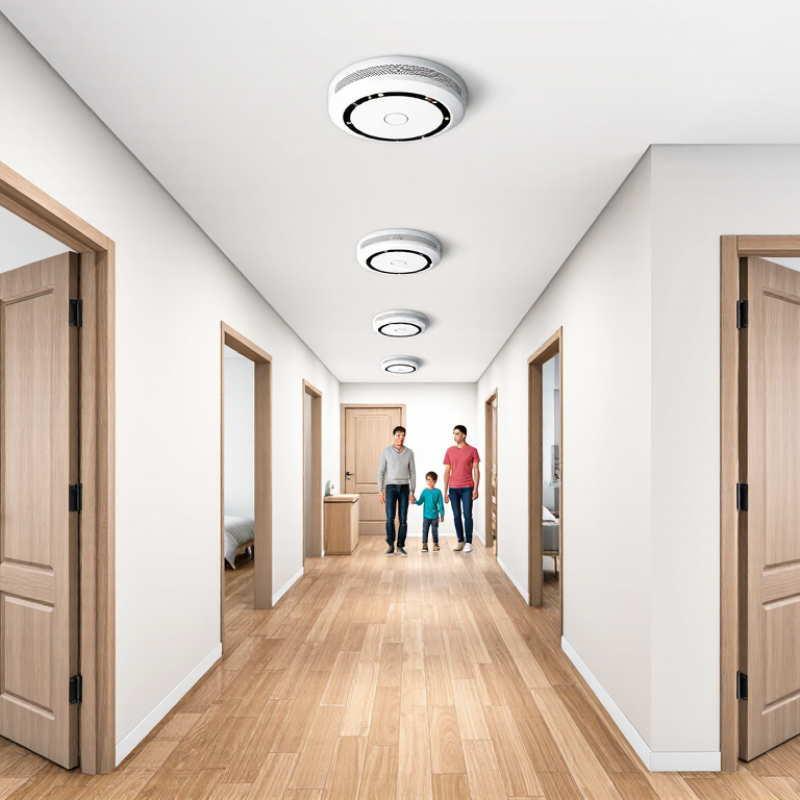
Linked smoke detectors communicate so that one alarm sensing smoke can trigger the others. If a detector sounds near the kitchen while someone is upstairs, the linked alarm in the hallway may also alert them. That extra warning can matter at night, when a closed bedroom door muffles distant sounds. A loud, local signal helps. It does not guarantee everyone will wake.
Some systems connect through household wiring; others use wireless radio signals. Before choosing, check that every unit is compatible with the same linking system and power setup. Thick walls, distance, or interference may affect wireless communication, so follow the manufacturer’s placement guidance. Also confirm whether the alarms detect smoke only or include carbon monoxide sensing. A link is not a substitute for suitable placement.
Linked alarms are useful in multi-storey homes, long hallways, and houses where bedrooms sit far from the kitchen. Put alarms where guidance recommends, not just where installation looks tidy. Test each unit regularly and replace it according to its instructions. If one detector is old or has a different signal pattern, the network can become confusing. I would not assume that every alarm will reach every other alarm without checking the system’s stated limits. A small detail, but worth checking.
How Linked Smoke Detectors Work
Alarm status in an illustrative four-location home when smoke is detected in the basement
How to read this: 1 means an alarm sounds; 0 means it does not. In this example, a standalone detector alerts only at the location where smoke is detected, while interconnected detectors signal alarms throughout the home. This is an illustrative scenario, not measured performance data; actual operation depends on the system design and installation.
Check Safety Standards, Certifications, and Local Requirements
Before buying linked smoke detectors, check the certification printed on the device, not just the product listing. In the United States, residential smoke alarms are evaluated to UL 217; the eighth edition added tests intended to reduce nuisance alarms from cooking. Look for certification from a recognized testing organization and confirm the exact model is covered. A matching logo on a box is not enough. Check the device label and installation manual. Small detail, big difference.
Local requirements can change what “best” means. Your fire department or building authority can tell you whether alarms must be interconnected, hardwired, or installed in specific rooms. Rules may also differ for new construction, renovations, and rental housing. NFPA’s report, Smoke Alarms in U.S. Home Fires, found that nearly three in five home fire deaths occurred where alarms were absent or did not operate. That finding makes placement and maintenance as important as certification. Test each linked alarm after installation, and check that one unit triggers the others. I would also verify backup-battery requirements locally; it is easy to assume all systems follow the same rule. They don’t.
Match Detector Types, Power Sources, and Interconnection Methods
How to Choose the Best Linked Smoke Detectors in 2026
Match the detector type to the rooms and risks in your home. Photoelectric sensors often respond well to slow, smoky fires, while ionization sensors can react faster to some fast-flaming fires. Combination models include both sensing approaches. Check the product’s certification for your region, and follow its placement instructions. Kitchens need thoughtful positioning to reduce nuisance alarms without leaving nearby areas unprotected.
Power and connection choices matter just as much. Hardwired detectors usually connect to household wiring and may include battery backup for outages. Battery-powered models can simplify installation, but their batteries still need attention. Some use sealed, long-life cells; verify the stated service life and replacement guidance. For linked alarms, confirm that every unit supports the same interconnection method. Wireless models can avoid new wiring, but walls and distance may affect signal reliability. Hardwired connections can be dependable, yet installation may require an electrician. The right choice depends on your home—not just the feature list.
Tips: Test each alarm after installation, then test regularly according to its instructions. Replace a unit that has reached its stated service life. Keep a note of which alarms sound during a test; it can reveal a weak connection. I would still check compatibility twice before buying a mixed set.
Compare Alerts, Smart Features, and Compatibility in 2026
When comparing linked smoke detectors, listen to the alert before judging the feature list. A sharp, shared alarm can wake people across a closed bedroom door. Voice alerts may identify the room where smoke was detected, which can help during a hurried check. Some units also use lights or phone notifications, but those extras should not replace a loud local alarm. Test it monthly. If the sound is hard to distinguish from other household alerts, that is worth noticing.
Smart features vary in usefulness. A phone alert may help when you are away, but it depends on power, network access, and correct app settings. Check whether alarms still communicate if the internet goes down. Compatibility needs equal care: hardwired and wireless systems may not link across every model or generation. Read the manufacturer’s compatibility chart, confirm backup-battery details, and ask a qualified installer about existing wiring when needed. It is easy to assume “interconnected” means universal; it often does not. Before relying on a new setup, test each unit and confirm that one alarm triggers the others.
Assess Coverage, Installation Needs, and Long-Term Maintenance
How to Choose the Best Linked Smoke Detectors in 2026
Assess Coverage, Installation Needs, and Long-Term Maintenance
Start with the home’s layout, not the alarm’s feature list. Count bedrooms, floors, and enclosed hallways, then check the placement guidance from your local fire-safety authority. Linked alarms sound together, which can help alert people far from the fire. But connection range and compatibility vary. A signal that works in a small apartment may struggle across thick walls or several floors.
Next, consider installation and upkeep. Hardwired units may need professional installation, while battery-powered models can be easier to fit but still need regular checks. Confirm that every alarm can connect to the others, and learn how it signals a low battery or fault. Check the test procedure before buying; a difficult-to-reach ceiling alarm can turn a simple monthly check into a chore. Manuals and local guidance matter more than assumptions.
Tips: Sketch the rooms and alarm locations before shopping. Test the linked system after installation, then set a recurring reminder to test it monthly. Replace batteries or units as directed by the manufacturer. Keep a record of dates. It may feel fussy, but missed checks are easy to forget. If you rent or have unusual ceilings, ask a qualified installer to assess the setup.





