Who Is the Best LED Mood Light Manufacturer in China?
Choosing the best LED Mood Light Manufacturer in China takes more than comparing product photos or factory prices. Buyers should look closely at color consistency, dimming range, materials, and how each unit performs after hours of use. A soft amber glow may look inviting on a sample card, yet feel harsh in a small bedroom. Details matter.
Lighting researcher Russell Foster has emphasized, “Light is the strongest signal for setting the body’s daily clock.” That insight matters when evaluating mood lights. A capable manufacturer should explain brightness and color options clearly, rather than promising that every setting suits every room. Ask for product specifications, test samples, and clear answers about customization. Check how the light transitions between colors. Does it flicker at low brightness? Does the housing feel sturdy, or flex under light pressure? Small tests reveal a lot.
There is no perfect shortlist. Not every supplier shares the same level of technical detail, and attractive images can hide practical weaknesses. A careful comparison should consider design support, production consistency, packaging, and communication—not price alone. The best LED Mood Light Manufacturer is the one that can demonstrate its claims with samples and reliable documentation. Even then, a buyer may discover a mismatch after testing. That is worth admitting. A measured evaluation helps readers identify manufacturers suited to their needs, instead of trusting a single ranking or polished catalog.
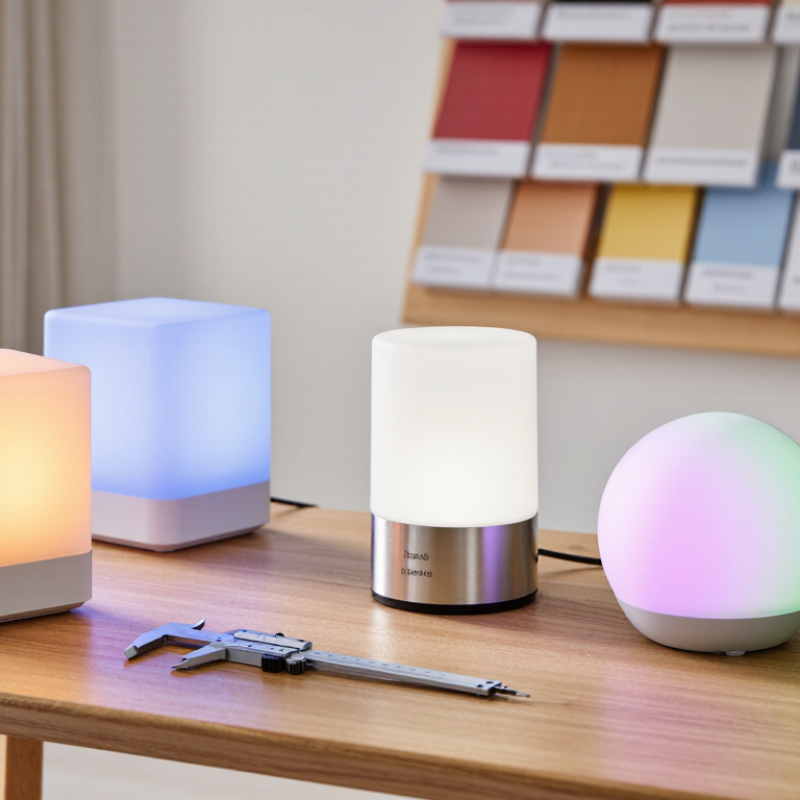
What Defines an LED Mood Light? RGB/RGBW and 2,700–6,500 K CCT
Who Is the Best LED Mood Light Manufacturer in China?
An LED mood light uses adjustable color or white light to change how a room feels. RGB models mix red, green, and blue LEDs to create many colors. Their white setting may look less natural, especially beside a warm bedside lamp. RGBW adds a dedicated white LED, which can produce cleaner whites while keeping colorful effects available. Small differences matter. A green cast on a pale wall is easy to notice.
CCT describes the apparent warmth or coolness of white light, measured in kelvins. Around 2,700 K feels warm and candlelike; 6,500 K appears cooler and more daylight-like. A tunable 2,700–6,500 K range gives users more control, but the actual result depends on LED quality, dimming, and room surfaces. Tips: Check color transitions in a dim room, not only under showroom lighting. Compare the white setting with a familiar lamp. Looks can mislead.
When evaluating a manufacturer, ask for specifications covering RGB or RGBW channels, CCT range, dimming behavior, and sample testing. Check whether low brightness causes flicker or uneven color. Request a sample and run it for several evenings; controls that seem simple in a catalog can feel awkward at home. I would not choose by color count alone. Consistency matters, and even a well-made light may not match every room’s paint or personal preference.
Key Performance Metrics: CRI Ra ≥80, Luminous Flux, and Dimming Range
When comparing LED mood light manufacturers in China, start with the light users will actually see. A CRI Ra rating of 80 or higher is a sensible baseline for bedrooms and living spaces. It helps colors look more natural than under low-CRI light. But Ra is an average, not a full picture. Ask for test data, and check whether the report identifies the color temperature and measurement conditions. A red cushion may still look dull if the product performs poorly on deeper reds. Small detail, big difference.
Luminous flux, measured in lumens, shows how much visible light a fixture produces. Compare samples at the same color temperature and input power; diffuser shape can noticeably reduce the light reaching a room. Request measurements after the light has warmed up, not only at startup.
Dimming deserves a hands-on check. Ask how low the light can go, then test for flicker, sudden jumps, or an annoying glow at the lowest setting. A stated dimming range is useful, but it does not prove smooth performance. Test it.
Keep notes from several samples, because one impressive unit may not represent consistent production. Specifications help narrow the choice; careful, repeatable testing helps reveal what they leave out.
Safety and Compliance: IEC 62471, IEC 60598, and RoHS
Choosing an LED mood light manufacturer in China means looking beyond color effects and app features. Ask how each model is assessed under IEC 62471, which addresses photobiological safety from lamps and lamp systems. Blue-rich LEDs and bright points can cause discomfort when viewed closely, even in decorative products. Request the test report and check its model number, LED configuration, and assessment conditions. A report for a similar light may not cover the unit you plan to buy. Details matter.
IEC 60598 covers safety requirements for luminaires, including electrical construction and protection against hazards. Inspect samples for enclosed wiring, stable bases, strain relief, and accessible labels. RoHS documentation should identify the product or material scope, rather than simply state “compliant.” Ask for current supporting records and confirm that component changes trigger review. A neat certificate can still leave questions unanswered. This is an easy detail to miss. Standards and documents support a careful evaluation, but they do not replace checking the finished product and its intended use.
Who Is the Best LED Mood Light Manufacturer in China?
Safety and Compliance: IEC 62471, IEC 60598, and RoHS
The chart shows EU RoHS maximum concentration limits by weight in homogeneous materials: 0.1% for most restricted substances and 0.01% for cadmium. Applicable exemptions may affect specific uses. IEC 62471 addresses photobiological safety of lamps and lamp systems, while IEC 60598-1 sets general requirements and tests for luminaires. Check relevant product-specific standards, test reports, and declarations when assessing a manufacturer; these standards are not directly comparable as numerical scores.
How to Compare Chinese Manufacturers: MOQ, Lead Time, Capacity, and Quality Control
A useful way to compare Chinese LED mood light manufacturers is to test their promises against your actual order. Grand View Research estimated the global LED lighting market at USD 75.3 billion in 2023, reflecting strong competition and varied product requirements. Ask each factory for its MOQ by model, color, and packaging type; a low headline MOQ may not apply to custom finishes. Request a written lead-time breakdown covering sample approval, production, inspection, and packing. A quoted 30-day schedule means little if the clock starts only after artwork approval.
Capacity needs evidence, not just a large factory floor. Ask for monthly output for comparable products, current production loading, and a recent sample of batch records. For quality control, check whether inspectors record light color, brightness, charging performance, and switch operation against agreed limits. IEC 60598-1 provides general safety requirements for luminaires, but it does not replace product-specific checks. Request inspection criteria and defect records. A tidy audit report helps; it does not prove every shipment is consistent.
Tips: Approve a “golden sample” before mass production, then confirm how the factory will compare finished units with it. Ask for dated inspection photos and a small pre-shipment sample. Keep the checklist simple. One lesson from sourcing: even good suppliers can misunderstand vague color words, so specify measurable tolerances where possible. I would still verify the first production batch independently; it adds time, but may reveal problems a factory tour misses.
Choosing the Best Fit: Verify Performance, Smart Controls, and After-Sales Support
A reliable LED mood light supplier should prove performance with more than a polished sample. Ask for measured brightness, color range, power use, and operating temperature. Test the light in a dim room, then leave it running for several hours. Watch for flicker, uneven color, or a warm housing. Small details matter.
Check smart controls in everyday conditions. Can users dim the light smoothly, set a timer, and restore their preferred setting after a power interruption? Test the app and physical buttons, if both are offered. Pairing should be simple. A feature list can look impressive, yet a confusing setup may frustrate customers more than a missing feature. Compatibility claims deserve a real test with the devices your buyers use.
After-sales support is part of product quality. Before placing a large order, ask how the supplier handles defect reports, replacement parts, and technical questions. Request clear response times and written warranty terms. A sample may perform well while later batches vary, so keep records and inspect production units. No checklist catches everything. A minor issue is not always a deal-breaker; an evasive answer can be more telling.





