


7 Best Laser Cleaning Equipment for Industrial Use

Industrial teams use Laser Cleaning Equipment to remove rust, paint, oil, and surface residue without relying on abrasive blasting. The right system can help prepare welds, maintain molds, or clean metal parts with greater control. But results depend on more than the laser source. Material type, coating thickness, working distance, and operator technique all affect the outcome.

This guide reviews seven options for industrial use, from portable units for on-site repairs to higher-output systems designed for demanding production work. It considers practical details such as laser power, pulse settings, cooling, controls, extraction needs, and service support. A compact machine may fit easily beside a workbench, while a larger system may suit repeated cleaning across a production shift. Neither is automatically better. Buyers should also check sample results on their own materials and ask suppliers about training, maintenance, and operating costs. Specifications can look persuasive on paper, yet real shop-floor conditions may expose limits that a brochure does not show. That matters. The comparisons here are intended to clarify trade-offs, not promise identical results for every factory. Even a careful shortlist can miss what operators value most: setup time, ease of handling, or a reliable local service contact. Use the recommendations as a starting point, then match each system to the task, workspace, and people who will use it.
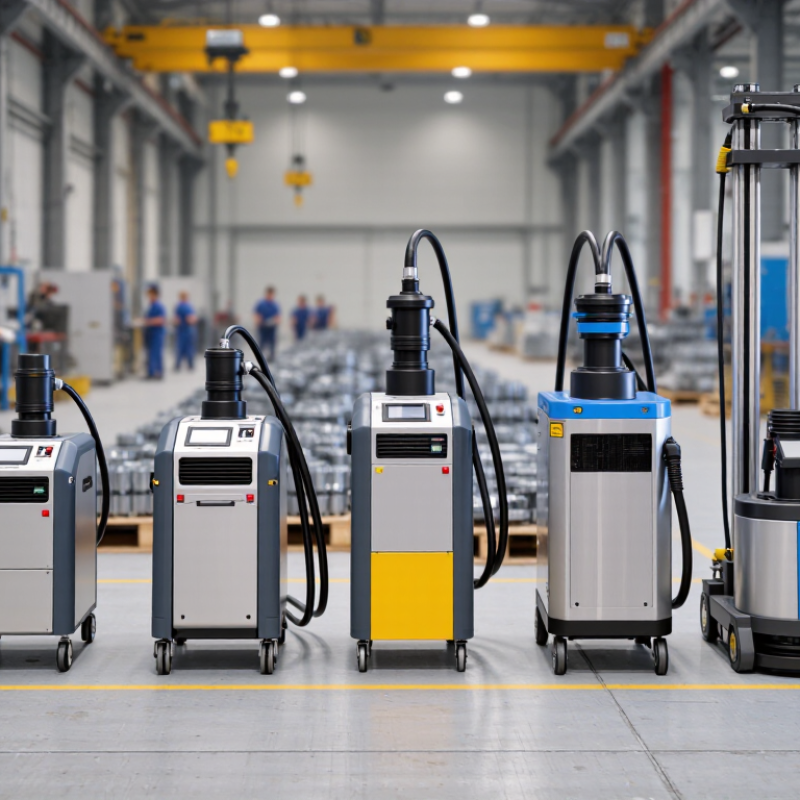
7 Best Laser Cleaning Equipment for Industrial Use

How Industrial Laser Cleaning Equipment Removes Contaminants

Industrial laser cleaning removes rust, oxide layers, paint residue, and other contaminants by directing controlled light onto a surface. The contaminant absorbs the laser energy and heats rapidly. It may vaporize, break apart, or lose its bond with the underlying material. A nozzle then carries the released material away, often with local fume extraction. No abrasive media. The workpiece can remain largely intact when the process is properly tuned, but results depend on the material and its condition.

Operators adjust pulse energy, scan speed, spot size, and distance from the surface. A rusty steel bracket may need different settings from a thin aluminum panel. Too little energy can leave dark patches behind. Too much can discolor or damage the substrate. That distinction is easy to underestimate. Before production, technicians should test a small, representative area and inspect it under good lighting. They should also check for heat-sensitive coatings, joints, and nearby components. Extraction matters because loosened particles and fumes should not simply drift across the shop. Laser cleaning can reduce consumables and manual scrubbing, yet it is not automatically the best choice for every job. Real surfaces vary, sometimes frustratingly; a clean test patch does not guarantee uniform results across a large part.

7 Best Laser Cleaning Equipment for Industrial Use - How Industrial Laser Cleaning Equipment Removes Contaminants

Equipment type Typical configuration How it removes contaminants Common industrial uses Main advantages Key considerations
Handheld pulsed-fiber cleaner Portable pulsed fiber source; commonly available in power classes from tens to several hundred watts. Short pulses heat or ablate a thin contaminant layer. The resulting thermal stress and material ejection help detach rust, oxide, oil, or paint from the surface. Maintenance, weld preparation, tooling, and localized cleaning of metal parts. Flexible for on-site work and small-to-medium areas; pulsed operation can limit heat transfer when parameters are properly selected. Cleaning speed and substrate impact depend on pulse settings, scan pattern, material, and contaminant thickness.
High-power pulsed-fiber system Industrial pulsed-fiber source, often in the several-hundred-watt range or higher, with a scanning head. Higher average power and rapid scanning increase the area that can be treated while pulses act on rust, scale, or coatings. Production cleaning of metal components, large fabrication parts, and recurring maintenance jobs. Higher potential throughput than lower-power pulsed systems, while retaining pulsed operation. Requires process trials to balance removal rate, surface finish, and heat input; suitable extraction and laser-safety controls are essential.
Continuous-wave (CW) fiber cleaner Continuous-wave fiber source; industrial systems are available from hundreds of watts to multi-kilowatt power levels. A continuous beam delivers heat to the surface, helping loosen or vaporize contaminants as the beam scans across the workpiece. Fast removal of rust, scale, and some coatings from robust metal surfaces and larger work areas. Can provide high cleaning rates on appropriate materials and contaminant layers. Generally introduces more continuous heat than a pulsed process. Check for warping, discoloration, or other heat-sensitive effects on the substrate.
UV precision laser cleaner Pulsed ultraviolet source, commonly based on a 355 nm wavelength; available power and pulse characteristics vary by system. UV energy can be absorbed by certain surface films and residues, enabling localized removal with a small treatment area. Precision cleaning of selected components, fine surface residues, and applications where a controlled, small-area process is required. Useful for fine-feature work and targeted cleaning when the material and residue respond well to the selected wavelength. Not a universal substitute for infrared fiber cleaning; confirm compatibility through testing because results depend on the substrate and contaminant.
Robotic laser-cleaning cell Laser source paired with an industrial robot, programmed scan paths, fixtures, and a guarded work area; source type and power are process-specific. The robot moves the scanning head along repeatable paths so the beam treats defined surfaces consistently. Repeated cleaning of weld seams, formed components, tools, and parts with complex geometry. Supports repeatability and reduces the need for an operator to hold the cleaning head during each cycle. Needs process programming, part positioning, guarding, interlocks, and validation for each workpiece and cleaning recipe.
Conveyor or inline cleaning system Enclosed or guarded laser station integrated with a conveyor or production line; laser source and power depend on line speed and part requirements. Parts pass through a defined beam zone, where scanning optics treat selected surfaces as part of the production flow. High-repeatability cleaning before coating, bonding, welding, or assembly in production environments. Can be integrated with automated handling and inspection for consistent cycle-to-cycle processing. Line speed, part orientation, beam coverage, fume extraction, and guarding must be engineered together.
Large-area gantry or multi-axis system Laser head mounted on a gantry or multi-axis motion platform; source type, power, and working envelope are selected for the job. Controlled motion moves the beam across large, flat, or extended surfaces using planned scan paths. Large plates, molds, industrial equipment, and workpieces that are difficult to clean by hand. Provides repeatable coverage over a larger work area and can reduce manual repositioning. Requires adequate floor space, secure workholding, motion planning, and a suitable enclosure or controlled laser-safety area.

Note: Power ranges and configurations are representative, not universal specifications. Actual cleaning performance depends on laser parameters, substrate, contaminant, surface condition, and scan strategy. Industrial laser cleaning can generate hazardous beams and airborne fume or particles; use appropriate guarding, wavelength-rated eye protection, and fume extraction.


Key Criteria for Comparing Industrial Laser Cleaning Systems

Comparing industrial laser cleaning systems starts with the surface and the contaminant, not the headline power rating. Rust on thick steel may respond differently from paint on a thin metal panel. Check wavelength, pulse energy, repetition rate, and available power against the material and required finish. Test a representative coupon. Look for residual contamination, heat discoloration, and changes in surface texture under consistent lighting. A clean-looking sample can still hide damage.

Consider how the equipment fits the actual work area. A wider scan head may cover large parts faster, while a compact head can reach seams and corners. Check cable reach, working distance, setup time, and duty cycle during a realistic production shift. Dust and vapor extraction matter, too. Ask how the system contains debris and protects operators, including enclosure design, interlocks, and wavelength-appropriate protective equipment. Small workflow details are easy to overlook.

Compare verified cleaning rates, energy use, maintenance needs, and service availability—not just purchase cost. Ask for test results on your own material, and record the settings used so trials can be repeated. The neatest demonstration is not always the best predictor of production performance. I would be cautious about choosing from one sample alone; part geometry and operator technique can change the result. That uncertainty deserves attention.

Seven Top Laser Cleaning Equipment Options for Industrial Use

Industrial laser cleaning equipment comes in several forms, and each suits different surfaces, production rates, and workspaces. A handheld pulsed-laser unit offers careful control for rust, paint, or residue on localized areas. A continuous-wave system may suit faster cleaning on robust parts, but heat input needs close attention. Portable cart-mounted equipment is useful when large assemblies cannot be moved to a fixed station. Convenient, but not effortless.

For repeatable small-part work, an enclosed cleaning workstation helps contain dust and supports consistent positioning. A robotic laser cell can follow programmed paths across complex components, though setup and fixturing require care. A gantry-mounted system covers broad or heavy workpieces, such as machine beds or structural panels. It needs sufficient floor space and a stable working area. No perfect setup exists.

A conveyor-integrated unit is designed for parts moving through a production line, where cycle time and consistent presentation matter. Before choosing among these seven options, check the material, coating, cleaning area, and acceptable surface change. Ask for sample testing on representative parts; a shiny test coupon may not reflect a worn production component. Include fume extraction, protective enclosures, interlocks, and operator training in the equipment assessment. These details are easy to underestimate. A supplier’s performance data is useful, but verify it against your actual process.

Matching Laser Cleaners to Industrial Materials and Applications

Choosing a laser cleaner starts with the surface, not the machine’s headline power. Carbon-steel parts with thick rust may tolerate a faster, higher-energy pass. Thin stainless panels need gentler settings to limit heat tint or distortion. Aluminum reflects more energy and can respond unevenly, so test a small area before treating a full component. Small details matter.

Pulsed systems often suit precision work, such as removing oxide from weld seams or residue from molds. Their short bursts help control heat on delicate surfaces. Continuous-wave systems can cover larger, sturdy areas efficiently, but heat buildup needs attention. Not always. A larger beam is not automatically the better choice for intricate parts.

Match the cleaning method to the contaminant, too. Loose oil, baked-on coating, and flaky corrosion behave differently under the beam. Check the substrate, coating thickness, access angle, and acceptable surface finish during a trial. Record the settings and inspect the cleaned area under consistent lighting; a surface can look clean while retaining residue in pits. Extraction and suitable enclosures help manage fumes and scattered reflections in production spaces. There is no perfect preset, and that is worth admitting: material batches and prior treatments can change the result.

Safety, Maintenance, and Operating Costs of Laser Cleaning Systems

Laser cleaning can reduce abrasive media and chemical handling, but it does not remove workplace hazards. A focused beam can injure eyes or skin, including through reflections from shiny parts. Use a suitable enclosure, interlocks, warning signs, and wavelength-rated protective eyewear. Confirm the safeguards match the equipment and work area. Fume extraction matters too. Removing paint, oil, or coatings can release harmful particles, so assess the material before cleaning and provide appropriate ventilation. Keep bystanders outside the controlled area.

Maintenance is practical, not optional. Dust on optical windows can reduce performance and may damage components. Inspect lenses, cables, connectors, cooling systems, and extraction filters on a planned schedule. Follow the equipment manual for cleaning; wiping a lens with the wrong cloth can make things worse. Keep service records. Small details count.

Operating costs include more than electricity. Budget for installation, operator training, protective equipment, extraction, inspections, and replacement parts. Compare systems using representative parts, not a perfect sample prepared for a demonstration. Record cleaning time, setup time, and downtime across several shifts. Estimates can be wrong. That is why a short production trial is useful, even when it complicates the purchasing decision. A cheaper unit may cost more if it cleans slowly or needs frequent service.

Powder Coat Booths

For those larger-sized parts, or smaller quantity runs, we have 2 independent powder coat booths and ovens. The quality, durability and affordability of today’s powder coating finishes make this the process of choice for world-class companies.

Powder coating advantages over other forms of coating are many. Materials used in the Powder coating process can be metals and non-metals that come in a multitude of thicknesses, textures, colors, etc. Another of Powder coating’s biggest advantages over conventional coatings is its ability to create finishes in many different textures. Powder Coating Booths allow us the ability to apply these advantages to large products.

Wet Paint Line

Tri-State Fabricators runs a full-service conveyor line for painting. Wet painting can provide protection or decoration to many different part styles. From start to finish, every project is easier to undergo random and point-based inspection by our skilled painting team.

Advantages to our Wet Paint Line are these lines start with product prep and ends with a thorough inspection of a high quality finished product. Our ability to complete large and small projects with a superior finish and doing so in a timely and economical fashion. This passes along the savings in production to our customers. When powder coating ins not an option, our Wet Paint Line gets the job done right the first time.

Wet Paint Booths

When the parts get big and heavy we roll-out our custom paint racks and oversize booth. By utilizing our partnerships with all the major paint brands, we can match virtually any color with wet paint.

The advantages of having access to a Wet Paint Booth are many. Large projects of many different shapes can be loaded into the booth. The Wet Paint Booth offers an environment that is much more controlled than a typical parts painting operation.

Not only are they used because of their controlled environment, but they’re are also advantageous when it comes to applying paint to parts that are needed in industries that require specialty coatings such as medical, aerospace, etc.

Military CARC

Our military forces have some very high standards when it comes to the finish of their vehicles and equipment. From the first pre-treatment step to final coat, it takes a great deal of knowledge and experience to protect the men and women of our armed forces. They deserve only the best, and Tri-State Fabricators provides it.

All of our processes are closely monitored by our staff and management teams. Both of which are highly trained in the processes of metal fabrication and finishing. Tri-State Fabricators’ goal is to always fully satisfy each and every customer, including the military. We will always put a 110% into what we do.

Glass-Bead Blasting

Abrasive media blasting is an excellent way to remove old paint, rust, and increase the paint/powder adhesion. Glass beads produce a much smoother and brighter finish than angular abrasives; leaving the part clean yet without any dimensional change. Chemically inert and environmentally friendly, we can recycle our beads approximately 30 times; making them a more preferred method of metal cleaning or surface finishing.

Advantages to Glass Bead Blasting are many. Glass bead blast media is used when a project is needing rough surfaces need to become smooth for applications of coatings such as paint. It is typically used to clean paint and rust from a product surface without deforming the surface it is being used on. Overall, compared to many other blasting media, Glass Bead Blasting is a very economical choice and those savings are always passed on to our customers.

Part Washing

Tri-State Fabricators utilize a zinc phosphate wash to clean and etch the material to ensure the best paint adhesion possible. The unique design of our 3-stage wash system does the work like a 5-stage. From Cleaning and rinsing to conversion coating and post-treatment, Our Part Washing process is a complete service and works throughout the fabrication service and the finishing service.

Along with the previously mentioned benefits, Curing is a vital chemical reaction that leaves the product finish hard and relatively safe from mild abrasion and aggressive corrosion. This process can be done in more than one way; ambient air-dry or in curing ovens at temps that exceed 240°.

Burn-Off Oven

From fixing paint mistakes (someone else’s of course) to simply cleaning our paint line hooks, our burn-off oven is put to good use. After a quick burn-off, a little clean up, and a fresh coat of paint, your parts will look better than new.

Why does our Burn-Off Oven work so well? Because super heating the air around parts turns the materials into ashes. From paint and powder coatings to rubber and machining oils, high temps do the job without degrading the integrity of the part.

Masking

Masking is a vital part of producing high quality products. We have die-cut masking patterns to protect machined surfaces as well as a wide range of plugs and caps to protect threaded holes and bolts. We provide permanent and temporary masking.

Masking allows the selected sections of a product to be protected from a fabrication or finishing service. This can be with both chemicals when etching and tapes, paints when only finishing just a section of the product. Masking is great in aiding the customization process of a project.

Screen Printing

Screen printing is a photographic process that transfers artwork onto a porous nylon screen which allows colored ink to flow through the screen and be deposited on an aluminum or plastic component. We can generally have just about any design created onto a screen for your parts.

Some of the advantages of Screen Printing are, brand recognition for your business displaying on your products, assembly instructions, product warnings/hazards, etc. Tri-State Fabricators produces Screen Printing of the highest quality so you know it’s durable.

Metal Finishing

Metal Finishing is the art of treating the exterior portion of product, often metal but can also be made of other materials, so that the surface is clean and free of any debris. Then the process of applying coats or either paint of powder coat takes place. This coating process improves the quality of the product in both appearance and resistance to wear and corrosion.

Tri-State Fabricators, Inc., understands that a project typically isn’t complete until a high-quality finish has been added to your product. This is why our painting and powder coating teams continuously inspect the products throughout the Metal Finishing process.
