


Choosing the best Laser Cladding machine in 2026 requires more than comparing power ratings or promotional claims. The right system must match the material, component geometry, powder type, and production volume. A repair shop restoring turbine blades needs different capabilities from a factory reinforcing mining shafts. Real performance appears at the worktable, not only in a brochure.
This guide examines practical factors that influence machine selection. These include laser source stability, powder delivery accuracy, deposition efficiency, heat control, motion-system precision, software usability, and service support. A reliable machine should create consistent layers with limited dilution and minimal distortion. It should also provide traceable process data, clear safety controls, and repeatable results across multiple operators. Testing sample parts remains essential. Ask suppliers for measured results, not vague promises.
There is no universal “best” machine. That conclusion may sound unsatisfying, but it reflects workshop experience. A high-powered system can waste material when delicate components require controlled heat input. A compact machine may appear economical, yet struggle with large repairs or future expansion. Maintenance access matters too. Powder nozzles clog, lenses collect residue, and calibration eventually drifts. Ignoring these details can turn an impressive purchase into an expensive interruption.
The following discussion compares machine categories, key specifications, operating costs, and application suitability. It also considers training, warranty coverage, and long-term reliability. Readers should verify every claim through demonstrations, reference customers, and independent technical evaluations. Performance depends on setup and skill. Even advanced equipment cannot replace disciplined process control.
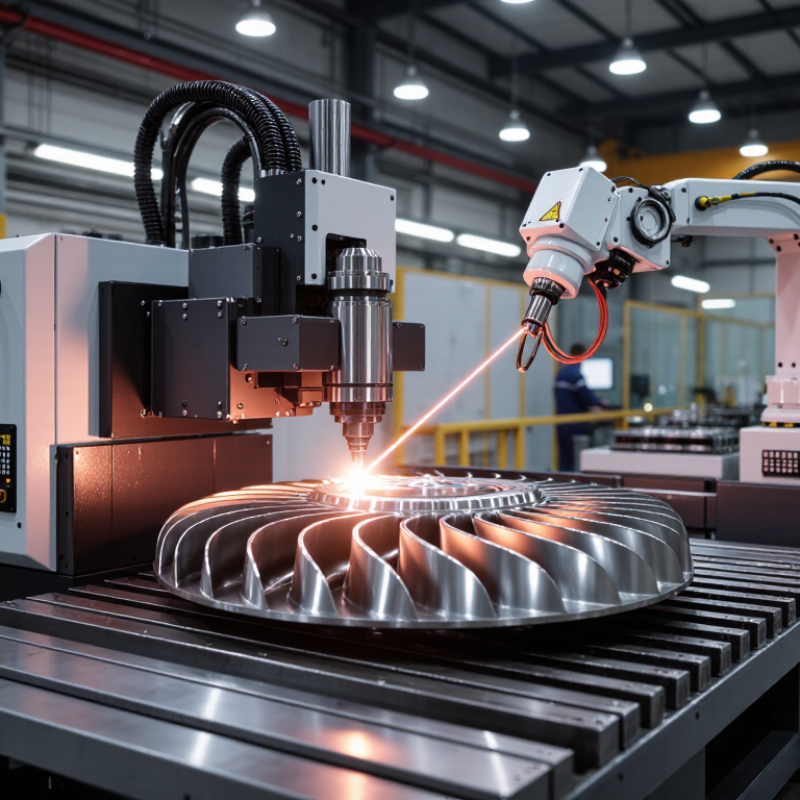
A laser cladding machine is a surface-engineering system, not simply a powerful welding unit. It feeds metal powder or wire into a laser-created melt pool. The laser melts the feedstock and a shallow layer of the base material. This creates a metallurgically bonded coating with limited heat distortion. The layer is precise. Its core purpose is to repair worn components and improve resistance to abrasion, corrosion, or heat.
A NACE IMPACT study estimates that corrosion costs the global economy about 3.4% of annual gross domestic product. That figure explains the practical value of extending component life instead of replacing entire parts.
Market reports also indicate rising industrial demand. MarketsandMarkets’ 2024 analysis forecasts the laser cladding equipment market to grow at a double-digit compound annual rate through 2029. However, growth does not make every machine suitable. For a worn steel shaft, operators may need stable wire feeding and accurate rotational control. For an aerospace repair, powder delivery, shielding gas, and thermal monitoring may matter more. The best machine depends on the repair geometry, material, and production volume.
A credible evaluation should measure coating density, dilution, hardness, deposition rate, and repeatability. Deposition rate alone misleads. Excessive heat can create distortion or undesirable microstructures. Poor powder capture also increases waste and operating cost.
A practical trial should use the actual alloy and component shape. That assumption fails. Published specifications rarely reveal every adjustment required on the shop floor. Experienced technicians still need to inspect cross-sections, review process logs, and challenge attractive performance claims.

In 2026, the best laser cladding machine is not simply the most powerful model. It is the system that delivers stable energy, accurate powder feeding, and repeatable results. Laser cladding repairs or protects a metal surface by melting a controlled layer of added material. A focused laser creates a small molten pool. Powder or wire enters this pool. As the material cools, it forms a dense metallurgical bond with the base metal. The process can reduce heat distortion compared with conventional welding. It is precise, but not effortless.
During a practical setup, technicians adjust laser power, travel speed, spot size, and feed rate together. Changing one setting can alter bead height, dilution, hardness, and surface finish. Shielding gas protects the pool from oxidation, while sensors may monitor temperature and layer position. Several thin passes usually provide better control than one heavy pass. Still, porosity or incomplete fusion can appear when powder delivery fluctuates. I have found that clean surfaces and consistent material batches matter more than impressive specifications. Machine comparisons can become misleading here.
Tips: Test the machine with the same alloy and geometry used in production. Measure dilution, hardness, porosity, and dimensional accuracy. Keep a record of every parameter. Inspect cross-sections, not only shiny surfaces. Leave room for adjustment. Published settings are starting points, not guarantees.
The best laser cladding machine depends on the part, coating material, and production target. No single design fits every workshop.
Coaxial powder machines suit precise repairs on turbine edges, hydraulic rods, and mold surfaces. Their powder stream surrounds the laser spot, producing consistent tracks around complex geometries. Skilled operators can adjust power, travel speed, and powder flow during a trial.
Wire-feed machines use less material waste and handle larger deposits efficiently. They work well for mining rollers, steel shafts, and heavy equipment components. Wire storage is simpler than powder handling. However, wire alignment needs careful calibration. A small feeding error can create uneven beads or weak bonding.
High-speed cladding systems favor thin protective layers and large surface areas. They can support corrosion control on valves, pipelines, and industrial tooling. Robotic or multi-axis machines offer better access to curved parts. They also improve repeatability after proper path programming. Still, automation does not remove the need for inspection.
Engineers should check dilution, porosity, hardness, and bond strength through documented tests. The first sample may look excellent but fail after machining. That is common.
Machine selection should include laser power, spot size, motion accuracy, cooling capacity, and software control. Production teams should compare real deposition rates, not only brochure figures. A practical test with the actual alloy and substrate reveals more than a showroom demonstration.
What Is the Best Laser Cladding Machine in 2026?
Criteria for Evaluating the Best Laser Cladding Machine in 2026
The best laser cladding machine is not defined by laser power alone. It must match the repair material, substrate, geometry, and production volume. Ask for documented deposition rates, powder utilization, layer thickness, and heat-affected-zone measurements. Real test coupons matter more than attractive specifications.
During evaluation, inspect beam control, powder delivery stability, motion accuracy, and thermal monitoring. A practical trial should reproduce a worn shaft, sharp edge, or deep groove from your workshop. Measure hardness, bond strength, dilution, surface roughness, and machining allowance after cladding. That matters. Check consistency across shifts, operators, and powder batches.
Reliable equipment includes calibration records, guarding, interlocks, extraction, and clear maintenance procedures. Confirm compliance with applicable workplace and laser-safety requirements in your region. Experienced suppliers should explain failure modes, not hide them. Review training, spare-part availability, remote diagnostics, and response times using service evidence. Beware of promises based on one perfect sample. My preference is a slightly slower machine producing repeatable layers, although this may reduce output. Budget for fixturing, powder storage, post-machining, and operator learning. A careful acceptance test can expose weaknesses before expensive production defects appear.
| Evaluation Criterion | Recommended 2026 Benchmark | Why It Matters | How to Verify |
|---|---|---|---|
| Laser Power | 2–6 kW for general repair and surface enhancement; higher power for large-area deposition | Determines deposition rate, melt-pool size, and the range of component materials and geometries that can be processed. | Review the continuous rated output, wavelength, power stability, and application-specific test results. |
| Beam Quality | Stable beam profile with adjustable spot sizes typically ranging from approximately 1 to 6 mm | A controlled beam improves cladding consistency, edge definition, dilution control, and heat management. | Request beam-profile measurements, spot-size specifications, and results from thin-wall and large-area trials. |
| Deposition Rate | Approximately 0.5–8 kg/h, depending on powder, power, layer geometry, and process settings | Higher useful deposition rates can reduce production time, but only when metallurgical quality and dimensional accuracy remain acceptable. | Compare measured deposition rates using the same alloy, layer dimensions, powder-feed conditions, and acceptance criteria. |
| Powder-Feeding Accuracy | Stable closed-loop or calibrated feeding with a practical variation target of no more than approximately ±2–5% | Consistent powder delivery supports uniform bead height, chemistry, hardness, and material efficiency. | Check feeder calibration records, gravimetric test results, carrier-gas control, and performance at low and high feed rates. |
| Material Utilization | Typically about 60–90% powder utilization, depending on nozzle design and process conditions | Higher utilization lowers consumable costs and reduces powder waste and cleanup requirements. | Calculate deposited mass divided by powder consumed during a documented production trial. |
| Cladding Dilution | Common target range: approximately 5–15% for many repair and wear-resistant applications | Lower, controlled dilution helps preserve the deposited alloy’s intended chemistry and performance. | Use cross-sectional metallography to measure dilution, fusion depth, porosity, and cracking. |
| Layer Thickness and Accuracy | Typical deposited layer thickness of approximately 0.3–2.0 mm per layer; final accuracy depends on machining and control | The suitable range determines whether the machine can handle fine restoration, dimensional buildup, or bulk deposition. | Measure bead height, track overlap, wall thickness, and dimensional repeatability over multiple layers. |
| Motion System | Multi-axis CNC or robotic motion with coordinated laser, powder, shielding gas, and substrate movement | Synchronized motion is essential for complex surfaces, consistent overlap, and repeatable toolpaths. | Evaluate positioning accuracy, repeatability, working envelope, rotary-axis capacity, and CAD/CAM compatibility. |
| Process Monitoring | Real-time monitoring of melt-pool temperature or emission, laser power, powder flow, and shielding gas | Monitoring helps detect instability early and supports traceability for safety-critical components. | Confirm sensor types, sampling rate, alarms, data export, calibration procedures, and closed-loop control options. |
| Shielding and Gas Control | Stable argon or helium shielding with independently adjustable carrier and shielding-gas flow | Adequate shielding reduces oxidation, porosity, surface contamination, and inconsistent bead formation. | Verify flow meters, pressure regulation, gas purity requirements, nozzle design, and oxygen monitoring where required. |
| Substrate Compatibility | Validated processing for steels, stainless steels, nickel alloys, cobalt alloys, titanium alloys, and selected aluminum alloys | Different substrate and powder combinations require different thermal strategies and process windows. | Request application trials using the actual substrate, alloy powder, geometry, and required mechanical properties. |
| Thermal Management | Controlled preheating, interpass temperature management, and active cooling where the application requires it | Thermal control reduces distortion, residual stress, cracking, and microstructural variation. | Review temperature sensors, cooling capacity, preheating range, interpass limits, and thermal-process records. |
| Safety and Compliance | Enclosed Class 4 laser system with interlocks, extraction, viewing protection, and documented risk controls | Laser radiation, metal powder, fumes, heat, and moving equipment create significant workplace hazards. | Check applicable laser-safety classification, interlocks, emergency stops, fume extraction, powder handling, and operator training. |
| Software and Data Traceability | Recipe management, toolpath simulation, parameter locking, user permissions, and exportable process logs | Digital records improve repeatability, troubleshooting, qualification, and production reporting. | Test offline programming, version control, audit trails, data formats, network security, and integration with inspection systems. |
| Maintenance and Serviceability | Modular optics and powder-feed components with clear preventive-maintenance intervals | Easy maintenance reduces downtime and helps preserve process stability. | Review spare-parts availability, service response, calibration requirements, maintenance access, and technician training. |
| Total Cost of Ownership | Evaluate purchase price together with laser operating cost, powder consumption, gas use, labor, maintenance, and machining | The lowest initial price does not necessarily provide the lowest cost per repaired or coated component. | Calculate cost per hour and cost per part using measured cycle time, consumables, labor, energy, rejects, and service costs. |
The best laser cladding machine is the system that meets the required material, geometry, deposition rate, quality, safety, automation, and total-cost targets in a documented application trial.
The best laser cladding machine depends on your material, repair size, and production rhythm. A machine for turbine blades needs different control than one for mining rollers. Start with the coating task, not the advertised laser power. Record the base metal, powder type, layer thickness, and acceptable heat input. These details narrow the suitable system quickly.
A large laser is not always better. High power may increase productivity, but it can also enlarge the heat-affected zone. For thin parts, precise beam control and a small spot may matter more. Check whether the machine supports powder or wire feeding. Powder can create detailed coatings, while wire may reduce material waste in larger repairs. Ask for test samples using your actual alloy. A polished demonstration piece proves very little.
Machine stability deserves close attention. Look for repeatable motion, protected optics, accurate temperature monitoring, and software that records process data. Operators should be able to adjust feed rate, scanning speed, and shielding gas without guesswork. Safety enclosures and verified ventilation are essential for responsible operation.
Service access matters too. A technically impressive machine becomes expensive when a minor fault stops production. Consider training, spare parts, calibration, and installation support before comparing prices. I have seen buyers focus on specifications and underestimate setup time. That choice can delay useful results. Leave room for process experiments, because the first parameter set may not fit every component.


For those larger-sized parts, or smaller quantity runs, we have 2 independent powder coat booths and ovens. The quality, durability and affordability of today’s powder coating finishes make this the process of choice for world-class companies.
Powder coating advantages over other forms of coating are many. Materials used in the Powder coating process can be metals and non-metals that come in a multitude of thicknesses, textures, colors, etc. Another of Powder coating’s biggest advantages over conventional coatings is its ability to create finishes in many different textures. Powder Coating Booths allow us the ability to apply these advantages to large products.
Tri-State Fabricators runs a full-service conveyor line for painting. Wet painting can provide protection or decoration to many different part styles. From start to finish, every project is easier to undergo random and point-based inspection by our skilled painting team.
Advantages to our Wet Paint Line are these lines start with product prep and ends with a thorough inspection of a high quality finished product. Our ability to complete large and small projects with a superior finish and doing so in a timely and economical fashion. This passes along the savings in production to our customers. When powder coating ins not an option, our Wet Paint Line gets the job done right the first time.
When the parts get big and heavy we roll-out our custom paint racks and oversize booth. By utilizing our partnerships with all the major paint brands, we can match virtually any color with wet paint.
The advantages of having access to a Wet Paint Booth are many. Large projects of many different shapes can be loaded into the booth. The Wet Paint Booth offers an environment that is much more controlled than a typical parts painting operation.
Not only are they used because of their controlled environment, but they’re are also advantageous when it comes to applying paint to parts that are needed in industries that require specialty coatings such as medical, aerospace, etc.
Our military forces have some very high standards when it comes to the finish of their vehicles and equipment. From the first pre-treatment step to final coat, it takes a great deal of knowledge and experience to protect the men and women of our armed forces. They deserve only the best, and Tri-State Fabricators provides it.
All of our processes are closely monitored by our staff and management teams. Both of which are highly trained in the processes of metal fabrication and finishing. Tri-State Fabricators’ goal is to always fully satisfy each and every customer, including the military. We will always put a 110% into what we do.
Abrasive media blasting is an excellent way to remove old paint, rust, and increase the paint/powder adhesion. Glass beads produce a much smoother and brighter finish than angular abrasives; leaving the part clean yet without any dimensional change. Chemically inert and environmentally friendly, we can recycle our beads approximately 30 times; making them a more preferred method of metal cleaning or surface finishing.
Advantages to Glass Bead Blasting are many. Glass bead blast media is used when a project is needing rough surfaces need to become smooth for applications of coatings such as paint. It is typically used to clean paint and rust from a product surface without deforming the surface it is being used on. Overall, compared to many other blasting media, Glass Bead Blasting is a very economical choice and those savings are always passed on to our customers.
Tri-State Fabricators utilize a zinc phosphate wash to clean and etch the material to ensure the best paint adhesion possible. The unique design of our 3-stage wash system does the work like a 5-stage. From Cleaning and rinsing to conversion coating and post-treatment, Our Part Washing process is a complete service and works throughout the fabrication service and the finishing service.
Along with the previously mentioned benefits, Curing is a vital chemical reaction that leaves the product finish hard and relatively safe from mild abrasion and aggressive corrosion. This process can be done in more than one way; ambient air-dry or in curing ovens at temps that exceed 240°.
From fixing paint mistakes (someone else’s of course) to simply cleaning our paint line hooks, our burn-off oven is put to good use. After a quick burn-off, a little clean up, and a fresh coat of paint, your parts will look better than new.
Why does our Burn-Off Oven work so well? Because super heating the air around parts turns the materials into ashes. From paint and powder coatings to rubber and machining oils, high temps do the job without degrading the integrity of the part.
Masking is a vital part of producing high quality products. We have die-cut masking patterns to protect machined surfaces as well as a wide range of plugs and caps to protect threaded holes and bolts. We provide permanent and temporary masking.
Masking allows the selected sections of a product to be protected from a fabrication or finishing service. This can be with both chemicals when etching and tapes, paints when only finishing just a section of the product. Masking is great in aiding the customization process of a project.
Screen printing is a photographic process that transfers artwork onto a porous nylon screen which allows colored ink to flow through the screen and be deposited on an aluminum or plastic component. We can generally have just about any design created onto a screen for your parts.
Some of the advantages of Screen Printing are, brand recognition for your business displaying on your products, assembly instructions, product warnings/hazards, etc. Tri-State Fabricators produces Screen Printing of the highest quality so you know it’s durable.
Metal Finishing is the art of treating the exterior portion of product, often metal but can also be made of other materials, so that the surface is clean and free of any debris. Then the process of applying coats or either paint of powder coat takes place. This coating process improves the quality of the product in both appearance and resistance to wear and corrosion.
Tri-State Fabricators, Inc., understands that a project typically isn’t complete until a high-quality finish has been added to your product. This is why our painting and powder coating teams continuously inspect the products throughout the Metal Finishing process.

