


Choosing among the 10 Best Kitchen Faucets for Every Budget starts with a simple question: what happens at your sink each day? A faucet may look polished under showroom lights, yet feel awkward when you fill a stockpot or rinse leafy greens. Kitchen Faucets vary in reach, handle design, spray settings, installation requirements, and price. Small details matter.
Plumbing expert Richard Trethewey offers a useful principle, paraphrased here: “Choose a faucet for the sink, the household, and the work it needs to handle.” That means checking the number of mounting holes, measuring the sink’s depth, and considering who will use the controls. A pull-down sprayer can reach crowded corners. A high-arc spout gives tall cookware room. But extra features are not automatically better. More parts can mean more upkeep.
Budget matters, too. An affordable model may provide dependable everyday function, while a higher-priced faucet might add a stronger finish, smoother operation, or a longer warranty. Read the specifications carefully. Confirm what comes in the box, and check whether your countertop needs an adapter or separate soap dispenser. Installation can be less straightforward than expected.
This guide compares ten options across price ranges, focusing on practical fit, usability, materials, and stated warranty coverage. It cannot predict how every faucet will feel in every home. That part is personal. A finish that looks warm online may seem too dark beside your actual countertop. The best choice is the one that suits your sink, routines, and budget—not simply the one with the longest feature list.
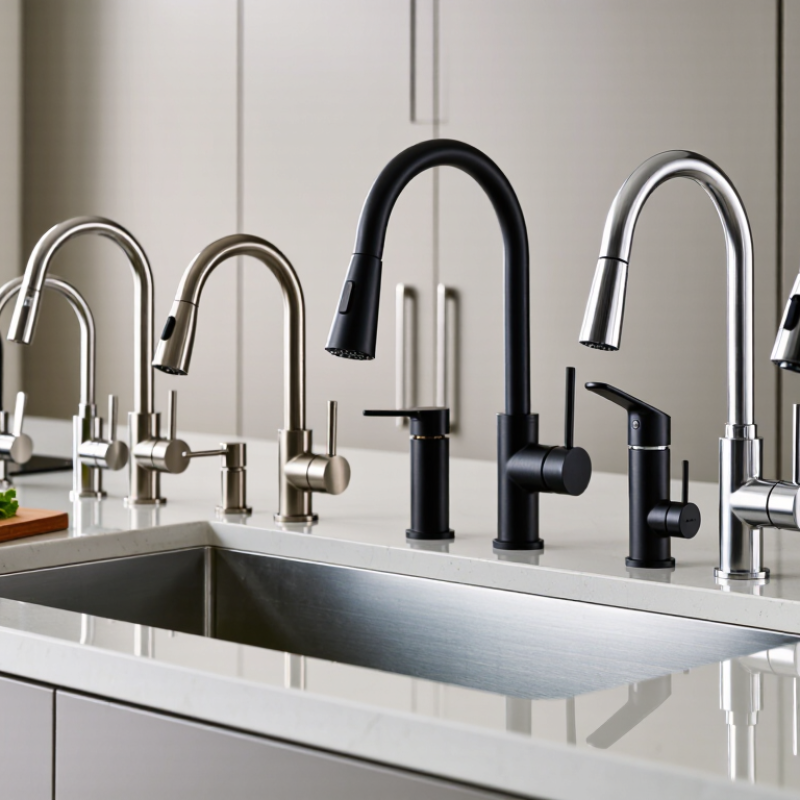
Kitchen faucets differ in reach, spray control, and installation needs. A pull-down faucet has a flexible spray head that lowers into deep pots. A pull-out model usually has a shorter spout, which can suit compact sinks. High-arc designs leave room for tall pitchers, but may splash in shallow basins. Check the sink’s number of mounting holes and the space beneath cabinets before choosing. That small measurement can prevent a frustrating return.
Core features affect daily use more than appearance alone. A single-handle control is quick to adjust with wet hands, while separate handles allow finer temperature changes. A ceramic cartridge can help reduce drips, though installation and water quality also matter. Look for a sprayer that switches smoothly between stream and spray, and a hose that retracts without snagging. Finishes vary in how visibly they show water spots; darker surfaces can need more wiping. Touchless controls are convenient, but they add parts that may need troubleshooting. No setup is perfect.
Tips: Measure the faucet’s reach against your sink before buying. Test the handle path near a backsplash. If possible, check replacement-part availability and confirm the faucet fits your existing connections. One detail is easy to miss: a powerful spray can scatter water in a shallow sink.
A practical comparison of common kitchen faucet styles, typical U.S. retail price ranges, and features to consider. These are category-based recommendations rather than rankings of specific products.
| Kitchen Faucet Type | Typical Price Range (USD) | Common Operation | Typical Spray or Spout Features | Installation Considerations | Best Suited For | Key Trade-Off |
|---|---|---|---|---|---|---|
| 1. Basic single-handle faucet | $50–$150 | One lever controls water flow and temperature. | Usually a fixed spout; some models include a simple spray setting. | Often fits a single-hole sink or deck; a deck plate may cover extra holes. | Budget-conscious kitchens and straightforward replacements. | Typically offers fewer spray options and a more basic finish selection. |
| 2. Pull-out faucet | $80–$250 | Single handle with a spray head that pulls forward from the spout. | Retractable hose commonly switches between stream and spray. | Check hose clearance and the space beneath the sink for the hose weight. | Compact sinks and kitchens where a lower-profile spout is useful. | The shorter spout may provide less clearance for tall cookware. |
| 3. Pull-down faucet | $100–$350 | Single handle with a spray head that pulls down into the sink. | Commonly offers stream and spray modes; some versions have a pause function. | Confirm the spout height and that the spray head can reach all sink bowls. | Everyday dishwashing and rinsing in a standard or deep sink. | A tall spout may not suit cabinets or shelves positioned close above the sink. |
| 4. High-arc gooseneck faucet | $70–$300 | Available with single- or two-handle controls. | High curved spout creates generous space beneath the outlet; spray features vary. | Measure overhead clearance and sink depth before choosing a tall model. | Filling tall pots and creating more working room above the basin. | Water may splash more in shallow sinks, depending on flow and basin shape. |
| 5. Touchless sensor faucet | $180–$600 | Turns on and off with a sensor; temperature is generally set with a handle. | May include pull-down spray functions and adjustable sensor settings. | Requires a power source, such as batteries or an outlet, depending on the model. | Hands-free use when cooking or handling raw ingredients. | Costs more than a basic faucet and may need battery replacement or power access. |
| 6. Touch-activated faucet | $150–$500 | Water starts or stops when the faucet body or handle is tapped. | Many versions combine touch activation with a pull-down spray head. | Check power requirements and follow the installation instructions for the sensor. | Users who want convenient activation without relying solely on a motion sensor. | Sensor response and placement can vary; electronic components add complexity. |
| 7. Commercial-style spring faucet | $150–$500 | Usually a single lever paired with a flexible spray head. | Exposed spring-style coil and a high-clearance pull-down sprayer. | Needs sufficient vertical clearance and a sink area that accommodates its size. | Busy kitchens and users who prefer an industrial-inspired look. | Its height and prominent design may overwhelm a small kitchen or shallow sink. |
| 8. Bridge faucet | $150–$600 | Separate hot and cold handles connect to the spout through a visible bridge. | Typically has a fixed spout; spray accessories depend on the design. | Often requires two or more deck holes; verify the sink or countertop layout. | Traditional or transitional kitchens seeking a distinctive profile. | Separate controls generally require two hands to adjust temperature and flow. |
| 9. Wall-mount faucet | $200–$700 | Controls and spout are mounted on the wall above the sink. | Spout reach varies; some designs allow the outlet to swivel. | Requires water supply lines in the wall and careful alignment with the sink. | Custom kitchens, apron-front sinks, and counters where a clear deck is desired. | Retrofitting can involve plumbing work; reach must match the basin to limit splashing. |
| 10. Pot-filler faucet | $150–$600 | Wall-mounted, articulated arm with a valve near the spout. | Folding joints extend the outlet over a cooktop or range. | Requires a water supply at the installation point; usually does not replace a sink faucet. | Filling large pots directly at the cooking area. | Does not carry filled pots back to the sink and adds a dedicated plumbing installation. |
Price ranges are approximate and can vary with materials, finish, included accessories, and retailer. Before buying, check the faucet’s hole configuration, sink depth, spout reach, water-supply connections, and installation requirements.

Choosing a kitchen faucet starts with the sink, not the price tag. Check how many mounting holes it has and measure the space behind the basin. A tall gooseneck may clear a stockpot, but it can splash in a shallow sink. Measure twice. If you rent or plan to keep the existing sink, choose a faucet that fits its current holes. An optional deck plate can cover extras.
Set a budget that includes installation, not just the faucet. Basic models often cover everyday needs, while pricier options may add a pull-down sprayer, sturdier finishes, or easier controls. Focus on features you will use daily. A smooth handle and a hose that retracts reliably can matter more than a touch feature you rarely need. Read the warranty and check whether replacement parts are available; a small leak years later should not mean replacing the whole fixture.
Think about who uses the kitchen. A single lever is convenient when your hands are wet, while a separate sprayer may suit a large sink. If your water has heavy mineral deposits, a finish that cleans easily could save effort. That matters. Still, no checklist catches every annoyance: spray reach and handle feel are hard to judge from a photo. If possible, compare faucet dimensions with your sink and countertop before buying. I would leave a little room in the budget for a plumber or unexpected fittings; that part is easy to overlook.
A useful comparison of ten kitchen faucets starts with price, but daily use matters more. In the entry-level range, consider a basic single-handle faucet, a compact low-arc model, or a two-handle design. These suit simple sink setups and keep replacement parts relatively straightforward. Check the mounting-hole count before buying. It is an easy detail to miss.
Mid-priced options often add practical features: a pull-down spray head, a pull-out hose, a high-arc spout, or a magnetic docking system. A pull-down head can rinse a baking tray without splashing the counter, while a longer hose helps reach sink corners. A separate side sprayer remains useful when the main faucet has limited movement. Look for smooth handle travel and a hose that retracts reliably; extra functions are not always better.
At the upper end, compare a touch-activated model, a bridge-style faucet, and a durable commercial-inspired design. These may offer convenient controls, distinctive styling, or sturdier construction, but higher cost does not guarantee easier maintenance. Confirm that the faucet fits the sink depth and cabinet clearance. Also check the stated flow rate and finish-care instructions. A polished finish can show water spots, and that may become tiresome. Read the installation requirements before choosing, especially if your sink or countertop is unusually thick.
Choosing a kitchen faucet means comparing more than finish and price. Stainless steel resists everyday wear and is easy to wipe clean, while brass often feels substantial and may suit traditional sinks. Coated finishes can offer more color choices, but scratches may show differently on each surface. Check care instructions before choosing; some finishes need a soft cloth rather than an abrasive pad.
Function matters at the sink. A pull-down spray head helps rinse leafy greens and reach sink corners, but its hose can snag if the cabinet below is crowded. A high arc leaves room for tall pots, though it may splash in a shallow basin. Touchless controls can be handy with messy hands, but they add parts that may need troubleshooting. More features are not always better.
Tips: Measure the sink holes, faucet reach, and cabinet clearance before buying. Check whether the faucet needs one hole or several, and inspect the shutoff valves. Installation can look simple on a diagram; tight cabinets and old fittings may make it awkward. If connections seem damaged or you are unsure, consult a qualified plumber.
A kitchen faucet lasts longer when small problems are noticed early. Once a week, wipe the spout and handle with a soft cloth, then check around the base for moisture. A thin wet ring can signal a loose connection or a worn seal. Catch it early. Don’t force a stiff handle; mineral buildup or a failing cartridge may be the cause. Mild dish soap is usually enough for routine cleaning. Abrasive pads and strong cleaners can damage some finishes, so check the care instructions before using them. I still find it easy to overlook the underside of the sink, where a slow drip may go unnoticed.
Every few months, remove the aerator if the faucet design allows it. Rinse away grit and soak mineral deposits in diluted white vinegar, unless the manufacturer advises against it. Turn off the water before attempting repairs, and open the faucet to release pressure. If flow remains weak, check the supply hoses for kinks and inspect visible connections for leaks. Replace cracked hoses promptly, using the correct fittings. Don’t overtighten them; excessive force can damage threads or seals. Test the shutoff valves gently, too. If one is stuck or a leak continues after a simple repair, a qualified plumber can help prevent water damage.
A simple upkeep schedule can help faucets at every price point stay clean and work properly.
Suggested routine: wipe the faucet weekly, check for drips monthly, clean the aerator every three months, and inspect under-sink connections annually. Follow the faucet maker’s care instructions when they differ.


For those larger-sized parts, or smaller quantity runs, we have 2 independent powder coat booths and ovens. The quality, durability and affordability of today’s powder coating finishes make this the process of choice for world-class companies.
Powder coating advantages over other forms of coating are many. Materials used in the Powder coating process can be metals and non-metals that come in a multitude of thicknesses, textures, colors, etc. Another of Powder coating’s biggest advantages over conventional coatings is its ability to create finishes in many different textures. Powder Coating Booths allow us the ability to apply these advantages to large products.
Tri-State Fabricators runs a full-service conveyor line for painting. Wet painting can provide protection or decoration to many different part styles. From start to finish, every project is easier to undergo random and point-based inspection by our skilled painting team.
Advantages to our Wet Paint Line are these lines start with product prep and ends with a thorough inspection of a high quality finished product. Our ability to complete large and small projects with a superior finish and doing so in a timely and economical fashion. This passes along the savings in production to our customers. When powder coating ins not an option, our Wet Paint Line gets the job done right the first time.
When the parts get big and heavy we roll-out our custom paint racks and oversize booth. By utilizing our partnerships with all the major paint brands, we can match virtually any color with wet paint.
The advantages of having access to a Wet Paint Booth are many. Large projects of many different shapes can be loaded into the booth. The Wet Paint Booth offers an environment that is much more controlled than a typical parts painting operation.
Not only are they used because of their controlled environment, but they’re are also advantageous when it comes to applying paint to parts that are needed in industries that require specialty coatings such as medical, aerospace, etc.
Our military forces have some very high standards when it comes to the finish of their vehicles and equipment. From the first pre-treatment step to final coat, it takes a great deal of knowledge and experience to protect the men and women of our armed forces. They deserve only the best, and Tri-State Fabricators provides it.
All of our processes are closely monitored by our staff and management teams. Both of which are highly trained in the processes of metal fabrication and finishing. Tri-State Fabricators’ goal is to always fully satisfy each and every customer, including the military. We will always put a 110% into what we do.
Abrasive media blasting is an excellent way to remove old paint, rust, and increase the paint/powder adhesion. Glass beads produce a much smoother and brighter finish than angular abrasives; leaving the part clean yet without any dimensional change. Chemically inert and environmentally friendly, we can recycle our beads approximately 30 times; making them a more preferred method of metal cleaning or surface finishing.
Advantages to Glass Bead Blasting are many. Glass bead blast media is used when a project is needing rough surfaces need to become smooth for applications of coatings such as paint. It is typically used to clean paint and rust from a product surface without deforming the surface it is being used on. Overall, compared to many other blasting media, Glass Bead Blasting is a very economical choice and those savings are always passed on to our customers.
Tri-State Fabricators utilize a zinc phosphate wash to clean and etch the material to ensure the best paint adhesion possible. The unique design of our 3-stage wash system does the work like a 5-stage. From Cleaning and rinsing to conversion coating and post-treatment, Our Part Washing process is a complete service and works throughout the fabrication service and the finishing service.
Along with the previously mentioned benefits, Curing is a vital chemical reaction that leaves the product finish hard and relatively safe from mild abrasion and aggressive corrosion. This process can be done in more than one way; ambient air-dry or in curing ovens at temps that exceed 240°.
From fixing paint mistakes (someone else’s of course) to simply cleaning our paint line hooks, our burn-off oven is put to good use. After a quick burn-off, a little clean up, and a fresh coat of paint, your parts will look better than new.
Why does our Burn-Off Oven work so well? Because super heating the air around parts turns the materials into ashes. From paint and powder coatings to rubber and machining oils, high temps do the job without degrading the integrity of the part.
Masking is a vital part of producing high quality products. We have die-cut masking patterns to protect machined surfaces as well as a wide range of plugs and caps to protect threaded holes and bolts. We provide permanent and temporary masking.
Masking allows the selected sections of a product to be protected from a fabrication or finishing service. This can be with both chemicals when etching and tapes, paints when only finishing just a section of the product. Masking is great in aiding the customization process of a project.
Screen printing is a photographic process that transfers artwork onto a porous nylon screen which allows colored ink to flow through the screen and be deposited on an aluminum or plastic component. We can generally have just about any design created onto a screen for your parts.
Some of the advantages of Screen Printing are, brand recognition for your business displaying on your products, assembly instructions, product warnings/hazards, etc. Tri-State Fabricators produces Screen Printing of the highest quality so you know it’s durable.
Metal Finishing is the art of treating the exterior portion of product, often metal but can also be made of other materials, so that the surface is clean and free of any debris. Then the process of applying coats or either paint of powder coat takes place. This coating process improves the quality of the product in both appearance and resistance to wear and corrosion.
Tri-State Fabricators, Inc., understands that a project typically isn’t complete until a high-quality finish has been added to your product. This is why our painting and powder coating teams continuously inspect the products throughout the Metal Finishing process.

