

Choosing a China-based manufacturer for an Illuminated Tact Switch means looking beyond a bright sample and a competitive quote. The switch must feel consistent, fit the panel, and remain readable in its intended lighting. A careful review starts with practical details: actuator height, operating force, mounting dimensions, LED color, and terminal layout. Ask how the supplier checks these features across production batches. Details matter.
Experienced buyers also examine samples under real conditions. Test the switch in the actual enclosure, with the planned light pipe or panel opening. A button that looks clear on a workbench may appear dim or uneven behind tinted plastic. Confirm the expected operating life and environmental conditions with documented specifications, rather than relying on broad claims. Request drawings, test records, and clear answers about customization and quality checks. These steps help separate capable manufacturers from listings that offer little technical detail.
China’s supplier base includes companies with different strengths, from standard catalog parts to customized assemblies. Compare their engineering support, communication, sample process, and ability to keep specifications stable. Not every option fits. One point deserves reflection: the lowest unit price can hide extra development time, inconsistent illumination, or a long approval process. Reliable sourcing is less about finding a perfect promise and more about verifying what the manufacturer can repeat. With measured testing and clear requirements, buyers can shortlist suppliers more confidently and select an Illuminated Tact Switch suited to the product, not merely the quotation.
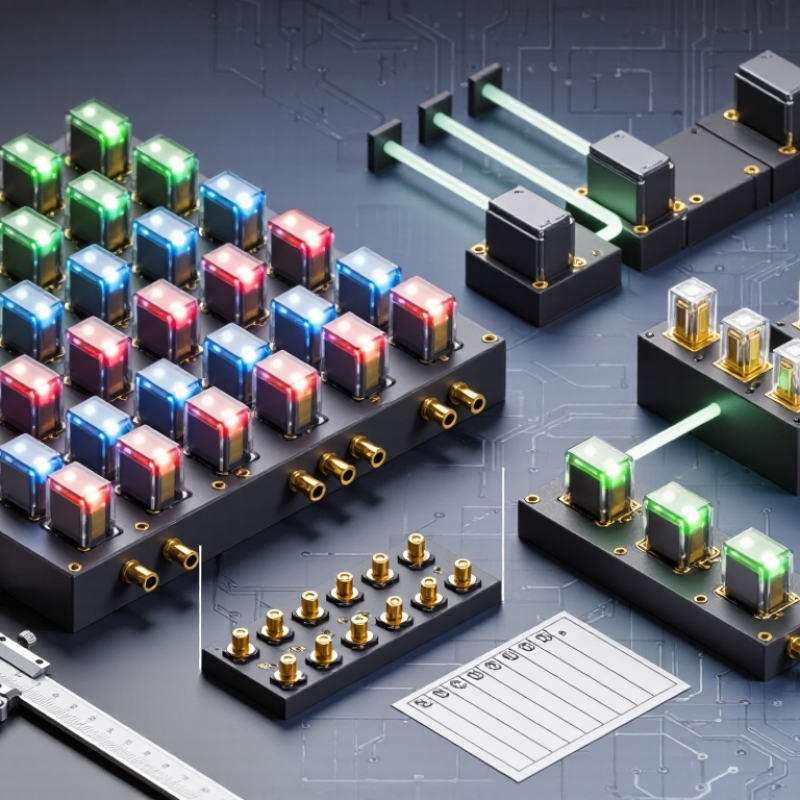
An illuminated tact switch combines a momentary mechanical switch with a small light source, usually an LED. Pressing its cap moves a spring-loaded contact, briefly closing an electrical circuit. Release the cap, and the contact opens again. The LED may turn on with the circuit, or operate separately through another pin. That depends on the design. Visibility matters. In a dim control panel, a colored cap can help an operator find the right button without changing position. Clear wiring diagrams and pin labels are essential because the light and switch circuits may be independent.
Brightness, color, operating voltage, and mounting dimensions all affect selection. The U.S. Department of Energy’s LED Lighting guidance reports that LEDs can use up to 90% less energy and last up to 25 times longer than incandescent lighting. Those figures describe LEDs generally, not the lifetime of a complete tact switch. One caveat. Heat, frequent pressing, soldering conditions, and panel exposure can affect actual performance. A common design mistake is treating brightness as the only goal; a very bright indicator may cause glare, while a dim one can disappear under strong ambient light. Check the switch’s datasheet for measured electrical and mechanical ratings, then test the assembled panel in its real lighting conditions.

China Best Illuminated Tact Switch Manufacturers
An illuminated tact switch combines a spring contact, actuator, housing, terminals, and light source. The contact dome creates the familiar click and returns the actuator after release. An LED may sit beside the contact, or a light guide may spread its output beneath a translucent cap. That small optical path matters. Uneven brightness can make a symbol look washed out, especially in a dark control panel.
Grand View Research estimated the global LED lighting market at USD 75.6 billion in 2023, with a projected 10.8% compound annual growth rate from 2024 to 2030. This broader lighting trend is not a tact-switch sales forecast, but it shows why compact illuminated controls attract design attention. For component selection, compare operating force, travel, contact rating, LED voltage, and mounting method. Also check light uniformity on the actual PCB; drawings can hide shadows from nearby parts. A common design miss is specifying a bright LED before checking heat and current limits. Bright is not always better.
For robustness, review the intended ESD environment and test conditions. IEC 61000-4-2:2008 includes test levels up to 8 kV contact discharge and 15 kV air discharge. These are test levels, not automatic product guarantees. Dust, soldering heat, and repeated actuation can also affect performance. Prototype the switch in its final enclosure. A clear lens may still distort color.
LED color is a key design choice for an illuminated tact switch. The chart shows representative nominal forward voltages; actual values vary with the LED and operating current. Check the component datasheet when selecting a switch or designing its drive circuit.
China’s illuminated tact switches are built through several tightly controlled production steps. Manufacturers typically mount LEDs and other components onto circuit boards, then combine them with molded housings, metal contact domes, and button caps. Automated optical inspection can flag shifted components, solder defects, or inconsistent LED placement. Operators also check samples by hand; tiny parts can still escape detection.
Testing covers both switching action and illumination. Equipment measures operating force, travel, contact resistance, and LED current, while cycling rigs repeatedly press sample switches to assess wear. For electrostatic-discharge planning, IEC 61000-4-2:2008 defines test levels up to 8 kV for contact discharge and 15 kV for air discharge. These are system-level test benchmarks, not proof that every switch receives those tests. Buyers should request the manufacturer’s actual test plan and results. Small details matter.
A capable factory records batch numbers and links test results to production lots, making failures easier to trace. Yet test fixtures can differ, and a passing sample cannot guarantee identical performance across every shipment. That limitation deserves attention. Ask how suppliers control LED brightness and color variation, and whether they test switches under the intended board and operating conditions. A switch may click reliably on a bench but feel different after installation.
When evaluating China’s illuminated tact switch manufacturers, start with the switch’s job, not a catalogue photo. Confirm the actuator size, mounting footprint, travel, and operating force against the panel design. Ask how the LED is driven and whether its color and brightness stay consistent across production lots. A bright sample is useful, but it cannot tell the whole story.
Request dimensional drawings, material details, rated electrical limits, and test records for endurance and contact performance. Check whether the supplier can explain the test setup, sample quantity, and acceptance criteria. These details make comparisons more meaningful than a single lifetime figure. Small details matter. Inspect samples for uneven light bleed, loose terminals, or a button that sticks after repeated presses. If something feels slightly off, request another sample; it may slow the decision, but guessing carries its own risk.
Manufacturing control deserves equal attention. Ask how incoming LEDs and contact parts are checked, how changes are documented, and whether dimensions remain stable between batches. Review packaging and lead-time assumptions, especially for delicate surface-mounted parts. A low quotation may still be suitable when specifications and inspection plans are clear. I would not treat a polished brochure as proof of reliability. Compare written evidence, sample behavior, and communication, then choose a manufacturer whose answers stay specific when requirements become less convenient.
| Evaluation Criterion | What to Check | Evidence to Request | Practical Evaluation Guide |
|---|---|---|---|
| Electrical Ratings | Rated voltage and current, contact configuration, and the specified resistive or other load conditions. | Current datasheet, product drawings, and test conditions for the exact part number. | Compare the ratings with the application. Do not assume a rating applies to every load type or operating condition. |
| Illumination Performance | LED color, forward voltage, forward current, polarity, brightness data, and illumination uniformity where specified. | LED specifications, circuit guidance, and sample measurements or visual samples at the intended operating conditions. | Confirm that LED drive requirements match the design and that the illuminated legend or window is suitable for the intended environment. |
| Operating Life | Electrical and mechanical life, plus the load, actuation force, travel, and test method used for each figure. | Datasheet life ratings and test reports identifying conditions and acceptance criteria. | Compare like-for-like test conditions. A cycle-life figure without its conditions is not sufficient for a direct comparison. |
| Mechanical Fit | Body dimensions, mounting method, terminal layout, actuator height, operating force, and total travel. | Dimensioned drawings, tolerances, recommended PCB footprint, and physical samples. | Check the switch against the enclosure, PCB, and actuator stack-up; verify fit with a sample before design freeze. |
| Environmental Protection | Operating temperature range and any stated dust or water protection rating. | Datasheet limits and, where an IP rating is claimed, supporting test documentation referencing the applicable IEC 60529 classification. | Treat protection as model-specific. Do not infer an IP rating from appearance or from another product in the range. |
| Materials and Compliance | Declared material composition and the product’s status against applicable substance restrictions and market requirements. | Product-specific compliance declarations and supporting material documentation; confirm scope and revision dates. | Verify documentation for the exact model and target market. A general company statement may not establish product-level compliance. |
| Quality Management | Documented production controls, inspection procedures, nonconformance handling, and traceability. | Quality-system certificate, its validity and scope, sample inspection records, and an explanation of lot identification. | Check that certificates cover the relevant manufacturing site and activities; assess production controls separately from certification. |
| Customization and Engineering | Available options for cap, illumination, actuator, terminals, packaging, and application-specific requirements. | Written feasibility review, revised drawings, prototype plan, and confirmation of design-change control. | Evaluate the supplier’s ability to document and validate changes, not only its willingness to offer customization. |
| Supply and Communication | Quoted lead time, minimum order quantity, sample availability, capacity information, and response to technical questions. | Written quotation, sample schedule, production and shipment assumptions, and a named point of contact. | Treat lead times and order quantities as quote-specific. Confirm them for the required configuration and order volume. |
| Sample and Production Validation | Consistency between approved samples and production parts, including function, dimensions, illumination, and packaging. | Pre-production samples, agreed inspection criteria, and a change-notification process for materials or manufacturing. | Approve samples against documented requirements and define how future production lots will be checked. |
Suggested scoring: Rate each criterion from 1 to 5 based on the completeness and verifiability of the evidence provided. This framework is for supplier comparison; specifications and commercial terms must be confirmed for each model and quotation.
Illuminated tact switches are useful wherever an operator needs clear, immediate feedback. They appear on appliance control panels, access equipment, instruments, and compact industrial interfaces. A lit key can help users find a control in a dim room or confirm that a setting has changed. Keep the light purposeful. Excessive brightness can cause glare, especially on glossy panel surfaces. A small prototype can reveal this problem before tooling begins.
Selection starts with the electrical and mechanical requirements. Match the LED’s rated voltage and current to the circuit, and check whether the switch offers the required color and viewing angle. Then compare actuation force, travel, and expected operating life with how often the key will be pressed. Panel thickness, mounting method, and available board space matter too. For dusty or damp locations, verify the specified protection level; a sealed panel does not automatically make the switch itself resistant. Test samples under the actual lighting and temperature conditions when possible. Check soldering compatibility as well. Specifications can look neat on paper, but tactile feel and visibility may differ in a finished enclosure. That detail is easy to overlook.


For those larger-sized parts, or smaller quantity runs, we have 2 independent powder coat booths and ovens. The quality, durability and affordability of today’s powder coating finishes make this the process of choice for world-class companies.
Powder coating advantages over other forms of coating are many. Materials used in the Powder coating process can be metals and non-metals that come in a multitude of thicknesses, textures, colors, etc. Another of Powder coating’s biggest advantages over conventional coatings is its ability to create finishes in many different textures. Powder Coating Booths allow us the ability to apply these advantages to large products.
Tri-State Fabricators runs a full-service conveyor line for painting. Wet painting can provide protection or decoration to many different part styles. From start to finish, every project is easier to undergo random and point-based inspection by our skilled painting team.
Advantages to our Wet Paint Line are these lines start with product prep and ends with a thorough inspection of a high quality finished product. Our ability to complete large and small projects with a superior finish and doing so in a timely and economical fashion. This passes along the savings in production to our customers. When powder coating ins not an option, our Wet Paint Line gets the job done right the first time.
When the parts get big and heavy we roll-out our custom paint racks and oversize booth. By utilizing our partnerships with all the major paint brands, we can match virtually any color with wet paint.
The advantages of having access to a Wet Paint Booth are many. Large projects of many different shapes can be loaded into the booth. The Wet Paint Booth offers an environment that is much more controlled than a typical parts painting operation.
Not only are they used because of their controlled environment, but they’re are also advantageous when it comes to applying paint to parts that are needed in industries that require specialty coatings such as medical, aerospace, etc.
Our military forces have some very high standards when it comes to the finish of their vehicles and equipment. From the first pre-treatment step to final coat, it takes a great deal of knowledge and experience to protect the men and women of our armed forces. They deserve only the best, and Tri-State Fabricators provides it.
All of our processes are closely monitored by our staff and management teams. Both of which are highly trained in the processes of metal fabrication and finishing. Tri-State Fabricators’ goal is to always fully satisfy each and every customer, including the military. We will always put a 110% into what we do.
Abrasive media blasting is an excellent way to remove old paint, rust, and increase the paint/powder adhesion. Glass beads produce a much smoother and brighter finish than angular abrasives; leaving the part clean yet without any dimensional change. Chemically inert and environmentally friendly, we can recycle our beads approximately 30 times; making them a more preferred method of metal cleaning or surface finishing.
Advantages to Glass Bead Blasting are many. Glass bead blast media is used when a project is needing rough surfaces need to become smooth for applications of coatings such as paint. It is typically used to clean paint and rust from a product surface without deforming the surface it is being used on. Overall, compared to many other blasting media, Glass Bead Blasting is a very economical choice and those savings are always passed on to our customers.
Tri-State Fabricators utilize a zinc phosphate wash to clean and etch the material to ensure the best paint adhesion possible. The unique design of our 3-stage wash system does the work like a 5-stage. From Cleaning and rinsing to conversion coating and post-treatment, Our Part Washing process is a complete service and works throughout the fabrication service and the finishing service.
Along with the previously mentioned benefits, Curing is a vital chemical reaction that leaves the product finish hard and relatively safe from mild abrasion and aggressive corrosion. This process can be done in more than one way; ambient air-dry or in curing ovens at temps that exceed 240°.
From fixing paint mistakes (someone else’s of course) to simply cleaning our paint line hooks, our burn-off oven is put to good use. After a quick burn-off, a little clean up, and a fresh coat of paint, your parts will look better than new.
Why does our Burn-Off Oven work so well? Because super heating the air around parts turns the materials into ashes. From paint and powder coatings to rubber and machining oils, high temps do the job without degrading the integrity of the part.
Masking is a vital part of producing high quality products. We have die-cut masking patterns to protect machined surfaces as well as a wide range of plugs and caps to protect threaded holes and bolts. We provide permanent and temporary masking.
Masking allows the selected sections of a product to be protected from a fabrication or finishing service. This can be with both chemicals when etching and tapes, paints when only finishing just a section of the product. Masking is great in aiding the customization process of a project.
Screen printing is a photographic process that transfers artwork onto a porous nylon screen which allows colored ink to flow through the screen and be deposited on an aluminum or plastic component. We can generally have just about any design created onto a screen for your parts.
Some of the advantages of Screen Printing are, brand recognition for your business displaying on your products, assembly instructions, product warnings/hazards, etc. Tri-State Fabricators produces Screen Printing of the highest quality so you know it’s durable.
Metal Finishing is the art of treating the exterior portion of product, often metal but can also be made of other materials, so that the surface is clean and free of any debris. Then the process of applying coats or either paint of powder coat takes place. This coating process improves the quality of the product in both appearance and resistance to wear and corrosion.
Tri-State Fabricators, Inc., understands that a project typically isn’t complete until a high-quality finish has been added to your product. This is why our painting and powder coating teams continuously inspect the products throughout the Metal Finishing process.