


10 Best Hex Nut Manufacturers for Global Buyers

Choosing a Hex Nut manufacturer involves more than comparing unit prices or browsing a polished catalog. Global buyers also need confidence in production consistency, clear communication, and dependable delivery. A part that looks simple can still cause costly delays when its thread fit, dimensions, or material differ from the drawing. Small differences matter. A useful supplier review looks at material options, dimensional controls, surface finishes, inspection practices, and the ability to handle repeat orders. Buyers should also consider whether packaging protects threads during long-distance shipping and whether product records are easy to review. No factory should be judged by a brochure alone.

This guide introduces ten Hex Nut manufacturers for buyers seeking potential partners across international markets. It offers a practical starting point, not a substitute for technical qualification. Compare each company against your actual requirements, including applicable standards, size range, order volume, lead time, and documentation needs. Ask for relevant specifications and inspection records, then confirm that samples match your drawings before committing to production. A supplier’s stated capabilities are useful, but evidence matters more. No shortlist is perfect. Company information can change, and a good fit for one project may not suit another. Use the profiles to narrow your options, ask specific questions, and verify details directly with each manufacturer.
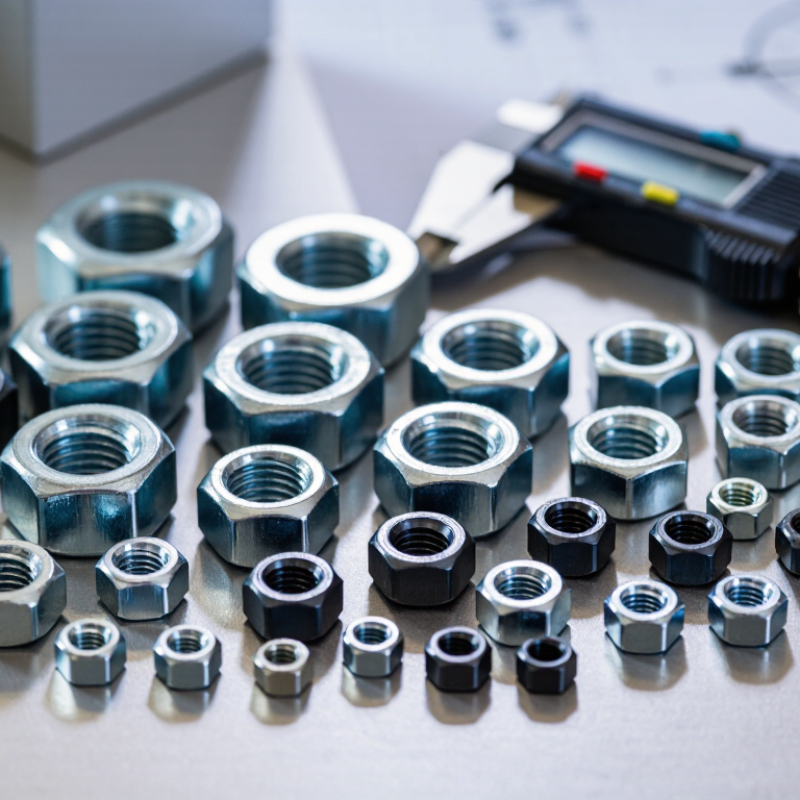
10 Best Hex Nut Manufacturers for Global Buyers

What Hex Nuts Are and How They Are Classified

Hex nuts are six-sided fasteners with internal threads, designed to tighten onto a bolt or threaded rod. Their flat faces give a wrench firm contact, while the corners help identify size quickly on a crowded workbench. For global buyers, “hex nut” alone is not a complete specification. Diameter, thread pitch, material, strength grade, and finish all affect fit and performance.

Classification can begin with shape and use: standard hex nuts suit many general assemblies, while thicker heavy hex nuts provide more bearing area. Lock nuts resist loosening through a nylon insert or all-metal design. Nuts are also grouped by material and grade, such as carbon steel, stainless steel, or brass. Finishes—including zinc plating and hot-dip galvanizing—change corrosion resistance and dimensions. Standards and grade markings vary, so confirm the applicable specification with the supplier. A catalog label can still be incomplete; I would verify samples or drawings before approving a large order.

Tips: Match the nut’s thread to the bolt, not just its diameter. Check the wrench size and clearance around the fastener. For outdoor use, consider the environment and coating compatibility. Keep a sample beside the drawing. Small mismatches matter.

10 Best Hex Nut Manufacturers for Global Buyers - What Hex Nuts Are and How They Are Classified

Common hex nut classifications, reference standards, materials, and typical selection considerations. Size examples are illustrative, not exhaustive.
Nut classification Common reference Typical materials Illustrative metric sizes Typical use and selection notes
Standard hex nut, style 1 ISO 4032 Carbon steel; stainless steel; alloy steel M6, M8, M10, M12, M16 General-purpose fastening. Match the nut’s property class and thread pitch to the bolt and service requirements.
Thin hex nut ISO 4035 Carbon steel; stainless steel M6, M8, M10, M12 Used where axial space is limited, often as a locknut paired with another nut. A thin nut generally has less load-bearing capacity than a standard nut.
High hex nut, style 2 ISO 4033 Carbon steel; alloy steel; stainless steel M8, M10, M12, M16 The taller profile provides more thread engagement than a standard style 1 nut; select according to the applicable assembly specification.
Nylon-insert prevailing-torque nut ISO 7040 Plated carbon steel; stainless steel M6, M8, M10, M12 The polymer insert resists loosening from vibration. Check the specified temperature range and whether reuse is permitted for the application.
Thin nylon-insert prevailing-torque nut ISO 10511 Plated carbon steel; stainless steel M6, M8, M10 Combines a reduced-height form with a nylon locking element for compact assemblies; verify available thread engagement and temperature suitability.
All-metal prevailing-torque nut ISO 7042 Carbon steel; alloy steel; stainless steel M6, M8, M10, M12 Locking action is produced by metal deformation rather than a polymer insert. Confirm the required property class, coating, and prevailing torque.
Hex flange nut ISO 4161 Carbon steel; stainless steel M6, M8, M10, M12 The integral flange spreads bearing load over a wider area. Serrated versions are also available, but their surface-gripping features can damage finishes.
Slotted and castle nut ISO 7035 Carbon steel; alloy steel; stainless steel M8, M10, M12, M16 Slots allow a cotter pin or similar retaining device to secure the assembly. The bolt or shaft must have a matching cross-hole.
Domed cap nut ISO 1587 Carbon steel; stainless steel; brass M4, M6, M8, M10 The closed end covers the exposed bolt thread and can improve appearance and reduce snagging. Ensure the bolt does not bottom out inside the cap.
Long hex coupling nut DIN 6334 Carbon steel; stainless steel M6, M8, M10, M12, M16 Joins two externally threaded components, such as threaded rods. Check engagement length and alignment when connecting rods.

Note: Standards and product details can vary by edition and specification. Confirm dimensions, thread tolerance, material, mechanical properties, coating, and certification requirements before ordering.


How to Evaluate Hex Nut Manufacturers for Global Sourcing

10 Best Hex Nut Manufacturers for Global Buyers

How to Evaluate Hex Nut Manufacturers for Global Sourcing

A low unit price can hide costly variation. Evaluate manufacturers against the nut’s grade, thread, dimensions, coating, and intended load. Ask for material certificates, dimensional inspection records, and mechanical test results tied to the specific batch. For coated nuts, check coating thickness and whether testing covers the finished product. Request samples from a normal production run, not only a specially prepared batch. Ask for clear batch identification. Small details matter.

Global delivery needs scrutiny too. The World Bank’s 2023 Logistics Performance Index assessed 139 countries across areas including tracking, logistics competence, and timeliness. These are country-level measures, not factory ratings, but they offer a useful lens for discussing shipping risks with suppliers. OECD Trade Facilitation Indicators cover 163 economies and 11 areas, including documentation and border procedures. Ask how the manufacturer prepares export paperwork and handles delayed or split shipments. A polished certificate is not proof of consistent production; verify records and compare samples with the agreed specification.

Tips: Start with a written specification and one pilot order. Check whether inspection results identify the batch, test method, and acceptance limits. If answers are vague, pause. Delivery promises can sound convincing, and I would still want evidence from a real shipment before relying on them.

10 Hex Nut Manufacturers Serving International Buyers

Choosing among ten hex nut manufacturers serving international buyers requires more than comparing unit prices. Buyers should check dimensional consistency, material traceability, production capacity, and export experience. ISO 898-2 specifies mechanical properties for nuts, so request test reports that identify the relevant property class and production lot. Small differences matter. A nut that binds on a bolt can slow an assembly line.

Shipping reliability also affects supplier choice. UNCTAD’s Review of Maritime Transport 2024 reports that over 80% of global trade by volume moves by sea. Delays, packaging damage, or unclear documents can therefore disrupt delivery plans. Ask manufacturers about lead times, corrosion-resistant packing, sample approval, and how they handle quality issues. A polished catalog helps, but it is not proof of consistent production; verify claims with samples and records. Even careful checks cannot prevent every delay.

Tips: Compare like-for-like specifications, including thread, grade, finish, and packaging. Request a recent inspection report, then check whether its lot number matches the sample. Record unanswered questions, too. They may reveal where a supplier’s process needs closer review.

How Manufacturers Compare in Standards, Products, and Supply

A useful comparison begins with the standard behind each nut, not the size of a catalogue. ISO 898-2 covers mechanical properties for carbon and alloy steel nuts, while ISO 3506-2 addresses corrosion-resistant stainless steel nuts. These standards help buyers check whether a product suits its load, material, and environment. A specification sheet should state the grade, thread, coating, and test requirements. Ask how the manufacturer controls lot traceability and handles test records. Certificates are useful, but they do not replace product-level evidence. Small details matter.

Supply capability needs the same scrutiny. The ISO Survey of Management System Standard Certifications reported 1,265,216 valid ISO 9001 certificates worldwide in 2023. Certification signals a quality-management system; it does not prove every shipment will arrive on time. UNCTAD’s Review of Maritime Transport 2023 says more than 80% of world trade by volume moves by sea. That makes packaging, port access, and realistic lead-time planning relevant when comparing suppliers. Ask for sample inspection reports and a clear plan for urgent replenishment. I would still compare more than a polished audit file: actual delivery consistency can be less tidy than the paperwork suggests. A short trial order can reveal packing damage, labeling gaps, or variation between batches.

How Global Buyers Can Select and Verify a Supplier

Choosing a hex nut supplier starts with a clear specification. Record the thread size, material grade, dimensions, coating, and required standard before requesting quotes. Ask how the manufacturer controls thread fit and lot-to-lot consistency. A low price means little if nuts arrive with uneven plating or damaged threads. Request material certificates and inspection records tied to the shipment, not generic sample documents. Check that the supplier can explain its testing process in plain terms.

Tips: Order samples from the production line, not specially prepared pieces. Measure several nuts with suitable gauges, then compare results with the agreed drawing. Ask for a recent inspection report and confirm batch traceability. If a supplier resists basic questions, pause.

For larger orders, review production capacity, quality procedures, and corrective-action records. A video call can show equipment and packaging, but it cannot replace independent inspection when risk is high. Confirm lead times, packaging details, and how defects are handled in writing. Keep a retained sample from each accepted batch. No audit catches everything; even a careful buyer can miss a detail, so build verification into repeat orders.

Powder Coat Booths

For those larger-sized parts, or smaller quantity runs, we have 2 independent powder coat booths and ovens. The quality, durability and affordability of today’s powder coating finishes make this the process of choice for world-class companies.

Powder coating advantages over other forms of coating are many. Materials used in the Powder coating process can be metals and non-metals that come in a multitude of thicknesses, textures, colors, etc. Another of Powder coating’s biggest advantages over conventional coatings is its ability to create finishes in many different textures. Powder Coating Booths allow us the ability to apply these advantages to large products.

Wet Paint Line

Tri-State Fabricators runs a full-service conveyor line for painting. Wet painting can provide protection or decoration to many different part styles. From start to finish, every project is easier to undergo random and point-based inspection by our skilled painting team.

Advantages to our Wet Paint Line are these lines start with product prep and ends with a thorough inspection of a high quality finished product. Our ability to complete large and small projects with a superior finish and doing so in a timely and economical fashion. This passes along the savings in production to our customers. When powder coating ins not an option, our Wet Paint Line gets the job done right the first time.

Wet Paint Booths

When the parts get big and heavy we roll-out our custom paint racks and oversize booth. By utilizing our partnerships with all the major paint brands, we can match virtually any color with wet paint.

The advantages of having access to a Wet Paint Booth are many. Large projects of many different shapes can be loaded into the booth. The Wet Paint Booth offers an environment that is much more controlled than a typical parts painting operation.

Not only are they used because of their controlled environment, but they’re are also advantageous when it comes to applying paint to parts that are needed in industries that require specialty coatings such as medical, aerospace, etc.

Military CARC

Our military forces have some very high standards when it comes to the finish of their vehicles and equipment. From the first pre-treatment step to final coat, it takes a great deal of knowledge and experience to protect the men and women of our armed forces. They deserve only the best, and Tri-State Fabricators provides it.

All of our processes are closely monitored by our staff and management teams. Both of which are highly trained in the processes of metal fabrication and finishing. Tri-State Fabricators’ goal is to always fully satisfy each and every customer, including the military. We will always put a 110% into what we do.

Glass-Bead Blasting

Abrasive media blasting is an excellent way to remove old paint, rust, and increase the paint/powder adhesion. Glass beads produce a much smoother and brighter finish than angular abrasives; leaving the part clean yet without any dimensional change. Chemically inert and environmentally friendly, we can recycle our beads approximately 30 times; making them a more preferred method of metal cleaning or surface finishing.

Advantages to Glass Bead Blasting are many. Glass bead blast media is used when a project is needing rough surfaces need to become smooth for applications of coatings such as paint. It is typically used to clean paint and rust from a product surface without deforming the surface it is being used on. Overall, compared to many other blasting media, Glass Bead Blasting is a very economical choice and those savings are always passed on to our customers.

Part Washing

Tri-State Fabricators utilize a zinc phosphate wash to clean and etch the material to ensure the best paint adhesion possible. The unique design of our 3-stage wash system does the work like a 5-stage. From Cleaning and rinsing to conversion coating and post-treatment, Our Part Washing process is a complete service and works throughout the fabrication service and the finishing service.

Along with the previously mentioned benefits, Curing is a vital chemical reaction that leaves the product finish hard and relatively safe from mild abrasion and aggressive corrosion. This process can be done in more than one way; ambient air-dry or in curing ovens at temps that exceed 240°.

Burn-Off Oven

From fixing paint mistakes (someone else’s of course) to simply cleaning our paint line hooks, our burn-off oven is put to good use. After a quick burn-off, a little clean up, and a fresh coat of paint, your parts will look better than new.

Why does our Burn-Off Oven work so well? Because super heating the air around parts turns the materials into ashes. From paint and powder coatings to rubber and machining oils, high temps do the job without degrading the integrity of the part.

Masking

Masking is a vital part of producing high quality products. We have die-cut masking patterns to protect machined surfaces as well as a wide range of plugs and caps to protect threaded holes and bolts. We provide permanent and temporary masking.

Masking allows the selected sections of a product to be protected from a fabrication or finishing service. This can be with both chemicals when etching and tapes, paints when only finishing just a section of the product. Masking is great in aiding the customization process of a project.

Screen Printing

Screen printing is a photographic process that transfers artwork onto a porous nylon screen which allows colored ink to flow through the screen and be deposited on an aluminum or plastic component. We can generally have just about any design created onto a screen for your parts.

Some of the advantages of Screen Printing are, brand recognition for your business displaying on your products, assembly instructions, product warnings/hazards, etc. Tri-State Fabricators produces Screen Printing of the highest quality so you know it’s durable.

Metal Finishing

Metal Finishing is the art of treating the exterior portion of product, often metal but can also be made of other materials, so that the surface is clean and free of any debris. Then the process of applying coats or either paint of powder coat takes place. This coating process improves the quality of the product in both appearance and resistance to wear and corrosion.

Tri-State Fabricators, Inc., understands that a project typically isn’t complete until a high-quality finish has been added to your product. This is why our painting and powder coating teams continuously inspect the products throughout the Metal Finishing process.
