


How to Choose the Best Heat Pump Water Tank in 2026

Choosing a Heat Pump Water Tank in 2026 means balancing household demand, available space, climate, and operating cost. Efficiency matters. But it is not the whole story. Tank capacity and recovery rate affect whether hot water is ready after back-to-back showers or a load of laundry. Check the unit’s dimensions, airflow clearances, and service access before comparing models. Some systems move noticeable air and sound, which can matter near a bedroom or shared wall. Small details count.

This guide explains how to compare capacity, efficiency ratings, operating modes, warranties, and installation requirements. It also considers cold-weather performance, backup heating, and the controls you will use every day. A product label offers useful data, but your home’s plumbing, local conditions, and household routines shape real-world results. Ask a qualified installer to assess the site and confirm the manufacturer’s requirements. Even a careful estimate can miss changing routines. That is worth admitting. The best choice is not automatically the largest tank or the model with the most impressive rating. It is the one that reliably meets demand, fits the installation space, and makes sense for your expected use. Before buying, compare total installed cost and ongoing maintenance needs, not just the purchase price.
How to Choose the Best Heat Pump Water Tank in 2026

Understand How Heat Pump Water Tanks Work

How to Choose the Best Heat Pump Water Tank in 2026

Understand How Heat Pump Water Tanks Work

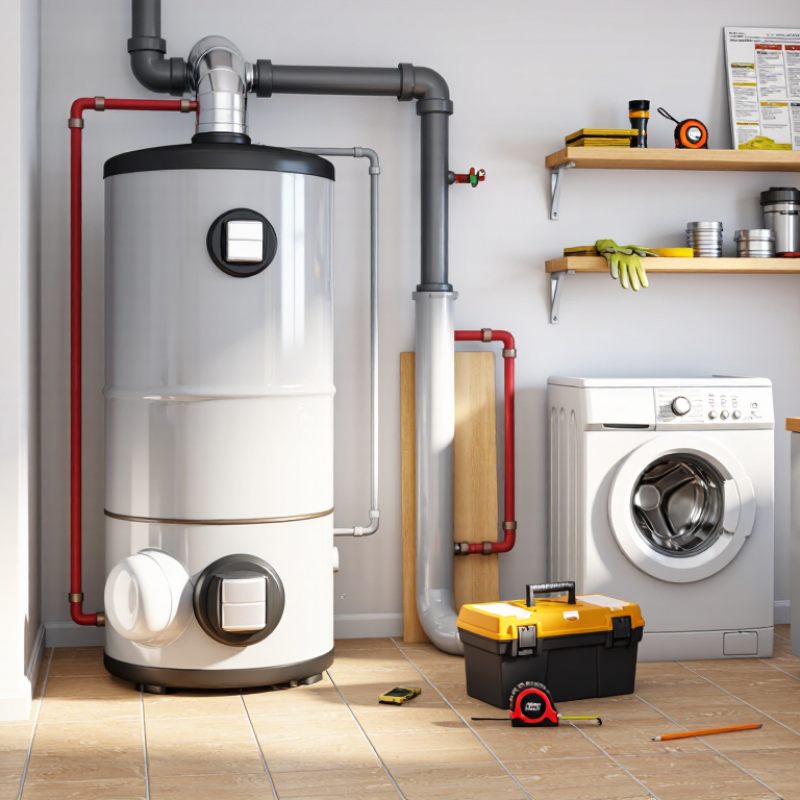
A heat pump water tank moves heat rather than generating it directly. A fan draws in surrounding air and passes it over a refrigerant coil. The refrigerant absorbs heat, then a compressor raises its temperature. That heat transfers to the stored water through a heat exchanger. It is clever. The tank still uses electricity, but often less than a conventional electric resistance heater.

Performance depends on the air around the unit. In a cold garage, the system may heat water more slowly or use its backup electric element. It also releases cool air and produces condensate, so placement and drainage matter. The explanation sounds simple, but real rooms are less tidy: noise, low ceilings, and winter temperatures can affect comfort and operation. Check the manufacturer’s stated operating range and installation clearances before choosing a tank.


Assess Household Hot Water Demand and Installation Conditions

A suitable heat pump water tank starts with a realistic picture of daily hot water use. Track showers, laundry, dishwashing, and overlapping morning routines for several days. A family of four may need more recovery capacity when two showers run back-to-back. Guest visits and a deep bathtub can change the peak demand, too. Measure twice. Don’t size the tank from household headcount alone; habits matter.

Next, check where the unit can actually go. Measure doorway widths, ceiling height, and floor space, including room for servicing. Many heat pump models draw heat from surrounding air, so a cramped closet may limit performance or require ducting. Check the manufacturer’s specified operating temperatures and clearances. Plan for condensate drainage, a suitable electrical connection, and plumbing access before choosing a location. Noise deserves attention near bedrooms.

A quick site visit by a qualified installer can uncover issues that a floor plan misses, such as a sloped floor or awkward pipe route. Ask how the proposed setup will handle colder conditions and household peak demand. Estimates are useful, but they are not perfect; actual use often differs from a neat calculation. Reserve enough space for safe access, not just the tank itself.

How to Choose the Best Heat Pump Water Tank in 2026

Assess household hot water demand and installation conditions.

Screening estimate: demand is based on 50 L of mixed water at 40°C per person per day, using the upper end of each household-size range. Indicative tank output assumes storage at 55°C and incoming water at 10°C, mixed to 40°C. Actual sizing depends on usage patterns, peak draws, recovery time, local water temperature, and installation conditions such as available space, airflow, noise, and condensate drainage. Confirm sizing with a qualified installer.

Compare Tank Size, Efficiency, Climate Performance, and Features

Choosing a heat pump water tank starts with matching capacity to real household use. Count the people, but also consider showers, laundry, and overlapping morning routines. A four-person home with long showers may need a different setup from one with brief, staggered use. Measure the space. Check doorways, ceiling height, and the room’s airflow before comparing models. An oversized tank can cost more and occupy useful space, while a small one may struggle during peak demand.

Efficiency ratings help compare energy use, but they are not the whole story. A higher rating can mean lower operating costs under standard test conditions. Check the rating method and the conditions behind it. Climate matters. In a chilly garage, some units may heat water more slowly or rely more often on backup elements. Review the manufacturer’s low-temperature performance data, and ask an installer whether the planned location stays within the unit’s operating range. This detail is easy to miss.

Features affect daily comfort and maintenance. Look for clear controls, useful scheduling, and accessible filters or service panels. Listen to a comparable unit if possible; fan and compressor noise can seem louder in a quiet utility room. Check where condensate drains, especially if the tank will sit above finished flooring. I would not choose based on a long feature list alone. Compare installation needs, expected recovery, and warranty terms with your household’s actual hot-water pattern.

Calculate Installation Costs, Energy Savings, and Available Rebates

How to Choose the Best Heat Pump Water Tank in 2026

Compare the full installed price, not just the tank’s sticker price. Ask contractors to itemize labor, electrical upgrades, condensate drainage, and any ductwork. Then subtract confirmed rebates from the total. U.S. Department of Energy guidance says heat pump water heaters can be two to three times more energy-efficient than conventional electric-resistance models. ENERGY STAR estimates a household of four may save about $550 annually by replacing a standard electric unit, though local rates and hot-water use change the result. Divide your net installation cost by realistic annual savings to estimate payback. It is only an estimate.

Tips: Check your state energy office and utility for current rebates before signing. Confirm eligibility, required equipment, installer rules, and application deadlines in writing. A rebate listed online may not apply to your installation date.

Get two or three detailed quotes. A basement with a nearby drain may be simpler than a tight closet needing new wiring or ventilation. Ask each installer to explain the assumed electricity rate and household usage behind their savings estimate. Small details matter. ENERGY STAR’s figures are useful benchmarks, not a promise; a spreadsheet can still miss changes in rates or shower habits. Verify 2026 incentive availability with the program administrator, since rebate rules and funding can change.

Evaluate Warranties and Select a Model for Your Home

A heat pump water tank can look like a simple replacement, until warranty details affect the real cost. Compare coverage for the tank, compressor, and other sealed components separately. Some warranties cover parts but not labor, so ask what a service visit may cost. Read the fine print. Check whether coverage requires professional installation, product registration, or routine maintenance. Keep receipts and service records; they may be needed if a claim arises.

The longest warranty is not automatically the best choice. Look for exclusions involving sediment, freezing, improper sizing, or installation conditions, and confirm the terms for your exact model. A helpful dealer or installer should explain these limits plainly, not just point to a large number on a brochure. That matters. Warranty service can also depend on local technician availability, so ask who handles repairs near your home and how quickly parts are usually obtained.

Fit the tank to household demand and the space available. Note the number of occupants, busy shower times, and the dimensions of the utility area. Heat pump models need suitable airflow and may produce a low fan hum; measure clearances and consider nearby bedrooms. In cooler spaces, check the operating temperature range and backup heating method in the manual. I might be tempted to choose the largest tank for peace of mind, but oversized equipment can cost more and take up useful space. Compare expected hot-water use with the unit’s first-hour rating before deciding.

How to Choose the Best Heat Pump Water Tank in 2026 — Evaluate Warranties and Select a Model for Your Home
Household size Starting tank-capacity range Approximate capacity in liters What to check before choosing
1–2 people 30–40 US gallons 114–151 L Compare the unit’s first-hour rating with your busiest hour of hot-water use. A smaller tank may be insufficient when several fixtures are used close together.
2–3 people 40–50 US gallons 151–189 L Consider shower length, bathing habits, and whether laundry or dishwashing commonly overlaps with showers.
3–4 people 50–60 US gallons 189–227 L Check first-hour delivery and recovery performance, especially if the household has multiple bathrooms or concentrated morning demand.
5 or more people 60–80 US gallons 227–303 L Compare larger-capacity options and the manufacturer’s sizing guidance. High demand may require a larger tank or a different system configuration.

Capacity note: These are preliminary storage-tank sizing ranges, not a guarantee of suitability. Actual selection should account for peak demand, the unit’s first-hour rating, incoming water temperature, and household usage. US gallons are converted using 1 US gallon ≈ 3.785 liters.

Warranty and Installation Evaluation Checklist
Evaluation area What to compare Questions to ask before purchase
Tank coverage Coverage for tank leakage or corrosion; the stated term and any exclusions. When does coverage begin? Are corrosion, water quality, or maintenance conditions excluded?
Compressor and sealed system Whether the compressor and other sealed-system components have separate coverage terms from the tank. Which components are covered, and is replacement labor included or excluded?
Other parts Coverage for controls, sensors, fans, valves, and other components; check whether terms differ by part. Does the warranty provide replacement parts only, or also cover diagnosis and service labor?
Labor and service Whether labor, travel, removal, disposal, and reinstallation costs are covered. Are there service-area limits, deductibles, or costs that remain the owner’s responsibility?
Warranty conditions Registration deadlines, approved installation requirements, maintenance obligations, and transferability. What documents must be kept, and could installation or maintenance choices affect coverage?
Installation space Required air volume or ducting, clearances, operating-temperature limits, noise, and access for service. Does the chosen location meet the installation manual’s requirements and provide a suitable condensate-drain route?
Operating cost and performance Compare the Energy Factor or Uniform Energy Factor, estimated annual energy use, and operating modes using the product’s current specification label. Are estimates based on assumptions that match your climate, electricity rate, and usage? How does the unit perform in heat-pump-only mode?
Final model fit Match capacity, first-hour rating, dimensions, electrical requirements, and warranty coverage to the home. Can the unit be installed without unplanned electrical, plumbing, drainage, or ventilation work?

Warranty note: Warranty periods and exclusions vary by model and region. Review the current written warranty and installation manual for the exact terms; do not compare warranty length alone.

Powder Coat Booths

For those larger-sized parts, or smaller quantity runs, we have 2 independent powder coat booths and ovens. The quality, durability and affordability of today’s powder coating finishes make this the process of choice for world-class companies.

Powder coating advantages over other forms of coating are many. Materials used in the Powder coating process can be metals and non-metals that come in a multitude of thicknesses, textures, colors, etc. Another of Powder coating’s biggest advantages over conventional coatings is its ability to create finishes in many different textures. Powder Coating Booths allow us the ability to apply these advantages to large products.

Wet Paint Line

Tri-State Fabricators runs a full-service conveyor line for painting. Wet painting can provide protection or decoration to many different part styles. From start to finish, every project is easier to undergo random and point-based inspection by our skilled painting team.

Advantages to our Wet Paint Line are these lines start with product prep and ends with a thorough inspection of a high quality finished product. Our ability to complete large and small projects with a superior finish and doing so in a timely and economical fashion. This passes along the savings in production to our customers. When powder coating ins not an option, our Wet Paint Line gets the job done right the first time.

Wet Paint Booths

When the parts get big and heavy we roll-out our custom paint racks and oversize booth. By utilizing our partnerships with all the major paint brands, we can match virtually any color with wet paint.

The advantages of having access to a Wet Paint Booth are many. Large projects of many different shapes can be loaded into the booth. The Wet Paint Booth offers an environment that is much more controlled than a typical parts painting operation.

Not only are they used because of their controlled environment, but they’re are also advantageous when it comes to applying paint to parts that are needed in industries that require specialty coatings such as medical, aerospace, etc.

Military CARC

Our military forces have some very high standards when it comes to the finish of their vehicles and equipment. From the first pre-treatment step to final coat, it takes a great deal of knowledge and experience to protect the men and women of our armed forces. They deserve only the best, and Tri-State Fabricators provides it.

All of our processes are closely monitored by our staff and management teams. Both of which are highly trained in the processes of metal fabrication and finishing. Tri-State Fabricators’ goal is to always fully satisfy each and every customer, including the military. We will always put a 110% into what we do.

Glass-Bead Blasting

Abrasive media blasting is an excellent way to remove old paint, rust, and increase the paint/powder adhesion. Glass beads produce a much smoother and brighter finish than angular abrasives; leaving the part clean yet without any dimensional change. Chemically inert and environmentally friendly, we can recycle our beads approximately 30 times; making them a more preferred method of metal cleaning or surface finishing.

Advantages to Glass Bead Blasting are many. Glass bead blast media is used when a project is needing rough surfaces need to become smooth for applications of coatings such as paint. It is typically used to clean paint and rust from a product surface without deforming the surface it is being used on. Overall, compared to many other blasting media, Glass Bead Blasting is a very economical choice and those savings are always passed on to our customers.

Part Washing

Tri-State Fabricators utilize a zinc phosphate wash to clean and etch the material to ensure the best paint adhesion possible. The unique design of our 3-stage wash system does the work like a 5-stage. From Cleaning and rinsing to conversion coating and post-treatment, Our Part Washing process is a complete service and works throughout the fabrication service and the finishing service.

Along with the previously mentioned benefits, Curing is a vital chemical reaction that leaves the product finish hard and relatively safe from mild abrasion and aggressive corrosion. This process can be done in more than one way; ambient air-dry or in curing ovens at temps that exceed 240°.

Burn-Off Oven

From fixing paint mistakes (someone else’s of course) to simply cleaning our paint line hooks, our burn-off oven is put to good use. After a quick burn-off, a little clean up, and a fresh coat of paint, your parts will look better than new.

Why does our Burn-Off Oven work so well? Because super heating the air around parts turns the materials into ashes. From paint and powder coatings to rubber and machining oils, high temps do the job without degrading the integrity of the part.

Masking

Masking is a vital part of producing high quality products. We have die-cut masking patterns to protect machined surfaces as well as a wide range of plugs and caps to protect threaded holes and bolts. We provide permanent and temporary masking.

Masking allows the selected sections of a product to be protected from a fabrication or finishing service. This can be with both chemicals when etching and tapes, paints when only finishing just a section of the product. Masking is great in aiding the customization process of a project.

Screen Printing

Screen printing is a photographic process that transfers artwork onto a porous nylon screen which allows colored ink to flow through the screen and be deposited on an aluminum or plastic component. We can generally have just about any design created onto a screen for your parts.

Some of the advantages of Screen Printing are, brand recognition for your business displaying on your products, assembly instructions, product warnings/hazards, etc. Tri-State Fabricators produces Screen Printing of the highest quality so you know it’s durable.

Metal Finishing

Metal Finishing is the art of treating the exterior portion of product, often metal but can also be made of other materials, so that the surface is clean and free of any debris. Then the process of applying coats or either paint of powder coat takes place. This coating process improves the quality of the product in both appearance and resistance to wear and corrosion.

Tri-State Fabricators, Inc., understands that a project typically isn’t complete until a high-quality finish has been added to your product. This is why our painting and powder coating teams continuously inspect the products throughout the Metal Finishing process.
