


2026 Best Fuel Cell Hydrogen Station Suppliers?

Choosing the 2026 best Fuel Cell Hydrogen Station suppliers requires more than comparing advertised prices. Buyers must examine engineering depth, proven deployments, safety records, and long-term service capacity.

A reliable supplier should understand the entire station ecosystem. This includes hydrogen production or delivery, high-pressure storage, compression, cooling, dispensing, controls, and emergency systems. Real experience appears in practical details: stable refueling times, clear maintenance schedules, accessible spare parts, and technicians who respond before a small fault becomes expensive downtime. Supplier evaluations should also consider recognized technical standards, regional approvals, cybersecurity practices, and transparent performance data. A polished brochure is not enough.

No supplier is perfect.

This guide compares leading companies through an evidence-based lens. It considers project scale, station configuration, fuel-cell vehicle compatibility, installation support, operating efficiency, and lifecycle costs. Customer references can reveal what sales presentations often omit, including noise near compressors, winter performance, software updates, and delays in replacement parts. Independent verification remains important, especially when suppliers report impressive capacity or uptime figures without explaining measurement conditions.

The strongest choice depends on your site, traffic profile, hydrogen source, budget, and expansion plans. A high-throughput station for buses may require different equipment from a compact fleet station serving delivery vehicles. Readers should use this overview as a practical starting point, then confirm certifications, warranties, local service coverage, and total ownership costs before signing a contract. Performance on paper can still disappoint in the field.
2026 Best Fuel Cell Hydrogen Station Suppliers?

What Is a Fuel Cell Hydrogen Station?

A fuel cell hydrogen station supplies compressed hydrogen to vehicles that use fuel cells. It is not a battery-charging site. Instead, hydrogen reacts with oxygen inside the vehicle’s fuel cell, producing electricity, heat, and water. The station receives hydrogen by pipeline, tube trailer, or on-site electrolysis. It then compresses, stores, cools, and dispenses the gas through a controlled nozzle. Think of it as a carefully managed energy transfer point.

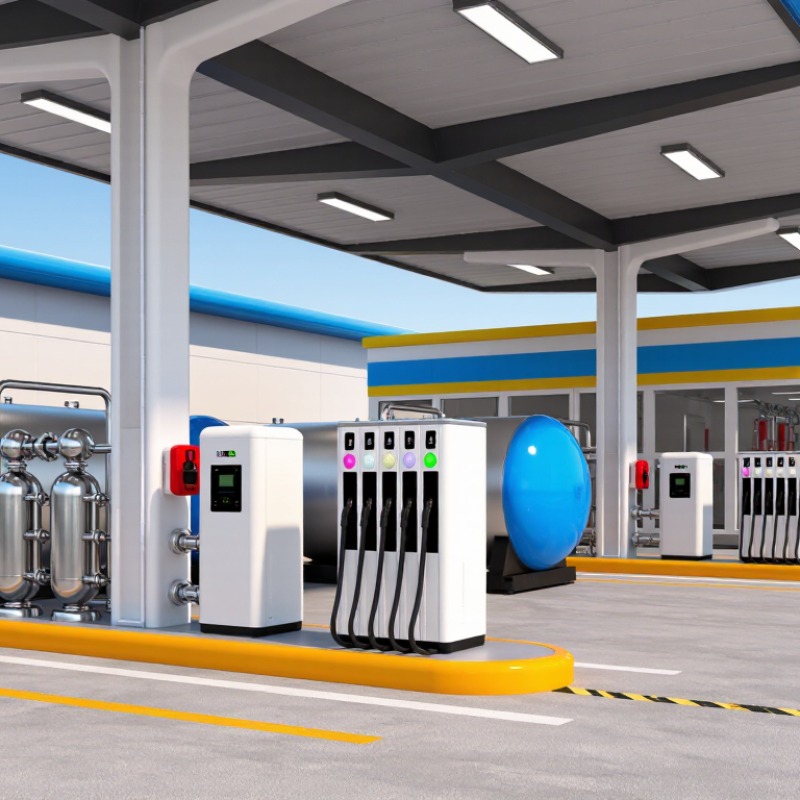
A typical station includes compressors, storage vessels, cooling equipment, dispensers, sensors, and emergency shutdown systems. During refueling, the dispenser checks pressure, temperature, and connection quality. The process may take only a few minutes. However, performance depends on storage capacity, delivery timing, weather, and maintenance. Real sites are less tidy than technical diagrams suggest. A small sensor fault can delay several vehicles, even when hydrogen is available.

When comparing fuel cell hydrogen station suppliers in 2026, buyers should examine safety records, pressure-control experience, service coverage, and system reliability. Independent testing and clear maintenance procedures matter more than attractive output figures. Suppliers should explain expected uptime, spare-part access, operator training, and emergency response. Experience from busy transport depots can reveal practical weaknesses early. No design is perfect. A responsible supplier admits limits and shows how the station handles them.


2026 Best Fuel Cell Hydrogen Station Suppliers? — What Is a Fuel Cell Hydrogen Station?

Fuel cell hydrogen stations store, compress, and dispense hydrogen for fuel cell vehicles. The two main vehicle fueling pressure classes are 35 MPa for many heavy-duty applications and 70 MPa for most passenger vehicles. These standardized pressure levels are important factors when evaluating station equipment, safety systems, and supplier capabilities.

Reference: SAE J2601 fueling protocols and common hydrogen mobility industry specifications. Values show nominal dispensing pressure classes, not company or brand performance.

How Fuel Cell Hydrogen Stations Operate

A fuel cell hydrogen station receives hydrogen, compresses it, and stores it in high-pressure vessels. Delivery may arrive by tube trailer or through a local production system. Compressors raise the pressure gradually. Cooling equipment then lowers hydrogen temperature before dispensing. This prevents excessive heat during a fast fill.

The vehicle and dispenser communicate continuously during refueling. Pressure, temperature, flow rate, and tank capacity guide the control system.

A typical passenger vehicle may use hydrogen stored near 700 bar, while other vehicles can require different pressure levels. Sensors check for leaks, abnormal pressure, and equipment faults. Automatic shutoff valves respond within moments.

Safety depends on more than hardware.

Trained technicians inspect seals, valves, grounding, ventilation, and emergency controls. In my experience, small calibration issues can create large operating delays. The process sounds simple, but it is not. A station may meet design specifications and still perform poorly during busy periods.

Cold weather, delivery timing, compressor wear, and user behavior all influence reliability.

Suppliers should provide clear maintenance records, realistic performance data, and practical operator training. I would also question impressive filling-time claims unless they include ambient conditions and actual vehicle testing.

Good operation is measured at the dispenser, not only in a laboratory.

Key Technologies Used in Hydrogen Refueling Stations

2026 Best Fuel Cell Hydrogen Station Suppliers?

Hydrogen refueling stations depend on coordinated technologies, not attractive equipment alone. A reliable supplier should understand the complete fueling process. This includes hydrogen storage, multi-stage compression, cooling, dispensing, and station control software. High-pressure storage cylinders must manage repeated pressure cycles safely. Compressors should maintain stable flow during busy fueling periods. Precooling systems reduce hydrogen temperature before dispensing. This supports faster vehicle refueling and protects vehicle storage systems.

Modern stations also require accurate sensors and dependable automation. Leak detection should respond quickly near compressors, valves, and dispensers. Purity monitoring helps protect fuel cell performance. Control systems can record pressure, temperature, flow rate, and maintenance events. Remote diagnostics may reduce service delays, especially in areas with limited technical staff. However, digital systems are not perfect. A sensor can drift, and software alarms may be misunderstood. Skilled technicians still matter.

Tips: Ask suppliers for verified performance data, maintenance procedures, and emergency response training. Check how the system performs during peak demand, cold weather, and repeated daily fueling. Request clear information about hydrogen purity, compressor life, spare parts, and service response times. A practical site visit can reveal noise, heat, access problems, and complicated maintenance points. Select equipment that trained operators can understand, inspect, and repair.

How to Evaluate Hydrogen Station Suppliers in 2026

How to Evaluate Hydrogen Station Suppliers in 2026

Selecting a hydrogen station supplier requires more than comparing equipment prices. The International Energy Agency’s Global Hydrogen Review 2024 reported that low-emissions hydrogen still represented less than 1% of global hydrogen production. This gap makes supply reliability and emissions data essential evaluation points. Ask suppliers for verified hydrogen origin, carbon-intensity calculations, compression efficiency, and electricity-use records. Vague sustainability claims are not enough.

Inspect station performance in real operating conditions. Request independently verified uptime, including failures, maintenance delays, and dispenser downtime. A supplier should demonstrate compliance with ISO 19880-1, SAE J2601, pressure-vessel rules, and local fire requirements. Check whether the station supports 350-bar or 700-bar vehicles, rapid cooling, leak detection, and emergency shutdowns. The International Organization for Standardization stresses risk-based design and operational controls for hydrogen refueling systems. Safety paperwork must match the installed hardware.

Look beyond the first quotation. Compare total ownership costs across compressors, storage banks, cooling systems, software, spare parts, and technician response times. The Hydrogen Council’s Hydrogen Insights reports continuing growth in announced hydrogen projects, but announcements do not guarantee construction or reliable service. Ask for operating references with similar traffic levels and climates. Site visits reveal more than presentations. I would also test the supplier’s repair process before signing. Some evaluations overvalue capacity and undervalue maintenance. That is a costly mistake.

2026 Best Fuel Cell Hydrogen Station Suppliers? - How to Evaluate Hydrogen Station Suppliers in 2026

Evaluation Dimension Key KPI or Requirement Recommended 2026 Benchmark Evidence to Request Weight
Safety and Risk Management Hydrogen leak detection, emergency shutdown, pressure relief, hazardous-area design and risk assessment Design aligned with ISO 19880-1 and applicable local fire, pressure-equipment and hazardous-location requirements; documented HAZOP or equivalent risk review Safety case, P&IDs, shutdown logic, alarm matrix, inspection records and third-party assessment 20%
Codes and Certifications Compliance with fueling, electrical, pressure-vessel and hydrogen-quality standards Clear compliance matrix covering ISO 19880-1, SAE J2601 where applicable, ISO 14687 hydrogen quality, IEC 60079 or equivalent hazardous-area rules, and local regulations Certificates, conformity declarations, test reports, calibration certificates and approval responsibility matrix 15%
Fueling Performance Vehicle compatibility, dispensing pressure, fueling time and temperature control Support for the required 35 MPa and/or 70 MPa vehicle classes; fueling protocol and temperature control suitable for the target vehicle fleet Validated fueling curves, protocol test results, dispenser specifications and vehicle compatibility list 15%
Station Availability Operational uptime, fault recovery and remote monitoring Contractual availability target of at least 98% after commissioning, excluding documented force-majeure events; 24/7 alarm monitoring preferred Reference-site uptime reports, service-level agreement, alarm history and mean-time-to-repair records 10%
Hydrogen Quality Purity and contaminant control at the vehicle dispenser Hydrogen quality documented against ISO 14687 requirements for the intended fuel-cell vehicle application, with sampling and traceability procedures Laboratory analysis, certificates of analysis, sampling plan, filtration design and chain-of-custody records 10%
Capacity and Scalability Daily dispensing capacity, peak demand handling and expansion options Capacity model based on actual fleet demand, delivery schedule, storage configuration and peak-hour dispensing; modular expansion should be possible Hydraulic model, storage and compressor sizing, queue analysis, expansion drawings and load profile assumptions 10%
Project Delivery Engineering, permitting, construction, commissioning and schedule control Single responsibility for interface management, documented stage-gate plan, commissioning protocol and clear permit-support scope Detailed project schedule, interface register, commissioning checklist, permit schedule and delay-management process 8%
Service and Spare Parts Local technical support, spare-parts availability and preventive maintenance Defined response times, trained service personnel, critical-spares strategy and preventive-maintenance intervals based on operating hours or cycles Service organization chart, response-time commitments, spare-parts list, maintenance plan and technician qualifications 7%
Total Cost of Ownership Capital cost, energy consumption, maintenance, consumables, upgrades and end-of-life obligations Five- to ten-year life-cycle model using common assumptions for utilization, electricity, hydrogen supply, maintenance and replacement parts Itemized quotation, energy-use assumptions, warranty terms, maintenance pricing and replacement-cost schedule 5%
Total Evaluation Weight 100%

Evaluation note: Apply the benchmarks to the specific country, station type, vehicle class and dispensing capacity. Final compliance must be confirmed with the relevant authority having jurisdiction and the latest applicable editions of the referenced standards.

Leading Supplier Categories and Selection Criteria

Choosing the best fuel cell hydrogen station supplier in 2026 starts with supplier categories, not glossy equipment photos. The main groups include electrolyzer manufacturers, compression and storage specialists, dispenser suppliers, EPC integrators, and operations teams. Each solves a different bottleneck. The IEA’s Global Hydrogen Review 2024 reported nearly 97 million tonnes of global hydrogen demand in 2023, while low-emissions hydrogen remained below 1 million tonnes. That gap signals opportunity, but also warns buyers against unrealistic delivery promises.

Selection should begin with station duty cycles. A city bus depot needs reliable overnight filling, while a highway station needs fast dispensing, larger storage, and stronger redundancy. Ask suppliers for measured uptime, filling times, hydrogen purity records, and maintenance response data. Check alignment with ISO 19880-1, SAE J2601, and ISO 14687 requirements.

Safety documentation matters. So does local service capacity. The Hydrogen Council’s Hydrogen Insights 2024 identified more than 1,500 announced hydrogen projects globally, representing substantial planned investment, but announcements are not operating assets.

My first supplier shortlist would have focused too heavily on compressor capacity. That would be a mistake. A station can have impressive flow rates and still suffer from poor controls, delayed spare parts, or weak commissioning support. Compare total cost per kilogram, not only the equipment invoice. Require factory acceptance testing, site performance trials, cybersecurity controls, and transparent warranty limits. Some proposals may look complete, yet exclude civil works or electricity upgrades. Read the exclusions carefully.

Powder Coat Booths

For those larger-sized parts, or smaller quantity runs, we have 2 independent powder coat booths and ovens. The quality, durability and affordability of today’s powder coating finishes make this the process of choice for world-class companies.

Powder coating advantages over other forms of coating are many. Materials used in the Powder coating process can be metals and non-metals that come in a multitude of thicknesses, textures, colors, etc. Another of Powder coating’s biggest advantages over conventional coatings is its ability to create finishes in many different textures. Powder Coating Booths allow us the ability to apply these advantages to large products.

Wet Paint Line

Tri-State Fabricators runs a full-service conveyor line for painting. Wet painting can provide protection or decoration to many different part styles. From start to finish, every project is easier to undergo random and point-based inspection by our skilled painting team.

Advantages to our Wet Paint Line are these lines start with product prep and ends with a thorough inspection of a high quality finished product. Our ability to complete large and small projects with a superior finish and doing so in a timely and economical fashion. This passes along the savings in production to our customers. When powder coating ins not an option, our Wet Paint Line gets the job done right the first time.

Wet Paint Booths

When the parts get big and heavy we roll-out our custom paint racks and oversize booth. By utilizing our partnerships with all the major paint brands, we can match virtually any color with wet paint.

The advantages of having access to a Wet Paint Booth are many. Large projects of many different shapes can be loaded into the booth. The Wet Paint Booth offers an environment that is much more controlled than a typical parts painting operation.

Not only are they used because of their controlled environment, but they’re are also advantageous when it comes to applying paint to parts that are needed in industries that require specialty coatings such as medical, aerospace, etc.

Military CARC

Our military forces have some very high standards when it comes to the finish of their vehicles and equipment. From the first pre-treatment step to final coat, it takes a great deal of knowledge and experience to protect the men and women of our armed forces. They deserve only the best, and Tri-State Fabricators provides it.

All of our processes are closely monitored by our staff and management teams. Both of which are highly trained in the processes of metal fabrication and finishing. Tri-State Fabricators’ goal is to always fully satisfy each and every customer, including the military. We will always put a 110% into what we do.

Glass-Bead Blasting

Abrasive media blasting is an excellent way to remove old paint, rust, and increase the paint/powder adhesion. Glass beads produce a much smoother and brighter finish than angular abrasives; leaving the part clean yet without any dimensional change. Chemically inert and environmentally friendly, we can recycle our beads approximately 30 times; making them a more preferred method of metal cleaning or surface finishing.

Advantages to Glass Bead Blasting are many. Glass bead blast media is used when a project is needing rough surfaces need to become smooth for applications of coatings such as paint. It is typically used to clean paint and rust from a product surface without deforming the surface it is being used on. Overall, compared to many other blasting media, Glass Bead Blasting is a very economical choice and those savings are always passed on to our customers.

Part Washing

Tri-State Fabricators utilize a zinc phosphate wash to clean and etch the material to ensure the best paint adhesion possible. The unique design of our 3-stage wash system does the work like a 5-stage. From Cleaning and rinsing to conversion coating and post-treatment, Our Part Washing process is a complete service and works throughout the fabrication service and the finishing service.

Along with the previously mentioned benefits, Curing is a vital chemical reaction that leaves the product finish hard and relatively safe from mild abrasion and aggressive corrosion. This process can be done in more than one way; ambient air-dry or in curing ovens at temps that exceed 240°.

Burn-Off Oven

From fixing paint mistakes (someone else’s of course) to simply cleaning our paint line hooks, our burn-off oven is put to good use. After a quick burn-off, a little clean up, and a fresh coat of paint, your parts will look better than new.

Why does our Burn-Off Oven work so well? Because super heating the air around parts turns the materials into ashes. From paint and powder coatings to rubber and machining oils, high temps do the job without degrading the integrity of the part.

Masking

Masking is a vital part of producing high quality products. We have die-cut masking patterns to protect machined surfaces as well as a wide range of plugs and caps to protect threaded holes and bolts. We provide permanent and temporary masking.

Masking allows the selected sections of a product to be protected from a fabrication or finishing service. This can be with both chemicals when etching and tapes, paints when only finishing just a section of the product. Masking is great in aiding the customization process of a project.

Screen Printing

Screen printing is a photographic process that transfers artwork onto a porous nylon screen which allows colored ink to flow through the screen and be deposited on an aluminum or plastic component. We can generally have just about any design created onto a screen for your parts.

Some of the advantages of Screen Printing are, brand recognition for your business displaying on your products, assembly instructions, product warnings/hazards, etc. Tri-State Fabricators produces Screen Printing of the highest quality so you know it’s durable.

Metal Finishing

Metal Finishing is the art of treating the exterior portion of product, often metal but can also be made of other materials, so that the surface is clean and free of any debris. Then the process of applying coats or either paint of powder coat takes place. This coating process improves the quality of the product in both appearance and resistance to wear and corrosion.

Tri-State Fabricators, Inc., understands that a project typically isn’t complete until a high-quality finish has been added to your product. This is why our painting and powder coating teams continuously inspect the products throughout the Metal Finishing process.
