


Choosing the best Explosion Proof Emergency Light from China is not a price-only decision. The light must suit the site’s hazard classification, operating conditions, and emergency-lighting needs. A unit that looks rugged in a product photo may still have the wrong protection rating or battery runtime for a particular installation.
Safety researcher James Reason wrote, “We cannot change the human condition, but we can change the conditions under which humans work.” That principle matters when selecting emergency lighting: dependable equipment can help make an evacuation route visible when normal power fails. Consider a warehouse aisle where dust settles on fixtures, a processing area exposed to moisture, or a corridor where a backup light must remain available after a power cut. Each setting calls for careful checks, not guesswork.
This guide compares Chinese-made options through practical details: certified protection markings, enclosure materials, light output, battery performance, charging time, and tested emergency duration. It also considers supplier documentation, spare-part availability, and the clarity of product specifications. Ask for test records and confirm that ratings match the intended application. “Looks compliant” is not enough.
There is room for reflection, too. A long runtime on a datasheet does not guarantee the same result under every temperature or maintenance schedule. The best choice is therefore the model whose verified performance fits the actual site—not simply the one with the brightest beam or lowest quote.
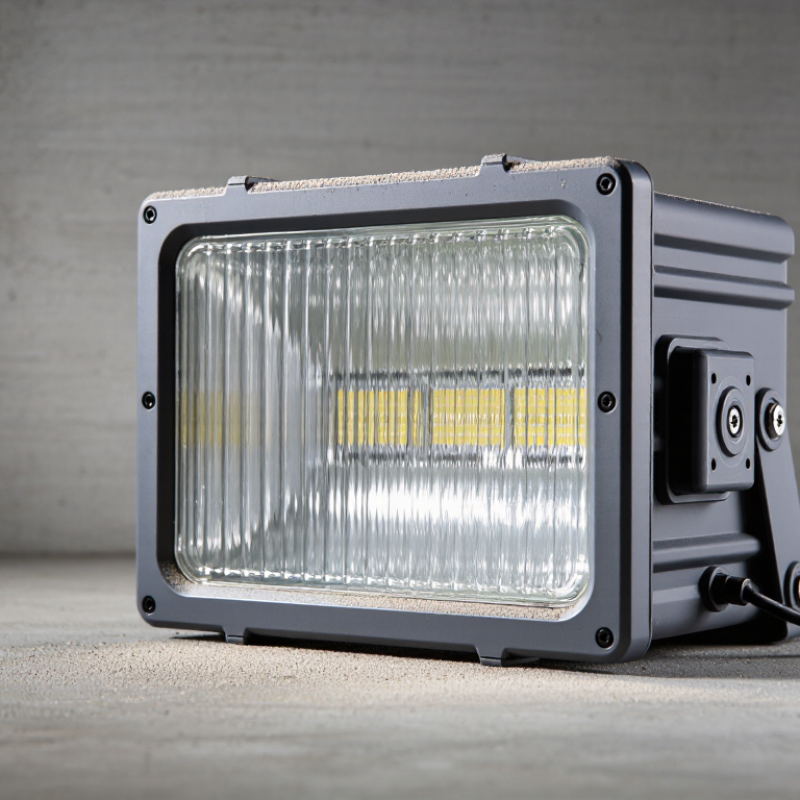
An explosion-proof emergency light is designed for locations where flammable gases, vapors, or dust may be present. Its enclosure helps contain an internal electrical ignition and limits flames or hot gases from reaching the surrounding atmosphere. “Explosion-proof” does not mean the light can never fail or that every model suits every hazardous area. That distinction matters. During a power outage, a built-in battery keeps the lamp operating so people can see exits, stairs, and work areas. Look for a clearly stated operating duration and suitable temperature and area ratings.
A sturdy unit often has a sealed housing, impact-resistant lens, and protected cable entries. These details help resist dust, moisture, and rough handling, but the right specifications depend on the site. A warehouse aisle and a chemical process room may need different equipment. Have a qualified professional assess the location and verify applicable certification before installation. In practice, these details are easy to overlook.
Tips: Check the battery’s condition and emergency runtime regularly. Test the light under the site’s maintenance procedure, and keep its lens clean. A dusty lens can reduce visibility when it matters most.

IP ratings describe protection against dust and water. They do not indicate explosion protection: for hazardous areas, check that the light has the required certification for the specific location.
The first IP digit indicates dust protection (5: dust-protected; 6: dust-tight). The second indicates water protection (4: splashing water; 5: water jets; 6: powerful water jets). The two digits refer to different tests.
What Is the Best Explosion Proof Emergency Light from China?
Where Explosion-Proof Emergency Lights Are Used
Explosion-proof emergency lights are installed in hazardous areas where a spark, hot surface, or electrical fault could ignite flammable gas, vapor, or dust. Common locations include refinery process units, chemical transfer areas, grain elevators, paint rooms, and biogas facilities. They are usually needed only in classified zones, not throughout an entire site. A careful site survey should identify the actual gas or dust group, temperature class, and zone or division before selecting a fixture.
The U.S. NFPA 101, 2024 edition, sets an emergency-illumination benchmark of 1 foot-candle average and 0.1 foot-candle minimum at floor level initially. After 90 minutes, the benchmark is 0.6 average and 0.06 minimum. These figures help assess escape-route visibility, but local requirements may differ. On site, test the beam around pipe racks, stair landings, and doorways; one bright patch can still leave a trip hazard in shadow.
Tips: Match the luminaire’s hazardous-area certification to the location, then check battery duration, ambient temperature, corrosion resistance, and dust buildup. Keep clear test records. A missed test is easy to explain—and easy to regret.
An explosion-proof emergency light must match the actual hazardous area, not just look rugged. Check the equipment marking for the gas or dust group, zone, temperature class, and permitted ambient temperature. These details determine whether the light suits a site handling flammable vapors, combustible dust, or both. A mismatch can be easy to overlook.
For many international projects, IEC 60079 standards cover protection methods and testing for explosive atmospheres. IECEx certification provides a conformity route recognized in participating markets, while ATEX applies to equipment placed on the European Union market. In North America, ask whether the product is certified for the relevant hazardous-location class and division, such as under UL 844. Requirements differ by destination. Verify the exact model and configuration against the certificate; similar-looking versions may not share the same approval.
Emergency-light performance matters too. IEC 60598-2-22 addresses emergency luminaires, while local rules may set additional requirements for duration, testing, or installation. Confirm the rated backup time and check that the battery can deliver it at the specified temperature. An IP rating describes resistance to dust and water, not explosion protection. That distinction is often missed. Review the nameplate, certificate scope, and test documents together, and ask the supplier to clarify any gap before purchase. Paperwork can look complete and still leave one important detail uncertain.
For an emergency light in a hazardous work area, compare the beam before comparing the price. LED units generally use less energy and can provide a clear, steady beam, but brightness alone is not enough. Check whether the light reveals floor edges, pipe labels, and exit signs without harsh glare. A wide beam may help in a cramped pump room; a focused beam can reach farther along a corridor. Try to assess the actual lens pattern, not just the headline lumen figure.
Runtime needs a careful read. A stated eight-hour duration may depend on a new, fully charged battery and a mild test environment. Ask what brightness was measured, whether the figure reflects emergency mode, and how battery aging affects performance. Cold storage can reduce usable capacity. That matters. If possible, review test records and compare them with the longest likely outage, leaving a practical reserve rather than relying on the exact advertised limit.
Protection ratings describe different things. An IP rating indicates resistance to dust and water; hazardous-area markings address whether equipment is suitable for a specified atmosphere and zone. They are not interchangeable. Check the marking, certificate scope, ambient-temperature range, and installation instructions against the site conditions. I would not pick a light from one rating alone. Even a well-marked unit can disappoint if its mounting blocks the beam or its battery is hard to inspect. The best comparison includes the environment, maintenance access, and real emergency lighting needs.
| Comparison Factor | Option or Benchmark | What to Check | Practical Comparison |
|---|---|---|---|
| Light source | LED | Rated light output in lumens, beam pattern, color temperature, and emergency-mode output. | Common in current emergency luminaires because LEDs are energy-efficient and have long service lives. Compare the stated emergency output, not just the normal-mode output. |
| Light source | Fluorescent | Lamp type, replacement availability, starting behavior, and output in emergency mode. | Found mainly in older installations. Compare total maintenance needs and replacement-lamp availability with an LED alternative. |
| Emergency runtime | 90 minutes or 180 minutes | Rated duration at the specified emergency output, and the test conditions used. | These are common duration choices, not a universal requirement. Select the duration required by local codes, the site risk assessment, and the project specification. |
| Battery | Rechargeable battery pack | Battery chemistry, charging time, replaceability, operating-temperature limits, and replacement interval. | Runtime can change with temperature, battery age, and load. Check that the declared duration applies to emergency operation and that the battery can be serviced safely. |
| Ingress protection | IP66 or IP67, where required | The complete IP code shown on the luminaire certification or datasheet. | Under IEC 60529, IP6X means dust-tight. IPX6 covers powerful water jets; IPX7 covers temporary immersion under specified test conditions. Neither rating alone establishes explosion protection. |
| Explosion protection | Hazardous-area Ex marking | Gas or dust group, temperature class or maximum surface temperature, equipment protection level, and certificate scope. | Match the full marking to the site’s hazardous-area classification. An “explosion proof” claim by itself is not enough to confirm suitability. |
| Protection concept | Examples include Ex db, Ex eb, or Ex ia | The protection concept and the applicable equipment marking for the intended area. | These are different protection methods, not interchangeable quality grades. Confirm the approved protection concept and area suitability against the certificate and installation requirements. |
| Photometric performance | Rated lumens and emergency illuminance | Independent photometric data, mounting height, spacing, and the required illumination along escape routes. | A higher lumen figure does not automatically provide better emergency coverage. Compare the lighting layout and emergency-mode performance for the actual space. |
| Certification and documentation | Applicable local approvals and test documents | Certificate number, issuing body, applicable standards, model identification, and installation instructions. | Verify that certificates cover the exact model and configuration being offered. Requirements differ by destination market and hazardous-area classification. |
| Overall selection | Best fit for the site | Hazardous-area classification, runtime, emergency light output, ingress protection, temperature limits, and serviceability. | Choose by verified compliance and measured performance for the installation—not by light source, IP rating, or advertised runtime alone. |
Comparison guide only: actual ratings and performance vary by model. Confirm the required hazardous-area classification, local regulations, and certificate details before purchase or installation.
Selecting a Chinese explosion-proof emergency light starts with the installation environment, not the catalogue photo. Identify the hazardous-area classification, ambient temperature range, dust or moisture exposure, and mounting position. Small details matter. A light intended for one area may not suit another, even if its housing looks robust.
Check that the approval documents and protection markings apply to the exact model and configuration you plan to buy. Ask for test reports, battery specifications, rated runtime, light output, and clear instructions in a language your maintenance team understands. Confirm that the supplier can trace the product by model and production batch. Compare the stated runtime with the time your site actually needs; a higher lumen figure alone does not prove better emergency coverage. Requirements vary by site, so have a qualified safety professional confirm suitability before installation.
Maintenance should be planned before the light is mounted. Follow the manufacturer’s inspection and test schedule, and record results, battery condition, and any faults. Check lenses, seals, cable entries, and mounting hardware for cracks, corrosion, or looseness. Test the emergency function using the approved procedure. Do not open an energized enclosure or substitute an unapproved battery. Batteries can weaken before the lamp appears faulty. That is easy to miss. If a test fails, remove the unit from service as appropriate and arrange inspection by qualified personnel.


For those larger-sized parts, or smaller quantity runs, we have 2 independent powder coat booths and ovens. The quality, durability and affordability of today’s powder coating finishes make this the process of choice for world-class companies.
Powder coating advantages over other forms of coating are many. Materials used in the Powder coating process can be metals and non-metals that come in a multitude of thicknesses, textures, colors, etc. Another of Powder coating’s biggest advantages over conventional coatings is its ability to create finishes in many different textures. Powder Coating Booths allow us the ability to apply these advantages to large products.
Tri-State Fabricators runs a full-service conveyor line for painting. Wet painting can provide protection or decoration to many different part styles. From start to finish, every project is easier to undergo random and point-based inspection by our skilled painting team.
Advantages to our Wet Paint Line are these lines start with product prep and ends with a thorough inspection of a high quality finished product. Our ability to complete large and small projects with a superior finish and doing so in a timely and economical fashion. This passes along the savings in production to our customers. When powder coating ins not an option, our Wet Paint Line gets the job done right the first time.
When the parts get big and heavy we roll-out our custom paint racks and oversize booth. By utilizing our partnerships with all the major paint brands, we can match virtually any color with wet paint.
The advantages of having access to a Wet Paint Booth are many. Large projects of many different shapes can be loaded into the booth. The Wet Paint Booth offers an environment that is much more controlled than a typical parts painting operation.
Not only are they used because of their controlled environment, but they’re are also advantageous when it comes to applying paint to parts that are needed in industries that require specialty coatings such as medical, aerospace, etc.
Our military forces have some very high standards when it comes to the finish of their vehicles and equipment. From the first pre-treatment step to final coat, it takes a great deal of knowledge and experience to protect the men and women of our armed forces. They deserve only the best, and Tri-State Fabricators provides it.
All of our processes are closely monitored by our staff and management teams. Both of which are highly trained in the processes of metal fabrication and finishing. Tri-State Fabricators’ goal is to always fully satisfy each and every customer, including the military. We will always put a 110% into what we do.
Abrasive media blasting is an excellent way to remove old paint, rust, and increase the paint/powder adhesion. Glass beads produce a much smoother and brighter finish than angular abrasives; leaving the part clean yet without any dimensional change. Chemically inert and environmentally friendly, we can recycle our beads approximately 30 times; making them a more preferred method of metal cleaning or surface finishing.
Advantages to Glass Bead Blasting are many. Glass bead blast media is used when a project is needing rough surfaces need to become smooth for applications of coatings such as paint. It is typically used to clean paint and rust from a product surface without deforming the surface it is being used on. Overall, compared to many other blasting media, Glass Bead Blasting is a very economical choice and those savings are always passed on to our customers.
Tri-State Fabricators utilize a zinc phosphate wash to clean and etch the material to ensure the best paint adhesion possible. The unique design of our 3-stage wash system does the work like a 5-stage. From Cleaning and rinsing to conversion coating and post-treatment, Our Part Washing process is a complete service and works throughout the fabrication service and the finishing service.
Along with the previously mentioned benefits, Curing is a vital chemical reaction that leaves the product finish hard and relatively safe from mild abrasion and aggressive corrosion. This process can be done in more than one way; ambient air-dry or in curing ovens at temps that exceed 240°.
From fixing paint mistakes (someone else’s of course) to simply cleaning our paint line hooks, our burn-off oven is put to good use. After a quick burn-off, a little clean up, and a fresh coat of paint, your parts will look better than new.
Why does our Burn-Off Oven work so well? Because super heating the air around parts turns the materials into ashes. From paint and powder coatings to rubber and machining oils, high temps do the job without degrading the integrity of the part.
Masking is a vital part of producing high quality products. We have die-cut masking patterns to protect machined surfaces as well as a wide range of plugs and caps to protect threaded holes and bolts. We provide permanent and temporary masking.
Masking allows the selected sections of a product to be protected from a fabrication or finishing service. This can be with both chemicals when etching and tapes, paints when only finishing just a section of the product. Masking is great in aiding the customization process of a project.
Screen printing is a photographic process that transfers artwork onto a porous nylon screen which allows colored ink to flow through the screen and be deposited on an aluminum or plastic component. We can generally have just about any design created onto a screen for your parts.
Some of the advantages of Screen Printing are, brand recognition for your business displaying on your products, assembly instructions, product warnings/hazards, etc. Tri-State Fabricators produces Screen Printing of the highest quality so you know it’s durable.
Metal Finishing is the art of treating the exterior portion of product, often metal but can also be made of other materials, so that the surface is clean and free of any debris. Then the process of applying coats or either paint of powder coat takes place. This coating process improves the quality of the product in both appearance and resistance to wear and corrosion.
Tri-State Fabricators, Inc., understands that a project typically isn’t complete until a high-quality finish has been added to your product. This is why our painting and powder coating teams continuously inspect the products throughout the Metal Finishing process.

